April 2001
Emerging flashpoints Q1 2001
Conflicts anno 2001
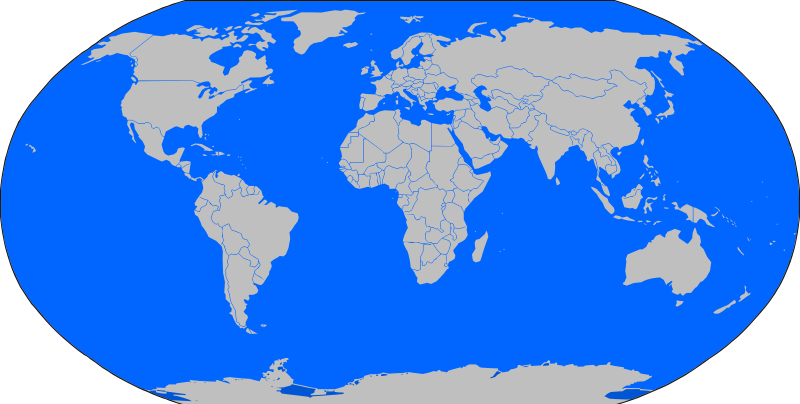
The world is still ridden with several conflicts, conflicts which continue since a number of years. Or conflicts which seemed to have diminished but flared up again. The world has not become any more secure since the end of the super power stand off. On the contrary the world has become less stable and prone to new and enduring conflicts which are out of control. International diplomatic pressure can not end or even mediate in these conflicts. Any mediation is all to often simply used to improve the situation of all parties involved. It is a tactical decision to join any mediation or negotiations and not a decision to end the conflict.
Nearly all continents on the earth are victim to one or more conflicts. And the poorer the area the more likely a conflict will be present or about to start. Conflicts are not about politics anymore, they are about power, money, ethniticity and/or religion. This makes the majority of the conflicts even more brutal and long lasting.
To name a number of conflicts, on the Indian sub-continent, the fight between the Tamil minority, the LTTE, and the government in Sri Lanka. The fight between the Kasmiri independence movements against the Indian government. The fight in Afghanistan between the Pushtun Taliban and the coalition of movements in the northern alliance. And the communist insurgency in Nepal, which is getting worser every month.
In South America, in general there are problems with the drugs/criminal organisations which undermine the countries in the northern part of South America. And the more serious problem, namely, the fight between two leftist organisations, the FARC and the ELN, againt the government in Columbia.
The former territory of the Soviet Union. The fight between the Chechnian minority against the Russian government in Chechnya. The fight in Uzbekistan, Kyrgyzstan and Tajikistan against the IMU, an islamic movement fighting for the establishment of an Islamic state in Uzbekistan.
The problems in South-East Asia and Pacific Asia. The fight between the Karen and Shan minorities in Myanmar against the government. And the regular clashes at the border with Thailand between the Myanmar army and the armed forces of Thailand if the Myanmar security forces cross the border in pursuit of the Karen and/or Shan resistance movements The fight in the Philippines between the government and the Islamic/Moro movements in the south of the country. And the Philippines are facing a resurgent communist party, NPA, who are gaining strength and are increasing the actions against the government, often in cooperation with the Moro movements.
The African continent is facing probably the most intensive and deadliest conflicts.
The fight in Guinea between the Guinean armed forces and rebel movements out of neighboring Sierra Leone. The fight in Sierra Leone between the government with support of the ECOMOG and the forces of the RUF. The socalled first Great War of Africa in the Democratic Republic of Congo, DRC. The DRC is deeply divided by several movements with external support who fight eachother for the control of the country and its wealthy resources. The fight in Uganda between the several opposition movements and the government who want to eliminate the current government. The struggle between the Tutsi dominated government and the surpressed Hutu majority in Burundi. And finally the decade long fight in Angola between the government controlled MPLA and the rebellious UNITA.
These are the largest and intensive conflicts in the world and the world seems to get a couple of new conflicts added to the already to long list. Beside the here mentioned conflicts there a number of conflcts which are relatively small and are therefore not listed . Never the less these conflicts are dangerous and deadly but will probably be contained, remain small of scale and probably have a chance to be ended on the short term
The new or better intensified conflicts are on the Balkan, in the Middle East and in Indonesia. And these might if Murphy’s Law has a part in it become really dangerous and involve more countries.
Balkan
The last decade has not been a peaceful decade on the Balkan. The fragmentation of Yugoslavia did not happen without any problems. With the exception of Slovenia, all other new countries experienced problems in becoming an independent country. At first the problems with the Serbian dominated government in the former Yugoslavia about the establishment of an independent country. And secondly, there after the worsest of both, the internal struggles between the several ethnic groups in the societies of Croatia and Bosnia.
The last victim of this kind of conflict is Macedonia. The Albanian minority in the country with rather large support from Albanians out of Kosovo, and probably even on their instigation demand to be equally treated by the Macedonian government.
Another UCK kind of army/movement has become active in Macedonia. This organisation came out nothing. It was established within about two weeks. They call themselves, National Liberation Army, NLA. The NLA is probably led by Albanians out of Kosovo but is recruited mainly in Macedonia.
The first operation of the NLA was at the same time the birth of the organisation. The NLA occupied some hills in Macedonia and started to attack a couple of towns, Tetevo and surroundings, with long range ineffectual shootings. The NLA is hoping to receive massive support from the Macedonian-Albanians in their fight against the Macedonian government. The Macedonian-Albanians have until now an attitude of wait and see what is going to happen. Even if they support the idea behind the actions of the NLA. At the moment they are not certain about what to do, they support them because they are Albanians but do not yet accept the violence they use.
The reaction of the Macedonian government has been gradual. At first the Macedonian government reacted with police forces to end the problem but later they sended army units with heavy equipment to defeat the NLA. In the beginning the police and army forces returned fire from the build up areas and did not enter the mountains where the NLA was firing from. Attempts to seal the area were made but they were not be very succesful to defeat the NLA. Later on the Macedonian forces were moving into the mountains where they trapped the NLA. The strength of the NLA force which is fighting the governement is estimated from as low as 50 fighters to as many as 300 NLA fighters. As the Macedonian army moved into the area the majority of the NLA fled the area but a part remained and digged themselves in. This will be however a matter of time until they will be removed. The use of the heavy weapons have been limited until now for the danger of civilian casualties and not to receive any comments of the media and the west that they were using excessive and indiscriminatory violence to force out the NLA.
The KFOR in Kosovo is at the same time busy to seal of the border between Kosovo en Macedonia to make any support out of Kosovo difficult if not impossible.
The danger of this new action of the NLA in Macedonia is the idea behind these new operations. They are not fighting for equal rights, the Macedonian-Albanians are supposedly treated as second class civilians which they are certainly not, they have been treated different in the past but since then the situation has improved and will continue to improve.
The NLA is essentially having a hidden agenda. They want to create a great Albania, consisting out of the Albania, Kosovo, the territories with a large number of Albanians in Macedonia and the Presevo-Medevo area in Serbia which is also inhabited by a majority of Albanians.
These ideas were already visible in the Kosovo conflict but was downplayed by all involved parties. The NLA is planning a replay of the Kosovo conflict, first start a civil war, which includes the help of the whole population and there after create large number of fugitives and stories of massacres to force the international community, read NATO, to intervene and create a defacto independent new country.
The family/clan structure of the Albanian society, with the vendetta thinking, will promote the support of the NLA but the price paid could proof to be to high.
It will be not that easy this time to get the support they had in the Kosovo conflict. The Albanians had in Kosovo the advantage of being the victim of the bad Serbians, a long time of suppression and a number of years of peaceful resistance.
The cards in Macedonia are totally different, it is true the Albanians were suppressed in the use of their own language and culture just after the beginning of Macedonia as an independent country. But at the moment there had been made progress to the improvement of the conditions of the Albanians in Macedonia. They can use their own language, have their own schools, even an university, can live according their own customs, have a large political freedom in their own region and are represented in the national government. So they are hardly the second class civilians the NLA claim them to be. They have received everything short of an independent Albanian state from the Macedonian government.
The NLA can and will start a new guerilla war in Macedonia, get even some support out of the local population and inflict damage to the government and the relations between the moderate Albanians and the government but they will not be as succesful as in Kosovo. Militarily and politically they will be much weaker and need to fight on their own, with the only supporters in Kosovo and Albania proper. They might have large stocks of weapons and ammunition in Kosovo but fighting a long conflict is an expensive business and the resources are limited.
They certainly will not receive international support and even large number of refugees will not impress that much anymore, as they can only go to Kosovo and Albania and live over there in poverty. And most importantly the refugees, Albanians will be blamed for their own miserable position. But considering the policy and objective of the NLA movement they will not care to much about the well beingof the local population as they consider their objective as the higher value, and much more important to achieve.
The problem of this conflict is that if the impossible should happen, the desintegration of Macedonia, then you would get an area wide conflict. Several countries would want to claim a part of Macedonia, and there would be several overlapping claims. The following countries would be willing to claim a part; Albania, Greece, Bulgaria and Serbia. Greece is the strongest of the four, but alliances could make the conflict really nasty and long. This is the large scale scenario.
The small scale scenario is that the NLA will continue their war against the Macedonian government, involve it in a longer guerilla war and some how achieve to gain their own nation or a greater Albanian nation with parts of Macedonia. This will leave a crippled Macedonia behind with the neighboring countries aspiring also some territorial changes. In the end leaving an economic unviable nation behind. Or ofcourse that the NLA can get support from other Albanians and even Albania proper and pull these two countries in a low to mid intensity long drawn conflict. With both sides getting as much support as possible from other countries. And eventually drawing them into the conflict.
The only policy to implement for Macedonia is to defeat the NLA rebel forces and to win the hearts and minds of the Albanians. The defeat should be intelligent as a scorched earth policy and to much killing of civilians will only increase the strength of the NLA. The hearts and minds policy should give the Albanians the same rights and an equal treatment in Macedonia. In this case it is benificial to do so as a generous attitude is te only way to built a lasting peace. But the NLA or violence in general is unacceptable as any negotiation on the basis of the threat of violence will only increase the demands of Albanians, and they will never get enough whatever they are offered.
Middle East: Israel and the Palestinian question
The much promising peace process in the Middle East collapsed after the Al Aqsa intifadah got on his way and the majority of the cooperation between the Israeli government and the Palestinians ended. The mutual cause, the achievement of peace in the region, ended as the insecurity in Israel and the frustration in Palestine took over control.
The peace process which was already slowed down because of the lack of progress in the implementation of the accords which were agreed upon on during previous negotiations. The socalled big offer of former prime minister Barak to the Palestinians was an unacceptable offer for the Palestinians, Arafat. They could have never agreed to that as East-Jerusalem, the return of the Palestinian fugitives from the neighboring contries and the return of 90 % + of the West Bank without conditions are an absolute minimum which should be fulfilled.
The visit of Ariel Sjaron to the Temple Mount, Al Aqsa, was the sign for the Palestinians to show their frustrations with Israel and the peace process. The escalation of violence in the time following the incident destroyed all further hope on a fast and easy end of the Israeli-Palestinian conflict.
The Palestinians first escalated the violence by attacking several kibbutz and Jewish settlements on the West Bank. They fired with assault rifles/machine guns at those places and the Israelis reacted harshly at the attacks but by now the Palestinians are preparing another kind of intifadah. The Palestinians want to end the attacks for the moment and change their tactics and have another peaceful, if you can call it that way, resistance. The Palestinian people should be involved again to make life very hard for the Israeli security forces. A popular revolt without using violence is always very difficult to control. It will take a higher toll on the Palestinians but the security forces will get all the blame if there are any casualties.
From a media viewpoint this strategy will bring them a good press and put Israel in the corner of the ruthless and suppressive occupation power. The effectiveness of the attacks of the Palestinians, or better of the Tanzim and the Hamas, was not very high. It has not been very damaging for Israel only irritating and it gave them an excuse to close down the Palestinian territories, destroy the local economy and suppress all resistance with all means available. This means the use of armoured forces and rocket launching helicopters. Not very appropriate to defeat the Tanzim and the Hamas but very impressive. The Palestinian case was however not be promoted by the agression of the Tanzim and the Hamas and it even did not bring to much international support. Even no widescale Arab support, only words that the Arab nations supported the Palestinian claim and position but no real support.
That is probably the main reason why the Palestinians, the Tanzim, decided to change directory of their actions. Peaceful resistance is less impressive but much more beneficial to the cause.
Any public statements that the Palestinians will return to violence on the very short term as a reaction to any Israeli attack on Palestinian people and property is mere a public relation play to garner more support in the population and to satisfy the hardliners in the PA.
At a later stage the Palestinians can always return to a more aggressive position towards the Israeli security forces, especially if they were to use the succesful tactics which were used by the Hizbollah in Lebanon. But at this stage it would be to early as the Israeli position is still to strong and would first need to be softened up.
This will deliver international support and progress for the Palestinian cause. And it will put Israel in a worse position militarily and politically, undermine the moral of the security forces and the Israeli society as an end to the Palestinian uprrise would not be feasible and this would improve the position during any negotiations. As peacefull resistance is not really violence, it is just very uncomfortable and difficult to deal with. The Palestinians would to be protrayed as the good guys, and civil disobedience and peaceful demonstrations make this possible. The Israeli security forces will inevitably overreact and use excessive violence and will be portrayed as the bully and occupier.
To really reach this the Palestinians, Palestinian Authority, have to create a bigger difference between the Palestinians, PA and the Tanzim and the Hamas. The Hamas is having a different ideology and will continue to use violence, bomb assaults, against the Israelis. This would be bad for the PA in any possible negotiations but on the other hand beneficial to keep the pressure on Israel. A twin track policy, uncoordinated and without any relations between eachother what so ever, could be the best for the Palestinians on the medium to long term and not considering the costs in human life. The Hamas as the uncontrollable religious fanatics and the PA as the moderate and reasonable opposite.
The continuation of the violence, shootings, and even possible incursions of the Hizbollah would be on the other hand undermining the Palestinian position. It would deliver the security forces an excuse to use all means available and could even lead to the involvement of Syria in the conflict. A widening of the conflict to the neighboring countries would be just as useless as the continuation of the violence. It will bring no international support to the Palestinian cause, it will only be beneficial to the Israeli position.
A new conflict in the Middle East is always possible but this should not be overestimated. An Israeli attack in response to an act of terror of the Hizbollah on Syrian targets might call for a Syrian reaction. The military potential of Syria is at the moment however limited and certainly not capable of fighting against the much superior IDF. So an escalation is not very likely. And in the first place Israel will only attack Syrian targets in Lebanon if they might pose a direct danger to Israel or the IDF and not out of retaliation. The political consequences of an attack might be worser that the military consequences.
That is why the target selection in Lebanon has to be very careful and only aimed at the Hizbolllah and Lebanese targets more or less connected to the Hizbollah.
Indonesia
The problems in Indonesia are not only limited to troubles in the outer provinces/islands were independence and autonomy movements are putting heavy demands on the Indonesian government. They are willing to use, as they do, violence to support their demands.
Ethnic and religious differences are also playing a major role in the problems in the outer provinces/islands. The local population is ventilating their problems with the migration policy of Jakarta. The large number of migrated people, who very often live in better circumstances, are being targeted by the local population. This is further aggrevated by the fact that the migrants are supported in return by socalled Jihad fighters from Java to protect and support the migrants in the troubled areas. This is fuelling the conflicts in these areas to a large extent.
There is another probably even larger threat to the stability in Indonesia. The government of Indonesia is at the moment relatively weak. The current president, Abdurrahmann Wahid, is under pressure because of several scandals and his rather indecisive style of government. There are demands that he should withdraw. This situation is further worsened by the fact that the economy of Indonesia is still very weak and dependent on foreign aid, loans, to survive.
The greatest danger in Indonesia is however that all political organisations have their own kind of militias and these are more than willing to fight other parties if they consider that their man has been treated unfairly. And it is rather simple to make them feel unfair treated as only not to agree with them is enough to get their attention and to feel their displeasure. This displeasure will be felt by the agression which they are more then willing to use.
Indonesia received last month an impression of what could happen if the differences between the parties would come into existence. The militia of Wahid, or to be correct of the organisation, Nahdlatur Ulama, NU, of which he is chairman, went on to the streets and destroyed party offices of political opponents in the East and the center of Java. If Wahid woud be removed from office, it could be likely that there would be an explosion of violence.
There are 4 major parties in Indonesia which could create chaos and ofcourse a fifth group, the armed forces, which also could play a decisive role. Some kind of civil war is certainly possible. Even if the security forces, the armed forces and the police, should be able to restore order on the short term with the use of excessive violence. But it could turn out different if the disorder could spread and the security forces would be slow in their reaction. And there would always be the question of loyalty in the security forces. It could happen that parts of the armed forces join of the fighting parties. Civil war could be much more close than is anticipated.
The four parties are the NU, 40 million members, with its Banser militia. The Banser militia also played a major role in the past, in 1965/66, as about half a million alleged communists were killed in the socalled left coup d’etat. There is also a considerable threat from the NU with the Banser militia. The militia is very loyal to the NU and have no doubts about the justness of the NU. The Banser militia is mainly recruited out of the Pesantren Islamic schools. So this could even deliver a religious quantity to the possible struggle. And the NU is willing to use the Banser militia to reach their goals. As have been proven in history.
The second, the old Golkar party with its old structures. Not as strong anymore as it used to be but still an important party in any possible struggle for power.
The third is the party of the Muhamadiyah led by the chairman of the Peoples Congress Amien Rais. The Muhamadiyah is an like the NU an Islamic organisation with 28 million members. The relations between the two are not very good as they fight for about the same people and goals. The Muhamadiyah is only sometimes claimed to be a little more fundamentalistic than the NU.
The fourth party is the PDI-P of vice-president Megawati Soekarnoputri with the Satgas militia. The militia is already used for all kind of guard and support jobs but Megawati has until now not made any use of the Satgas in political problems. At least until now, this might change in an all out conflict between the major political parties if Wahid would be forced to leave office.
As long as Wahid is president the situation will remain relatively calm. There might be demonstrations but not an all out conflict for power. But if Wahid would be forced to go, things could change overnight. A kind of civil war could erupt between the four major parties about who would succeed Wahid. Megawati would try to get power with support of the political system but none of the others might be willing to accept Megawati as president. Or will try to achieve control by the use of their militia. Or the likeliest the Banser militia will out of frustration start to revolt and this could put the whole country into jeopardy.
A civil war is the most likely result of the ejection of Wahid, if he is not prepared to go by himself. The security forces should be able to restore order but it is uncertain if the officers corps cannot agree to a new leader. And even more important, if the NCO’s and soldiers do not agree with the decision of their commanders. There is also a chance that the security forces will be split in several factions each supporting one of the parties involved. This would severely undermine Indonesia as the movements in the outer provinces/islands would be more than willing to use this internal weakness of the central government to draw more control from the government.
The highly dangerous combination of unrest in a number of provinces in the country and the fragmented leadership in the center might destroy the country. The problems with the several seperatist movements in the countryside is putting enough tensions on the integrity of Indonesia. A conflict in the center of government between the major parties would mean the end of Indonesia as we know it.
The armed forces could use this troubled sitiation as a last bid to recover the power they have lost in the recent years but this is a really dangerous attempt as they are not the same as before the changes. Command structures have changed, alliances broken, there is certainly not the old used to be loyalty present. And more importantly the economic situation will not leave much room for dangerous experiments which are sort of mixed with suppression and military rule.
The problem in Indonesia is, can they solve their problems politically or face a civil war. The civil war scenario is very much likely as all involved parties are ready to start and fight a civil war. The political system and the parties participating in it have the key to the future of Indonesia. But somehow they are to busy with promoting their own position and cause, which will make a conflict about power more likely.
 IN-SE Services