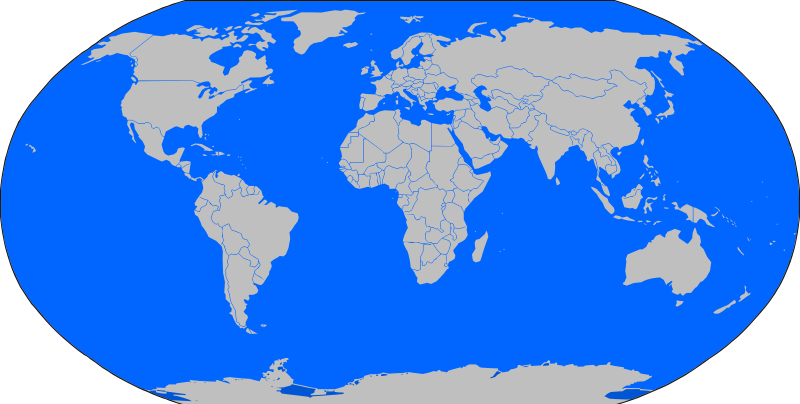
February 2000
Conflicts in the world
December 1999, Part I;
– Introduction
– The Americas
– Europe, Russia and the new states
– The Middle East
February 2000, Part II;
– Africa
– The Indian subcontinent
– Asia, the Pacific-rim
Conflicts in the world, Part II
– Introduction
– Africa
– The Indian subcontinent
– Asia, the Pacific-rim
Introduction
On the eve to a new millennium the world has not become any safer or more peacefully. There are now more conficts and wars than in the previous decades during the superpower stand-off. The Cold War might have been unpleasant but at least it kept most conflicts in the world at bay. As no side could allow a failure or even a loss of face. This could have easily escalated into to something uncontrollable and absolutely destructive.
On all continents of the earth there are some or more conflicts or even wars going on. As a definition of conflict or war we would like to use the following description, war or conflict is happening if states or organised groups of people have differences with eachother which they choose to solve or end by the use of violence. This violence is that large and intensive that normal live is interrupted by it. War in our understanding is only an increased, stronger, form of conflict with more agression and more victims, military and civilian.
We intent to deliver an overview of all actual conflicts and the ones which might come into existence on the short term, e.g. in the coming 6 to 12 months, in the world.
Africa
The African continent promised improvement after the Cold War had ended. In a big sweep of democratisation many African nations got rid of their autocratic regimes and new elected governments were sworn in. The subsequent economic rally surprised many in Africa and around the world. Finally Africa started to develop, it seemed as it would leave behind its bad past of political suppression, economical depression and financial exploitation.
As quick as progress, democracy and peace came as fast it went away. As soon as the new regimes were in power, they abandoned democracy and a new suppression began. And several old and deep seated sentiments and hatreds became alive but also a number of people with large ambitions could easily manipulate the poor and unemployed crowd to create tensions and conflict.
Inter-state war is very rare in Africa, there are differences and tensions run sometimes high but it stopped mostly just before war. There is only one inter-state war going on right now and these two countries used to be one, Ethiopia vs. Eritrea.
Intra-state conflict on the other hand with the support of a neighbouring country happened and happens all to often. The majority of the African people experience or have experienced an internal war at some time in their history. This might be caused by a coup, fighting between tribes, religious motives or conflicts between the remnants of rebel organisations of the colonial era.
Still a number of intra-state conflicts are going on and will most likely continue in the next millennium. The intensity is mostly low to medium, depending on the season, The form of warfare is mostly guerilla or infantry vs. infantry with generous use of land mines, occasional armour and artillery support and now and then some air strikes. But the brutality during the fighting and towards civilians is out of bound. The soldiers are often very young, without relatives and future, with strange convictions like that by killing and mutilating they receive the energy/strength of the enemy and doped by some mysterious substances like qat.
This have made the civil wars in Africa very bloody and disgusting. Unfortunately this catalog of horrors was extended by the killing and raping to spread fear like in Algeria and the aimed proscecution and systematically murdering of another race like in Rwanda. Africa has seen more tragedies in the last 50 years than should be possible in a socalled civilised world.
Egypt
The situation in Egypt is in comparison with other African nations very good. The only threats to Egypt are the activities of the muslim fundamentalists who want to change Egypt into an islamic republic and the slumbering differences of the Copt christians with the muslim majority in the country.
There are several obscure organisations like the Jihad, Takfir wal Hojra and the Muslim Brotherhood which are active with recruiting new members/followers at the unemployed and poor people in the society and ofcourse at the universities. They offer them ideals and alternatives and very often they even have a social system to support the poor. The fundamentalistic penetration of the society is becoming a fact of live. Ever more fundamentalists are getting government positions.
All those militant fundamentalistic organisations are not only working in Egypt but are also directly or indirectly, through associations active in other countries. They have created networks which makes them stronger and more difficult to defeat.
To enforce their policy some groups, the radical muslim fundamentalistic movements, resort to violence and attack government institutions and officials and the economy of the country to weaken the government. The assaults on tourists have a double function it weakens the economy and warns/punishes the infidels who are behaving disrespectfull in an islamic country.
The Copt christians, 5 to 8 % of the population, are pressured by the islamic majority. They are discriminated by the government and the by the majority of the islamic population but since some time they are also psysically assaulted by militant muslims who do not tolerate any other religion in Egypt. This will most likely continue as they are an easy target and the security forces are not very likely to proscecute the militants intensively because of the assaults on the infidels.
The radical islamic fundamentalists will continue to attack the government and the tourist industry. On the positive side, the Egyptian security forces will be ever better able to control the islamic militants even if occasional attacks will occur. The freedom of movement will become smaller of the agressive militant organisations and time will work against them. As any economic recovery and every week they can not deliver some results the supporters will turn away. The agression of the islamic militants will become lesser but the influence of islamic fundamentalism, especially from the more moderate organisations, will remain strong and will increase through the large social system they constructed in the country and the penetration of the government institutions and nearly every other part of the society.
The position of the Copt christians will become worser as they have no priority in Egyptian politics. The discriminatons of and the attacks on christians and their institutions will continue in 2000. The Copt christians do not have the political influence, national nor international, to end it.
Algeria
The situation in Algeria seems to become more stable. After years of insurrection, a military government, a president elected under undemocratic conditions, another president, the current president Abdelaziz Bouteflika, elected under better circumstances, and the recently held referendum on the National Reconciliation delivered Algeria some stability. The fight against the violent islamic opposition and the reconstruction of the country receives the support of the population. This will boost the position of the president and will limit the influence of the armed forces in the society.
After decades of political and economical mismanagement through the government the country was close to bankruptcy. In this precarious situation a new political organisation with a strong islamic background, the Front Islamique de Salut, FIS, Islamic Salvation Group, could win several communal, county and provincial elections. The FIS promised improvements and they could even deliver some improvements in the areas they controlled. The FIS was and is however an islamic fundamentalist organisation which want to change Algeria into an islamic republic.
The success of the FIS continued as they won the national elections and were on the verge to take over government. This was unacceptable to the ruling establishment and the military. The military took over power and put in their choice as preseident. The FIS was declared illegal and was forced in the the underground.
The reaction of the FIS was to re-organise themselves and fight the government. The Islamic Salvation Army, the military wing of the FIS started to fight the government. As government officials and institutions were well guarded their targets were people from western countries working in Algeria, journalists, artists, in short short people who disapproved islamic fundementalism or who were simply conceived as disrespectfull to the islamic cause.
The insurrection created and nurtured other groups like the Groupe Islamique Armee, GIA, armed islamic group, and the Salafist Group for Preaching and Combat. Those organisations were even more radical in ideology and actions than the Islamic Salvation Army.
The GIA and the Salafist who also fight for an islamic republic and object any western influence started to spread terror in the countryside by attacking villages and killing all people they could get. The terror actions should make the population aware of the incompetence of the government and that Allah, FIS, GIA and/or the Salafist, are the only option to peace and progress.
The actions of the islamic fundamentalists and especially the resistance of the population against the terror campaign undermined the popularity of the FIS. The GIA and Salafists and the likes never had much popular support and lost the most of it because of the atrocities committed by them.
The policies of Bouteflika and the deprivation of influence of the islamic fundamentalists in the society made the FIS renounce the war against the government. The FIS realised that they could not win the war and that the war, atrocities, estranged the people from them.
Consequently, as Bouteflika limited the power of the military somewhat, introduced a new social and economic policy and finally offered some kind of amnesty for the FIS/AIS fighters. The FIS took the opportunity and declared an end to the violence.
The GIA and Salafists will however continue their struggle. The internal war in Algeria will continue in 2000 as the GIA and Salafists will keep on fighting or better continue committing atrocities. The intensity will be lower but it will take at least one to two years to eradicate the violent fundamentalistic organisations out of the society.
Morocco
Morocco has been relatively quiet recently. The death of king Hassan II and the new rule of his son, king Muhammad VI, have been the most exiting intervention in Moroccan policy in the last year. King Muhammad VI will introduce new ministers and advisors and probably a new policy in the kingdom. The problems of Morocco are largely economical as the economy has been performing very badly in recent years. The islamification of the society has been early occupied by the government which limited most of the activities of muslim fundamentalist organisations in the country.
The political problems are the still centred around the Western Sahara. This former protectorate / colony of Spain has been occupied by Morocco as Spain left this territory. Since then there has been a conflict between Morocco and the Polisario over the control of the area.
Polisario with its armed wing SPLA has been fighting a decade + long guerilla war with Morocco. Polisario has several bases in Algeria and received support from Algeria. Algeria has not had the best relations with Morocco as those two had some minor differerences about the demarcation of their mutual border.
The situation in the Western Sahara ended in some kind of stalemate as Morocco dugged itself in with the famous wall of sand around the most valuable areas in the center of the territory and settled many thousands of Moroccans in the area. The activities of the Polisario organisation were severely limited by the policies of Morocco.
The guerilla war has not been very succesfull but international pressure delivered a diplomatic solution and a cease fire. There would be a referendum about the territory. The execution of the referendum has been however delayed by the question: who is allowed to participate. All people living in the territory, including the Moroccan settlers or only West Saharians including the ones in the refugee camps in Algeria.
The situation in the Western Sahara is a death end street as the Moroccan government is hardly in a position to give up the territory because the large funds invested in the protection and infra-structure of the territory. And ofcourse because of the minirals over there. Polisario on the other hand can only accept independence and they want it as fast as possible. Time will degrade their forces, sources of support, Algeria is hardly in a position to continue to support Polisario, and it will become ever more difficult to relocate the Morrocan settlers, at least at a civilised and correct way.
The status quo is beneficial to Morocco as it includes a cease fire. The situation for Polisario will become worser. A return to the guerilla war is very likely in the coming year. Its intensity will be however low and not very effective as Polisario does not have the necessary military strength and not many powerful friends.
Niger
There have been some destabilising activities in the south of the country. The local population, tribes, are dissatisfied with recent activites of the central government. Officials of the government have been granted large tracts of land and rights in the most promising areas of the region.
The local population is resisting this policy and are forming organisatons to resist the government policy. The organisations are not very well organised nor unified but this is just a matter of time. Within 6 to 9 months this could have changed with an increasing number of activities initiated against the government. This will mean violence against government institutions and officials and government suppression against the opposition.
Chad
Chad has been one of the many countries who are involved in the conflict in the Democratic Republic of Congo, DRC, the former Zaïre. Chad has supported the government of Kabila in their fight against the rebel forces supported by Rwanda and Uganda.
Some 2.000 troops had been deployed in the DRC but they have been withdrawn as the costs of the intervention became to expensive and because of the mounting internal problems.
Chad is having some internal problems with two groups. First the Movement for Democracy and Justice in Chad, MDJT, under the leadership of Youssouf Togoimi which is claiming to occupy several oases in the desert in the north of the country. The MDJT has stated the willingness to move south and occupy the capital N’Djamena but is until now lacking the capability to do so.
Second, the government is at odds with groups living in the south of the country. A new rebel group has been organised to resist to the plans of the government for oil exploration in the south of the country. Former soldiers of the armed forces of the federal republic, FARF, have been recruited by the rebels. The activities have been moderate until 1999 but they will most likely increase as the government plans are implemented as they were planned in 1999.
Sudan
The situation is Sudan is as worse as last year. The civil war is destroying large parts of the country. Especially in the south and north-east of the country. To limit the support to its main enemy in the south of the country, Sudan is supporting the regime of Laurent Kabila in the DRC. To support Kabila Sudanese forces have bombed several towns in the DRC which are held by the rebels. A victory of Kabila would automatically help Sudan as the Sudan’s People’s Liberation Army, SPLA, would loose bases and support out of the DRC. The second reason of Sudan to support Kabila, the DRC, is that the rebels in the DRC receive support from Uganda and Rwanda and Uganda used to support the SPLA. So, indirectly this would undermine Uganda and the SPLA.
The relations with Uganda have recently improved after a peace agreement was reached between the two countries. According the agreement the two states would cooperate in affairs concerning the military and security. And more importantly they would not allow rebel forces to operate from eachother’s territory, e.g. the SPLA in Uganda and the LRA and UNRF II in the Sudan.
The peace agreement has one large omission, the policy on the Democratic Republic of Congo, DRC, as both support different sides. The contradictionary policies on the DRC will soon lead to collision of interest and thereafter very likely the end of the peace agreement.
The civil war in Sudan is continuing at the same pace as last year. The islamic north is still fighting the christian / animist south. The southern opposition is largely united in the Sudan’s People’s Liberation Army, SPLA, under the leadership of John Garang. There some changing loyalties of local warlords but no large changings which would change the balance in favour of the north. The south has in the mean time received support from islamic opposition groups who are also fighting the islamic fundamentalistic regime in Khartoum.
The activities of the SPLA did become more succesfull as it became an ally in the National Democratic Alliance, NDA, with muslim opposition groups out of the north of the country. For some time they could put the government under pressure. This led to some negotiations under the guidance of Lybia and Egypt. But after an agreement between Eritrea and Sudan was reached not to support rebel forces in eachother’s country, the conquering by the Sudanese armed forces of the province of Unity, the province with the oil fields, and the opening of the southern oil fields the position of the government forces were better than ever before. Consequently all negotiations were ended because of irreconciliable demands and even as the NDA was wiling to accept a cease fire, the SPLA did not agree as did the government.
The civil war will continue as before and will likely intensify as the negotiations were fruitless and the agreement between Eritrea and Sudan proved to be very short lived. Eritrea moved heavy forces to the border with Sudan and continued their logistical support to the SPLA.
The horrors to the civilian population has been as worse as before. Hunger, starvation, and looting of Sudanese army forces and changing loyalties of local warlords is making live very difficult for the population. The civil war is the Sudan seems to be a never ending story.
Eritrea vs. Ethiopia
The only war between two states, with the exception of the involvement of many neighbours in the conflict in the DRC, on the African continent is between Eritrea and Ethiopia. The two countries, former allies in the civil war against the communist regime, started a war between eachother about the exact demarcation of the border around the town of Badme in a triangle of about 2.000 sq. km.
After some heavy fighting in the region around Badme, along the Merib river sector on the western front and a diversionary attack on the eastern Burie front, 70 km. west of the Red Sea Eritrean port of Asseb the fighting between the two opponents has entered a status quo as it seemed that both are holding their positions and recovering from the heavy fighting.
The fighting pause has been used to move the conflict into Somalia were both sides support different warlords which in turn support Eritrea or Ethiopia. The Rahanwein fighters could with Ethiopian support conquer the town of Baidoa of warlord Hoessein Aidid which receives support from Eritrea and who is allowing an Eritrean army base to be stationed on his territory at Coriolei. Eritrean forces staged some attacks on Ethiopia from there. The Rahanwein will with Ethiopian support try to capture the Eritrean base at Coriolei.
The fighting between Ethiopia and Eritrea is most likely to continue in 2000. If the forces of one or of both sides are recovered they will stage another direct attack on one or more of the three fronts on the 1.000 km. frontier. Both countries consider the area around Badme as vital to the country and will be very unwilling to surrender or compromise. In the mean time the fighting will continue between the two countries in Somalia as both support different warlords and both use Somalia as a support line and staging area to attack the other side.
Eritrea
Beside the conflict with Ethiopia and the involvement in the Somali conflict, Eritrea has another problems. The Eritrean government is supporting the SPLA in Sudan which is raising tensions between the two countries as Eritrea and the Sudan had some sort of agreement not to support rebel forces in eachothers country.
Eritrea has another more pressing problem, the Eritrean Liberation Front, ELF, is fighting the government of Eritrea as it is discontented with the policy of the government. The ELF is receiving support from Ethiopia and has become stronger and more dangerous. The ELF will continue their struggle and will have a bigger impact on the government and on Eritrea. Even if the conflict with Ethiopia has ended it will prove to be more difficult to beat the ELF as the support it receives now and influence it can win now will proof to be invaluable in the future.
Ethiopia
Beside the conflict with Eritrea and the involvement in the Somali conflict, Ethiopia has a problem with the Oromo people living in the south of the country. The Oromo Liberation Front, OLF, is demanding independence from Ethiopia. The OLF is waging a low intensity guerilla war against the Ethiopian government. Occasional attacks against government institutions and officials is making live difficult in the southern part of Ethiopia. The conflict has led to some collissions with Kenyan forces as Ethiopian forces were in pursuit of OLF rebels who fled to Kenya. A large group of Oromo people are living in Kenya which support their brothers in Ethiopia.
Djibouti
Djibouti is having some problems about the demarcation of the border and the possession of the Hanisch islands with Eritrea. Considering the problems of Eritrea at the moment, it will be very unlikely that the misunderstanding with Djibouti might become violent in the coming 12 to 18 months. But if a diplomatic solution will not reached after the Eritrean-Ethiopian conflict has ended, the problem could eventually become violent. But again this will be very unlikely especially if France has a major base in the country.
Somalia
Somalia remains the same divided country as last year. There are about 26 clan regions and what is called Somaliland in the north. Somaliland is the most stable region in the country, the only one with some kind of government structure.
The Somali conflict heated up as Eritrean and Ethiopian forces became involved in the conflict. In exchange for basing and transport rights Eritrea supports the clan of Houssein Aidid and Ethiopia the Rahanwein clan. The stability which was reached in the country after long and hard fighting has been changed by the interventions/support of Eritrea and Ethiopia. This destabilisation will continue in 2000 as the intervention of the neighbours will give the clans an opportunity to enlarge their territory and improve their power as the others are weakened or better become relatively stronger or weaker.
The tensions between the clans will increase in the future as renewed fighting will be necessary to reach a new balance between the many clans in the country.
Senegal
The integrity of Senegal has been serious threatened by the activities of the secessionist rebels of the Mouvement des Forces Democratiques de Casemance, MFDC. The MFDC are fighting for an independent Casamance, a region in the south of Senegal. The people of Casemance feel themselve ill represented by the government in Dakar.
The MFDC have become more violent over time and the rate of clashes with the government have increased in 1999. The clashes occurred all over Casemance including around the regional capital Ziguinchor. This will continue until the government in Dakar can offer something which will satisfy the demands of the people, the MFDC, living in Casemance.
The government became aware of the seriousness of the demands of the MFDC and the government and the MFDC agreed to end the hostilities and allow free movement in the region. The underlying dispute would then be solved by negotiations in the coming year. If the government is seriuous about negotiations and willing to fulfil some of the demands of the people in Casamance their could be a peace agreement this year.
Guinea-Bissau
Guinea-Bissau experienced a civil war in the last two years as rebel leader Ansumane Mane started a rebellion against the government of president Joao Bernado Vieira. After some fighting between forces loyal to the government and the rebel forces, the intervention of forces out of Senegal and Guinea, a cease fire of three months, a continuation of fighting until a diplomatic solution, a peace accord with elections and a sharing of power, was reached everything seemed to end peacefully. But Ansumane Mane used this opportunity to oust the president and took over power. The peace keeping force left the country after the coup of Mane as they were not wanted nor necessary anymore.
The situation in Guinea-Bissau is however far from stable as large number of forces loyal to former president Vieira are still around in the border region with Senegal and Guinea. It will be very likely that they will try to regain control of some regions and slowly increase their territory. So the fighting in Guinea-Bissau is far from over as long as those forces are not demilitarised.
Guinea
The situation in Guinea is relativily stable, the only problem is the overspill of conflicts from neighbouring countries. Forces fighting the governments in Guinea-Bissau and Liberia are using Guinea as a base to launch attacks into both countries. This creates tensions and occasional clashes between the Guinean armed forces, the rebel forces and inadvertant border crossing of the forces out of Liberia and Guinea-Bissau.
Until now this has not created a problem to the security of the country but this could change if the rebel forces would get to big and powerfull and start to intimidate the Guinean government. And ofcourse if Liberian forces would cross the border in pursuit of the rebels on a regularly base.
Sierra Leone
Sierra Leone experienced some very hard fighting between the government of the elected president Ahmed Tejah Kebbah and the rebel forces of the Revolutionary United Front, RUF, of Foday Sankoh. The government had to be saved and reinstalled twice by an intervention force of the ECOMOG and according to some rumours, the second time with considerable support of a mercenary force of an Executive Outcomes like security company. ECOMOG is the Economic Community of West African States Monitoring Group. The intervention force of ECOWAS, the Economic Community of West African States whose membera are Nigeria, Mali, Gambia, Ivory Coast, Guinea, Ghana, Liberia and Siera Leone.
The RUF was twice able to nearly conquer the whole country and they committed many atrocities against civilians as they wanted to suppress any opposition and the fighters of the RUF have the idea that by mutilating enemies they receive their strength.
With the utmost effort the RUF could be forced back from the capital but they kept control of much of the countryside, including the valuable diamond fields. To break this stalemate negotiations were held and proved to be succesfull. The government will cooperate with the RUF in governing the country until the next elections. The agreement is to be guarded and implemented by a peacekeeping force, UNOMSIL, UN Observer Mission in Sierra Leone, with support of forces of the ECOMOG to create some security in the country.
The peace in Sierra Leone is very fragile as there are still to many government and rebel forces around which might try to endanger the peace treaty and the cooperation between the government and the RUF.
Liberia
Liberia has experienced a very violent and lengthy civil war until Charles Taylor was elected president and was able to eliminate his opponents. The presence of an ECOMOG force could not stop the fighting it could only introduce a short cease fire and held elections. The new government of Charles Taylor were then able with the use of force to eliminate his opponents, the seven or eight factions which fought for the control of Liberia.
The situation is far from peacefull as there are still some organisations around which want to eject Charles Taylor out of power. The majority of them have united themselve in the United Front for the Liberation of Liberia, ULIMO.
The ULIMO continues to fight the government of Charles Taylor and occasionally were able to seize some larger towns in the north of the country. The ULIMO operates out of Guinea but are not yet strong enough to beat the government forces of Liberia. Everytime the government forces could regain the territory temporarily lost to the ULIMO. The fighting between the two will continue and will most likely become fiercer as long as the ULIMO can operate out of Guinea.
Ivory Coast
There have been in the last year increasing tensions between the government and the opposition. The presidential elections in 2000 seduced the sitting government into actions the block, limit, the actions of the opposition. The position of opposition leader Alassane Ouattara, the prime candidate in the next elections, has been questioned. Ouattara’s father has been from Burkina Fasso so Ouattara is not an original Ivorian citizen, ergo not allowed to enter the elections.
Beside the political tensions there was another problem which proved to be more dangerous, especially in combination with the political constellation. Namely, the dissatisfaction in the armed forces about the unability or unwillingness to pay the wages and the allowances which have been earned in peacekeeping operations of the United Nations. The deteriorating living conditions in Ivory Coast made the situation even more dangerous.
Ouattara is allied with former general and former minister of education Robert Guei, which still has strong ties with the military. And consequently as the military created unrest because dissatisfied soldiers went on the streets in Abidjan and started to loot and burn houses and commercial buildings. Former general Robert Guei used this opportunity and took over power and quickly restored order and introduced a curfew. The military coup d’etat was the first in the history of Ivory Coast since its independence in 1960.
The elected president Henri Konan Bedie could with his family and the support of French forces stationed in Ivory Coast leave the country and find refuge in Lome, Togo.
The military junta under the leadership of Guei organised in the National Public Salvation Council wants to restore order, introduce stability and growth and promote the political party of Ouattara, Union of Republicans, as 12 leaders of that party were released out of prison immediately after the coup.
Ivory Coast will not return to the stability of before the coup that easily. The military will from now on continue to play an important role. Even if democracy is restored, the demands, the existence, of the military and especially the possible connections between political leaders and the military will create tensions. These tensions might escalate as the armed forces might become divided and all kinds of militias might be created to enforce political goals. And this is likely to happen in about 6 to 12 months time.
Nigeria
The most populous and on paper one of the richest country in Africa has been able to change in 1999 peacefully from a military dictatorship to a democracy.
Nigeria has been involved as the major regional power in all deployments of the ECOMOG forces in the conflicts of west Africa. The deployments were not always succesfull and sometimes they could not do very much but it has been some kind of stabilising factor. Because of the high cost of deploying that many forces, the financial problems of Nigeria and the internal problems of Nigeria, Nigeria is now scaling back their presence and role in the ECOMOG forces.
The economy of Nigeria is in deep trouble because of the dependency on the oil exports, the divisions in the country and the decades long of government mismanagement, corruption and nepotism.
The problems in the economy are exacerbated by the border problem with Cameroon and especially by the internal differences between many of the tribes in Nigeria which is fuelled by the exploitation of the oil rich regions by the central government.
The external problem is the dispute with Cameroon about the ownership / demarcation of the oil rich Bakassi peninsula. The dispute is now placed at the International Court of Justice but this has not de-escalated the conflict. Both countries have builded up their forces in the region and a cease fire is in place but any wrong perceived movement could end up in breaking the cease fire and the beginning of the hostilities. It will be very likely that some kind of violence will start between Nigeria and Cameroon in 2000. The conflict will be most likely confined to the Bakassi peninsula and both countries will do their utmost to conquer the disputed territory if any violence would start.
The internal differences can be divided into three groups. First between the two major tribes, second between many of the smaller tribes in Nigeria and third between the central government and the tribes living in the oil rich provinces. The internal differences are having a very large impact on the stability and economic performance of Nigeria. The external problem with Cameroon is controllable and small in comparison with the threatening internal problems.
The battle between two of the largest tribes, the Haussa in the north who traditionally had a lot of influence in the armed forces and the ruling of the country, and the Yoruba in the south, who traditionally had more influence in the economy / business community. The fight between those two is about who rules the country and who is getting what position. The differences between the two tribes have recently escalated as a Yoruba has become president. President Olusegun Obasanjo have ruled fair but both groups perceive that the other group is treated better. This have led to clashes between the tribes especially against the Yoruba living in the north of the country. The clashes between the two will continue as there is still a lot of uncertainty.
Beside the fight between the large tribes there are lot of differences between the smaller tribes. These differences are about territory and perceived injustices of one tribe against another tribe. The tribes which have problems with other tribes or with eachother a for example the Ijaw, the Ilaje, the Itsekiri and the Urhobo. Most are differences about the ownership of property and end in small scale war between the tribes and could only be ended by the massive deployment of Nigerian security forces to the area.
And finally the conflicts between the tribes living in the oil rich provinces and the central government. The tribes in the oil rich provinces do, in their perception which is pretty correct, not get a fair share of the oil wealth. But they receive all the problems of the oil exploitation. Consequently they started to resist the central government and demand a larger share of the oil revenues, autonomy or even independence from Nigeria. The small tribes resist orders from the central government and they even commit acts of sabotage against the oil industry in their region. The actions of the tribes have until 1999 been controllable by the central government but sometimes the central government had to use a lot of violence and inhumane actions against the tribes to restore order. This kind of hard suppression operations will become ever more difficult in the future, so limiting the government in solving internal problems.
The internal differences in Nigeria will most likely continue in 2000. The problems might increase as there is no clear cut solution to satisfy all. The Nigerian government will need all avaiable political skills, ability to compromise and persuasion to de-escalate the tensed and dissatisfied groups in the society.
Cameroon
The stability in Cameroon is undermined by the above mentioned conflict with Nigeria. Both countries are unwilling to compromise and are prepared to use violence to enforce their case.
The situation can easily get out of control if one side is being pressured by the other or even by the perception of being threatened. Negotiations and some confidence building measures are needed to de-escalate the conflict between the two countries.
The tensions are running high at times between the two opponents but war could be avoided until the end of the courtcase if both countries could built some trust between eachother. The increase of forces in the border area will however reach the opposite. It will be very likely that some kind of violence will start between Nigeria and Cameroon in 2000. The conflict will be most likely confined to the Bakassi peninsula and both countries will do their utmost to conquer the disputed territory if any violence would start.
Kenya
Kenya is threatened by the overspill from the conflicts in Somalia and in Ethiopia. Groups of Somali fighters are crossing the border with Kenya to steal cattle and other goods of need in Somalia. On the other side their is a vivid gun trade between the countries which could led to more instability in Kenya, as problems between tribes and tribes and the government are more likely to be fought out with arms.
The independence fight of the Oromo people in Ethiopia is also threatening the integrity of Kenya as Ethiopian forces are violating the border between the two countries in pursuit of rebels of the OLF.
These problems will continue in 2000 and are likely to increase as the problems in Somalia are becoming worser and more violent.
Congo – Brazzaville
The stalemate between the forces of the former elected president Pascal Lissouba and the forces of the sitting government of Denis Sassou Nguesso will not be changed in 2000. None of the goups is strong enough to eliminate the other and therefore the conflict between the two will continue. The fighting might be small scale and low level but for that it will take very long before the conflict between Lissouba and Nguesso will end. Especially if there are so many other interests which are so valuable. Like the oil production in the coastal area.
The interference of outside parties , the oil companies, the UNITA and the Angolan government will make the conflict continue. The regional defence pact with the Democratic Republic of Congo, DRC, and Angola to assist eachother in military and security concerns will not bring the opposing sides to the negotiation table. The intention of Angola to send more forces to the Congo to eliminate the bases of the UNITA will not be benificial to the Congo it will extent the problem. The Angolan forces are there to solve an internal Angolan problem. It will not weaken the rebel forces of the former elected president Pascal Lissouba by much who also receives some support from the UNITA. The additional foreign forces on Congo territory will prolong the conflict, create more chaos, division in the country and estrange the population from the government of Nguesso.
The Democratic Republic of Congo, DRC
The Democratic Republic of Congo, DRC, the former Zaïre, has experienced since the fall of the corrupt Mobotu regime a civil war were former allies are now the biggest opponents. The conflict could continue that long because of the fact that nearly all neighbouring countries are supporting a side. All neighbouring countries have their own interest for supporting a side and they just want to see their interests protected.
The current president of the DRC, Laurent Desire Kabila, could eject Mobuto with the support of Rwanda, Uganda, Angola, Namibia and Zimbabwe. Rwanda and Uganda want to eliminate the bases of rebel organisations operating out of the DRC. Rwanda wants to eliminate the Interhamwe militia, the Hutu dominated organisation held responsible for the mass slaughter of the Tutsi minority and moderate Hutus. Uganda wants to eliminate various organisations, like the West Nile Liberation Front, Allied Democratic Forces, National Army for the Liberation of Uganda and the Uganda National Rescue Front II, who all are operating out of the DRC. Angola wants to destroy the logistical support lines of the Unita in the DRC. Namibia supported Angola as the Unita is operating occasionally out Namibia and because the Unita is supporting rebel organisations in Namibia. And Zimbabwe acts out of protection of commercial interests. Which became even larger as Kabila became president.
After Kabila became president he soon forgot his major backers and played the nationalist Congolese card and started to suppress the Tutsi population and other minorities like the Banyamulenge and the Mai-Mai living in the DRC and allowed, or did nothing against it, the Interhamwe and other organisations to operate out of the DRC.
This made Rwanda and Uganda very angry and a new rebellion against the regime of Kabila was started. The rebellion received quickly support from Burundi as Kabila also allowed Hutu rebels out of Burundi operate out of the DRC.
The rebellion emcompasses four major organisations which more or less cooperate with eachother. The Banyamulange organisation, the Mai-Mai militia, the Rassemblement Congolais pour la Democratie, RCD, and the Mouvement de Liberation Congolais, MLC. The RCD and MLC received most support, including armed forces, by respectively Uganda and Rwanda.
The rebel forces and the armed forces of Uganda and Rwanda could quickly conquer large parts of the north-eastern and eastern part of the DRC. The south-eastern part has been since under pressure by the rebel forces who are slowly enlarging their territory.
Kabila received support of Angola, Namibia, Zimbabwe, Chad and the Sudan. Angola and Namibia supported Kabila to destroy Unita activities in the DRC. Zimbabwe to protect its commercial interests in the DRC. And the Sudan suppported Kabila because the SPLA was receiving support out of the DRC.
With the support of his allies Kabila could delay the offensive of the rebel forces and as nearly the whole eastern part of the DRC is controlled by the rebel forces some kind of stalemate, statua quo, have been reached. All involving countries had reached their goals, a number of countries, Angola, Namibia and Zimbabwe, had pressing internal problems and the support for Kabila started to become very expensive. The supporting countries started now looking for a diplomatic solution and came to an agreement in the Lusaka accords which included a cease fire. Kabila agreed but was not happy about it. The major rebel organisations, RCD and MLC, were more or less forced to accept the Lusaka accords and the cease fire but were placing doubts on its usefulness.
Lusaka accords are doubtfull and complicated because Kabila did not like the agreement, the RCD was forced to accept, the smaller rebel organisations like the Mai-Mai militia and the Banyamulenge were not included, the Rwandan and Burundi Hutus and the Ugandan rebel organisations were left out, Unita was also not included and the implementation is unclear, e.g. who and when to enforce the accords. It looked like a relieve but the security concerns of Uganda, Rwanda and Angola are not met by these accords. The neighbouring and supporting nations wanted the agreement because the conflict became to expensive and there were more pressing internal problems. Only the MLC liked the idea of a diplomatic settlement but was at the same time afraid of unsecere motives of Kabila.
As expected the cease fire did not hold for long as Sudanese transport planes were bombing villages under the control of the MLC, Zimbabwan forces attacked positions of the RCD, forces of Kabila were trying to retake territory lost to the MLC and RCD, Kabila is resisting the implementation of the accords and finally Kabila used the cease fire to recover and rearm. The DRC has acquired SS-1C and SS-1D, Scud B and C SSM, from Iran and Su 25TK strike fighters from Georgia. And as mentioned before the Hutus, Ugandan rebels and the Unita were continuing their operations in the DRC. The Lusaka accords and the cease fire are now more or less death.
Kabila wants to destroy the rebel forces in the east and is counting on the continued support of Angola and Zimbabwe. But both countries have pressing problems of their own so their support should not be taken for granted by Kabila. Uganda has placed his forces in the border region on alert because of the violations of the Lusaka accords by the DRC. Rwanda and Burundi are still involved with operations in the DRC to secure their border. And the Congolese rebel organisations are also returning to the war mode.
The regional defence pact with the Republic of Congo and Angola to assist eachother in military and security concerns will not stabilise the situation. It is concluded with the motive to solve internal problems in each country. There is no real common thought behind it. The DRC wants to secure the support of Angola, Angola wants to eliminate the UNITA bases and forces in the DRC and the Republic of Congo wants to secure its common border. If one of the parties have reached their goal, the commitment to the pact will be over.
The conflict in the DRC will continue as no party is willing to compromise and all supporting nations are only interested in the fulfilment of their own demands.
Uganda
The situation in Uganda is tensed as their involvement in the DRC will continue in the coming year. The security concerns of Uganda could not be solved by the Lusaka accords. There are still a number of rebel organisations who continue to resist the government of Musevenie and are actively fighting the government all over Uganda. A number of them also use the DRC to recover and rearm and as base to attack targets in Uganda.
The relations with the Sudan have recently improved after a peace agreement was reached between the two countries. According the agreement the two states would cooperate in affairs concerning the military and security. And more importantly they would not allow rebel forces to operate from eachother’s territory, e.g. the SPLA in Uganda and the LRA and UNRF II in the Sudan.
The peace agreement has one large omission, the policy on the Democratic Republic of Congo, DRC, as both support different sides. The contradictionary policies on the DRC will soon lead to collision of interest and thereafter very likely the end of the peace agreement.
The organisations fighting the government are numerous and often they might be small but they are very violent. They commit bomb attacks all around Uganda, are attacking towns and villages, harass road traffick and commit many atrocities against the population. The following organisations are fighting the government. The Lord’s Resistance Army, operating mainly in the north of the country with support of and out of Sudan. The West Nile Liberation Front, operating in the Ruwenzori mountain range and the DRC. The Allied Democratic Forces, ADF, operating in the west of Uganda. The National Army for the Liberation of Uganda, NALU, operating in central and western Uganda. The NALU is linked to the government of former president Milton Obote and is believed to cooperate with the ADF. The Uganda National Rescue Front II, UNRF II, operating firstly out of the DRC but later moved to Sudan as the situation in the DRC became untenable. And finally the Citizen’s Army for Multiparty elections.
The situation in Uganda has become even more complicated as some tribes support the rebel organisations. The Pygmies are for example suspected of collaborating with the ADF. And there are still the anomisities between the many different tribes in Uganda. The Bokora and Mathenniko tribes recently clashed in Uganda and a revanche is just a matter of time.
Uganda will remain an unstable country in 2000, the involvement in the DRC, the internal differences, opposition against, with the government and the tribal quarrals will be the causes of the continuation of violence.
Rwanda
The involvement of Rwanda in the conflict in the DRC will continue as there are still large groups of Hutu rebels, members of the Interhamwe movement, some members of the ALIR, and former Rwandan army troops, in the DRC which are using every opportunity to weaken the Rwandan Tutsi government. They destabilise the DRC and are attacking Rwandan armed forces on both sides of the border. The Interhamwe and another organisation the Armee de Liberation du Rwanda, ALIR, also operate in Rwanda where they receive support from Hutus who returned to or who still are living in Rwanda. They attack not only government buildings and officials but also Tutsi villages, infra-structure and other economic targets. Where as the Interhamwe is a radical organisation the ALIR is much more moderate and more likely to receive wide support from the Hutu population.
As long as the security along the common border cannot be guaranteed Rwanda will keep their armed forces in the DRC to control the rebel forces. Because the activities of the rebel forces in the DRC are closely connected with the insecure situation in Rwanda, it will be important to end the outside influences.
The internal situation is far from secure. Beside the external influences of Hutu extremists in the DRC there is also increasing trend of an internal opposition against the Tutsi government. The internal opposition is divided into a moderate group, ALIR, who wants to achieve changes by mainly political activities and only have limited military objectives. And a group which is associated with the Interhamwe movement. This group is dangerous as it supports the attacks of the Interhamwe and they recruit new members. And there is still a large group of dissatisfied and underprivileged Hutus in Rwanda which are the right potential for any organisation who wants to improve the situation of the Hutus.
The conflict in Rwanda is far from over as there is to much internal and external conflict potential. The differences between the Hutus and Tutsis are still very large and there does not seem to be any improvement achievable on the short to medium term.
Burundi
The situation in Burundi seems to be deteriorating as the number and intensity of the guerilla attacks in the country are increasing. The military coup of the Tutsi minority, replacing the elected Hutu government, in 1996 has not brought more security nor stability to the country. The number of casualties is increasing by the day. Over 200.000 people have been killed in the ethnic conflict since 1993.
The Hutu guerilla fighters, the armed wing Forces Nationale de Liberation, NFL, of the rebel movement Palipehutu, are using the DRC and Tanzania as a recovery / support base. From there and out of Burundi proper they start their raids against the Burundi government. The threat of the guerilla increases as the Burundi armed forces are not able to defeat the guerilla with their hit and run tactics. And the refusal of Tanzania to cooperate or allow Burundian forces enter Tanzanian territory if they pursue rebel forces make it even more difficult to defeat the Hutu rebel forces.
Even the doubtfull tactics of the goverment of relocating large groups of Hutus into protected areas did not deliver the wanted results. The guerilla activity is increasing and will continue to do so on the short to medium term. As with Rwanda the ethnic cause of the conflict and the instability and volatility in the whole region will make an end to the conflict nearly impossible to accomplish with violence, e.g. armed forces.
Tanzania
The security situation in Tanzania is much more stable as with its neighbours. The largest threat to Tanzania will be the possible intervention of Burundi forces on their territory if they are pursuing Hutu rebel forces. But this would be disadvantageous to Burundi as they would clash with Tanzanian armed forces. This would weaken Burundi fighting power and they would loose a logistic support line.
Zambia
The situation in Zambia is not very stable. There are external and internal threats which might destabilise Zambia. Externally Zambia is threatened by a possible overspill of the conflict in the DRC. As the fighting between the rebel forces against DRC government forces and the Zimbabwan armed forces is closing into the Zambian-DRC border withdrawing forces have used Zambian territory to escape from the rebel forces.
Zambia has further been put under pressure by transports crossing Zambia to support the Zimbabwan forces fighting in the DRC. The rebel forces might disapprove of the logistical support crossing Zambian territory. They might consider it as hostile and if they would reach the border they might be tempted to cross the border and stop the transports for good or simply to punish Zambia for allowing the transports to cross Zambian territory.
The internal problems of Zambia could cause some big troubles in the future. There is ever more resistance to the autocratic rule of president Frederick Chiluba. The president has been concentrating power around his position and is supressing all opposition against his rule. This will indirectly weaken the position of the government.
The integrity of Zambia has been thereby threatened by the actions of the Barotse Patriotic Front. The Barotse Patriotic Front has been fighting for an independent Barotse country in the south-west of Zambia. The number and intensity of actions of the Barotse Patriotic Front are increasing and even get a trans-national character as the Zambian Barotse Patriotic Front is supporting the independence movement in the Caprivi strip in Namibia. The people in the Caprivi strip are of the same etnic group as the people living in Barotse country.
There will be more conflicts and violence in Zambia on the short to medium term. Zambia’s semi-neutral position will not protect it from an overspill, on the contrary, it will be held responsible for supporting the other side. The fight of the Barotse Patriotic Front will also increase as the Zambian armed forces are not very strong and the Barotse people determined to improve their position. The Zambian armed forces will be able to control the situation on the short term but an overspill from the conflict in the DRC and/or an alliance between the Barotse Patrotic Front and the Unita in Angola might lead to an overstretch.
Angola
The peace agreement between the main opponents in Angola, the government, e.g. the Movimento Popular de Libertacao de Angola, MPLA, and the Uniao Nacional para la Independencia Total de Angola, UNITA, the main and largest rebel movement did not last very long. The lack of trust, the differences about the sharing of power and wealth, the unwillingness of the UNITA to disarm its elite units, the ursurpation of power by and the rearmement of the MPLA and the military encirclement of UNITA territory by government, MPLA, forces led to the renewal of the civil war.
The hawks in the MPLA and UNITA both wanted the continuation of the war and were against the peace process. They thought the conflict could be best solved by the use force, and that it could be done by force. The involvement of Angola in the conflict in the DRC was the first step to beat the UNITA. The deployment of Angolan forces in the DRC was aimed at eliminating the logistical support lines of the UNITA. If they would be destroyed it would be far easier to destroy the UNITA in Angola. The defence pact with the Republic of Congo and the Democratic Republic of Congo has been created to fulfil that goal. The elimination of UNITA bases and support in both countries. Angola wants to tighten the relations to commit both countries in eliminating the UNITA.
This strategy to weaken the UNITA did not work out that well. The UNITA support base in the DRC could not be destroyed that easily and the conflict in the DRC took longer as expected, the end is still not visible nor expected in the coming six to nine months. The involvement in the DRC is expensive in financial terms and in manpower. And the UNITA has not been really limited in their actions in the DRC.
The military operation against the UNITA in Angola had to be postponed because of the involvement in the DRC. The UNITA used this weakness and started spoiling operations in various parts of Angola and reinforced their positions.
The UNITA was much stronger than expected and the operations against the UNITA proved to be much more difficult and complicated. An easy victory was not possible as both sides had been rearmed and introduced new and more advanced capabilities like strike aircraft and attack helicopters.
The major difference has been that the moral is and was high in UNITA forces, UNITA could gain the better strategic positions because of its headstart and its strategy is partly superior, hit and run tactics and only a few positions to govern and protect. The MPLA forces were on the other hand tired, badly trained and had a low moral. The improvement in armament could not cover those shortages, weaknesses.
At first, the UNITA could gain several victories and put the Angolan government forces under pressure but the war in Angola lost its momemtum as the MPLA was holding the coastal strip and the largest cities and the UNITA controlling most of the countryside. The old division which happened before and will place the government at a beneficial postion.
It will give the Angolan government, MPLA, an opportunity to take the initiative away from UNITA. New offensives can be directed at certain areas which will force the UNITA to react with the consequence of being more vulnerable. And secondly the attrition warfare will be very costly to the UNITA as the embargo and Angola’s activities in the DRC might make the supply more difficult. And finally the increased cooperation with Namibia and partly with Zambia gave the government an opportunity to corner the UNITA and hurt them badly. For the first time since over a decade Angola is controlling the border region with Namibia and is occupying Jamba, one of the HQs of the UNITA. This will put the Angolan government, armed forces, in more difficult position as they will have to guard these large areas against UNITA activities which will resume very shortly after they have regrouped from the government offensive.
It will be however impossible to defeat the UNITA in one or more offensives. The structure and the scale of the UNITA have made it very survivable and very difficult if not impossible to defeat on the short to medium term. And certainly not with one or two major victories on the UNITA or against there headquarters. UNITA never cared to much about the possession of towns, they want to indirect control large tracts of land and be able to disrupt government movement and control.
The UNITA is however not the only opposition movement in Angola. The Angolan government has to deal with another threat to its integrity. The oil rich enclave of Cabinda, the financial life line of the Angolan regime, is under threat by the demand of the Frente de Libertacao do Enclave de Cabinda, FLEC, Cabinda Enclave Liberation Front, for independence of the oil rich province from Angola. To enforce their demands the FLEC has its armed wing the Forcas Armadas Cabindesas, FAC, Cabinda Armed Forces. The FAC is committing attacks on government institutions and officials and it will not take long before the all important oil exploration and infra structure will be targeted.
The effectivity of the FLEC and FAC has not been very good. The actions were low in number, not very succesfull and a leader of the FLEC could be arrested. The FLEC and FAC could be controlled until now but will pose a threat for the future.
Angola will experience a lot of violence in the coming years. The UNITA is far from defeated, the FLEC/FAC is becoming more dangerous, the involvement in the DRC will take a number of years if Angola is willing to support Kabila to the end and the government is only favoring the military solution in the conflict with the UNITA and FLEC/FAC.
The conflict will be devasting for the country and especially the population. As the government, MPLA, and the UNITA only care about their political and military positions, the people will pay the price with hunger and starvation. The international community will be left with the task to keep the people alive.
Namibia
The stability in Namibia is threatened by the involvement in the conflict in the DRC, an overspill of the conflict in Angola and by the activities of an independent movement in the Caprivi strip.
The involvement in the conflict in the DRC is out of solidarity with the government of Kabila, to support Angola and most importantly to limit the power and options of the UNITA which occasionally use, illegaly, Namibian territory. The involvement is limited in the objective/commitment but is nevertheless expensive financially and in manpower. The involvement in the DRC is costing approximately US $ 150.000 dollar a day as there are around 3.000 troops deployed in the DRC, nearly a third of the total of the Namibian armed forces. It is therefore threatening the stability as it limits the capabilities of the Namibian government to develop the country and provide security.
Despite the involvement in the DRC the security of and in Namibia is still threatened by an overspill from the Angolan conflict into Namibia. The UNITA has used and will use Namibian territory in withdrawals and offensives against the Angolan government and to support its forces. This is a violation of the Namibian borders and it undermines the integrity and stability in Namibia. Especially because the UNITA is supporting the independence movement in the Caprivi strip.
The Namibian government is therefore increasing the forces in the border region with Angola and is cooperating with Angola to eliminate the UNITA. There has been increasing military cooperation to limit the movement of the UNITA and to eliminate the UNITA in the border region. In a combined operation Angola could force the UNITA to leave the border region with Namibia and they even could conquer Jamba, a HQ of the UNITA. Zambia was allegedly also supporting these operations as the Unita is also supporting the Barotse Patriotic Front, which in turn is supporting the independence movement in the Caprivi Strip. It has to be seen if the region will become any safer as the UNITA will soon return with increased guerilla activities and the many unpaid, unmotivated and bored Angolan soldiers in the region will not make the region any more secure.
The most direct threat to the integrity of Namibia are the activities of the Caprivi Liberation Army, CLA. The CLA is demanding secession of the Caprivi strip from Namibia. To enforce their claim the CLA is committing attacks on government institutions and officials.
The CLA is at the moment relatively weak, with the deployment of additional forces to the Caprivi strip and a curfew of a few weeks most resistance could be broken. But with support of the UNITA and the Barotse Patriotic Front this could change very quickly. The CLA has the potential to become much more dangerous.
The mutual support between the three organisations, UNITA, CLA and Barotse Patriotic Front, is understandable. Firstly, the people in the Caprivi strip, south-west Zambia and south-east Angola are of the same ethnic group. And secondly, the goal of the three groups is to weaken their governments to enforce their policies.
Namibia will experience instability on the short to medium term. The deployment of approximately 3.000 troops in the DRC, 2.500 in the Caprivi strip, the forces along the border and the involvement in the cooperation with the Angolan government is stretching the Namibian capabilities, financially and militarily, to the utmost. Any increase or improvement of the capabilities of the opposite parties will dramatically undermine the stability and security in Namibia. A withdrawal from the DRC or from the border to improve the security inside Namibia will not solve the problem. The result would be that the support to the CLA and the intrusions of the UNITA will become easier and larger and in turn more dangerous to the stability of the country.
Zimbabwe
The stability of Zimbabwe is threatened by the internal dissatisfaction with the involvement in the conflict in the DRC. The involvement of over 14.000 Zambabwan forces in the DRC to protect commercial interests of a small group of wealthy Zimbabwans is very expensive and difficult to legitimatize. In an economically weak and bad performing Zimbabwe the people start to oppose to the involvement.
The opposition to the involvement is growing and the government of Zimbabwe, already not very popular because of its internal and economical policy, is becoming ever more endangered. It already had to use the armed forces to disperse villagers in Matabeleland who occupied commercial farms which were confiscated under the programme to resettle peasants. The commercial farms were however given to high government officials. It will be therefore the question how long the opposition can be supressed and controlled in such a situation before the political opposition turn violent.
Zimbabwe is on the brink of popular revolt and if the policy of the government does not change on the short term it will become very nasty in the new millennium. Every dollar to and body bag returning out of the DRC involvement is another nail to the coffin of the Zimbabwan government.
South Africa
The situation in South Africa is totally different from the above mentioned countries. South Africa is not involved in any conflict and does not actively support one side of a conflict. South Africa likes to be, as the regional superpower, some kind of broker of peace. It is the economically and militarily strongest country in the region, as such and because of the peacefull transition from apartheid to democracy, they want to spread their ideas and influence.
The problems of South Africa are economical, a below average performance with high unemployment and a very high crime rate. Especially the high crime rate is a worrying factor. It creates unsafety and an unwillingness to invest.
The crimes are about the normal crimes, if crimes can be normal, like robbery, murder, rape and so on, but there is also a more worrying kind of crime. Crimes in the realm of terrorism.
There are two developments which create some instability in the country. First the islamic vigilante group PAGAD, People Against Gangsterism and Drugs. PAGAD started in Cape Town as an organisation who guarded certain neighborhoods against the spread drugs and street crime. The methods were sometimes crude but the number of crimes decreased. In time the organisation became larger but also more agressive and militant, islamic fundamentalistic. This changed the course of PAGAD as politics and religion became more important. PAGAD had become a militant organisation controlling areas with little to none tolerance for other ideas. By this time PAGAD was just one of the other gangs or organisations with the goal of changing the government.
PAGAD attraction and success has diminished since it became more militant and radical. They can be controlled by the security forces but they remain dangerous as occasional attacks against government or other targets which do not get their approval will continue on the short term. Continued operations of the security forces against PAGAD and an improving economy will mean the end of PAGAD in its current structure on the medium to long term.
The second threat to the stability in South Africa are the groups of former guerilla fighters who are dissatisfied with the government policy, the progress of the black population and that they did not receive any important and well paid position within the government. Those groups attack farms of white farmers, terrorize villages and commit bombings in the cities. It is unclear if there is some organisation behind the attacks but they are dangerous as they are difficult to identify and apprehend.
The threat of small groups of former guerilla fighters will continue until the position of the black population and the groups can be improved. But this will take some time.
Swaziland
The small kingdom of Swaziland is having some problems with a small terrorist organisation called the Tigers. The Tigers disagree with the current political hierarchy and government policy. To change the government the Tigers have committed several attacks against government officials and the king.
The small scale of the Tigers and the lack of popular support will keep the Tigers a small and unconvincing organisation but nevertheless they are dangerous because their attacks could become very damaging if somebody really important would get killed.
The Tigers will proof to be very difficult to eliminate as they are small and unknown. They will be able to commit several attacks before they will be eliminated.
Comores
The island group of the Comores remains an unstable country. The division between Grand Comore and the economical succesful islands of Anjouan and Moheli remains in place as Grand Comore is unable to retake the runaway islands.
The military coup d’etat on Grand Comore complicated the affair as it will make any international support for and cooperation with Grande Comore impossible. Anjouan and Moheli will also be not very inclined to rejoin the federation, even with more autonomy.
Whatever the statements of the military to return power to a civilian government if the island group is re-unified, the Comores will remain a unstable country.
It will be highly unlikely that there will be any violence on the short term as Grand Comore is hardly in a position to retake the island by military force. On the contrary Grand Comore will become weaker as it was dependent on the financial support of the other two islands.
The Indian Subcontinent
The Indian subcontinent is a large and diversified area with many and large contradictions. It is a very unstable area with at least one to many internal conflicts in each country and not to forget a highly unfriendly relationship between two of the largest countries in the region which also happen to be the new nuclear powers.
Nearly every kind of conflict can be found on the Indian subcontinent. Religious, ethnic, national, independence or territorial conficts, or a combination of them, are present in this part of the world.
Afghanistan
The conflict in Afghanistan has entered in 1999 its 19 anniversary and it seems very likely that it will not end in 2000. After the Soviet occupation, communist regime versus the various islamic liberation groups, liberation versus liberation group, the conflict has entered the next phase Taliban, islamic fundamentalists, versus the Northern Alliance, the organisation of moderate liberation groups with roots to the Soviet occupation.
The islamic fundamentalistic Taliban succeeded in gaining control of a large part of the country. With exception of some small parts in the north, north-west and larger parts of the north-east, the whole country is under firm control of the Taliban.
The Taliban, originally an organisation of radical islamic fundamentalisitic students of Pathan origin, educated, trained and armed by and actively supported with men and leadership out of Pakistan, could relatively easy gain control of the Pathan dominated south of the country and introduce their interpretation of an islamic state. A very conservative interpretation of the islam with little to none space for other ideas or another interpretation of the religion. But it has been effective in the south of the country to create some peace and stability.
This way of living was acceptable to the Pathan south but met resistance when the Taliban moved north and met the Hazara, Uzbek and Tajik peoples. Different ethnic groups and with another understanding of religion. The Hazara, the Uzbek nor the Tajik peoples were not very found or impressed by the Taliban and resisted any influence or leadership from the Pathan Taliban.
After some setbacks the Taliban received more support from Pakistan where after they could take the capital and by treason they could eliminate one of the two large opponents in the conflict. The Jomesh-i-Milli of Abdul Rashid Dostam was defeated by the Taliban and it seemed as nothing could stop the Taliban in their crusade. The by now large presence of Pakistani support, including officers and soldiers, made the Taliban offensives succesfull. Except for some small parts in the north, north-west and the north-east, Afghanistan was under firm control of the Taliban. Even as only three countries recognise the regime of the Taliban, Pakistan, UAE and Saudi Arabia, and the international community condemn the Taliban for the violations of human rights, the involvement in the narcotics trade, the harboring of Osama bin Laden and the support of all kind of militant Islamic fundamentalistic organisations, the Taliban was and is in power and receive support from the country which was and is needed to continue the war, Pakistan.
1999 was the year when the Taliban offensives lost their success. The several opposition movements could succesfully stop the advance and at a number of places and they could even force the Taliban to withdraw. The remaining opposition movements in the country had been united in the Northern Alliance under the leadership of Ahmadshah Massoud. The three largest and important groups in the opposition are the Tajik Jamiat-e-Islami of Ahmadshah Massoud, the Hazara people with the Hizb-i-Wahdat Islami and the remainders of the forces of the Uzbek Jomesh-i-Milli of Dostam.
The strength of the opposition became visible as important areas around Kundzu city, the Shomali plains, Pansjir valley in the Hindu Kish mountain range, Dar-i-Suf valley and the areas around the capital Kabul could be held or retaken, the important airports of Bagram, Fauzabad and Khwaja Ghar could be held and the all important Amu Darya river remained under control of the Northern Alliance. The strong grip on these areas will allow the Northern Alliance to withstand the Taliban and even conquer more areas in the north.
It will prove to be very difficult to beat the Northern Alliance as the Taliban forces are demoralized, thinly spread in the north and they are highly dependent on Pakistani support, which is at the end of 1999 and at the beginning of 2000 only delivering the most necessary products like food and ammunition. But no men, officers, advice nor heavy weapons are delivered.
The coup d’etat in Pakistan, the tensions with India and the internal problems of Pakistan forced Pakistan to evaluate its involvement in the Afghan conflict.
The objective of Pakistan to establish a Pakistan friendly regime in Afghanistan might become difficult as the Northern Alliance have become stronger and the Taliban weaker. Only the resumption of massive Pakistani support, including more Pakistani armed forces, could change the situation. But even this might not be enough to beat the Northern Alliance. The Taliban and the Pakistanis are fully aware of the difficult situation as they do not talk anymore about the elimination of the Northern Alliance but about the marginalisation of the Northern Alliance. The situation is at the turn of the century very difficult and stressed as a succesfull spring offensive of the Northern Alliance could break the unity in the Taliban and if the Taliban would fragment the influence of Pakistan in Afghanistan would be marginalised so destroying five years of Pakistani support and foreign security policy and creating a crisis in Pakistan.
A diplomatic solution, renewed negotiations, between the Taliban and the Northern Alliance could be possible in the second part of 2000 to protect the positions of the Taliban and of Pakistan. It all depends on the spring if Pakistan would increase its support to the Taliban with the launch of an all-out offensive to push back the Northern Alliance. Depending on the success of the offensive the Taliban could either continue the war and hoping to defeat the Northern Alliance or start after a promising beginning negotiations and reach a political agreement with the involvement of the Northern Alliance in the future government, this to the displeasure of Pakistan. As Pakistan would be less influential in this solution but at least its efforts would not be lost.
But this would be preferable to the other option. If the Northern Alliance would be able to retake Kabul and establish firm control over the northern part of Afghanistan. This would most certainly mean the end of the Taliban as we know it. The Taliban would fall apart into a fragmented Taliban with a number of Pathan warlords each controlling their own little territory with a more or less Taliban ideology and a dominating alliance in the northern part of the country. And most likely very unfriendly towards Pakistan as each warlord will change sides as it fits and Massoud never has been that charmed about Pakistan.
But in any case the war in Afghanistan will continue in 2000. If serious negotiations would begin in the second part of 2000 the conflict could be ended and for some time peace would be possible. The other option is that the conflict would continue as both sides are not strong enough to defeat the other side and the supporters of each side will continue at some level to support their side. If the Russian or better Soviet occupation could not destroy Massoud, the Taliban will certainly not be able to defeat Massoud.
Pakistan
The situation in Pakistan is very complicated. Pakistan is a conflict ridden country which would only need a small spark to explode. The political situation has become very dangerous after the military took over power. The political elites have been sidelined and the reactions of their clientele, clans, remains uncertain. The political differences between several etnic groups, the clans and the role of the islam in the Pakistani society is still as explosive as before. The problems with the economy are far from solved. The involvement in Afghanistan and the support for the separatists in Kashmir is obvious and very large, if not to large, has become very dangerous. And finally the relations with India are very unhealthy and worsening by the day.
The economy of Pakistan has had and will show a very bad performance. There are no signs of any improvement. The economic infra-structure is outdated. The companies are unprofitable, unproductive and innovation is an unknown quality. Corruption and nepotism are the most succesfull institutions.
The internal situation in Pakistan is far from stable as there are differences between the people living in the north and south of the country. Between the original population in the south of the country and the immigrants which entered the region after the independence from Great Britain. The continued conflicts between the several clans in each region of the country, like the strained situation between the different ethnic and religious groups in the province of Sindh. And finally the destabilising activities of the islamic fundamentalists which want to change Pakistan into an Islamic republic, in which they were very succesfull during the government of former prime-minister Nawaz Sharif. Secular institutions were eliminated, islamic elements introduced and internal and external fundamentalistic organisations received support from the goverment.
The worsening external relations are mainly caused by the involvement in the conflicts in Afghanistan and in Kashmir. Since a number of years Pakistan is actively supporting the Taliban regime in Afghanistan who are involved in a civil war about the control of the country, especially the northern mountainous parts. The political objective of Pakistan was to create a Pakistan friendly Afghanistan. After massive Pakistani support the Taliban was able to conquer large parts of the country and nearly destroyed the opposition. The opposition could however recover and as the Northern Alliance they were able to push back the overstretched Taliban forces. Pakistan is now faced with the difficult decision to increase the support for the Taliban and hope to win and marginalise the Northern Alliance in the coming year or be defeated and face a hostile Afghanistan. This could create some internal problems as the political elites and the population would have great difficulties in accepting such as waste of resources if the Afghanistan adventure would not deliver a positive outcome for Pakistan. A possible diplomatic solution between the Taliban and the Northern Alliance could save some of the influence, investments, but it would be a solution which would leave a bad taste.
The involvement in the Kashmir conflict, the support of Pakistan of the Kashmiri freedom fighters or terrorists, what depends on the viewpoint, is worsening the relations with India. Pakistan wants to re-unite the Indian part of the Kashmir province with Pakistan as they consider Kashmir a part of Pakistan. The support of the Kasmiris used to be covert but with the occupation of some hills in 1999 in the Kargil region the Pakistani support became larger and very obvious. The Kashmiris occupying the hills could only be removed after some heavy fighting and political pressure. The large and obvious Pakistan involvement in the occupation enraged India which always suspected Pakistan of involvement in, support to, the Kashmiri organisations fighting the Indian security forces. The relations with India deteriorated and has since become worser as India is convinced of the bad intentions of Pakistan towards India.
Not only the relations with India became worser but also the relations between the military and the Pakistani government became very bad. The forced withdrawal from the Kargil region was much to the disappointment of the military as they finally had a direct entry into the Kashmir conflict. Militarily the occupation of the hills in Kashmir could continue for one or two months before the Indian armed forces could force them out of the area. And this at very high costs in men and material. In the eyes of the Pakistani military it would have weakened India and gave more opportunities in other parts of Kashmir.
The government was in these circumstances hardly able to govern the country as the bad performing economy, the internal differences between several groups and clans, the machinations of the political elites and their clientele, the strained relations between the government and the military, the problems in Afghanistan, the deteriorating relations with India and the actions of the government to accumulate ever more power and sidelining other institutions made efficient government impossible.
At the end of 1999 the military took over power to solve the problems with the economy and in the political realm. A triumvirate of general Pervez Musharraf as the chief executive, lt.-gen. Mahmoud Ahmed as the director-general of the all powerful ISI, Inter-Services-Intelligence, and lt.-gen. Mohammad Mir Aziz Khan as the Chief of General Staff became the leaders of the country who would solve the problems in the country. They stated that they will eliminate the corruption, end the internal conflicts, introduce law and order, improve the economy and improve the relations with India and Afghanistan to the benefit of Pakistan.
It will be very difficult to solve all those problems as it will be nearly impossible to unite the several groups in the society. Every group have their own interests and the demands of the muslim fundamentalists will collide with all other groups, ethnical, clan and political. The relations with India are likely to worsen as the involvement in the Kasmiri conflict will increase to force India to accept international mediation to solve the conflict. And Pakistan is convinced that if mediation will be brought in, some kind of referendum will be needed, their cards will be the better ones. The relations with Afghanistan could also become worser as an increased commitment of Pakistan is needed to improve the position of the Taliban but the outcome is very uncertain, so in the end they could loose more then they could gain. And finally a recovery of the economy will be equally difficult to achieve as growth will need stability and this is still far away. There is simply to much instability.
Pakistan will experience great problems in the coming year. Especially externally, the tensions with India could lead to the brink of war or even a short war. Both countries will not tolerate anything from the other side. International political pressure and the possession of nucluar devices could keep it from escalating but the tensions remain very high and dangerous.
Internally Pakistan has some better prospects. The military rule could introduce more stability as any unrest, internal strive between different ethnic groups or clans can be put down very quickly. A failure in the Afghanistan policy will not lead to chaos or unrest as the military can put the blame on the former government and they can better control any kind of unrest. And the corruption can be better fought at least at the beginning of the military rule. To solve the problems will be impossible on the short to medium term but some improvements are possible. But volatility will be present in 2000.
India
The largest and most populous country of the Indian sub-continent is facing a number of problems. India has a number of internal problems which could cause some instability and a large problem with its neighbour Pakistan and a minor problem with China.
The distrust between India and Myanmar which verged on open hostility has been recently buried by increased diplomatic relations including military exchanges and the agreement not to support or allow rebel / opposition movements to operate from eachothers country, e.g. rebels from Assam and Nagaland in Myanmar’s Sagaing Division and Chin rebels in India’s Mizoram province and pro-democracy activists in India’s Manipur province.
India has changed its policy towards Myanmar as it wanted to reduce the Chinese influence in Myanmar. As the pro-democracy movement and the independence movements could not force Myanmar to some changes, India decided to coopeate with the government of Myanmar to limit the Chinese influence and activities in Myanmar.
The advantage of India is that the economy has and will deliver a moderate to good performance in the year 2000 and that the prospects for the next five years are promising. There are however a number of problems in India which undermine the growth potential. Like the dislike of foreign investment, involvement, in the Indian economy, or at best involvement on Indian terms, is equally damaging as the legal, infra-structural and mental shortcomings in the Indian economy and society. But political changes and the determination to improve could overcome many of these problems and then Indians full potential could be realised.
The external problems are the most threatening to India. They have the biggest impact on the Indian society and economy. The costs of the tensed situation, the costs of maintaining and modernising large armed forces, not to speak of the possibility that a threat turns into war, is draining the resources of the country. Resources which could be used elswhere to develop the country.
The biggest threat to India are the bad relations with Pakistan. This threat is so explosive as it is combined with the Kashmir problem. One of the many internal problems of India about autonomy or independence of a region.
India had already two wars with Pakistan and in between and after the wars there never was a really peaceful situation. The main cause of the stressed relations with Pakistan are about the Indian part of the province of Kashmir. So an internal Indian problem became externalized as Pakistan supported their brothers in religion in Kashmir. The Pakistani support and involvement increased as the Kashmiris increased their resistance to the Indian presence in the province. The claim of Pakistan that Kashmir is a part of Pakistan and that India should held a referendum, as promised after the independence from Great Britain, led to a further deterioration of the relations. The result has been a spiral of distrust and violence between India on one side and Pakistan and the Kashmiris, fighting the Indian government and in their eyes the occupation, on the other side.
The majority of people living in Kashmir are demanding independence or the re-unification with Pakistan. They are supporting one of the several organisations in Kashmir who are fighting the Indian government. The most active organisations are mostly fundamentalistic, receive generous support from Pakistan and are pro unification with Pakistan, like the Hizbul Muhadjedeen, Islami-Jammiat-Tulba, Harakut-ul-Mujahedeen and the Jammu and Kashmir’s People’s League. There are about 10 Pakistani backed organisations in Kashmir and they are organised in the Muttahida Jihad Council.
The more moderate organisations are demanding independence and maybe a re-unification with Pakistan and therefore receive less support from Pakistan, like the Jammu and Kashmir Liberation Front, Mahaz-i-Azadi and the Kashmir Muhadjedeen Liberation Front. There are about 16 organisations in Kashmir who demand some form of independence and some of them would even settle for autonomy and they are organised in the United Jehad Council.
Both organisations are however not very strong as the organisations are fragmented about the demands and the policy to execute. And none of the proposals, autonomy, independence or unification, is likely to receive a majority.
The occupation of some hills in the Kargil region demonstrated the activities and vigour of the Kashmiri organisations who oppose the Indian government and the scale of the support the Kashmiris receive from Pakistan. The support given to the Kashmiris was very large and included not only weapons, ammunition, cold weather clothing and advanced cummunication and electronic equipment but also intelligence support, indirect air support as Indian aircraft should not pass or come to close to the border and even artillery support. India was therefore enraged about the actions of Pakistan and not only India but also the whole world did become aware of the rather doubtful involvement of Pakistan in the Kashmir conflict.
The Indian armed forces had difficulties in eliminating the Kashmiris from the hilltops and would have need another two to three months if a diplomatic settlement would not have been reached. The Pakistani involvement in the conflict in general and in particular in the occupation of the hilltops became obvious as Pakistan could order or persuade the Kashmiris to withdraw from the Kargil region.
The combination of the external threat, Pakistan, with an internal conflict, the Kashmir problem, has created an highly dangerous affair. Which will lead to more conflicts between Pakistan and India. As with any action in Kashmir India will suspect Pakistani involvement. The wish to retaliate against Pakistan will become larger with every attack on Indian security forces or against Indian interests. The mutual suspicion of both countries towards eachother could easily lead to an escalation in 2000. A small and short war, clash of forces in the border region, is not unlikely but it will most likely not escalate as the possession of nuclear devices and international pressure will force both sides to the negotiation table and an end of hostilities.
The other external problem of India is with China. India has some differences with China about the demarcation of their border. India has a claim on the Aksai Chin plateau, close to the Siaachen glacier in Kashmir and about the borderline in north-east India. Both claims exist but are not enforced by India. The relations between the two countries have improved after the first unfriendly reactions, because of the Indian nuclear tests and the Indian identification of China as one of its main threats, have been subsided and put in the right dimensions.
Beside the Kashmir problem India has a number of other problems, conflicts, with groups who demand independence for their region. All these organisations, the activities of those organisations, cause considerable problems but not on the scale as the Kashmir conflict. All those independence movements resorted to the use of violence to enforce their objectives. Indian police, para-military, government officials and government institutions are occasionally attacked by these groups which cause a number of deaths and wounded each year. The intensity and the consequences of these attacks are relatively low. The organisations are to small and lack the internal and external support to make a larger impact.
Regions in which those independence movements are active are Assam state where the United Liberation Front of Assam, ULFA, is trying to liberate Assam. The ULFA is also using bases in Bhutan and in Myanmar. Bhutan is unable to eliminate the ULFA camps in the country, but even with those bases they are not able to force the Indian government to leave the region. The bases create only better fighting conditions but do not deliver the much needed support. The bases and support out of Myanmar ended after both governments improved their relations and promised not to support nor allow foreign organisations to operate out of their country. And Assam state itself is questioned by the Bodo Liberation Force and the Bodo Security Force, who are fighting for their own Bodo state. The Bodo separatists do not only attack the Indian government but also muslim migrants out of Bangladesh. In Tripura state the National Liberation Front of Tripura is fighting for independency. And in Nagaland the National Socialist Council for Nagaland is fighting for independency.
As mentioned before all those organisations are to small to make an impact. They are all more or less controllable by the Indian security forces in the region. The unrest in the state of Bihar is a much bigger danger to India. This is not a question of secession but about the political, economical and social position of the people living there. The higher and lower castes are in conflict with eachother. The poor lower castes want to improve their living conditions, illegally occupy farmland and demand better working conditions.
The rich higher castes use their private security forces to suppress the lower castes, to retake the farmland and secure the status quo. The lower castes in return are supported in their fight by the radical left, the Naxalite rebel force and the People’s War Group, PWG. The situation escalated as ever more violence was used by both sides and the local government was unable to control the situation. Federal government forces were send in to stabilise the situation. Which they did and now there are only occasional attacks of the Naxalite rebel force and the PWG. This will not solve the tensions in the region as the problems are still existent but it creates an opportunity for the government to introduce some improvements in the living conditions of the poor.
This conflict between the poor and the rich is much more dangerous as it could happen all over India. The differences between the two are very large and if there is a small deterioration of the position of the poor, they could look and find allies in the radical left organisations of the country. Together they could become a danger to the government of India. In the year 2000 we might see more social unrest which could end up in active resistance against the government and the division of wealth. But not on a scale wich would threaten the existence of the government or the integrity of the country.
Sri Lanka
The civil war in Sri Lanka is still continuing. The government has not been able to defeat the Liberation Tigers of Tamil Eelam, LTTE, who are fighting for an independent Tamil country, Eelam, in the north and north-east of Sri Lanka. On the contrary the fighting has increased after months of relatively quietness.
The government could not exploit the territorial gains they had made in the offensives of 1995 with the recapture of the Jaffna peninsula and ended with the attempt in 1997 to open a land passage, highway A 9, to the peninsula. Which operation was ended in 1998 after they realised they could not beat the LTTE at that moment. The fighting power of the LTTE was dimished after the fall of the Jaffna peninsula but they could stop any further advances of the government. The government could neither increase the territory nor stabilise the hold on the Jaffna peninsula. All logistic support to the peninsula have to be flown in or be delivered by sea.
The LTTE could recover in 1998 some territory like the important coastal town of Mullativu or the assaults on Killinochi pressing the government at the important Elephant Pass. At the end of 1998 until the end of 1999 the LTTE limited their operations to recover, rearm, and mobilise, train, more men to resume the fighting. The LTTE increased their fighting power by the acquisition of a small air force, a couple of helicopters and light airplanes, and more importantly Igla SA 16 or SA 18 anti-air missiles, Multi-barrel Rocket Launchers, 122 mm atillery, 122 mm mortars and Spigot anti-tank missiles.
As the government thought the LTTE was badly hit by the last attacks in 1998 in reality they used the time to improve their forces. Which the government learned at the end of 1999 on the hard way by the succesfull attacks and seizure by the LTTE of Paranthan and Vettilaikerni, as the LTTE overran military positions at Kanakarayankulam, Mankulam, Odusuddan, and Nedunkerni and by the heavy battles at the Elephant Pass. The government needed to use all means available to stop the advances of the LTTE. The government has been humiliated by the recent successes of the LTTE.
The front lines are now more or less stabilised. None of both sides is able to defeat the other side on the short to medium term. The LTTE showed their strength and more important that they are now able to launch conventional assaults from the regions they control. As nearly equal fighting powers it will stretch the war even longer.
The conflict in Sri Lanka has turned into a war of attrition. The government and the LTTE will continue to fight eachother. There might be occassional gains but they will be lost or the other side will gain some territory in another part of the country. Both sides are willing and able to continue to fight as none of the sides is exhausted. It has become more difficult to attract and retain manpower but there are still resources available. And both sides continue to receive support from their friends. The LTTE from their Tamil brothers in India and covert support from India and Sri Lanka from Pakistan, China and training from the U.S.A.
The first signs have however surfaced that negotiations might be possible but both sides demand to many conditions before the negotiations could start. Beside the conditions, the recent successes of the LTTE on the battlefield will not make it any easier.
The LTTE is for example not willing to negotiate with the government of president Chandrika Kumaratunga. And the government originally demanded that the LTTE would lay down their arms before negotiations would be possible and they did not want a third party to be involved in the mediation. But those demands seem to be lowered.
As long as these conditions remain in place and each side attain occasional small successes in the battlefield a diplomatic solution will prove to be very difficult to reach. The activities of Norway to promote peace, to bring both sides to the negotiation table has not led to a breakthrough. The only advantage is that the two are talking to eachother and this could lead to the first steps of a peace agreement. Especially if the first signs of exhaustion will become visible. In the mean time the war will continue into the year 2000 with now and then an increase in fighting but with no decisive gains for one of both sides.
Bhutan
The small mountainous country of Bhutan is experiencing some problems with the government policy to force all non Bhutanese, living in Bhutan since 1950, to leave the country. This created some dissatisfaction in the population as a large part of the population is from Assam or Indian descent. Their friends or relatives might be forced to leave the country. This caused some unrest but not any use of violence.
Bhutan is facing a larger problem with the overspill of Indian secessionists crossing the Bhutanese-Indian border and establishing camps in the border region. The United Liberation Front of Assam is using Bhutan, especially the Samdrup Jonghkar region, as a safe area to recover and regroup their forces for new operations in India. Bhutan is unable to control nor expell the ULFA fighters from their territory. This weakness could be exploited as the ULFA might be tempted to increase their control over the region and stay forever or unify the region with Assam if they would be able to take over power in the Assam province.
Nepal
The other mountainous country in the region located between China and India. Nepal has been an absolute monarchy before the pro-democracy movement forced the government, the king, to abdictate his absolute power.
As democracy became a matter of fact in Nepal other opposition groups became more active. Two of them are causing more problems as they left the path of political opposition and entered the road of violence to reach their goals.
The United People’s Liberation Front of Nepal and the Nepal Communist Party, a Maoist organisation, are opposing the government and want to change the political system in the country. Both organisations are occasionally attacking government officials and installations to enforce their claims. The level and intensity of the attacks are relatively low but the Nepalese security forces are not able to defeat the two organisations. Both organisations receive support from outside, from ideological brothers out of India, which increases their resistance and survivability on the longer term.
Nepal will continue to experience some violence on the short term as the security forces are not able to control the violent opposition, at least as long as the capabilities of the security forces are not improved. The offered amnesty for the members of the Nepal Communist Party in exchange for the renouncement of violence and the start of negotiations is fruitless as long as the communist still believe they can take over power. As long as the government, security forces, can not control the communist they will never accept a political solution.
Bangladesh
The poorest country in world is facing beside the problems with the economy, the islamification pressures of muslim fundamentalistic organisations and the every year returning natural disasters occasional incursions of its souvereignity as fighters of the United Liberation Front of Assam, ULFA, are crossing their borders.
The peace agreement with the Chittagong hill people seems to hold and will probably hold in the year 2000. We do not expect any return to violence on the short term.
The activities of the islamic fundamentalistic organisations like the Harkat-ul-Jihad will continue as before. The government is paying attention to the demands of these groups and is trying to meet the demands. This at the cost of alienating the minority groups of Hindu or Buddhist belief. Until now the government could find some kind of compromise to keep the minorities pacified but this will get ever more difficult. On the short term we do not expect any problems between the islamic majority and the minorities in the country as the rights and freedom of the minorities ae not yet directly threatened and other problems, economical and disasters, is keeping the government from any large and intrusive changes in the society.
The incursions of the ULFA fighters are rare and of small scale but occasionally Indian security forces are following the ULFA fighters. This have led to clashes between Indian security forces and Bangladeshi border patrol units.
The border clashes are most likely to decrease as the relations with India have improved in 1999. The tighter control of the border areas by the Bangladeshi border patrol will limit the activities of the ULFA in the region. Which became obvious as a leader of the ULFA, Anup Chetia, had been arrested and sentenced in Bangladesh for illegally entering and staying in Bangladesh.
Mynmar / Burma
Burma is a military dictatorship, the State Peace and Development Council, SPDC, is ruling the country. The SPDC is a group of military officers, the leadership of the armed forces, who govern the country as some kind of private business. They do not have justisfy their actions and they can do what they consider as appropriate.
The government of the SPDC is not popular nor accepted by the society. They have alienated the population by their ruthless and corrupt regime. There is resistance against the regime from parties which gained some seats at the last elections but these were not recognized by the SPDC. Those parties continue to press the regime for changes but they have not been succesful. And in any case, the security forces of the country are able to suppress any unrest or revolt against the regime.
The external problems of Burma / Myanmar have all been solved more or less or have a low priority. The years of distrust which verged on open hostility between Myanmar and India has been buried. Diplomatic relations are restored, including military exchanges, and the agreement that the governments of both countries will not support nor allow rebel / opposition movements to operate from their territory, e.g. the rebels from Assam and Nagaland in Myanmar’s Sagaing Division and the Chin rebels in India’s Mizoram province and the pro-democracy activists in India’s Manipur province. The border differences with Thailand are in exchange for the end of support to the Karen people solved in the advantage of Thailand. The largest threat for Burma / Myanmar is internal.
The largest and most active resistance comes from the Karen people and to a lesser extent from the Chin, Shan and Kachin people’s living in the north, north-east and east of the country. The Karen, Chin, Shan and Kachin are minorities in the country and are fighting the government for more autonomy, independence, since many years.
The Karen organised themselves in the Karen National Union and have an armed force, Karen National Liberation Army, which is fighting the Burmese government. After Thailand curtailed Karen activities in Thailand the Burmese armed forces could force the Karen out of their strongholds but they were not able to defeat the Karen.
The Shan and Kachin people’s are repecticely organized into the Shan State Army and the Kachin Independence Army. Beside the ethnic based oppostion movements there is also the Islamic Front Rohingya. The Karen, Chin, Shan and Kachin are fighting for more autonomy or independence from Burma. The Islamic Front is fighting for a change of the regime as the Islam is a minority in Burma. The Islamic Front wants to improve the living conditions of the muslims in Burma and secretly they might dream about the islamification of the country.
With the exception of the Karen, KNU and KNLA, the other movements have been marginalised by the offensives of the armed forces of Burma. Only the remnants of those organisations remain fighting the government. The activities, the number and intensity, of the attacks of those organisations are low and will remain so on the short to medium term if they do not receive support from a stong supporter.
Only the Karen remained a mentionable enemy for the government. They are the largest of the minorities and could find, received, some support from friends abroad. In 1999 the Karen could recover, regroup and start new offensives, guerilla attacks, against the armed forces. The Burmese government is still not able to fully control the Karen inhabited regions. Even the very harsh suppression methods could not break the spirit of the Karen people but the government has pressed the Karen out of their strongholds in the country. Greatly reducing the fighting power and abilities of the Karen. The Karen will continue their struggle in the new millennium even if their chance to win remains as unlikely as before. Only a change of government and/or massive international pressure and support for the Karen could change the situation for the benefit of the minorities.
The Asian – Pacific region
The Economy
The Asian – pacific region is a large area covering China in the north, the small Pacific island nations in the east and south-east and Australia and New Zealand in the south to south-east. The Asian – Pacific region has a very large potential in economic development but an even larger potential in conflicts.
The fast and miraculous economic development of Japan in the seventies and eighties, of the tiger economies, Taiwan, South Korea and Singapore in the eighties and nineties, of the tiger cubs, Thailand, Malaysia and Indonesia, in the nineties and finally the economic expansion of China in the nineties promised to turn the twenty-first century into the Asian century. The story turned regrettably into a drama. This large and fast economic development ended in the burst of the bubble in Japan at the end of the eighties and the Asian financial and economic crisis of 1997-98.
Japan suffered from an overvalued stock and real estate market, industrial overcapacity and from lower economic growth figures. The Asian financial and economic crisis was caused by the overvalued currencies, real estate prices and stock market. By the inadequate government and business structures and management. And finally by the unability the repay the US dollar nominated debts.
In short, the economic development of East and South-East Asia had to change to a lower gear as the high growth figures were not sustainable anymore. The financial systems collapsed and the economies experienced for the first time in many years a standstill or even negative growth. This could happen as the parity with the US dollar ended. As the investments in unproductive consumer goods, overvalued real estate and stocks could not be financed anymore and became unprofitable. As the export of goods and the import of investments declined. As the mostly short term government and commercial US dollar nominated debts could not be serviced. As the generously (over)financed companies had smaller sales, turned unprofitable and were unable to pay their debts. And finally as the mismanagement and nepotism practices were uncovered by the above mentioned developments.
Notwithstanding the many problems which existed and exist in the Asian – Pacific area, it remains an area with a great political and economical potential. It will most likely become the third large and important political and economical region in the world, but not as strong and influential as firstly anticipated in the theories of the Asian century. The development into an important region will only take some longer than thought just before the Asian crisis. If ofcourse, they can work out the problems they all more or less have.
China, or Asia for that matter, will not be the large and strong political and economical power as predicted by some before the Asian crisis because they will have problems to sustain the economic growth and development on the medium to long term. The first phase, the development from an agricultural society, combining a large and cheap workforce with the availability of capital and low technology, into an urbanized industrial society is relatively easy. The second phase is much more difficult to accomplish. The society has to change from an industrial into a high-tech industrial-service society. Economic growth will become smaller as markets become more developed and mature. A different kind of workforce will be necessary, more educated. Leading to a division in the society of educated and none to little educated and consequently to unemployment of the none educated. Employment will therefore become more expensive. Capital on the other side will be more scarce. And most important and difficult to achieve is that the low technology industry / products has to be replaced with high technology which is not that easily available and therefore has to be developed and invented in the country or region. This will automatically limit the growth opportunities in China and Asia in general.
Politics and conflicts
The financial problems and the economic downturn have one advantage, it lessened the chance that a problem in the region could become violent as the countries had other things to do then to solve the differences they had or could have with eachother. The economy received a priority above other affairs. Economic performance is very important in Asia as the governments in Asia have very often connected their position, their right to rule, to the economic performance, well being, of the country.
There are many potential conflicts as the region, the borders of the countries, are designed after the former colonial borders. As such several regions and people were simply divided and separated. The Dayak and Iban people’s in East and West Kalimantan are for example traditional migratory farmers and fishermen. In doing so they cross the border without bothering to ask for a permit by the respective authorities. The same is valid for Sebatik island, Serawak and Sabah all sensitive questions between Malaysia and Indonesia. But China and Vietnam, Thailand and Laos, Thailand and Malaysia, Thailand and Myanmar/Burma, Malaysia and Singapore and Indonesia and Singapore have similar problems about the demarcation of their land borders. All countries have a vested interest in solving these problems by diplomacy as no country is willing to play the nationalistic card as separatists, rebel movements and drug lords have often exploited the uncertain situation and used the disputed territories as sanctuaries to operate out.
But not only the landborders are questioned the martime borders are also unclear. There are differences between Vietnam and China, Malaysia and Indonesia, Thailand and Malaysia, the Philippines and Indonesia and Singapore with all its neighbors.
The 1993 workshop on managing potential conflicts in the South Chinese Sea has been very helpful in managing the maritime differences between the countries. The workshop introduced methods to defuse potential conflicts and tensions by the establishment of a permanent telephone line between the high ranking officers of the six countries, e.g. irritation and escalation should and could be prevented by the contacts between the military staffs.
Beside the maritime borders there is still the looming question of the Spratly island group, called Nansha by the Chinese, which are claimed by China, Taiwan, Vietnam, the Philippines, Malaysia, Indonesia and Brunei. The Spratly island group consists out of approximately 430 islands of which most are inhabitable. The main reasons for claiming the island group are that the area is suspected of possessing large reserves of oil and gas and it has rich fishing grounds.
None of the interested parties is at the moment nor on the medium term able to enforce their claim politically, economically nor militarily. The Taiwanese proposal to exploit the Spratlys as a Joint Venture between the seven countries plus Japan and the U.S.A., with the last two furnishing the majority of the US $ 14 billion development costs, met therefore wide acceptance. Even from China who already stated before their willingness to solve the problem by negotiations in a regional context. Economic development has on the short to medium term a higher priority than the enforcement of political claims.
And finally the Paracel island group which is contested by China and Vietnam. The Paracel islands consist out of 30 islands which are claimed by both countries. China and Vietnam occasionally clashed about the islands but this could be quikly de-escalated. The granting of a research contract to an American company by Vietnam caused some irritation with China but this was later on solved by the workshop methods and the signature of the provisional agreement between China and Vietnam for a common scientific research programme on marine biology. The problem between the two countries is not solved but the immediate threat has been removed.
There is a lot of conflict potential in the Asian – Pacific area. But at the moment there is a genuine interest to solve the external conflicts, as described above, in some peaceful mode. None of the mentioned states are willing nor able to start a conflict about the territorial and / or maritime claims on the short to medium term. There are however some other external hot spots which could turn into conflict/war on the medium term. They will be described in the country chapters. The most imminent threat are the internal problems of a number of countries which will also be listed in the country chapters. The Asian – Pacific area is not as dangerous as it looks at the first glance as the largest problems are of an internal nature but a number of these conflicts have enough potential to destabilise the whole region.
North Korea versus South Korea
Even after several decades of a cease fire their still could not be concluded some kind of peace agreement between the two Koreas. Both countries remain suspicious towards eachother. North Korea, nearly bankrupt with a close to starving population, is turned into an armed camp on guard against a South Korean invasion or preparing for an offensive to conquer the South. South Korea is much more relaxed and is on guard against any northern maneuvres, including the espionage and destabilisation activities of mini-submarines and insertion of special forces units, but is paying more attention to the improvement of its air force and navy then to improve the capabilities of the amy. The air force and navy are much more important to protect the sea lines of communication, the economy, which have a priority in South Korean policy. The threat out of North Korea is existent but is not imminent as the economic situation in North Korea limits its abilities to attack the south. The threat from piracy or a conflict between China and Taiwan is more present and likely than an invasion from the north.
Nevertheless the tensions between the two countries remain high and at times increases as North Korea is staging one of the ever rarer military exercises, is launching one of its long range missiles or is boasting its nuclear, biological and/or chemical capabilities. Especially the NBC threat is the most threatening but it is hardly useful in conquering, invading, the south. The NBC and the missile capabilities are more useful in persuading and manupulating the U.S.A. to receive more money, investments and respect then as a threat for the south.
China
China has weathered out the Asian financial and economic crisis fairly well. The protected market and currency protected it from the negative external influences. The inflow of foreign capital and the export decreased but there was no economic instability as in many of the other south-east Asian countries.
The slower growth rate, slightly under 8 percent, has been more damaging as it became increasingly difficult to transform the rural workforce into an industrialised urban workforce and to close the unprofitable and inefficient large state owned industries. Larger number of unemployed and homeless people have become a reality in the cities in the coastal region. The situation in the inner provinces deteriorated equally as natural disasters, closures of state owned industries, uemployment, taxes and corrupt local and federal government officials and in general the unfair treatment through the government made live very difficult for the people. The people ventilated their discontend by large demonstrations and revolts, there have even been bomb attacks against the government in some cities and provinces.
The social instability starts to become much more dangerous as it undermines the government. The government’s reaction to this kind of unrest is limited to the use of force as the government does not have the instruments at hand to implement any improvement on the short term. China is faced with a number structural problems in the economy, trade and accounting regulations, business structure and the financial position of many companies. These need to be solved before any real development and growth can set in.
Beside the social-economic induced problems China has two internal problems which could, in a worst case scenario, damage the integrity of China. But at least it will cause some problems, instability, and will drain the financial resources badly needed for the economic development of the country. Two minorities in the west and south-west of the country, the muslim Uigur people of turkish descent in the mineral rich Xinjiang province and the Tibetians in Tibet, are not pleased to live in China. The Uigur people would like to be independent and the Tibetians want their independence back which they lost as China invaded and occupied the country in 1950.
The Uigur people resist the Chinese occupation by living in a kind of shadow society practicing their own culture and religion and by committing occasional attacks on Chinese government officials and institutions. The Chinese government brutally suppresses any Uigur resistance or even any expression of the Uigur culture. Additionally the Chinese government promotes the relocation, migration, of Han Chinese into the Xinjiang province with the goal to change the demographics.
The resistance of the Uigur people will continue in the new millennium. The improved relations with their Islamic neighbors, like Kyrgyzstan, and the support of muslim fundamentalistic organisations will improve the abilities and capabilities of the Uigur people to resist and attack the Chinese government forces.
The Tibetians will also continue their resistance against the Chinese occupation. The brutal Chinese suppression methods, as used in Xinjiang and in Tibet after the invasion until five to ten years ago, will not be necessary as the Tibetians will most probably not use violence or open and large resistance against the Chinese government. China will apply a different policy in Tibet and will try to convince the Tibetians by funding economical development in Tibet that belonging to China has it advantages. To increase the Chinese claim on Tibet, China will continue to promote the migration of Han Chinese into the region.
The resistance in Tibet will be mainly political opposition and some civil disobedience. There might be some violent assaults of inpatient young Tibetians but this will be relatively rare. The leadership of the all powerful Tibetian religion will lead the opposition. The leadership can not be eliminated as the Dalai Lama, the leader of the religion, is operating out of India and its successor just fled to India. So the Chinese cannot hope to have a China friendly Dalai Lama in control in the future. The second in command, the Pancha Lama, is detained in Beijing, so also not very helpfull to convince the Tibetians about the attractivety of belonging to China.
The strength of the Tibetian resistance is the international activities of the Dalai Lama. The Dalai Lama is organising support for the Tibetians and is giving China a bad press.
On their own or together none of the conflicts are able to beat the Chinese government but they will be a nuisance and damage the Chinese international position. But if the social and economic situation in China keeps deteriorating leading to massive civil unrest and instability, the options of the Uigur people and the Tibetians will improve.
In the perception of the Chinese government there is another destabilising factor in China but as usually the government and security forces have with fervour arrested and jailed the leaders and its most active members. This dangerous organisation is the Failun Gong, a semi religious organisation, a religious sect, based on Confucianism and Buddhism. The Failun Gong wants to learn the people a way of living, with morning gymniastics, how to treat other people and so on. The problem with the Failun Gong is probably that the Chinese government can not control the leader of the sect as he is living in New York, U.S.A., another very dangerous and undermining fact, and the communist party has no role in the Failun Gong, a position unthinkable for a party who used to control every aspect in the society. Other semi-religious organisations, like the Chong Gong, are also under surveillance of the government and will most likely be forbidden or put under tight control of the government.
China vs. Taiwan
After Hong Kong and Macau had returned into the fold of China at the end of the last century, there was only one territory left which is not under control of Beijing, Taiwan. Taiwan, the renegade province, in the perception of China, has to return to China. China will and have used diplomacy to persuade Taiwan to return. Taiwan should accept, like the Hong Kong did, an one country two systems method.
If this would not work or if Taiwan would declare independency China would certainly try to force Taiwan to accept the Chinese sovereignity over Taiwan. China would use, as it already does, political and economical pressure and if necessary even military pressure to regain control over Taiwan.
The tensions between China and Taiwan soared in 1999 as Taiwan declared that it would be better to treat the relations between the two as between two countries. This declaration fell just short of a formal declaration of independence. China, as expected, reacted fiercely on the words out of Taiwan. China repeated its threat that if necessary China would use force to recover the renegade province. The coincidental start of army and naval execercises in the region adjacent to Taiwan fitted perfectly to the Chinese threat. This kind of gunboat diplomacy should impress Taiwan. Just like the fact that the structural changes and modernisation of the Chinese armed forces in the Nanjing and Jinan region, the 1st Group Army, receive a priority. Or the deployment of missile forces opposite of Taiwan.
The Chinese threat is however hollow as China does not have the capabilities to invade Taiwan in the coming ten years. China might be able to occupy a couple of small islands close to the Chinese coast but a full scale, succesful, invasion of Taiwan is considered the capabilities of the Chinese army, land and airborne forces, air force, fighter and transport aircraft and navy, ships and amphibious forces, out of the question. They simply lack the capability to do so.
China’s abilities are limited to the missile threat and some limited embargo operations against Taiwan. China would be able to damage the Taiwanese (export) economy but they can not do anymore. But Taiwan could do the same to the Chinese economy. The Taiwanese navy and air force are capable to stop all, or better most of, the shipping and air movements in the coastal region of China. This embargo policy would destabilise the whole region as both countries have become important pillars in the Asian economy.
If Taiwan has any ambitions of becoming an independent nation with none whatsoever political claim on mainland China, they will have to act in the coming two to three years. The first indications of their want of independence have become visible and they are essentially one step short of the formal declaration of independence.
It is now the moment to do so, China is now, objectively, unable to react violently and will be limited to threats and none or little actions. Some foolish or desperate actions, like an embargo, air strikes, missile launches or a limited attempt to invade, are not impossible and should not been excluded. The political leadership in Beijing might feel compelled to do something impressive and there might be an escalation. This could eventually lead to a short and intensive war but international pressure and the realisation that it is impossible to gain a decisive advantage on the short to medium term will lead to a cease fire.
Beyond 2005 it will become ever more difficult to get away with a declaration of independence. Beyond 2010 it will be impossible as China would be able to invade Taiwan and most likely no country would oppose, or better, do not want to get involved and restrict themselves to diplomatic comments.
China is forced to wait another 10 years before the strategic balance has shifted in their favour. The modernisation and organisational changes within the armed forces will be finished at that time, the economy could have been improved and the political influence of China in the world will most likely be increased to persuade the international community to tolerate the Chinese agression.
The Philippines
The Philippines never became one of the tiger or tiger-cub countries it would like to be. The Philippines have developed very slowly, they used to be in a preferential kind of system as the U.S.A. had its large air force and naval bases in the country. This not only brought many dollars and jobs but also improved trade relations. With the withdrawal of the bases much of that was lost. The dollars and the jobs were gone and more importantly the Philippines lost their kind of special status in the U.S.A., they were now one of many friends instead of a special friend.
In this precarious economic situation the Philippines were faced with an increasing internal threat to the stability and integrity of the country. Since many years the Philippines were suffering from two movements which had and have the desire to change the Philippines. The threat changed during time from intensity but it remained a constant in the Philippines society. After the U.S.A. had withdrawn a new round started.
The withdrawal of the U.S.A. initially improved the relations between the communist National Democratic Front, NDF, and the government. The NDF has and had the goal to change the Philippines into a people’s republic. To reach this goal NDF’s armed wing New People’s Army, NPA, have fought a long and at times very hard battle with the government. As the authoritarian rule of president Ferdinand Marcos was replaced by a democratically elected president and the U.S.A. had withdrawn there was an improvement in the relations between the NDF and the government. It seemed for some time as the NDF would become a regular political party in a democratic system.
As the negotiations between the government and the NDF got more complicated and the Philippines government sought to improve the relations with the U.S.A., to get more economic support and support in the then worsening relations with China about the Spratly island group, and signed the Visiting Forces Agreement with the U.S.A., the outlook for a positive conclusion with the NDF disappeared.
The NDF broke off the negotiations and the NPA returned to fight the government with arms instead of words. The NPA regularly attacks government officials and installations. But it is a low level, low intensity, fight as the NDF wants to start new negotiations with the government as a new president is elected in 2004.
The integrity of the Philippines is more threatened by the activities of the islamic population on Mindanao and the surrounding islands. Since many years there have been a fight between the islamic population and the government. The islamic population wanted more autonomy or even independence for the areas inhabited with muslims. Several organisations are fighting and have fought the government. The moderate Moro National Liberation Front, MNLF, supported by Malaysia and the more radical Moro Islamic Liberation Front, MILF, supported by Libya have for many years fought the government. The MNLF and later the MILF signed a peace agreement with the goverment in which Mindanao and some other muslim inhabited regions would receive more autonomy. This seemed the end of the conflict but the hardliners organised themselve in or joined the Abu Sayyaf Group. The Abu Sayyaf Group is an extremist islamic organsation supported by Pakistan and Afghanistan and demand independence for the islamic inhabited areas of the Philippines. The Abu Sayyaf Group broke every peace agreement, cease fire, which was reached with the goverment.
The situation has improved in the Philippines as the NDF will remain relatively quiet and the MNLF and the MILF have reached an agreement with the government. This agreement has a fair chance to survive as it offers the muslim population a large share in the power to govern the areas in which they constitute the majority.
The Abu Sayyaf Group will be the main danger to the peace on Mindanao and surroundings. They will continue to attack the government but their impact will be limited as they lack the scale and support in the population. At least on the short term.
On the medium to long term they might become a danger if the peace agreement does not work out as planned and the people on Mindanao suffer from economic hardships. The extremism of the Abu Sayyaf Group will be very attractive for the dissatisfied population and the staunch supporters of the group, Pakistan and Afghanistan, will fuel and make violent resistance possible. This will most likely destabilise the region and will turn the region in a civil war like situation.
Indonesia
The country who suffered most under the Asian economic and financial crisis has been Indonesia. Not only the currency and stock market collapsed but also the government and the majority of the commercial sector. This led to civil unrest in many parts of the country fuelling ethnic hatred between the muslim majority and the wealthy Chinese and Christian minorities and rejuvenating the autonomy / independence sentiments in the island, over 17.000 islands, and people, over 360 different tribal and ethnic groups with over 250 languages, rich country.
The authoritarian regime of former general Suharto was first replaced by his successor of own choice B.J. Habibi and later on by elections by president Wahid, Gus Dur. Habibi could stabilise the economy and the currency but could not initiate any larger growth. The economical induced violence between the islamic population and the wealthy Chinese minority could be stopped but the dissatisfaction in the population about problems in the economy are still present. As the ethnic and religious inspired violence which surfaced after the beginning of the financial and economic crises.
Indonesia has a lot of problems with the many people’s living outside the main island of Java. The non-Javanese population is demanding more autonomy or even independence from Indonesia. This could be a threat to the integrity of Indonesia.
The first region has already left Indonesia. East Timor has after a long bloody battle, a referendum, violence between the East Timorese and the Indonesia backed pro-integration/anti-independence movement and the intervention of the UN peacekeeping force Intervet, International Force East Timor, received independence. The country has to be rebuilt from scratch as everything what could eventually be taken away has been transported back into west-Timor or Indonesia, what could not be moved was burned or destroyed and the most abled and skilled part of the East-Timorese society left as they are Indonesian. An additional note on East Timor, East Timor will not be stable or secure on the short term. The people are impatient and the first clashes between different groups, clans, in East Timor already happened and will most likely happen more oftern in the future. This will make the reconstruction and the work of the UN peacekeeping force very difficult.
There are still many regions in Indonesia which are dissatisfied with the current situation. It will be most likely that violence will continue or will emerge in the future. And any increase of violence and the gaining of independence will be bad for Indonesia as many territories are responsible for the exportrevenues. The territories are possessing the most valuable resources like oil, gas and gold. So difficult to loose in these economic bad times.
The following regions are currently hit with violence and where there is a strong demand for independence or autonomy. On Sumatra in the regions of Aceh and Riau, on East Kalimantan, on South Sulawesi, on the Moluka island group, on Lombok and on Irian Jaya.
Sumatra, possibly the most wealthy island in resources, is divided. The original populations in the provinces of Aceh and Riau are wanting to become independent from Indonesia. Especially the people of Aceh, who have a tradition of resistance, are fighting the Indonesian government. The most active organisation is the Gerakin Aceh Merdaka, GAM, who has been succesfully fighting the government. The GAM receives support from Libya and are therefore very good trained and armed. The GAM has become a dangerous foe for the Indonesian armed forces. Only the use of the most brutal suppression methods of the special forces of the Kopassus could temporarily pacify the region. But as they left, partly under international diplomatic pressure, the activities of the GAM increased and attacks became the order of the day again. This followed a policy of large demonstrations against the Indonesian occupation. This placed the Indonesian government in a rather difficult position and forced them to do something to pacify the area and the country. Which will be rather difficult.
The problems with the economy, the widespread ethnic violence, the increasing resistance against the government, international demands and the new president forced the government to change policy. There are for the first time serious talks between the government and the GAM in Jakarta. Economically Indonesia cannot afford to loose Aceh, politically it could trigger more independence activities and the resistance and possibly a coup d’etat of the still powerful military who are against any change in the composition of Indonesia.
The fighting against the Indonesian government will continue on the short term but on the medium term some kind of autonomy, close to independency, or even full independence are very likely. The increased, resistance in Aceh, the ethnic and religious induced problems all around Indonesia, the bad performing economy and the pressure of international diplomacy will force Indonesia to implement some changes.
The GPK in the Riau province will profit from the changes in Indonesia. The resistance and violence are not yet that intense as in Aceh but it is increasing. If the position of Aceh changes, Indonesia will also be forced to change the position of Riau.
The population in southern Sumatra, many of Javanese origin, also demand some changes. They do not want independence but more autonomy, a decentrilisation of power. They are not willing to continue to see much of the money they generate flowing to Java without getting much in return. If this is not changed on the medium term, 3 to 5 years, the civil unrest will turn violent.
The population of Irian Jaya is also discontent with the presence of the Indonesian government. Since the arrival of the Indonesians they were againt it. The resistance is organised in the Organisasi Papua Merdaka, OPM, and they demand independence from Indonesia. The OPM has not been very active. The OPM is a relatively small organisation and badly armed and trained but they receive support form the majority of the population. The OPM occassionally attacks the Indonesian security forces or government installations and commit some rare high profile actions like the kidnapping of westerners to receive additional attention for their cause.
The population on Irian Jaya demand independence and became hopefull as a referendum on East-Timor was organised and they subsequently received their freedom. This will not be very likely on Irian Jaya as the security forces can easily control the situation. Unless the OPM receives more support from abroad to increase the resistance there will be no changes on Irian Jaya. The OPM will do therefore their utmost to improve their abilities to resist the Indonesian government. On the medium term we will see an increase in violence in this region unless the political situation would change, some form of autonomy could maybe improve the situation on Irian Jaya.
As the above mentioned problems are largely political / territorial differences Indonesia is facing another threat. As Indonesia has many different ethnic and tribal groups and one large dominating religion, the islam, and many smaller religions, the different groups started to fight eachother over actual or perceived unfair or wrong treatment. Most of the fighting is between the islamic majority and the Christian minority.
On East Kalimantan the original populations, for example the Dayak and the Iban, are fighting immigrants from Sulawesi and Java. On South Sulawesi the original population is at odds with immigrants from Java. On Lombok the islamic population is burning churches and assaulting Christians living on the island. The same is happening on the Moluka islands group, the Spice islands.
The original population on the Moluka islands are Christian. Over the years many immigrants, from Java and Sulawesi which are muslims, have moved to the Moluka islands. The immigrants and the Indonesian government were never very popular because the population of the Moluka islands always wanted to be more autonomous or even independent from Indonesia.
The Asian economic and financial crisis destroyed the artificial stability on the islands. As the economy collapsed and the central government started to loose grip, the differences and demands of the people living on the islands escalated. The Christians and the muslims clashed about many things including the fear of the muslims of a resurfaced wish of the original population for more autonomy or independence. In this tensed situation little was needed to start a fire. A muslim or Christian could be treated unfair by the other group, one group was economically more succesful, old pains surfaced, property could be destroyed, in short a group felt discriminated, all these could be the reason to start an attack on the other group. Many of those clashes, burnings, lootings, beatings and killings happened since the start of the Asian crisis.
The government has been unable and unwilling to end the ethnic and religious fighting as the security forces regularly sided with the Javanese and/or muslims. The violence will continue as the conflict received a political bias as most of those regions started to demand more authority, or autonomy, from Jakarta. Jakarta in his turn was even less inclined to establish order on the several islands in the expectation that they would ask Jakarta for support in restoring order. What started as support for their religion and ethnic group ended in an instrument to re-establish the authority of the central government in Jakarta.
This will most likely back fire as Jakarta is not considered as a fair protector. The populations of many islands have already, recently or some time ago, experienced the brutal, inequal and unfair treatment of the security forces and the central government in Jakarta. Jakarta is essentially sidelined, it is considered part of the problem and party in the conflict. Especially after the mass demonstrations of muslims in Jakarta calling for a Jihad, a holy war, against the Christians living in the country and in particular on the Miluka islands.
The new millenium will see a large number of atrocities on many islands. The differences between the several ehtnic and religious groups will escalate and will be very difficult to end. Only decisive and fair actions of the central government with support and mediation from an international country or organisation could stabilise the situation and save Indonesia as some kind of federation, the other option is most likely the disintegration of Indonesia into many, at least four or five, new countries, of which some are very wealthy in resources.
Solomon Islands
The Pacific island paradise has an internal problem and a small external destabilising factor. Both are controllable and does not threaten the existence of the country.
The proximity to Papua New Guinea caused some problems as the conflict between the government of Papua New Guinea and the rebels on the island of Bougainville threatened to spill over to the Solomon islands. The Solomon islands were used by the rebels as logistical base, much to the displeasure of both governments.
The attempt to improve the armement of the Solomon security forces, Solomon islands do not possess an army and rely for their security on the Royal Solomon Island Police Force, caused some internal disturbance in the population and the new elected government. The availability in the country of more and advanced weapon systems, to the understanding of Solomon islands, could worsen the fragile internal political constellation.
There is an internal conflict going on, on the Solomon islands between the inhabitants of the country’s two largest islands. People from Malaita have settled on Guadalcanal. This to the displeasure of a number of people from Guadalcanal who consider them as intruders occupying valuable land of the Guadalcanal original population.
The Guadalcanal resistance has organised themselve in the Guadalcanal Liberation Army, GLA, to fight the immigrants and the government who supports or at least condone the Malaitans. They call themselve the liberators of Guadalcanal.
The GLA has become very active as they have attacked police stations and they are forcing, intimidating, the Malaitan immigrants to leave Guadalcanal and return home. The militants do not eschew the use of violence to reach their goals.
The end of the conflict is dependent on the willingness of the GLA to lay down their arms. A foreign donor is prepared to fund a peacekeeping force from Fiji, Vanuata and possibly Papua New Guinea to keep order on Guadalcanal. The GLA will be difficult to convince to end their fight. They are convinced about the righteousness of their case. The GLA will probably only be willing to lay down their arms if a number of demands are fulfilled. Like lesser immigrants form Malaita and more opportunities for the Guadalcanal inhabitants. In the mean time the GLA will continue their fight against the government and the Malaitans.
Papua New Guinea
Papua New Guinea one of the less developed countries in the region had until last year an internal conflict with the population of the island Bougainville who demanded independence. The people of Bougainville felt being exploited as the government only extracted the resources from the island without giving the island an appropriate disembursement. The only thing Bougainville received was the environmental damage from the exploitation.
The Bougainville People’s Congress, BPC, a seccessionist movement, resisted the policies of the government of Papua New Guinea. The BPC attacked government institutions and officials and made the exploitation of the natural resources very difficult. After a prolonged fight and the failure of the government to defeat the BPC an agreement was reached with the other political factions of Bougainville. The agreement should be supervised by the UN. The BPC resisted the agreement as it included only some administrative arrangements and the BPC demanded independence.
The government and the BPC started thereafter talks to solve the problem. The decision of the government to allow the island more autonomy was welcomed by the BPC as a step in the right direction. The BPC demand however a referendum about the future of Bougainville with independence as an option before they would be prepared to surrender. The government maintains that independence is not an option, economically Papua New Guinea cannot afford to loose the island.
The talks between the government and the BPC stalled on this subject and it will be very difficult to find an acceptable solution. A referendum will be unavoidable and with autonomy and a fair share in the resources the Bougainville population can be persuaded to remain part of Papua New Guinea. As long as the talks continue the armed struggle against the government wil be suspended. It is therefore of the utmost importance for the government to reach some kind of solution. An armed conflict will be very difficult, if not impossible, for the government to win. Papua New Guinea lacks the financial resources and the capabilities to defeat the BPC.
 IN-SE Services