May 1999

May 1999

May 1999

The Kosovo conflict, history, exits and future

Kosovo a new Bosnia, were opposing ethnic groups do their utmost to make live unbearable for the other side. Including ethnic cleansing and occasional mass murders to create facts which will prove difficult to change in the future. The goal of all those operations is to exclusively reserve a part of territory for their own group.

A peace which only could be reached at the point of a gun or for that matter at the point of a cruise missile. In the Bosnia conflict peace could be reached by the use of NATO forces, IFOR and SFOR, and that peace can be maintained just by the stationing of a large contigent of forces. Does Kosovo get and even need a similar treatment.

Bosnia have been pacified and they could, with some problems and differences, start with the reconstruction of the country. If the current Kosovo problem is solved, the people in Kosovo have to do the same. But the international community is willing to help and a new Balkan wide kind of Marschall plan is being put together. This should boost the economic development and with some luck social relations in the region.

A short history

The Serbian minority of about 10% of the population of Kosovo which at their height, before the second world war, made up 30-40% of the population and the Serbians as a whole who have strong historical connections with Kosovo want to remain in control in the region.

The autonomy status granted to Kosovo by the late president Tito was changed in 1990 into a provincial status under direct control of Belgrad. The Kosovo-Albanians were satisfied with the autonomy but the remaining Serbian minority had the perception that they were treated unjust in general by the Albanian majority and particularly because of the positions they occupied. Especially the Albanians who had a position in the government apparatus. The Serbians protested loudly and violently and demanded immediate action out of Serbia, Belgrad.

The Serbian president Slobodan Milosevic first wanted to pacify the situation in the normal communist way. They were after all comrades in a communist country. Differences between peoples, especially the working classes, were impossible according the communist ideology or world view.

After the sweeping changes in Eastern Europe and Russia, Milosevic recognized the potential of the Serbian claims in Kosovo. The nationalistic card provided an opportunity the consolidate his power generally in Yugoslavia and particularly in Serbia. The take over of Kosovo rallied, as expected, the Serbians behind Milosevic and gave the Serbians in Kosovo their demanded powerfull and preferred position.

The Kosovo-Albanians reacted in the first six to seven years with a policy of peacefull resistance. They created a kind of shadow society in Kosovo out of, as mentioned before, resistance and necessity. But they were essentially forced to have a separate society because the Albanians were pushed out of all government positions and out of the larger companies in the region which were still owned and managed by the state or better Belgrad.

As the peacefull resistance was not particularly succesfull an increasing number of the Kosovo-Albanians looked for an alternative. The Ushtria Clirimatare e Kosoves – Kosovo Liberation Army, UCK-KLA, which wanted to force out the Serbians by force attracted ever more support. Especially when the UCK-KLA proved to be the only group who did something and who promised some protection against the suppression of the Serbians and the actions, sometimes even atrocities, of the Serbian security forces. The protection proved to be an illusion as the first larger scale Serbian operations against the UCK-KLA and on a smaller scale against the population started.

Methodically the Serbian security forces took over control in the border areas with Albania, here the first ethnic cleansing started, and almost simultaneously the Serbian started to force out the UCK-KLA out of the territories they claimed to control. The UCK-KLA crumbled under the first Serbian pressure and were forced to retreat into the mountains and to Albania and to a lesser extent Macedonia.

International mediation brought some temporary relieve to the UCK-KLA as some Serbian security units were withdrawn and international observers of the Organisation for Security and Cooperationin Europe, OSCE, moved in to verify the withdrawal and future operations of the Serbian security forces.

This gave the UCK-KLA an opportunity to regroup, retake some of the lost territory and to assault Serbian security units. The OSCE observers were able to limit the operations of the Serbian security forces. The increased activities of the UCK-KLA, which proved to be more resilient and stronger than anticipated by the Serbians, led to increased activities including new atrocities in Kosovo against the Kosovo-Albanians by the Serbian security forces.

The Serbian atrocities led to international, especially western, demands to end the Serbian activities, start diplomatic negotiations to solve the problem and finally to the creation of the Rambouillet agreement which the Yugoslav government found unacceptable. The Rambouillet agreement would give something to all parties. It declared autonomy for Kosovo in Yugoslavia for at least three years whereafter the future of Kosovo would be arranged by a conference, the best protection imagineable for minorities and the stationing of a NATO force, KFOR, including Russians and Ukrainians, in Kosovo to execute the agreement. Just like SFOR in Bosnia.

The stationing of an international NATO led force, KFOR, was unacceptable for Yugoslavia, Serbia. They considered it as an right to occupy the whole of Yugoslavia. This is however a falsification as the Rambouillet treaty clearly defines does and doesnots of KFOR. The name NATO, which is mentioned in the annex to the Rambouillet agreement, stands for the coalition of forces which were to be stationed in Kosovo and therefore is the same as KFOR. NATO would be the partner in the Rambouillet agreement with Yugoslavia just as NATO is the partner in the Dayton agreement with Bosnia where SFOR is the implementation force of the agreement.

The Serbians were from the beginning againt a diplomatic solution as another plan was preferred. Namely the elimination of the Kosovo problem by a combination of ethnic cleansing and subjugation of the Kosovo-Albanians. To attain thet goal the Serbians increased the number of security units in Kosovo and the scale of the operations against the Kosovo-Albanians. This led to the withdrawal of the OSCE observers and finally to the first air strikes by NATO forces. The west expected that Milosevic would accept the Rambouillet agreement after a couple of days of air strikes.

The west underestimated, just like the Serbians underestimated the UCK-KLA, the resistance of Milosevic. The Serbians did not accept the western demands and accelerated a large scale campaign to solve the problem in the old fashion. They started to ethnically clean large areas of Kosovo-Albanians. Consequently large crowds of refugees fled into neighbouring countries. The identity cards of the fleeing Kosovo-Albanians were confiscated and the population records destroyed. The existence of all refugees was essentially destroyed.

The continuing air campaign could do nothing to stop the Serbian security forces, who in the meantime received support of shady militias like the Arkan Tigers, in their operation to ethnically clean Kosovo. The human tragedy of over a half million refugees in Albania, Macedonia and Montenegro and about the same number in Kosovo is a clear proof of Serbia’s inhumane policy.

The air strikes at Yugoslavia have destroyed a large part of its command and control system, air force and defence systems, military property, military and civilian infrastructure and capabilities in oilproduction and arms and arms related industry. Yugoslav, Serbian, industrial and defence capabilities have been severely degraded by the air campaign. And first signs of weakness have become visible in the Serbian society and political leadership.

The air campaign cannot deliver short term results but if it continues it will cripple or better virtually destroy Yugoslav economy. The price for noncooperation, non adherence, to the ideas of the Rambouillet agreement will be very high.

Exit options

There are several scenarios how the conflict might be ended or what policies are available to end it. There are about four options which are possible or acceptable to happen.

The first is the acceptance of the Yugoslav government of the ideas which were presented in the Rambouillet agreement. The second option is the continuation of the current policy. Force Yugoslavia to comply to the ideas of Rambouillet. The third option is an agreement between the two sides to stop all military activities and start a new round of negotiations. And the fourth option is the use of ground forces to end the Serbian acitivities in Kosovo.

There are ofcourse more options but they are less likely or even impossible to happen.

Acceptance of agreement

The easiest and fastest way to end the conflict is the Serbian acceptance of the ideas of the Rambouillet agreement. Even if this demands some compromises from both sides. Rambouillet might be considered death but the ideas about the protection of people, the institution of civil rights to guarantee the rights of minorities and the stationing principle remain as valid as before.

The end of the air campaign would stop the disastrous effects of the air strikes at several important parts of Yugoslavia. A Rambouillet like agreement would guarantee the rights of the Serbian minority where as Kosovo would remain part of Yugoslavia. It would be the best position attainable for the Serbs. But they should be quick because the longer they wait the stronger the UCK-KLA will become. The UCK-KLA have demands and wishes of their own and the more they have to fight, the more they gain and the more Kosovo-Albanins suffer in Kosovo and abroad in refugee camps the more power and influence the UCK-KLA will get.

The diplomatic position of the Serbian side is weakening and the position of the Kosovo-Albanians will improve. An independent Kosovo will be one of the possibilities if they wait to long. The Serbian policy of creating facts and act on it could backfire. They might get a Kosovo which they can not control as the UCK-KLA with support of the NATO would beat the Serbian security forces and control ever larger tracts of land.

Continuation of policy

The second option is the continuation of the current air campaign, the limited use of the battle helicopter – artillery combination and an increase of attrition warfare of the UCK-KLA against the Serbian security forces. The weather improvements will make the air assaults and the air support of the UCK-KLA ever more effective and they will slowly but certainly destroy Serbian capabilities.

This policy will take longer but a victory of NATO will be certain as the fighting power and the logistic support of the Serbian security forces will slowly be destroyed. The UCK-KLA will be active in supporting this operation as their fighting power has increased, their logisitic support improved and military support, close air support, has dramatically been improved. The UCK-KLA has learned a lot of its two former defeats by the Serbian security forces. The organisation structure, strategy and tactics and the quality of the fighting men has been improved.

The much improved UCK-KLA is very motivated to continue the struggle against the Serbian security forces. As they fight and conquer parts of Kosovo they will get a bigger and more important say in every political solution which might be concluded.

If NATO has to force the Yugoslav – Serbian forces out of Kosovo or adhere to the conditions set in the Rambouillet treaty the Serbian position will be fundamentally undermined. In the following negotiations it can be stated with a high degree of certainty that an independent Kosovo will be one of the options. The UCK-KLA will hold after a prolonged fight/struggle considerable parts of Kosovo and they will be very unwilling, even not willing, to hand back Kosovo to an international force or allow any Serbian official or entity to stay in the area. The UCK-KLA is and has become a powerfactor of which little is known but it is or has created facts which will be difficult to circumvent. Any agreement, if you like or not, will need the consent and cooperation of the UCK-KLA.

Diplomacy

The third option, not very likely, would be the cessation of hostilities and the resumation of negotiations between the Yugoslav government, NATO and the Kosovo-Albanians.

A third country for example Russia could persuade all sides to give diplomacy another chance to solve the problem. In the negotiations, under Russian leadership or guidance, a compromise should be reached which would satisfy all sides and most important would protect the Serbian position on the Balkan. This will be however very difficult with a high level of wish thinking. The Kosovo-Albanians and NATO would have to give a lot just to satisfy Serbia and even condone the ethnic cleansing. And this would be unacceptable to NATO and the international community. The position of Russia remains important and any solution and especially the implication should be ideally with political support and military involvement of Russia. But not at all cost should Russia be accomodated, more important issues are at stake.

Russia has been calling for the cessation of hostilities from the start of the air campaign. They did so out of concern of their Serbian allies. Both, Serbs and Russian are of Slavic descent and this has created a kind of kinship. Out of tradition and the communist and nationalistic parties in Russia are favouring to support the Serbians. And in time of elections provides the Kosovo-conflict a very good opportunity to rally support in the population. By exaggeration and one side views at the happenings the Serbians are portrayed as the victims of NATO agression who are in need for support of their big Slavic brother. This picture of the situation has been modified a little to temper the feelings as their was talk of world war III and agression against western targets in Russia. But Russia remains on the side of Yugoslavia.

Russia even if economically a chaos remains a great power with a lot of nuclear weapons. The west, NATO, has to respect Russia and its sentiments about Serbia. And therefore any solution, to attain and execute, should preferably involve Russia. Russia could play an important role as a mediator to end the conflict by persuading Yugoslavia to adhere to the demands of NATO. In this position they could protect Serbian interest the best.

The use of ground forces

The fourth option, the most agressive one, is the use of ground forces to stop the human tragedy in Kosovo. Ground forces could push out the Serbian, Yugoslav, security forces out of Kosovo. They could than create a cordon around Kosovo to implement the proposals of the Rambouillet agreement and to protect it from any Serbian incursions.

The use of ground forces is possible even if there are a number of problems which have to be overcome. First, organise a force of about 80.000 personell. Second, deploy them to the region. Third, improve the infra-structure in Albania to simplify deployment and the logistic support and fourth chose a way into Kosovo.

The resistance of the Yugoslav army could be fierce but should not be overestimated. The quality and quantity of the forces are clearly below the level of NATO forces. The Yugoslav armed forces have been neglected in the preceding five years. There have been no modernisations and the training has been below standard out a lack of funds. Milosevic preferred the police and special police forces as they were politically more reliable and as good in the low level, counter insurgency, operations Milosevic preferred to wage. In all recent problems with Slovenia, Croatia and in Bosnia the Yugoslav armed forces pulled out without a fight and they did not do that out of superiority. And finally after the NATO air campaign the Yugoslav armed forces have been degraded, demoralised and logistically crippled. Impressive against unarmed civilians and usefull against a lightly armed inexperienced guerilla-like organisation like the UCK-KLA but no adversary against an all-arms NATO combat force.

There are four roads into Kosovo. Firstly, from the south through Macedonia. This would be the best way considered the connections with harbours in Greece and the relativily good developed inroads into Kosovo. The Macedonian government opposes however any offensive operations out of Macedonia because of the large group of Serbians in the country. And Greece is not particularly keen on supporting an offensive because of religious connections and traditional good relations with Serbia. Secondly, from Albania which would meet no political objections but would require extensive construction of infra-structure. The inroads into Kosovo are a little more difficult but poses no impregnable barrier. Thirdly, through Montenegro. This would be possible because of the harbour facilities in Montenegro. There are two objections to this plan, first you have to conquer the harbour and in a worst case situation you would have to fight yourself through the country. Military it would not pose to be impossible or difficult but it would be a big nuisance. Second, the mountain range between Montenegro and Kosovo are the heighest in the region which would make it more difficult to cross them. And fourthly, from the north out of Hungary. The Hungarian government has allowed NATO to use bases in Hungary. This would be the easiest entry into Yugoslavia. The geography is the most suitable as there are no mountains to limit movements. The military resistance of the Yugoslav armed forces will be the same as in Kosovo where as in Kosovo they have the advantage of defensive favourable terrain. But they should not rely on favourable terrain to beat of an offensive opponent, as Julius Caesar stated in his book the Gallic War; people in some geographic areas, like mountains, rely on the terrain for their defense but every determined force will break their defense. The Hungarian route is military feasible but it requires a larger logistic effort. The advantage of this entry are that any possible problems in the Vojvodina between the Hungarian minority and a Serbian nationalistic plan could be solved before it surfaces, all installations which could become a threat could be destroyed, any logistic support for the Serbian forces in Kosovo could be destroyed at the source and people accused of war crimes or crimes against humanity could be apprehended. The real problems with the Hungarian road are political, Russia will not be happy, more likely very angry, if this road was used. The Russians and many other states would view it as an illegal act of agression against Serbia.

All possible entry points, except probably the Montenegro road, are possible. The road which would meet the littlest problems is through Albania as there is only one big problem the missing infra-structure.

The Future of Kosovo

President Milosevic is fighting, or better sitting out, a lost battle. His calculations that he could solve the Kosovo problem by ethnic cleansing and create facts which cannot be turned back will prove to be false. The NATO air campaign will continue until the Serbian security forces and the Yugoslav army have left the region. The NATO did not get divided about the Kosovo conflict but stood firm in support of the policy decided on. And there is no country, even not Russia, who going to help him. Yugoslavia receives some political or moral support but not the much needed arms and physical back up.

However and whenever the conflict will end is up to Milosevic, if he decides to cede to the demands of withdrawal of the Serbian security forces and the Yugoslav armed forces, the implementation of self determination for the Kosovo-Albanians and the installation of an international force with a large number of NATO forces, more or less what is stated in the Rambouillet agreement, the air campaign will stop immediately. Until now, the end of April 1999, Yugoslavia still has a small chance to influence the outcome of the conflict and the future position of Kosovo. If they wait another month or so, time or reality will make the choices for them.

The other option is that the NATO will, if they do not use ground forces themselve, with increasing support of the UCK-KLA destroy the Serbian security forces and army units in Kosovo and all the important logistics, support and infra-structure in Yugoslavia. Consequently, on the medium to long term the UCK-KLA will take over Kosovo and than it will be independent. There will be no negotiations or any role for Yugoslavia left in Kosovo.

The future of Kosovo will be determined by the Kosovo-Albanians. After the Serbian forces left the region Kosovo will be a semi-independent state on the short term. After the refugees have returned to their homes the final position of Kosovo will be determined. It can be an autonomous province in Yugoslavia as proposed in the Rambouillet agreement but more likely it will be an independent state considering the atrocities committed by the Serbs and the efforts of the Kosovo-Albanians, the UCK-KLA, to return to Kosovo.

A reunion with Albania, to create a great Albania, will probably be a bridge to far. Albania has to many problems of their own to expand and get even more problems. And the international community might disagree with a great Albania because they could consider it as potential new problem which could lead to a new conflict between neighbours. The Kosovo-Albanians and the Albanians have to be carefull whay they do as they are in need of western economic support to reconstruct their countries. And a new conflict between Macedonia and Albania is the last the thing the west is willing to tolerate.

The future of the Balkan could be with a small and impoverished Yugoslavia if it makes the wrong choices. The international community, the U.S.A. and the Europan Community, are planning an economic support package for the Balkan. This mini-Marschall plan should not only support Albania, Kosovo and Macedonia in the reconstruction of their economies but is aimed at the Balkan as a whole. Roumania, Bulgaria and possibly even Yugoslavia are included in this plan. The plan should boost the economies, support and promote democracy, civil rights, trade and cultural exchanges and start a self-supporting economic growth in the region.

The creation of political, economical and social stability in the Balkan is the key to peace and progress. It will be the only way to break the negative spiral of poverty and conflict in the region. The peoples of the Balkan have to be learned to live together and solve conflicts and disagreements by diplomacy instead of resorting to nationalistic and tribal inspired violence at the first possible occasion.

Standaard
April 1999

April 1999

April 1999

Portfolio management in 1999

A new year with new opportunities to invest, divest or hold your portfolio. Might it be a diversified portfolio of stocks, bonds, real estate and derivatives, a mixed less risky portfolio of treasuries, bonds and some mutual funds or a secure portfolio of treasuries and assetbacked bonds. All need some management or decisions to continue the existence and profitability of the portfolio.

There are essentially two important decisions to make about a portfolio. What is the intention or goal of the portfolio and what level of risk is acceptable. To generate an income or to accumulate wealth. And so secure with a domination of bonds or more risky with stocks and derivatives. These two questions determine the composition of the portfolio. The next step is about the portfolio.

If the personal requirements are established the portfolio can be created. Again a number of decisions have to be taken. Namely active, many trades, or inactive, only the yearly allocation, management of the portfolio. Or a combination of both, active only if necessary. Another option would be to hire a financial institution to do the business for you and leave it to them.

A short history of 1998

1998 was a very volatile year for the economies and on the stock markets. It has shown the best and the worst of what can happen. The U.S. economy showed improved growth figures, Europe showed moderate growth, Asia achieved some kind of stabilisation where as Russia and South America, especially Brazil, experienced a currency devaluation and a shrinking economy.

The stock markets showed an equal volatile behaviour. The first quarter, until April, the stock markets enjoyed an unprecedented growth. After a short interruption in April the markets continued their rise and new records were achieved in July. The Russian crisis and South American currency problems sended shock waves through the world stock markets. The markets turned south and lost between 10 and 20 % of their value. In October an all time low, of the year, was reached.

But at that time the market bottomed as the economic forecasts and company figures proved to be better than anticipated. In November of 1998 a recovery started which would bring the stock markets back to their former heights. The markets closed at a record high on the last day of 1998. After all the year has been better than was expected after the retreat during the late summer and autumn.

The recovery of the stock market was based on a number of reasons. The most important condition for the rebound were the promising economic and business figures of the fourth quarter in the U.S. and to a lesser extent in Europe. This was supported by the low interest rates in the U.S., the strong consumer demand in the U.S., the improving international situation, especially in Asia, the containment of the Russian and Brazilian problems and the availability of an abundance of cash needed to be invested.

1998 ended promising for the next year even if you consider the large number of problems around which could depress the stock markets of the world. Problems like the milennium problem, lagging demand in Europe, the Middle East and Asia, the problems in Russia and South America and an overvaluation of a large number of stocks in the U.S.A. and Europe. But the existence and impact of those problems might prove to be lesser than most of us think.

Rayanalyse internet portfolio

Last year in our 1998 January II issue on our website we proposed and example portfolio. This has been an good mirror on the ups and downs of the stock market. It has shown excellent results but was also hit by the downturn in some sectors like financing and oil and oilservice industries. But even at the lowest level on the stock market indices we still attained a result close to 10 % with the exception of our Asian proposals.

The year result on the portfolio has been in line with the development of the stock markets. If however the portfolio had been managed according to the conditions of low level management the results are above the stock market indices development. Low level management is to act only if the stocks are pressured by developments like accounting irregularities or a loss of more than twenty percent. The rule of cut your losses should then be implemented.

The policy to select quality stocks, stocks of companies with a sound product collection, healthy company structure and finances and superbe management, have been very profitable in 1998. The return of the stock portfolio has been better than anticipated. The average return on our U.S. selection has been over 18 % if no changes were implemented but over 30 % if some little changes, according the above mentioned rules, were used. The European stock portfolio performed more or less the same with a return of over 32 %. The Asian portfolio showed a mixed result. The Asian, Hong Kong, Taiwanese and Singapore, stocks delivered a small positive result of barely 5 %. The Japanese stocks were the disappointing part of our example internet portfolio with a loss of over 6% over the year.

In general the allocation and the selection of stocks of our example internet portfolio has been a right decision in line with the development of economies of the world. Our research, understanding of the markets and our investment policy has proved itself with this performance.

An outlook on 1999

The general situation in the world will be very differentiated. Some parts will be stable but large parts will be very unstable. The unstability is the result from political, economical and social tensions in some countries and regions.

The unstable areas are located in geographical and economical areas which have limited effect on the economies of the leading countries in the world. Regions and countries which have to be dealt with with great care are nearly all underdeveloped and autocratic. Like large parts of Africa, the new countries in the Caucasus, Iraq, Afghanistan, Pakistan, Sri Lanka, Myanmar, Indonesia, parts of the Philippines, North Korea, Haiti, Columbia and Yugoslavia. Other countries with a higher level of risk are Russia, China, some Middle Eastern countries, middle America, Brazil, Venezuela and Cuba.

The countries belonging to the developed world, the U.S.A., Europe, Australia, South American countries like Argenitina and Chile and the Tiger economies in Asia are the most promising in the world. Especially the U.S.A., Europe and Australia will remain as stable as before where as the Tiger economies and South America will see some improvement after the recent problems they experienced.

The economies of the U.S.A., Europe and Australia will continue to show growth. The growth will be lesser than in 1998 but a growth for Europe and Australia of 2-2,5% will be feasible. The U.S. economy will remain the strongest economy in the world. Continuing strong consumer demand will keep U.S. growth at 3,5-4 % in 1999.

1999 will be a good year despite negative comments about the milennium problem, lower demand, high unemployment and an uncertain situation in Russia and Brazil. 1999 does not promise to be paradise and therefore careful stock picking remains very important. And true, some sectors like some parts of the IT industry will experience some slow down but this will pick up in the fourth quarter of 1999 or the first quarter of 2000. Or South America oriented companies will see a drop in sales but a change in markets should be able to alleviate this temporary loss in markets. And finally the market will react brutally on any negative international developments and earnings warnings which will cause a correction. But the strong economic fundamentals in the U.S. and Europe and an improving world economy will stimulate economic growth.

The negative advance/decline line, more stocks loosing value then gaining value, and the high price/earnings valuations of a number of stocks should according to some analysts have a depressing effect on the stock market. This is true for conventional stocks but the majority of the stocks with a high P/E are different from the usual, conventional, companies. These companies value is based on a knowledge based capabilities. Those companies belong to software, pharmaceuticals, insurance and particular strong franchise based operations which allow a higher P/E than used to be in traditional capital and labor intensive companies. This group of companies will continue to boost the stock markets as long as their productline remains in demand.

The negative advance/decline line is more worrisome. The growth of especially the U.S. stock market and to a lesser extent the European stock markets is based on a small group of companies. These companies are mostly knowledge intensive and aimed at the home markets. A wider spread of growth would be desireable but will only happen if the cyclicals and the export and manufacturing oriented companies, or better the world economy, improve. A full recovery will be doubtful in 1999 but the first improvements, a higher demand for manufactured goods and the slow improvement of the world economy, especially South East Asia, will become visible in the fourth quarter of 1999.

1999 will be volatile as there are to many uncertainties and depressing factors around. Growth and corrections will follow but at the end of 1999 the market indices will have reached new highs and the majority of the stock market indices will end far above the current level.

The second halve of 2000 and the first quarter of 2001 will finally bring a decisive improvement in the world economy as the crisis will diminish and demand increase.

Asset allocation in 1999

The need for a balanced portfolio based on quality stocks and bonds which are able to gain a profit in a difficult and volatile year as 1999 will be even more necessary as in 1998. Weak countries and stocks should be avoided as any change in the market will be violent and large. Losses of over halve of the value are possible in such a volatile situation as we are now experiencing.

A portfolio, with limited risk, good growth perspectives, for the medium to long term and with low level management, should be structured like this; 50% stocks, 35% bonds and treasuries,10% property and 5% in liquidities. The low inflation, shorttime opportunities like repos or gilts and the promising opportunities in the fourth quarter of 1999 makes the availability of some extra capital an attractive and profitable option.

The geographical allocation could be like this; 38% in Europe, 5% in Eastern Europe, 42 % in the U.S.A., 4% in South America, especially Argentina and Chile, 4% in Australia/New Zealand, 4% in South-East Asia and 3% in Japan and Hong Kong.

You can either invest directly into the stockmarket or into one or more of the many funds which are offered by several financial institutions. These funds offer an opportunity, with lesser capital, to invest into a larger number of companies than would otherwise be possible. These funds are related to a stock market index, an industrial sector or a geographical region. This would decrease risk, optimise your possibilities and limit the workload and the commissions.

It is certainly adviseable to invest into funds if one or more of these conditions are present; with a limited sum to spend, in emerging countries, if the government regulations are complicated and if information and accounting rules are below western standards.

The markets

As mentioned before there are several opportunities to invest. In country, region, index and industry funds and/or directly into companies which are listed on a stock market.

Investments into Eastern Europe, Hong Kong, Japan, South East Asia and South America can be best done, because of the small scale of the investments of our example portfolio in those areas, through a country, region or industry fund. With the selection of such a fund you should pay some attention to who is managing the fund, what is the track record and how is the assessment of the market and the companies which are part of the fund.

The Eastern European market looks promising in 1999. The influence of the Russian crisis will get lesser as the Eastern European countries are becoming more and more part of the Western European culture and economy. Especially Poland, the Czech republic, Hungary and Slovenia are becoming more stable and are promising the biggest growth of the group in 1999.

The Baltic countries, Slowakia, Croatia, Romania and Bulgaria are still having problems with the change to a market oriented society. High unemployment, poverty, high debts and a large uncompetitive industrial sector are causing problems and are limiting growth. These countries will not see a positive change in 1999. It will take at least another 5 years before they have reached the level of Poland, the Czech republic, Hungary and Slovenia.

Hong Kong has experienced a drop in business activities and growth in 1998. They have managed to keep the currency stable and will most probably be able to do so in 1999. The close connections with China will inhibit growth in 1999. A stabilisation of the current situation is the best what can be achieved. A participation in a fund is the best way to profit from a possible improvement in the economic situation in Asia which might start at the end of 1999. An investment in Hong Kong, China and Japan is however very risky as it might take over two years before a profit can be realised.

The situation in Japan is unlikely to improve in 1999. As long as the population does not consume more, the bad debt problem is not eliminated and the Japanese pecularities of government involvement and criminal activities in the economy are not eliminated the market will remain depressed. The national economy is in a bad shape and a large number of companies are in equal difficulties. Some Japanese companies will however be able to show some growth in earnings and profits. A participation in a Japanese fund with food, retail and export oriented companies could deliver a substantial increase in 1999.

The situation in South East Asia, with the exception of Indonesia, has stabilised. This will lead to a slow recovery in 1999. A participation in a Souh East Asian fund with interests in telecommunications, transport and export manufacturing companies will most probably show the biggest improvement in 1999.

The South American situation is more complicated. Middle America, Columbia, Paraguay, Peru, Ecuador, Bolivia, Guyana, Surinam do not promise to deliver a positive development in 1999. Venezuela and Brazil could show an improvement of the economic situation in the third or fourth quarter of 1999. The new government in Venezuela and an improved oil price could deliver some improvement of the economic situation. Brazil could in the second part of 1999 also show an improvement as the currency and debt problems are solved or brought back to manageable proportions. Only Argentina and Chili seem to be able to generate some growth. The economies of both have been hit by the Asian crisis and the Brazilian currency crisis but the impact could be minimized. A stabilisation and an improvement of the world economy will substantially improve the earnings position of the Argentinian and Chilian companies.

European markets

The international problems and the European inefficiencies in the economy have been a drag on the economic development of Europe. The introduction of the Euro, the new European currency introduced by the majority of European Union members except the U.K., Denmark, Sweden and Greece, have been a positive development to Europe. It will not create short term advantages but on the medium and long term it will strengthen Europe.

The European economy or better the collection of European economies will deliver moderate growth in 1999. An average growth of 2 to 2,5 %, we believe, especially if the world economy improves, a growth of 3-3,5%, will be attainable. There are many problems but the strong economic fundamentals, the slow economic recovery in Asia, the stabilisation in Brazil, the resistance of the majority of the other South American economies to the Brazilian crisis and the positive prospects in Eastern Europe have left the European economies in a good position to expand their growth on the short term, the second part of 1999 or at last in the second quarter of 2000.

1999 will be volatile but it will have a positive direction as the largest economies of Europe, Germany and France, are climbing out of the slow growth period of the last years. The export and consumer demand will continue to be moderate in 1999. It will improve at the end of the year at earliest or at last in the third or fourth quarter of 2000.

The economic outlook for 1999 is moderate positive. But some sectors will perform very well, like financial, pharmaceuticals and services where as capital goods and basic industries will underperform.

The United States of America

The largest economy of the world has experienced an enormous growth in the last four years. The economy expanded at an averge of four percent a year. Increased export and above all very strong consumer demand stimulated growth. It seems as the growth is slowing down somewhat in 1999. This will be lesser than anticipated. The strong fundamentals and the improving world economy will support the U.S. economy. A growth of 3,5-4% will be easily attainable in 1999.

The U.S. will remain strong and the people will profit from this situation. And even more important more savings were realised in the first quarter of 1999 as the personal income rose stronger then personal spending. The increases in personal income does not fuel inflation as the rises are within the production growth of the U.S. economy.

This economy will keep on booming as the performance of companies remains good, interest rates low anf demand high. After 2000 the growth will continue as the world economy, South-East Asia, will finally experience a substantial improvement.

The stock market will mirror this performance in 1999. But volatility with a number of corrections and afterwards recoverings remain a part of the game. The stock markets will see the growth based on a wider group of companies, a rotation from computer manufacturers to oil and oil services industries and continued strength in the pharmaceuticals, financials, retail, telecommunications and some IT companies.

Attractive listings

Nearly all stock markets have a couple of interesting companies which promise to deliver a stabile growth or even outstanding growth in the coming year. These expectations should be based on the performance and capabilities of a company and any company which growth is based on a hype or special media coverage should be avoided.

The companies we list are promising for some growth next year, are based on a good product and are masterfully managed, at least according to our research. We especially like stocks in Europe and the U.S.A. as they are the most promising and less risky.

In the U.S.A. we like AT&T, Bell South, MCI/Worldcom in the telecommunication sector. In the ICT sector we like the software-services side of the business like Computer Sciences, Computer Associates, Wind River, IBM, Lucent, Cisco Systems, and Unisys. In the more hardware side we like Hewlett Packard, Applied Material and Sun Microsystems. In the financial sector we like BancOne, American Express, Citigroup, BankAmerica, Chase, Union Planters Bank, Fleet Financial, Washington Mutual Inc., American International Group, Merrill Lynch and Charles Schwab. In the retail industry we like Walmart, Kroger, Dayton Hudson, Kmart and the GAP. We continue to like in the oil / energy industry Exxon, Texaco, BP/Amoco, Mobil, Unocal and Burlington Resources. In the oilservices industry we like Schlumberger, Diamond Offshore, Baker-Hughes and Transocean Offshore. In the pharmaceutical sector we like Bristol-Myers-Squibb, Eli Lily, Johnson&Johnson, Pfizer, Schering-Plough and Beckman Coulter. We further like General Electric, Lockeed Martin, Raytheon, Textron, General Dynamics and United Technologies in the defence sector. Home Depot, Staples and Abercrombie and Fitch in the office equipment and apparel combination. In the media sector we like Time Warner, Walt Disney and the more technology focussed companies AOL, Barnes and Noble.Com and Amazon.Com. Finally we like, which are more risky and better suited at the third or fourth quarter of 1999, Intel, Texas Instruments, Federal Express, United, Dupont and Monsanto.

In Europe we like the British, Dutch, French, Swiss, Italian and Spanish stock markets and we eye the German stock market with some care. But we continue to support some German stocks. We like DaimlerChrysler and Porsche in the automobile industry. We like Siemens, Mannesmann and MAN in the electric-engineer sector. We continue to support SAP in the IT sector. We like VEBA and VIAG in the mixed sector. In the financial sector we like Deutsche Bank, Dresdner Bank, Allianz and Muenchener Ruck. And in the pharma/chemical sector we like Bayer and Schering.

In Switzerland we like Novartis and Roche in the pharmaceutical sector. Nestle in the food sector. ABB in the engineering sector. And we like UBS and Zuerich Group in the financial sector.

In the United Kingdom we like BP/Amoco in the energy sector. We like British Telecom and Cable and Wireless in the telecommunication sector. We like Pearson and Sainsbury in the publishing and services sector. In the pharmaceutical sector we like Glaxo Wellcome and SmithKline Beecham. In the food and beverages sector we like Cadbury Schweppes, Diageo and Unilever. And in the financial sector we like HSBC, Barclays Bank and the Royal Bank of Scotland.

In France we like Carrefour, Promodes and Pinault-Printemps-Redoute in the retail sector. We like Danone, L’Oreal and Sanofi in the food and consumer products sector. In the financial sector we like Generale d’Eaux and Societe Generale. And in the energy sector we like Total.

In Italy we like Generali, Mediobanca, Banca di Roma and INA in the financial sector. We like Olivetti in the services sector. And we like Telecom Italia in the telecommunication sector.

In the Netherlands we like ABN-AMRO, ING, Aegon and Fortis Amev in the financial sector. We like Unilever, Nutreco and Numico in the food sector. We like Ahold in the retail sector. We like Getronics and Cap Gemini in the IT sector. And we like Royal Dutch Shell/Koninklijke Olie in the energy sector.

To conclude this little list we like Fortis and Tractabel in Belgium. And in Spain we like Argentaria, Banco Bilbao Vizcaya, Iberdrola, Endesa and Telefonica.

Standaard
March 1999

March 1999

March 1999

Stability and Conflict in 1999

Part I, January:

– The Americas

– Europe

Part II, February:

– Africa

– Middle East

Part III, March:

– Russia / Former Soviet Union

– Indian Subcontinent

– Pacific / Asia

Part III, Russia / Former Soviet Union – Indian Subcontinent –

Pacific / Asia

Russia / Former Soviet Union

The dissolution of the former Soviet Union has created many new countries. The majority of the larger peoples who were living in the Soviet Union received, or better, took the opportunity to regain independence from their former masters in Moscow.

The largest inheritor of the Soviet Union are ofcourse the descendants of the builders of the former Soviet empire, the Russians. Russia remains the largest state in the region. The capabilities and more important the potential of Russia, human, technological, industrial and resources like, makes them to a very powerful country. Even considering the political and economical problems they have experienced in recent years. Russia will be a superpower with certain limitations.

The successor of the Soviet Union is the C.I.S., Community of Independent States. The C.I.S. is less powerful and hierarchical as the Soviet Union but they have taken over some functions of the Soviet Union in areas like cooperation in political and industrial affairs and especially on common defence and security. The relationship in the C.I.S. is based on common agreements and discussions. All members remain independent as the C.I.S. is more like an association of common interests than a confederation-like successor of the Soviet Union. Not all former members of the Soviet Union are members in the C.I.S.

The C.I.S. is dominated by Russia, as Russia was the strongest political, economical and military power of the participating countries. The dominating role of Russia was at first accepted as the internal situation in and external relations of the other countries were unclear. The economic crisis in Russia and decaying political and military power will lead to an assesment of the structure of the C.I.S. Russia’s influence will decrease and some countries will leave to C.I.S to pursue and independent policy.

The new countries, excluding Russia, can be divided into three groups. The more Russian like countries like Ukraine and Belorussia. The poor and small countries in the Caucasus with the exception of oilrich Azerbaidjan. And finally the islamic, and some of them resource rich, countries in the south-east of the former Soviet Union like Kasachstan and Uzbekistan. The new leaderships in each of those countries are mostly former communist party leaders. They have continued to govern in the same way a they used to do with sometimes a market economist flavour but mostly as the sole leader without the acceptation of any serious opposition.

The general situation in the majority of those countries is negative. Several actual and latent problems are depressing the stability of each of those countries. All problems, except one or two, are internal problems or problems with Russia. Russia remains the dominating power for some time, and as such will try to influence internal politics in their sphere of influence.

Russia

The largest country of the former Soviet Union has not reached the same level of wealth and influence as its predecessor could accumulate. The consequences of the fall of the Soviet Union have been very heavy on most of the countries, entities and people in the former empire. The only advantage seems to be the lessened religious discrepancies between the Russians who are orthodox and the Asiatic peoples of which the majority are moslems. The continuing growth of the moslem population had become a real problem in the Soviet Union. The religions became factually separated as the majority of the Asian peoples of the Soviet Union have received their own state and where they have the opportunity to develop and live as they want to. Religious, social and economical.

The political changes in Russia have not brought the progress and wealth that was expected by many. The current political system in Russia has created uncertainty about who is in control and what is the future policy in Russia. The current president, Boris Yeltsin, is ill and politically hurt by the economic crisis and the inability to implement a positive change. The parliament, the Duma, is controlled, dominated, by radical parties like the former communists and extreme right organisations who want to damage the government of the president to force Russia back to the old days. And finally the military is weakened by chronically underfunded budgets which have hurted the capabilities of the armed forces in manpower, equipment and modernisation.

The changes had an incredible impact on the economy. The unproductive industry with inferior products had at once to compete against western and eastern products which were very often of better quality, cheaper and fashionable to procure. The resulted industrial downturn created unemployment of over 10 %, inefficient and very low tax collection, increasing debts and an unstable currency. After the fall of commodity prices, the absence of foreign investment, the end of the financial support of the IMF and consequently the devaluation of the national currency, the ruble, an economic crisis.

The only group of people who profited from the political changes were a group of businessmen, who became very wealthy, even billionaires, by international commodity trade, financing and a number of them through criminal activities. The Russian maffia secured a large share of the wealth in Russia and are very succesfull with their illegal activities abroad, especially in western Europe.

The economy of Russia has been virtually destroyed by the introduction of a market economy. A medieval kind of barter economy has replaced the newly introduced endaveour towards a market economy. Some industries can keep on operating in this peculiar way of doing business. The majority is however closed because of the political and economical changes in the country.

The population suffers the most from the crisis. Poverty under large parts of the society have come into existence. Social instability has had a damaging effect on the relations in and between family, company, society and country.

The economical problems had consequently a damaging effect on the political leadership and the ability to govern the country. Policy could not be executed, wages and pensions not be paid and the military is heavily underfunded.

A cyclical process had started because of the problems on nearly every field and sector in the country. Political instability led to economical instability, this led to social instability and the circle starts over again, a downward spiral.

The dissolution of the Soviet Union led to the rebirth of Russia but not a strong and stable Russia. The situation in Russia is far from stable. Beside of the economic problems which are felt by nearly everyone, there are still a number of unsatisfied groups in the country. Especially the Caucasus remains a volatile area.

The problems are deteriorating by the weak situation in Russia. As the government is or seems ineffective, the problems will worsen and the demands out of countryside will get louder and more dangerous.

There was first the demand in Chechnya for independency from Russia. After a prolonged insurgency, civil war, the Russian internal security forces, OMON, and the Russian armed forces were forced to leave Chechnya. The diplomatic solution have given birth to a five year grace period where after the Chechnyians can receive independence if wanted. Chechnya had became a de facto independent country.

The state structures and level of government remains however very low in Chechnya. The government under the leadership of Aslan Maschadov has not been able to control the country. The former warlords, or army leaders, have kept their power and militias which have each an own agenda. They all control a small territory and fight with neighbouring groups about power and wealth. Anarchy, chaos, kidnappings and racketeer operations are a normal fact of life in Chechnya.

The political, economical and social stability are non-existent in Chechnya as long as the central government can not control the many small militias in the country. Chechnya remains the snake pit of the region, very deadly if you get involved without precautions. A civil war is about the start again in Chechnya, not against the Russians but against the central government and between the several militias.

The second problem are the other Russian republics in the Caucasus which are also dissatisfied. Republics, regions, like Dagestan and Ingusjetia are dependent on financial support from Moscow. The economical problems of Russia limits the support to those regions. This can and possibly will lead to violence and calls for independence from Moscow. With support from some groups out of Chechnya violence and resistance against the regional governments is stimulated. A similar development as in Chechnya is one of the possibilities in large parts of the Russian controlled Caucasus.

The third problem in Russia are the 89 regions and republics like the Krasnoyarsk, Kalingrad, Jakoetia, Far East and several in the Ural. 80 of the 89 regions are dependent on support out of Moscow, like the above mentioned Dagestan, and a large number of them start to implement their own policy. Some of the governors of the above mentioned regions are already running their region / republic as an independent state. They collect taxes, pay wages and pensions, accumulate gold and other commodities and are pursueing an internal and external policy independent of Moscow. If the situation deteriorates any further the possiblility of a breakup of Russia into 8 or 9 parts is one of the possibilities, especially if Moscow does not adress the problems and demands of the regions and the sometimes very ambitious governors with appropriate care and attention.

The political stability will not improve in 1999. The parliament will continue to block any proposals which could create some progress as this would undermine their own agenda. They want to return to the situation of the former Sovjet Union with more or less the same government structure.

The president Boris Yeltsin with the support of the more left oriented prime minister Jevgeni Primakov will not be able to implement the much needed policy to increase the tax collection, boost the economy and stabilise the regions. Yeltsin, even with the support of Primakov, has to many opponents, in parliament, in the administration and on the street, who want him out of government.

And prime minister Primakov also has an agenda of his own, he wants to improve the political and economical situation in Russia but he is also using his position to inforce his own position by trying to eliminate the influence of the president, the business tycoons and the Yeltsin clan.

Beside the problems, instability, in the center the other part of Russia is also divided. The regions demand a greater say in and want more support from Moscow. The majority of the regional / republican governors want to maintain Russia but not if the current political elite remain on the same course. The regions will therefore go on to execute their own regional policy which is to the benefit of their own people.

The Caucasus will remain volatile and be leaning towards agression. Groups in the Caucasus will want to establish independent nations in the area to satisfy their own power wishes and out of the conviction that they could bring some improvement. The reactions of Russia and internal differences in each of the wannabe countries in the Caucasus will be responsible for more bloodshedding in the near term future of Russia.

The economy will only show some slow improvement as the industry will slowly become more productive and competitive. The absence of foreign products, because they are to expensive, will bring some more solace. The depressed commodity prices will not bring any relieve to the economy in the coming year. It will take at least another year before revenues from the commodities trade will be an important contributor to the Russian economy.

The bad political and economical forecasts will have an negative effect on the social stability. Poverty will remain around in large parts of the Russian society and will destroy many relations in the society.

The biggest chance for improvement is some kind of economical stabilisation, some small growth and regional activities to improve the economy. The next presidential elections could than bring forward a strong president with a more supportive parliament which could implement an effective policy which would boost the economy and in course the social stability of Russia. This scenario would in the end deliver more power to the regions but also a united Russia.

Moldova

This small country between the Ukraine and Romania has experienced a violent secessionist movement just after the independence of Moldova from the Soviet Union. The Russian/Ukrainian part of the population, around 25-30%, who are mostly living in the Dnjestr region did not want to live in Moldova and wanted their own independent republic. After Russian interference and mediation the situation calmed down and with some kind of autonomy the Dnjestr region remained part of Moldova.

Moldova was a poor and underdeveloped region in the former Soviet Union. This has not changed since the independency. The recent economic performance has been negative. The economic dependence on the former Soviet Union and afterwards Russia could not yet be replaced by new relations. The Russian crisis had immediately a negative effect on the Moldovan economy. Moldova is economically unstable through the dependence on Russia, the high debts and the lack of promising industries.

The social situation is some what better, the social stability could be maintained. The people are poor but they can make a living.

The political stability is more uncertain. The communists still have a lot of influence in Moldova. They are vehemently against the liberal economic policy, like the privatisation plans, of the government. They want to turn back the clock and create ones again a communist state. The recent economic crisis in Russia and the negative consequences of that crisis in Moldova give the communists more power. They could destabilise the government.

Beside the internal political tensions, there is another problem. The Dnjestr problem is still not solved satisfactorily according some people in the Djnestr region. New organisations are being formed who resist the Moldovan authorities in Djnestr. The Russian instigated treaty which calmed down the insurrection last time is loosing its value and Russia is not in the same position to solve the problem again. They have enough problems of their own.

The political, economical and social stability could because of the economic crisis, the political division in parliament and the increased tensions in the Djnestr region decrease. The latent conflict in the Djnestr region could prove to be the most dangerous factor in Moldova. Even limited actions will be to much for the politically destabilised, weak and poor Moldova. A conflict is to expensive and will not only destabilise the economy but also the social and political stability beyond any possibility of repair.

Belarus

The independence of Belarus from the Soviet Union has been disastrous and not wanted by the political elite of the new country. The elections brought forward Alexander G. Lukashenko as president. This former kolchoze manager and true communist eliminated all oppostion to its rule within a year and gathered sweeping powers in the second elections held in the country. The goal of Lukashenko is to reestablish the Soviet Union to its old might. The first step toward the realistion of that goal is the reunion, first economically later possibly politically, with Russia, a treaty to reach that goal has been signed by both countries but not yet executed. Other even more integrating plans have been shelved but could be reinstated if wanted.

The country is politically stable as all opposition have been jailed or suppressed by one of the most suppressive security apperatus in Europe. It might be unbelieveable but socially it is also stable. The majority of the population is still rural and under control of the communist party organs.

Enonomically, Belarus is close to bankrupt. The economic policy of Lukashenko have been disastrous for the economy. The Russian crisis have been the nail to the coffin of the Belarus economy. Industrial production is at an all time low and unemployment and poverty are rising throughout the country. Even the countryside starts to feel the economic problems.

The economic instability could fuel social instability. If this development can not be stopped in the countryside this could undermine the position of Lukashenko. The recent approaches to the west can be considered as an opportunity of last resort to improve the economy.

The economic instability could create some social and political instability in 1999. The security apperatus, the party organisation and the absence of serious competitors to the presidency will forestall any great changes and keep Lukashenko and his policy in power. A reunion with Russia is very unlikely as Russia will not be interested to get the Belarus economic problems added to their own problems. Russia is only interested to maintain the current relations. This will give them some influence in Belarus politics and position without having the responsibility to solve the problems in Belarus.

Ukraine

The independency of the Ukraine has been welcomed in the majority of the country. The Soviet economic system has been responsible for the bad shape of the Ukrainian economy. The industry and agricultural structure of the country is unproductive and needs improvement.

There is widespread social instability because of the economic problems. This social instability has been aggravated by the division of the Ukraine into two parts. The western part is inhabited by Ukrainians but the eastern part is inhabited by Russians. The Russians pose a sizeable minority on the Ukraine and there concerns should be properly adressed. As they are leaning towards more cooperation, even reunion, with Russia, instead of the western orientation of the Ukrainians.

The election of pesident Leonid D. Kuchma has been a stabilising factor in the Ukraine as he is aware of the concerns of the Russians living in the country.

The same level of instability will remain in 1999. Economically the situation is depressed and in need of improvement. This will be at least a five year plan with western support and an improvement of the world economy before some improvement will be visible. The political and social instability will also remain the same as there is no alternative to the current government and policy.

Georgia

The rebirth of Georgia as an independent state had to be protected against three internal threats who wanted their part or a change of policy in Georgia. This continued struggle to unite the country has been damaging on the economic and social stability.

The economic growth and development is hindered by first the civil war in Abchasia and thereafter by the tensions and low intensity fighting in Abchasia, South Ossetia and by violent actions of the internal opposition. The high costs of these conflicts have made investments in the country impossible or useless. This has led to social instability in the country. The country is divided by poverty and by the continued internal and semi-external conflicts.

The political stability in Georgia is undermined by the secessionist movements in Abchasia and South Ossetia and by violent opposition parties in Georgia. The opposition parties do not agree with the government policy on Abchasia and South Ossetia. According to the opposition these movements should be eradicated as those two parts belong to Georgia. The opposition is very clear in their wishes and are prepared to use violence to attain their goals.

In the first years of the independency those groups were used by the government in Georgia to fight in Abchasia. After a cease fire was reached, by mediation or better pressure from Russia, the government under the leadership of president Eduard A. Shevardnadze had to accept more or less the division in Georgia. The opposition could not accept the cease fire and started to fight the government.

The Russian involvement in Georgian internal affairs had to be tolerated because of the weakness of Georgia and the relative power position of Russia. This is and was however not appreciated by Georgia. As a result Georgia will try to minimize Russian involvement in internal affairs and will use any weakness of Russia to loosen the ties with Russia. The membership of the C.I.S. could be terminated by Georgia as one of the first steps in this proces.

The situation is Abchasia and South Ossetia has been stabilised somewhat by the cease fire. Large scale fighting between the opponents are over. The political situation is as these two regions are already independent states. Officially they belong to Georgia but de facto they are run by themselves.

The political situation remains far from stable as is clear by the sporadic fighting between Georgia, Abchasia and South Ossetia. The instability is further fuelled by the actions of the Georgian opposition movements who continue to operate all over Georgia. This has effect on the economical and social stability in the Georgian area. Economic activities are depressed and the fighting destabilises the economy in general. The social instability is increased as the division and poverty in the population gets more widespread.

Armenia

The situation in Armenia stabilised somewhat after the cease fire with Azerbaijan came into force. The conflict with Azerbaijan about Nagorno-Karabach, an Armenian enclave within Azerbaijan, have ended for now in the military advantage of Armenia. The Armenian forces could conquer and hold the enclave and the areas around the enclave to create a connection between Armenia proper and Nagorno-Karabach. The Armenian military was, is and will be on the short term stronger then the Azerbaijan military capabilities. Azerbaijan will not be in the position to reconquer the lost territory on the short term.

Armenia has been relativily stable after the fighting had ended. Politically, the policy is dominated by the conflict with Azerbaijan. This continues to be an important case in Armenia. No politician can afford it to give up the enclave. As long as they support the enclave the politicians will receive the support of the population. But the government is more moderate than during the war. Externally it has been a negative factor in the improvement of relations with Azerbaijan and some western countries.

The economy recovered and started to grow after the cease fire. The high cost of the conflict decreased and more funds became available for the improvement of the Amenian economy. The cease fire and the more moderate policy of the government attracted more foreign investments, especially out of the Armenian diaspora. As Armenia has no valuable resources like oil the economy has to be based on production of goods which demand more investments.

The social stability soared as the conflict ended in the avantage of Armenia. The economic growth which followed the cease fire supported the attained stability.

The political, economical and social stability can most likely be maintained in 1999. The Russian crisis will limit the economic growth somewhat but not that dramtically as for example in Moldova. Armenia is less dependent on Russia and has stronger supporters in the form of the Armenian diaspora.

Azerbaijan

The potentially rich Azerbaijan has experienced a lot of difficulties after the dissolution of the Soviet Union. They have been humiliated in the conflict in Nagorno-Karabach. Internally there have been some difficulties with the dominating position of president Heidar A. Aliyev, the popular authoritarian leader. This former communist could gain power in Azerbaijan by elections, his policy after the elections was to suppress any opposition towards his regime which supposedly is corrupt. And finally the low oil prices destroyed any hope on a quick recontruction of the economy despite the large foreign investments into the oil industry which is outdated and inefficient. It will take an increase in the oilprice and a couple of years before the investments are translated inyo revenues for the economy.

Azerbaijan is not very stable. There are to many threats to the stability of the country. On the positive side, politically, Aliyev holds a tight grip on to his position and could reestablish law and order after the war with Armenia. But on the negative side, the defeat in Nagorno-Karabach, the occupation of a part of the country by Armenia and the weak economy could become a serious threat to his regime if a turn around takes to long.

Economically, the position of Azerbaijan is very bad. There was first the conflict with Armenia and the many fugitives out of the war area which drained the budget. And after the cease fire the drop in the oil prices and the Azeri dependence on the oilrevenues has virtually destroyed any plan for the reconstruction of the country. The badly needed investments in the economy, especially into the all important oil industry, have been delayed and there were no government funds available nor foreign investors willing to invest more or in other sectors in Azerbaijan to boost the economy. And more importantly the investments in the oil industry do not bring any revenues on the short term so no relieve of the hard hit budget. Finally the question of how to transport the oil out of Azerbaijan is, beside the low oilprice, another obstacle to new investments in the region. The transport problem is important because of the costs and the volatility of the area where Azerbaijan is situated.

Socially, the population is dissatisfied because of the worse economic situation, the lost war and the many fugitives. President Aliyev remains however very popular. He benefits from the successes he gained like the attraction of a lot of foreign investments, the arrangement the cease fire and the creation of some internal stability, especially law and order after the war with Armenia.

Political, economical and social instability will be present in Azerbaijan in 1999. The situation does not predict any positive development on the short term. The low oilprices limit any new investments. Economic growth will not be attained in 1999. The social consequences of the economic crisis will have a damaging effect on the population and will create more dissatisfaction. The present government will be able to survive these problems through its popularity and the old trick of suppression and disinformation.

The remaining looming threat is the occupation of a part of Azerbaijan by Armenia. The cease fire is the best solution for the moment but the Azari government would like to solve the problem as soon as possible on their terms. A diplomatic solution with the fulfilment of the Azeri, or for that matter Armenian, demands is not possible. A compromise is not acceptable for each of both parties. What is left is the military solution of the Nagorno-Karabach problem, which would boost the Azeri political and social situation, will prove to be impossible on the short term. An Azeri military operation against Armenia demands an increased capability of the defence foces which is not fundable by the current Azeri government. And if the Azeri side would attack to early, if they are not fully prepared and / or Armenia is still to strong, the results will be devastating for Azerbaijan.

The Asian republics of the former Soviet Union

The Asian republics of the former Soviet Union, Kazakhstan, Uzbekistan, Turkmenistan, Tajikistan and Kyrgyzstan, are having their own share of instability. The governments who came into power after the dissolution of the Soviet Union are led by former communist leaders who continue to govern in the same way with the same structures as in the Soviet days. The only change have been more attention towards a peculiar kind of democracy and to traditional islamic values.

A number of defence and border confidence building measures agreements have been closed between the Asian republics and respectivily Russia and China. For example an air defence early warning treaty between Russia, Armenia, Belarus, Georgia, Kazakhstan, Kyrgyzstan, Tajikistan, Turkmenistan, Ukraine and Uzbekistan. Azerbaijan and Moldova will probably follow. Or the five nation agreement to improve military confidence in border areas between Russia, China, Kazakhstan, Kyrgyzstan and Uzbekistan. Or the cooperation agreement to contain the Taliban in Afghanistan between Russia, Turkmenistan, Uzbekistan and Tajikistan. These are the most important ones beside other economy related multi- and bi-national agreements. The relations between the Asian republics are generally, beside a few disturbances, good. The problems are largely internal about power and the division of it.

Kazakhstan

The largest and wealthiest of the new Asian republics, Kazakhstan posesses very large oil and gas reserves. The Kazakh economy is the best perfoming economy of all post Soviet economies.

The president of Kazakhstan, Nursultan Nazarbayev is an autocratic leader. He is the sole power in Kazakhstan. The recent elections were a staged performance with the goal of electing Nazarbayev. According to Nazarbayev; democracy in Kazakhstan comes from above, the president has arranged his own kind of democracy. Which is supposedly the best for all. The people are not ready for a western kind of democracy.

In Nazarbayev’s elections opposition is controlled and granted a little piece of the cake. Therefore the only serious opponent, Akezjan Kazjegeldin, was sidelined on the accusation of being present at a meeting of an illegal not registered organisation, the Movement for Fair Elections. All other unwanted opponents were sidelined by the very harsh rules for being a candidate. The elections were consequently easily won as Nazarbayev controlled the parliament, the regional governments and the press.

The president holds a tight grip on the government of Kazakhstan. The opposition is dissatisfied but not in a position to act against the government. The opposition is and will not be able to use violence it is limited to some small parliamentary like opposition and do not have the support out of the population to become dangerous.

The large minority of Russians in the north and north-west of Kazakhstan could become a larger problem. They are less likely to be supporters of Nazarbayev regime and have strong backers in Russia. All agreements with Russia will not limit Russian support and protection of their group in Kazakhstan.

The replacement of the capital from Almaty to the remote and barren Astana, or Akmola if you wish, is to demonstrate the Kazakh claim on the whole of the country including the Russian inhabited parts.

A possible distant problem could become, despite several multi-national and bi-national agreements, China. The relations with China are at the moment friendly. There are two threats to these good relations, firstly, the wish of China to dominate its neigbours and the need to secure energy resources for the Chinese economy. China might be tempted to get involved in Kazakh politics. And secondly, the Kazakh support of the minority of Uigur peoples in the Chinese province of Xinjiang. The Uigur people are Sunnite muslems who are speaking a Turkish language just like the Kazakh people. The Chinese can not afford to loose the province of Xinjiang and would consequently not tolerate any kind of foreign involvement in Chinese affairs.

The political stability can be maintained in 1999 as the regime of Nazabayev will hold on to the position they have. There is no contender to replace him on the short term, either peacefully or forcefully. The Russian minority can be controlled if the Kazakh government does not unnecessary estrange and suppress the Russian community in the north of the country.

The economic stability can also be maintained in 1999. The potential wealth, the revenues out of the energy export and the lease on the Russian space port in Kazakhstan guarantee a steady flow of money into Kazakhstan. The economy will show some growth in the coming years. The growth could be larger if the freedom of the people would be larger but this would be at a cost.

The political and economical stability has created social stability. There is some opposition to the government but not the kind which would be damaging to the government. The majority of the people accept and feel comfortable with the Nazarbayev government.

Uzbekistan

Uzbekistan does not posses the same wealth as Kazakhstan or Turkmenistan. They have some gas reserves but small compared to the other two. Uzbekistan has been throughout history the governmental, cultural and religious center of the region. The central geographic location, the large population, strong military and the reliance on trade and agriculture have been the cause of their historical strong position in the region. This has been the case from the days of Dhengis Khan until the Soviet era.

Uzbekistan wants to regain this central position and are busy to gather support from their neighbours to increase the cooperation. They try to maximise their influence and minimise Russian influence in the region. The membership of the CIS could be sacrified in this battle of influence and power. A lot of funds are invested in upgrading the infra-structure and the industrial capabilities of Uzbekistan. The economy is not a star performer but is doing allright in the group of countries in the former Soviet Union.

The political situation in Uzbekistan in stable. The government under the leadership of Islam A. Karimov has proven itself as capable and has been extended by plebiscite. There are no immediate contenders to the position of Karimov as he does not accept any opposition. All opposition is forced into the illegality and therefore easy to control and if necessary to suppress.

The political problem is its foreign policy. As they want to be the center point of the region they have gotten involved in the politics of its neighbours. Uzbekistan opposes the stationing of a Russian division in Tajikistan. The Tajiki government is accusing the Uzbek government in supporting Tajiki rebels with bases and the provision of equipment. The desire to have another president, government, in Tajikstan could lead to increased tensions between Uzbekistan and Tajikistan.

The threat out of Afghanistan has diminished recently. The countries with a common border with Afghanistan, with the support of Russia, have all agreed to support the northern opposition against the Taliban. This will limit the chances of the Taliban to conquer the whole of Afghanistan, at least the attrition will make them less dangerous and will make it more difficult to undermine the populations of Turkmenistan, Uzbekistan and Tajikistan with Taliban style muslem fundamentalism.

The population is satisfied in the new post Soviet situation. The economy is promising and have been lesser hit by the drop in oil prices and Russian crisis than Kazakhstan.

The political, economical and social stability can be maintained in 1999. The government of Karimov is stable, the economy will grow slower than anticipated but will not endanger the country’s prospects. The social stability will remain intact, there are no big differences in the populations and no external threats, like fundamentalism, to socially destabilise the country. The only threat to Uzbekistan is about the interference in the policy of other countries, like Tajikistan.

Turkmenistan

This Asian republic have been gifted with large reserves of oil and gas. The potential wealth of Turkmenistan could bring prosperity to the country if the natural resources can be exploited properly. Turkmenistan has the same problem like the majority of the other oil rich countries. They possess large reserves of energy but the problem is how to transport it to the markets. The volatility in the region could make any transport system, pipeline, vulnerable to attacks, sabotage, taxes and illegal draw off of oil. This would make the production expensive and insecure.

Several transport possibilities have been processed beside the existing ones. But all are not secure and not cheap. The existing line through Chechnya is being plagued with sabotage, draw offs and is expensive because of the taxes from the government. A pipeline is planned around Chechnya but this will increase the Russian influence and is still vulnerable to Chechnyan terrorist actions. Another option would be a new pipeline through Azerbaijan and Georgia to the Black Sea. This line would have two problems, first the Armenian threat in an event of crises and the objections of Turkey of to many large ships sailing through the Bosporus. An option would be to build a pipeline through Turkey. This would eliminate the Bosporus problem and would stimulate the Turkish economy but it would ad the Kurdish threat to the pipeline. And finally the Turkmenistan government will also have to build a pipeline through the Caspian Sea which is expensive.

The second option, the cheapest and savest option would be a pipeline through Iran. This would make economically the most sense but would be politically more difficult to realise as the U.S.A. opposes any larger business relations with Iran. And U.S. oil companies have a large stake in the Caucasus and Asian oil business.

The third option would be a pipeline through Afghanistan and Pakistan. This would be an attractive alternative if Afghanistan would not be divided and destroyed by a war which will continue at least for another decade and Pakistan which is ever more becoming unstable.

The first option through Turkey could become the most likely option. As it is the least dangerous, most controllable and lessens the dependence on Russia. The majority of the new republics want to lessen the influence of Russia in their countries.

If the oil prices increase and the exploitation gets underway the economy of Turkmenistan, and the other resource rich countries, would start to grow. The dependence on Russia would automatically lessen and an independent economy with more than only an oil industry could be constructed. If a prudent government policy is executed.

The situation in Turkmenistan is relativily stable. The government under the leadership of president Saparmurad A. Niyazov has recently been extended by a plebiscite. Like other leaders in the region the authoritarian style of leadership is popular in these countries as it creates some kind of stability, law and order, and the peoples are used to such kind of government.

The only threat to Turkmenistan has been the Taliban in Afghanistan if they would want to spread their version of islamic fundamentalism to the islamic former Soviet republics. The agreement with Russia, Uzbekistan and Tajikistan to support the opposition in Afghanistan has limited the possibilities of a Taliban victory. And the presence of Russian forces in Turkmenistan will, in a worst case scenario, limit the chances of a spill over into Turkmenistan by Afghan Taliban forces.

The economic situation is highly dependent on the rise of the oil price. The oil industry, with western support, could bring progress and prosperity to Turkmenistan on the short term. Otherwise the economy will be lagging behind and with only great efforts some economic growth would be attainable.

The social situation is stable as the majority of the people support the president. As long as there are no large changes in the political and economical situation the people will not oppose the geovernment.

The political, economical and social stability can be maintained in 1999. There is no threat or competitor to the government of or to Turkmenistan. The economy has some problems but they are bearable and an increase in the oilprice will make up all problems. The social stability can also be maintained as long as there is some political and economical stability. The population is pretty homogeneous in ethniticity and religion which promotes the stability.

Tajikistan

The situaton in Tajikistan is much different from the other countries in the region. Tajikistan is less wealthy, less homogeneous and more volatile as former government officials and groups out of Afghanistan operate against the government of president Emomali Rakhmonov.

Former prime minister Abdulmalik Abdulladzhanov and former colonel Makhmud Khudoiberdyev have staged at least four attempts, 1995, 1996, 1997 and finally 1998, to unseat the government. Each time military rebel forces entered Tajikstan and tried to take over the country. Several times some towns came under their control before they were droven off by Tajiki armed forces. The rebels allegedly received support out of Afghanistan and Uzbekistan. There were training camps in northern Afghanistan and in Uzbekistan who also supported these rebel forces with asylum and equipment. The Tajiki government accused the Uzbek government for supporting terrorists for a number of years. This has been a dangerous threat to the government of Tajikistan under the presidency of Rakhmonov.

Beside the opposition of Abdulladzhanov and Khudoiberyev there are some groups operating out of Afghanistan who want to destabilise the government to replace it with a fundamentalistic regime. They stage regular expeditions into Tajikistan with the sole aim to make the current government less acceptable.

The presence of a Russian infantry division and the agreement with Russia, Turkmenistan and Uzbekistan to support the opposition in Afghanistan to limit the influence of the Taliban have minimized the operations out of Afghanistan. This support have been advantageous to Tajikistan as it relieved the Tajiki forces from fighting the opposition forces on their own. They consequently improved their position and recently have beaten the opposition every time.

The political stability of Tajikistan have been under severe threat of inside and outside opposition groups. The government under the leadership of Rakhmonov could only manage with utmost efforts and the support of Russia survive the attacks of the opposition.

The economical stability have equally been suppressed by the political problems in the country. The economic growth have been reduced by the fighting and collapsed during the Russian crisis. This had its effect on the social stability. The conflict divided the population, the ethnic differences stimulated it and the poverty created even more hardships on the people.

The political, economical and social stability will increase somewhat in 1999. The internal and exernal opponents can be controlled better with the support of Turkmenistan, Uzbekistan and Russia. The economy will improve because the lesser fighting and the improving Russian economy. Consequently will the social stability improve as the general conditions improve in Tajikistan.

Kyrgyzstan

This small country at the border of China have experienced some stability. They are at the side of the volatile Afghanistan area and do not possess any valuable minerals which would make them interesting. The only problems could be in the future relations with China and with the large Russian minority.

Politically the country have been stable under the government of president Askar A. Akayev who rules the country in the same tradition as all his neighbouring collegues. The situation is at the moment stable but this could change in the future if the Russian minority would be treated unfairly. This is however unlikely as Kyrgyzstan is dependent on Russia, economically and for security. Russia is for example still responsible for the protection of the borders of Kyrgyzstan. And economically Kyrgyzstan is tied to Russia as a market and as a deliverer of equipment.

The more dangerous and more likely problem is with China. The Uigur people of the Chinese province of Xinjiang receive support from their religious friends in Kyrgyzstan. At the moment this support is low level and mostly private. The government is discouraging any support but cannot control all of their people. If the situation in Xinjiang get more destabilised the Chinese will be more agressive in their responses towards its neighbours of whom they suspect support to the Uigur people. Despite all treaties which should build mutual trust and confidence the relations between the two countries could deteriorate very quickly into unfriendly.

The economical situation deteriorated after the Rusian crisis. This has created social instability. A large number of the younger generation left or are leaving Kyrgyrstan as the opportunities to find work are limited. The unemployment has created a lot of poverty. It has been controllable and bearable considering the family structure of the society. But the limits of support have been reached.

The political, economical and social stability can be maintained in 1999. The political situation will remain the same as the government is without serious opposition. The economy will only show some improvement if the Russian economy will see some growth. And the social stability will increase as the living standards will improve.

The Indian Subcontinent

The Indian subcontinent is a very volatile area with many internal tensions and with some external differences between some countries. All kinds of internal problems can be found on the Indian Subcontinent. Economic, Ethnic and Religious problems are existent in nearly every country of the subcontinent. Authoritarian and democratic states live side by side, and in both the opponents are absolute in their beliefs which makes the differences explosive, aggressive and very dangerous in their effects.

The relations between the countries are at best supportive and friendly but for two countries an armed cease fire like situation is a better description.

The countries are all unstable on many levels and continue to be so in the future. The differences are still to wide apart and absolute that a conciliation is very unlikely. The range of conflicts are from tension to civil war and are equally cruel in their application.

Afghanistan

This country has lost much of its character during the war of liberation against the Soviet Union and the even more destructive war, civil war, after the Soviets had withdrawn. Afghanistan lost every factor necessary to be a state.

The were several liberation groups which successfully fought with the Soviet occupation forces in Afghanistan. After the war there was no clear leader. The Soviets had withdrawn but the communist regime was still in power. It took a couple of years before the communist regime fell apart. Not only individual soldiers defected but also generals with the units under their command. The former military units became a kind of militias based on ethnicity and led by their former commander, like the Uzbek general Abdul Rashid Dostum. Which build virtually an independent state in Afghanistan with all necessary institutions.

The collapse of the communist regime did not bring the strong man wanted or needed to govern and reconstruct the country. There were a number of temporary coalitions which governed the country for some time. Or better they governed only the parts under their control. All former leaders were essentially their own boss in their region and consequently only followed the governments orders if they were part of the coalition. Afghanistan was divided into many small empires.

None of the groups was strong enough to control another group. The groups where regionally and ethnically organised according to a clan system. The cooperation during the war functioned because of the common enemy but as soon as the binding factor disappeared it was everyone against everyone. Afghanistan fell into chaos as the clans controlled Afghanistan and they ruled with the gun and without any policy to reconstruct the country.

On inspiration of refugees out of Pakistan and possibly on instigation of the Pakistani military security service, ISI, Inter Services Intelligence, a new group emerged of young islamic scholars; the Taliban. The Taliban is an organisation with a fundamentalistic islamic ideology with a very stringent if not medieval interpretation of the Koran. The mass of its support is from the rural southern part of Afghanistan, the Parthans.

The Taliban, under the leadership of mullah Mohammed Omar Hassan started a campaign to conquer Afghanistan to end the violence and disorder and to create a fundamentalistic islamic state in Afghanistan. At first they have been very succesfull, they could persuade many of the Parthan local leaders to join the Taliban. The war tired people were happy with the order created by the Taliban and the local leaders could keep their position of power. The Taliban lifestyle posed no objection as the rural people already lived more or less according the Taliban rules. The Taliban could conquer nearly two thirds of the country by negotiations. The few refusing clan leaders were easily swept away by superior forces, at least in numbers.

When the Taliban approached the northern part of the country the resistance stiffened. The northern peoples are of Tajik or Uzbek origin and could not accept the Parthan dominance. The first oprations against the battle proven northern groups ended in a disaster for the Taliban. The second attempt, this time with the support of mercenaries of the ISI, the Taliban could defeat the groups one by one and take the capital Kabul. By persuasion and treason in the Uzbek camp of general Dostum the Taliban could conquer a part of Dostum’s empire. The Uzbek people retaliated by forcing the Taliban back out of their capital and region. The Taliban under the command and with support of the Pakistani ISI, included some covered army staff, started another offensive to conquer the remaining part of the northern Afghanistan. This operation was successful as the forces of general Dostum were defeated and with the exception of the the north-east, the area north of the Hindu Kish mountains, were brought under control of the Taliban. The only dangerous opposition left was the Jamiat-e-islami under the leadership of former defence minister Ahmadshah Massoud. There are a number of small groups which also oppose the Taliban but they cannot become a major threat on the short term but will weaken the Taliban by attrition.

Massoud had, shortly after Kabul was taken by the Taliban, created with the other opposition forces an alliance against the Taliban. The alliance have recently been successful in the battle against the Taliban by offensive operations and guerilla warfare. The Taliban has lost several towns and territory. The Uzbek and Hazara regions had to be given up by the Taliban. And the Taliban are still pressed around the capital, Kabul. The forces of Massoud are dug in around the northern side of the city. Massoud is however to weak to retake the city.

The strategic position of the Taliban was further undermined by the Iranian movements on the border. Iran is supporting the alliance and when a number of Iranians were captured and some of them killed by the Taliban in their successful operation against the northern alliance the Iranians reacted by military maneouvers on the border and by threats toward the Taliban government to demand the release of the Iranians arrested or if you will hold hostage.

The Taliban is no adversary to the superior Iranian forces and they would have been defeated by the Iranians if the conflict would become active. The situation relaxed as the Iranians were released and thereafter even more as the Taliban started to loose territory.

The political situation in Afghanistan is internally and externally unstable. Internal instable because the northern alliance remains a threat towards the Taliban. The Taliban firmly controls the southern Parthan inhabited areas but will remain to have difficulties in the north. They will not be able to defeat the alliance. The alliance could force out the Soviet occupation forces by guerilla warfare and certainly are able to do the same with the Taliban, at least in the north.

The Taliban government is externally unstable because the bad relations with Iran and the international refusal of the Taliban. The Iranian government oppose the Taliban and will continue to support, together with Russia, Uzbekistan, Turkmenistan and Tajikistan, the northern alliance. The Taliban has little support in the world as they also support and hide the much wanted terrorist Osama Bin Laden. The fundamentalistic Saudi millionaire who with his organisation Al Qa’ida, the military base, fights western influence in the Arab / islamic world by terrorist assaults on western, U.S.,targets.

The economy has been destroyed by the decade long war in Afghanistan. Every attempt of reconstruction was first destroyed by the civil war and later by the rules of the Taliban which despise any western influence and values. The continuing conflict will suppress any economic recovery in Afghanistan.

Social stability is only present in the Taliban controlled Parthan south. As they accept and support the Taliban. The northern people do not like the Taliban style society and resist it. The people of Kabul are forced to live by the rules but despise them. Afghanistan is essentially an impoverished and divided country of which large parts of the population are dissatisfied.

Pakistan

Pakistan has been changing dramatically in recent years. The democratic state is changing and seems to become more fundamentalistic and authoritarian in character. The man responsible for the changes is prime minister Nawaz Sharif.

The country has seen, during the government of Sharif, many changes but most of them led to more power for Sharif. The judicial limits on the power of the prime minister have been eliminated as the high courts of Pakistan could not stop Sharif in using military courts, including the death penalty, to eliminate his enemies. Or the removing of the president’s power to dismiss the prime minister. Or to take over power in southern province of Sindh which he was constitutionally not allowed to do. Sharif strengthened his position as he placed to him favourable officers on powerful places in the army, including the replacement of the Joint Chief of Staff general Jehangir Karamat. Sharif further limited the free press by intimidation, harassment, regulations and fines which could force any media company out of business in a very short time if they would report negativily about Sharif.

To gain more support and not to alieneate the rural and fundamentalistic part of the Pakistani society he proposed to introduce the islamic law, Sharia. This was not very popular in parliament because the parliament expected a hidden agenda which would boost the power and position of Sharif even more and limits the power of other institutions like the parliament. The introduction of the Sharia above any other legislation could be prevented but the idea is still on the table.

Prime minister Sharif have become the most powerful person in Pakistan. He has created an absolute power like position around his person. To secure his position even more Sharif has been busy in eliminating the major opposition party to his party the Pakistan Muslem League, PML. The oppositional MQM, Muttehida Quami Movement, the Karachi based party of which the majority of its members are former fugitives out of India have been prosecuted by the military courts which should eliminate the violence in southern Pakistan.

In reaction to the nuclear test explosions in India Pakistan accelerated its own nuclear programme and allegedly tested five nuclear devices to prove their nuclear capabilities. The question remains about the quantity and quality of the explosions and even if the tests were high grade the next problem would be weaponisation. Which is as difficult and time consuming as building and testing a nuclear device.

The new member to the exclusive club of nuclear countries has a number of problems which have a destabilising effect on the country. Nuclear weapons might be nice for the ego and a strong leader could implement a decisive policy but going nuclear will drain the budget and a strong leader might implement a bad policy and can be very unpopular. Both do not solve problems.

Pakistan has internal and external problems. The internal problems are political, economical and social. And the scale, level or intensity of each of those problems are large or high enough to bring Pakistan on the brink of collapse.

The political problems are largely internal. As described in the introduction into Pakistan, the prime minister Sharif and his party the PML have eliminated contenders and collected power. The opposition has been forced out of every important position and even the power of parliament is curbed. But Sharif has become the leader of chaos as Pakistan is hardly a prosperous country. It is divided by political, economical and religious problems and differences.

The official national opposition has been weakened by the policy of Sharif but the regional and back room opposition have become stronger. Several small political, religious and even criminal organisations are resisting the national government and have made any regional and local government impossible. The situation in the north of Pakistan is relativily calm, the problems are between clans and religious convictions and to a lesser extent against the government. But in the southern part it is aimed as well against the national government.

Civil disobedience, riots and insurgency have become common in Pakistan. The organistions fight eachother but they all fight against the national government. The deployment of military forces and the installation of special military courts in the province of Sindh to curb the ethnic and political violence has also been used to minimize the influence of the MQM.

The external problems are about Kashmire with India and about the involvement in the Afghanistan. The external problems are to some extent controllable by the government. Diplomacy and international intervention can cool off or slow down any intensification in the conflicts. And more importantly there have been several efforts from India and Pakistan to come to some kind of agreement to solve the problem. The conditions and demands are still to different but there is at least the will to talk and to create a working relationship.

The several decades long battle with India about Kashmire has been a low intensity conflict with regular artillery duels between Pakistani and Indian forces. The majority of the casualties are however not from the fighting but from the harsh circumstances in the mountainous region. A solution to the Kashmire conflict is difficult to attain as both sides do not want to surrender territory to the other side.

The involvement in Afghanistan is a nuisance to the supporters of the northern alliance in Afghanistan conflict. The support is important for the Taliban as all military sucesses are connected with the Pakistani support but it is not enough to win the conflict. The resort to guerilla warfare will make military support and advice less important.

Economically Pakistan is in much greater problems. The economy has been hurt by the internal differences and the poverty in the country. The political problems, social structures and the lagging world economy has created an economic crisis in Pakistan. The financial resources are exhausted and the debts are making all government policy to improve the economy impossible.

One of the reasons for the political problems are the social problems. The differences between the economic haves and have nots are increasing and unemployment and poverty are growing. The problems between the several clans get larger and more violent. The very often connected religious differences between clans who belong to a religion, of better interpretation, exacerbate the problems in Pakistan.

Political instability is very large and will increase in 1999 as there is no strong and accepted government which could bring any order and improvement to Pakistan. The economic instability will also increase as the economy will probably shrink in 1999 and thus decrease the economic prospects and financial resources to create any improvement. Social instability will consequently increase as the unemployment and poverty will increase, the differences between the clans / religions get more violent and the satisfaction in the population decreases.

India

The biggest democracy on this planet is experienicing some problems which could have a negative effect on its stability and even on the existence of India. The economical problems are not that bad as in Pakistan. The government is stronger and more united but the differences between the several different groups and religions are becoming more violent and some secessionist movements are becoming more aggressive.

The acquisition, or better the test explosion, of nuclear devices to state their nuclear capabilities will not significantly improve the strategic position of India. They are just at the beginning of being an accepted and capable nuclear country. They have to weaponise the device and build launching systems for delivery. This will take a number of years before they have a capable nuclear deterrent in quality and quantity. And than they have to obey the rules of Mutual Assured Destruction which makes the application of nuclear weapons useless, except as a weapon of last resort under special conditions. Like you are fighting a nuclear power which is on the brink of defeating your last conventional forces and will destroy and loot your country.

India has a number of problems with Pakistan and China about the exact demarcation of the border. There have been a couple of wars with both countries to solve the differences. In all wars the differences were not solved, it ended in a stalemate. The differences still exist today and will continue to do so in the future. The differences will most probably not end in a armed conflict on the short term. International pressure and negotiations to solve the problem by diplomacy or at first to create a no-first use or non-agression pact between India and Pakistan will prevent an armed conflict. The knowledge that they are now nuclear powers also gives the conflict an extra dimension and reponsibility. The use of violence is in this situation not acceptable.

The problem with Pakistan is about the demarcation of the border, or better the position of Kashmire. The province of Kashmire is now for two-thirds under Indian control. The muslem population of Kashmire does not feel comfortable under Indian rule. They want to be independent or as some, including Pakistan, claims to be reunited with Pakistan. There is a strong secessionist movement in Kashmire. Several organisations fight for unification or independence. Like the pro-Pakistan and/or fundamentalistic Hizbul Muhadjedeen, Allah Tigers, Al-Omar Muhadjedeen, Islami -Jammiat-Tulba and the Jammu and Kashmire People’s League. And the independence movements like the Jammu and Kashmire Liberation Front, Mahaz-i-Azadi and Kashmir Muhadjedeen Liberation Front. Those organisations receive support from the majority of the people. And especially the pro-Pakistan parties receive support from Pakistan. This is perceived by India as an illegal involvement in Indian internal affairs.

Since decades both countries are having relatively large forces stationed in this inhospitable region of the Siaachen glacier. This highest battlefield in the world is contested by regular artillery and mortar duels between both sides. There have been only a few casualties of these duells as both forces are dugged in the mountains. The majority of the casualties are from the geography, climate and diseases in this harsh and barren area.

Both sides are not capable and willing to change this status quo by military means. A diplomatic solution will also be difficult to reach as the pre-conditions to negotiations and the actual demands of both sides are inacceptable to the other side. A solution to the Kashmire problem is difficult but a general improvement in the relations between India and Pakistan is certainly possible. As it becomes ever more clear in the increasing diplomatic negotiations and meetings. A non-agression pact and increased commercial and cultural relations are attainable.

India also has demarcation differences with China about the Kashmire area, India claims the Aksin Chin plateau which is close to the Siaachen glacier. The other problem is about the border in the north east of India in Assam state. The exact borderline is still not accepted, China has accepted the Simla treaty but India is not satisfied with this agreement and contests the demarcation line since the last war in 1962. The differences are known but there are on both sides, especially India, no activities to enforce the claims by force.

The last external problem of India, or better potential tension area, is with Myanmar about the improving military capabilities in the Andaman sea of Myanmar. Myanmar is, with the support of China, improving its forces and intelligence capabilities in the Andaman sea region, especially on the Great Coco Island. This could pose a threat to Indians position in the region as India wants to keep China out of the region and remain the sole regional superpower.

Where as the external problems are more or less under control the internal problems between religions and ethnic groups are much more dangerous. The internal problems can be divided in three groups. The secessionists, the economic dependent and the religious inspired. All three are a threat to the unity of India and the religious fanatism fuels the secessionists ideology.

In the secessionist group there are several regions which want to break away from India. The Kashmire people, the Sikhs in Punjab, several groups in Assam and the Tamils in Tamil Nadu under some circumstances.

The Kashmire problem is the largest independence movement. There a many organisations in Kashmire who demand unification with Pakistan or independence. Like the pro-Pakistan and/or fundamentalistic Hizbul Muhadjedeen, Allah Tigers, Al-Omar Muhadjedeen, Islami-Jammiat-Tulba and the Jammu and Kashmire People’s League. And the independence movements like the Jammu and Kashmire Liberation Front, Mahaz-i-Azadi, Kashmir Muhadjedeen Liberation Front and Al-faran. Those organisations receive support from the majority of the people living in Kashmire. The deployment of a lot of military and para-military forces can control the situation but Kasmire has changed in to a occupied like territory under strict military control. The situation demands a solution as this can not go on forever. The intensity of the feelings from the Indians, Pakistanis and the people living in Kashmire make a diplomatic solution necessary but complicated and difficult to attain.

The situation in Assam is less dangerous and violent than in Kashmire. There are several organisations operating in Assam which demand independence from India or more autonomy in Assam. The level of organisation and support of the population is lower then in Kashmire. The population in Assam is more diversified as large number of moslems have settled in the province. The unfair treatment of the original population or groups in Assam led to the demand for secession or more autonomy.

Beside some smaller dissatisfied groups in Manipur, Tripura, Nagaland and Moziram, there are two larger organisations in Assam.

The United Liberation Front of Assam is fighting for independence and have been succesfull, they even governed some parts of Assam until Indian forces ended this experiment. The ULFA was then forced to start a guerilla war against the Indian forces. Internal divisions in the ULFA have led to a cease fire but the radical elements continue the violence against India.

The Bodo Liberation Tiger Force, BLTF, and the Bodo Security Force, BSF, demand a seperate state in Assam. After some religious disturbances between moslems and the Bodo people, the Bodo had become dissatisfied with their position in India and especially Assam. The BLTF and BSF fight for independence to create a own secure nation. A low level guerilla war started with no clear results until now.

The problems in the Punjab have settled somewhat but the dissatisfaction of the Sikhs remained. The unfair economic and religious treatment of the Sikhs led to the demand of autonomy or independency. After the violent uprising of the Sikhs, the hard military reaction of the Indian government and the manipulated elections an artificial peace like situation could be established. But like Kashmire and Assam this is no long term solution. The Sikhs continue to reject to Indian dominance and preferential treatment of the Hindus. Several groups continue their resistance to the Indian occupation. The two largest groups are the Khalistan Liberation Force, KLF, and the Khalistan Commando Force, KCF. They countinue the battle against India for secession or at least more autonomy. The fight between the Sikhs, Hindus and the Indian forces have led to a large number of massacres but the Sikhs will not be able to beat the Indian armed forces. A stalemate is the result about nobody will be satisfied. The situation in Punjab gets even more complicated as the Sikhs have become divided about which policy to implement. The more liberal Sikhs versus the orthodox Sikhs which are the hardliners. The liberal Sikhs oppose the policy of the Orthodix Sikhs, the hardliners, which want to continue the armed fight against and the rejection of India with the goal of independence. The libaral Sikhs favor more diplomacy and would accept more autonomy. The hardliners are sometimes very rude in the endeavours to persuade the liberals.

The least dangerous situation is in Tamil Nadu. The Tamils in Tamil Nadu support their people on Sri Lanka, the Liberation Tigers of Tamil Eelam, LTTE, who are fighting for an independent Tamil state on Sri Lanka. A large support infra-structure have been build in Tamil Nadu to support the LTTE. If the LTTE would be successful in their fight and get their own nation the Tamils in India might be tempted to do the same. This will not happen on the short term but it is a probability on the long term if the LTTE would be successful.

The economic dependent problems are connected to the poverty and incompetent government in some of the provinces. The central government had to take over power from the regional / provincial governments, like in Bihar, after the problems became uncontrollable for the provincial government. The provincial government could not keep law and order in the region as there were increasing violent confrontations between the rich and poor of Bihar. The confrontations became a religious flavour as the rich belong to a higher caste than the poor. The rich, land owners, have used private militias which kill and intimidate the poor people from a lower caste, like the untouchables, which receive support from extreme left organisations. This chaos and violence between two economical, religious / caste, groups of the society could easiliy flare up all overal India. This could become a threat to the unity of the country if the government in Delhi does not act.

The above mentioned independence movements and the rich-poor conflicts are stimulated by a development of Hindu fundamentalism in India. The largest religious majority in India, Hinduism, is becoming ever more radical in the interpretation and execution of the religion in the society. They are becoming less tolerant to other religions like Christianity and the islam but also to caste migration. The fundamentalistic Hinduism is translating itself into politics. The governing Hindu nationalistic party Bharatiya Janata Party, BJP, more moderate in their actions, mainly due to the fact that there is a coalition government, than in their retoric during the elections, is supporting radical Hindu movements and executes a pro-Hindu policy in India. This alienates other religions and ethnic groups living in India and creates a division in the society which could have dramatic effects on the unity of India on the medium or long term.

The economy of India is not that much negative influenced by the Asian crisis due to the relative isolated Indian economy. The very often inefficient and out of date Indian economy is on a lot fields self sufficient. The economy is doing relatively well, macro-economically. There is still a lot of poverty in India but there is some improvement which slowly is having some effect on the worser off in the society. Live is hard on the poor people in India but they can make a living and the tight family structure is supporting the unemployed. With the exception of some areas like Bihar which seems to get poorer and poorer and more uncontrollable and chaotic.

The advantage in India is the growth of new industries like software engineering and people intensive activities like bookkeeping. These industries generate foreign currencies and are creating a larger small and medium business sector. This is the base for any positive economic development in a country.

The cooperation in the country is becoming less as Hindu fundamentalism is excluding, discriminating, other religions and ethnic groups in India. The recent election successes of the congress party in provincial elections is a promising sign of more cooperation in India, the trend in society is still to often aimed at excluding other groups.

The political stability in India is under threat in 1999. The Hindu fundamentalism and the independence movements created a division in India which will prove difficult to close. The internal problems undermine the unity of India and creates instability. The external threats can be controlled and managed by a careful policy and will not support instability.

The economical position is not that much depressed considering the internal political problems and the Asian crisis. The growth is lesser because of the Asian crisis but not of that scale that it would undermine the economy of India. The economical stability will therefore not change in 1999. The situation will remain the same. The internal problems will make any economic improvement difficult if not impossible to realise in 1999.

The social stability is under threat by the political problems in India. India will be more instable in 1999. The people, groups, do not cooperate on the scale they should. They exclude eachother and sometimes even fight eachother to improve their own situation.

Sri Lanka

The situation in Sri Lanka remains depressed as the insurgency, civil war, on the island continues. The conflict is infecting all parts of the society and worsens the general situation.

The Tamils living on the Sri Lanka are fighting for their own state on the island. The party behind this long and heated fight is the Liberation Tigers of Tamil Eelam. LTTE. The LTTE could take over large parts in the north and north-east of Sri Lanka. They govern, including all necessary institutions, the territory under their control just like a normal government of a country.

By a policy of guerilla warfare and later normal conventional operations they could take and hold a large part of Sri Lanka. If the LTTE experienced a defeat, they returned to guerilla warfare and by attrition they exhausted the Sri Lankan army and could automatically and relatively cheap regain lost territory.

The Sri Lankan armed forces could conquer a part of the territory under control of the LTTE. The northern part of Jaffna could be taken. It has, however, to be supplied by air and sea as the Sri Lankan armed forces could not defeat the LTTE in central Sri Lanka to create an overland connection. And again the Sri Lankan armed forces are exhausted by long operations with small to no gains and at high costs.

The civil war between the Sri Lankan government and the LTTE has entered a stalemate. The LTTE can not force the Sri Lankan government to recognise an independent Tamil state on their territory. Nor is the government able to destroy the LTTE, the government can make some gains but they can not, partly because of the guerilla nature of the battle, eliminate the fighting power and the ideas living in the Sri Lankan Tamil population.

The economy of Sri Lanka has been badly damaged by the civil war and the Asian crisis. The civil war has been and will be a burden on the budget. The Sri Lankan government will not be able to alleviate the negative consequences of the Asian crisis on the economy and society. This will hamper economic growth on the island.

The society is divided into two parts. The Singhalese people and the Tamils. The majority of the peoples of the two are living separated on Sri Lanka. The internal cohesion and cooperation within each of those groups is very strong. The relations between the two groups is disturbed by the ideology and the violence.

Sri Lanka will continue to be a politcal unstable country as long as the civil war dominates the political scene. The conflict will also have a damaging impact on the economic stability. As the costs of the war are very expensive, it will limit economic development and growth and human and economical resources are wasted. The social stability will decrease. The war will increase the contradictions between the Singhalese and the Tamils. The conflict stimulates poverty in the population and this will lead to dissatisfaction with the people and at the government, the Sri Lankan and Tamil government.

Bangladesh

This country which has been hit by severe natural disasters is one of the poorest nations in the world. The weak economy is, beside the natural threats, damaged by the religious differences and secession demands. The poverty and religious fundamentalism are a threat to the cohesion in Bangladesh, only the own group is important.

The political situation is depressed by the weak economy, the weak government, the rising fundamentalism in the moslem population and the resistance of the tribal peoples in Bangladesh.

The low developed economy in Bangladesh is regularly destroyed or at least disturbed by the floods and other natural disasters. The agricultural business is particularly hard hit by the disasters. The productive fields are becoming smaller by every flood. The industrial and service sector are disrupted by civil unrest and actions of fundamentalistc movements. And the fast growing population is another heavy pressure on the economic development.

The government is to weak to implement any reforms to change the situation. They have to take care about to many sensitivities in the population and with the armed forces. They simply do not have the money to support the economy. And the moslem fundamentalists, one of the before mentioned sensitivities, are against every change which undermines the moslem character of the country. They demand that the islamic law, sharia, remains the national law. Any change and progress is considered as a possible threat to the islam. The most radical of the moslem fundamentalists, Harkat-ul-Jihad, receive support of the Saudi millionaire Osama Bin Laden. And they want to have an islamic state like Afghanistan.

The moslem fundamentalists are further responsible for the stimulation of the conflict with the tribal people. They not only want to limit the traditions and religion of the tribal people, which are Buddhist and Hindu, but they also move in the living areas of the tribal people and exploit the oil and other resources over there.

The tribal people, which are Buddhist and Hindu, in the Chittagong hill tracts were against the policy of the Bangladesh national government. The resistance has, however, become lesser because of the peace treaty. Radical elements in the government and with the Chittagong hill people, especially the members of the Shanti Bahini, are against the peace treaty and continue to fight eachother and try to stimulate dissatisfaction to destroy the treaty.

The political instability will remain in 1999. The government will not be in the position to create any change and to bring the radical elements in the population on their side. The economical situation will not change, the high population growth, lagging industry and service sectors, shrinking agricultural sector and the, although lesser, violence of the fundamentalists and Shanti Bahini limits all growth and development. The resulting poverty in Bangladesh and the conceived unfair treatment of the tribal people in the Chittagong hill tracts will lead to more social instability.

Bhutan

The situation in this kingdom in the Himilaya mountain range is becoming unstable. The policy of the government to create a more homogenous population by expelling large numbers of Indians or Assam immigrants without an offical status from before 1950 is creating political and social unrest.

The Royal Bhutan army has been ambushed several times in Bhutan and in the border area with India. This development is likely to continue as the eviction process will be executed as planned. The violence will not become critical to the government but it will be bad for the internal security and economical situation of Bhutan.

The forced migration will result in more insecurity and anger in large parts of the population and this will undermine the political and social stability of the country. The economic stability has been good in Bhutan but as the immigrants have a substantial part in the economy this could change on the short term.

Nepal

The situation in Nepal has been quiet since the Chinese threat has disappeared. The Chinese claim on Nepal has not been executed by China. They now more or less accept the Macmahon line which describes the borders between China, India and Myanmar or Burma. Nepal is not specified in this agreement but it does not give Nepal to China.

Nepal is in the sphere of influence of China as there are some cultural and trade relations with China. Beside of the proximity to China. But Nepal also has some strong relations with India. The treaty of peace and friendship of 1950 with India states that Nepal is obliged to consult India before establishing cooperation with a third country as regards to arms purchases and personell training.

Nepal is forced to pacify both of its big neighbours but non of them could do something against Nepal because the other side would probably not allow it.

There have been some internal problems in Nepal. Some groups are dissatisfied with the current political situation. The United People’s Liberation Front of Nepal, Bhattarai, have launched several assaults on the police forces of Nepal. They want to change the political constellation in Nepal. These assaults could eventually undermine the political stability in Nepal if they could generate enough support from politicians and out of the population.

The economic situation is not exiting as Nepal is a poor country with none to little resources. The economic growth is average and dependent on foreign trade and tourism.

The poverty has not created social instability as the majority of the population can make a living.

The political, economical and social stability will remain the same in 1999 as there are no clear improvements or downturns expected. The UPLFN is not in a position to make an impact in 1999.

Pacific – Asia

The Asian and Pacific region promised to be the most prosperous region in the world until autumn 1997. The majority of the promising, Tiger, economies collapsed in the following six months. Thailand, Malaysia, Indonesia, South Korea, and the Philippines all experienced the merciless rules of the economy and in particular international financing. Even the largest economy of the region Japan could not save the little tigers. Japan’s lagging economy also turned south and for the first time in a decade shrunk.

The national currencies devaluated, stock markets lost over three-quart of its value, property lost over half of its value and companies had to limit or close down the production in the countries in question. The crisis has been the result of a combination of factors. Firstly, economic growth based on the input of cheap money and cheap labor, low technology/quality products and overproduction. And secondly the existence of an uncontrolled, without the necessary legislation, financial system, the inflow of foreign capital, the reliance on short term debts, the investment in consumer products, property speculation, the creation of bad debts and the absence of a reliable accounting system.

Only a few countries could avoid or minimize the consequences of the economic problems of their neighbours. There are two groups , the ones which had and have something to loose and the ones with little to nothing to loose. To the first group belonged China, Taiwan, Brunei, Singapore, Australia and New Zealand. The countries of the second group are North Korea, Laos, Cambodia, Vietnam and Myanmar. The exception is ofcourse Japan, they had and have an economic crisis of their own and felt the consequences of the crisis but the impact was negligible. An improvement of the Japanese economy is a precondition for the recovery of the Asian economies. The region is an important market for Japanese products and there have been many direct and indirect investments which have decreased in value. But Japan’s wealth and international position makes the impact of the crisis relatively small.

The economic crisis undermined the progress of the political and social position of the Pacific Asian region in the world. The Asian century with Asian values and traditions have been postponed. It will take time, work and regulations to return to their former might. A stronger Asia will come but not an Asia centred world as expected before a couple of years.

The countries in the Asian Pacific area have a number of internal and external problems. The internal problems of a number of countries will become more dangerous but the external problems will be less dangerous. The economic crisis will make visible and exacerbate problems in several countries and they can momentarily not be solved by economic growth or money. This will make them that dangerous. The external problems will be limited as the majority of the countries are to occupied by the internal problems and they do not have the time and the capabilities to become violent and dangerous.

Myanmar

Myanmar or the former Burma has been hit by the Asian crisis as investments in the country out of Asia came to a vitually stop. The western nations had already stopped the majority of the investments because of the human right violations of the government, the State Peace and Development Council, SPDC, the successor of the State Law and Order Restoration Council, SLORC. The only investors and the majortiy of the trade relations were out of the Asian region.

The SLORC has been responsible for the installation of the military regime, the majority of the violations and the corruption, nepotism and unfair distribution of the wealth in the country. The SPDC is the successor of the SLORC with the same people, policy and state structure only with a more positive sounding name.

The SPDC is not very popular with the people, they have alienated the population because of their ruthless regime of suppression and forced labour. The ruling party, military junta, have become wealthy but the poverty in the population remained the same.

There are numerous insurgent groups in the country scattered around the country’s perimeter. There are around twenty organisations operating against the military junta. They consists out of ethnic groups who demanded indepency or autonomy, national opposition parties and warlords who have their own opium empire. The capabilities and influence, power, of all those organisations have been diminished as the SLORC has routed all opposition by negotiations, especially the Karen and Shan people. The SLORC/SPDC promised autonomy and support which was accepted by a number of them. The remaining opposition was finished off by military offensives and a cruel suppression, including intimidation, kidnappings, torturing, deportations and murder. The opposition still exists but it does not pose a direct threat to the SPDC, or SLORC if you will, government.

The largest opposition, insurgent, groups, or parts which survived the last military offensives, are the Karen National Union, KNU, the Karen National Liberation Army, KNLA, the Kachin Independence Army, KIA, the Shan State Army, SSA, and the Islamic front Rohingya. They fight for more autonomy or independence in or from Myanmar.

The national opposition group consists out of parties which have gained seats in the parliament in the last elections which are however not recognized by the military junta. These semi-official parties are the National League for Democracy, NLD, the largest party under the leadership of the well known Aung San Suu Kyi, the Shan NLD, the Rakhine Democratic League, National United Party and the Mon Democratic Front. These parties want to change Myanmar by diplomatic means and sometimes they cooperate with the opposition groups.

A number of the oppostion groups and national oppositon parties cooperate in the Democratic Allliance of Burma, DAB. This group wanted to coordinate the military battle and the political opposition against the SLORC / SPDC. The DAB is nothing more than a discussion panel with no authority what so ever to make an impression on the government or even its members.

The last insurgent group are the warlords, many of them former Chinese Kuomintang officers/units, which took over control of the opium production and trade. There forces are called the Shan United Army, SUA, and the Thai Revolutionay Council, TRC. They have fought for their own cause, opium trade. They have been destroyed or are working under protection of the government if they pay their taxes.

Myanmar is a political stable country as the SPDC could eliminate or better suppress all opposition to its regime. This artificial stability can be maintained in 1999 as the opposition does not have the ability and capabilities to force the SPDC to abdicate power. The economy of Myanmar will not see any positive development in 1999. Myanmar will remain unstable as the wealth of the country is centred at the ruling elite and the economy will not be stimulated to generate a wide based growth. The social stability will decrease as the population will remain dissatisfied as poverty will continue to spread and the supression will remain the most important tool of government.

Thailand

Thailand was the first country were the currency had to be devaluated. It was the beginning of a regional economic crisis. The previously more or less booming and wealthy economy and population had to adjust to the new situation. Governmental spending had to be reduced, projects cancelled or deferred and the population had to change from a western-like life style to that of a developing country.

The political situation became more difficult, changes had to be implemented but were partially delayed out of political sensitiveties in the parliament / political parties and a rising dissatisfaction in the government and population.

There have been several violent reactions on the economical crisis as the government is not able to solve problems as they used to do. The majority of the violence was committed by disgruntled persons who are against the changes the government did implement. There are rumours that some officers from the armed forces placed some bombs because they opposed the reforms in the armed forces and the appointment of a civilian minister of defence.

Beside the internal problems Thailand has some differences with Vietnam about the demarcation of the economic zone in the Gulf of Thailand. And there are some border disputes with Myanmar and Laos. The economic crisis will limit any resort to use violence to settle these differences as no country has the financial capabilities to start a conflict.

The political stability in 1999 will be undermined by the economic crisis. The necessary changes will stimulate the dissatisfaction in the population in general and with some groups in particular. Those groups will resort to illegal activities, voilence, to force the government to change their mind. The government could and can resist this pressure as the scale of the groups is to small to represent a real threat. The economical stability will probably improve somewhat in 1999 as the economy will show the first signs of growth in 1999. The worst time and developments occured last year and it can only get better. The social stability will also improve as the economy will most probably recover. The dissatisfaction in the population will remain but the prospects are hopeful as the government could remain in power and was not swept away by pressures from small dissatisfied groups in the society.

Malaysia

The Malaysian federation have been equally hard hit by the Asian crisis. The value of the currency and the stock market have lost over half of their value. The impact of the crisis was lesser then in Thailand. The Malaysian economy was stronger, had more and more diversified production capabilites, was to a lesser degree reliant on foreign investment, was willing to save by cancelling several projects and it introduced regulations to curb the financial institutions and a tight money / capital control system to keep foreign currency in the country. Malaysia did not need nor wanted support of the IMF. They consider the IMF, Worldbank and international investors/speculants as the cause of the crisis and did not want to cooperate with them.

The economy of Malaysia seem to recover some what from the tornado-like crisis which destroyed a large part of the country and its short term prospects.

Politically the government could survive although a division has been arisen between the prime minister Mahathir Mohamad and his vice-prime minister and minister of the exchequers Anwar Ibrahim. Mahathir blamed the decadent western world and the speculants for the crisis and wanted to close the country for financial speculations. Anwar opposed the statements and policy of the prime-minister and started to make his own policy, contrary to Mahathir. Consequently Anwar was sidelined and soon after even prosecuted and jailed. The political scene is divided into two camps the Mahathir and Anwar group. The Mahathir camp is a little stronger as he is in power and receives the benefit of doubt. If the economy can keep up the same recovery as in the last two – three quarters than Mahathir’s position will be strong enough to simply dump Anwar, the outcome of the trial will be superfluous.

The external political situation is more complicated. Malaysia has several differences with nearly all of its neighbours about the ownership and demarcation of islands and seaborders. Malaysia claims part of the Spratly islands but so does China, Philippines, Indonesia, Vietnam and Brunei. Further Malaysia has a claim on Limbang islands this is contested by Brunei and Malaysia has a dispute with Indonesia about the Sipadan / Ligitan islands. The problems with Brunei and Indonesia are under negotiation and the first meetings were positive. This is an indication that the claims will not be enfoced by the use of arms on the short term. The involved countries will try to find a diplomatic solution. With the exception of the Spratly problem were a diplomatic solution is more difficult if not impossible to reach. The Chinese claim and the Chinese attitude and actions does not look like compromising. Any actions will however be very unlikely in 1999 as all countries lack the capabilities to enforce their claim and more importantly the economic crisis forestalls any large scale military operations.

The political stability can be maintained in 1999. The government will probably be able to weather out the economic crisis. The policy seems to be successful. Mahathir will be able to run the country as he wants as the economic recovery continues. Anwar will not be able to unseat the government in the current situation, he will not receive enough popular support to do so. The external differences will be solved diplomatically or will be shelved to be dealt with in the future. The economic stability will improve as the financial system is restructured and the economy can start to grow again. The social stability will remain the same as the political and economical situation get more stable. An improvement is possible as the people will directly see the economic improvement in their budgets.

Singapore

The situation in Singapore is ambigeous. The economy of Singapore has strong fundamentals, a strong and competitive industrial base, large currency reserves and strong political leadership. But all these good conditions could not stop the effects of the economic crisis on Singapore. The currency has become weaker and the stock market dropped by approximately 40 %. The large investments in the region and the regional connections have been the cause of the negative development.

The recent stabilisation and trend towards recovery in the region will have a positive effect on the economy of Singapore. Singapore and the Singapore business model, a strong government with a rigid legislature, civilian, administrative and financial, and free of corruption, which very rare in Asia, will continue to support the economic development and is an example in the region. Political stability is an absolute necessisity to create economic progress and stability.

The political and social situation in Singapore is very good, the population has not experienced the same negative effects as the trouble countries did. The only political and social problem of Singapore is the demand for some more freedom in the country. The opposition in Singapore is controlled as the best people are attracted by the government and its policy. And free speech is controlled by permissions to organise events and law suits if something negative is told.

The political, economical and social stability can be maintained in 1999. The government is stable and popular with the people. The economy is doing not that bad in this crisis ridden region. And the people are satisfied with the current situation, they do not demand a change in policy. The stability will improve if the recovery in Asia continues and/or starts in the countries which have not implemented the necessary changes like in Indonesia.

Indonesia

The situation in Indonesia is very bad, it is one of the worsest off countries in the region. Not only the economy has collapsed but also the political system and the social cohesion in the population.

The economy of Indonesia has been close to bankruptcy. The currency lost of two-thirds of its value, the stock markets lost a similar number and the inflation soared. Industrial production has been halted or limited as it was uncompetitive and supported by cheap government supported short term debts. The large IMF support saved the country from the absolute disaster but it will not be enough the reconstruct the country. A thorough reassesment and overhaul of the political system, the economy and the business community is necessary to stimulate growth and trust in the country.

The new government under the leadership of president Habibie has implemented a number of reforms which should make Indonesia more democratic but fall short to the demands out of the society. The military should have been cleaned up but the opposite has been happened. The memory of dirty war against secessionists movements and opposition groups in Indonesia and the attitude and actions of the armed forces in the recent problems has destroyed all goodwill of the military with the population. The economic reforms and plans to bring any change are viewed as to opportunistic with little chances to bring substantial improvement to the economic situation.

The economic crisis sparked a much more dangerous phenomen. The political differences in Indonesia between, rich and poor, religions and on different islands became visible and very active. The have nots assaulted the haves and looted, intimidated and raped whole living and business areas. The businesses of the Suharto-clan and the Chinese were particularly targeted as they were held responsible for the economic troubles. Muslems attacked Chinese and christians living in the archipel. And finally independency movements on Sumatra, Irian Jaya and East Timor took the opportunity the gain back terrain which they had lost in the days of military suppression.

The political and social instability which grew out of the economical instability will prove to be difficult to diminish. The existence of Indonesia as we know it has become doubtful. The opposition parties demand more influence and power in a new Indonesia. The position of the leading Golkar party has to be limited to give the oppostion parties like the Partai Demokrasi Indonesia, PDI, under the leadership of Megawati Soekarnoputri, the muslem organisations who start to play a political role like the Nahdlatul Ulama, NU, and the Muhammdiya a bigger role to satisfy demands out of the population. An elected government on a coalition of these parties could execute a policy to rebuild the country and unify the population.

The chaos created by the uproar, the looting and raping and so on, the activities of the socalled black ninjas, a number of islamic scholars have been killed by them, on Java and the religious conflicts between muslems and christians should be combatted. The religious conflict could get an extra dimension as a lot of them happen on the island group of the Moluks. This conflict could refuel the secessionist demands of the christians living on those islands. Law and order has to be established as a first condition for economic recovery.

The drive for independence on Sumatra, Irian Jaya and East Timor should be solved, or pacified, by giving more autonomy or by independence. The situation on Sumatra in the northern province Aceh has escalated. The parties fighting for independence, the GPK and the GAM, have increased their actions against the Indonesian government as they withdrew some of their military forces, which have committed human rights violations, to pacify the province. The GPK and GAM will be difficult to convince to stop their campaign and to remain a part of Indonesia. The wealth of Sumatra, including Aceh, will make an independent country economically viable, but this is also the biggest objection from Indonesian side to accept independency. The armed forces are still in the position to change the situation by the use of force if necessary. A diplomatic solution would be preferable.

The people of Irian Jaya have also been fighting for independence. Their major resistance organisation, OPM, has not been very successfully as they lack numbers and organisation to make an impact. A diplomatic solution should be attainable.

The situation on East Timor is different from the other two as the fight has been longer and more intensive. The East Timor organisation for independence, Frente Revolutionara de Libertacao e Independencia, Fretilin, has successfully been resisting the Indonesian occupation. The Indonesian forces needed to use a large number of forces and violence to pacify the island. And even than it was not secure. The relaxation of the pressure of the Indonesian armed forces on the Fretilin has been immediately took as an opportunity to improve the position of the Fretilin. Autonomy will not be acceptable to the Fretilin and independency if not gradually given will mean civil war in East Timor.

The complicated internal situation, unclear political relations in Indonesia, the economic problems and the related outburst of violence and the secessionist movements, have made external problems insignificant. Indonesia does not have the ability, capabilities and time to pay attention to them. There are a couple of differences with neighbours about the possession and demarcation of islands and sea borders. Indonesia claims a part of the Spratly islands as do China, Vietnam, Philippines, Brunei and Malaysia. Indonesia has a problem with Vietnam about the Natuna islands and Indonesia has some differences about the Sipadan / Ligitan islands with Malaysia. There have been negotiations with Vietnam and Malaysia about the claims and both negotiations are promising. The Spratly problem has been shelved as it is to complicated and they can not support any decision because of the many internal problems.

Indonesia will be very unstable in 1999. The political problems will not be solved that easily as there are problems on all levels. The current government is not in a position to establish law and order and execute a policy to reconstruct the country. The regions are destabilised by the secessionist movements and the differences between different religions. The economy will not see an improvement in 1999 as the whole situation is still uncertain and the financial problems are still present. The combination of political and economical instability have created social instability. The poverty is getting larger, the cohesion in the population is diminishing as all side with their own group, religious or ethnic, and independence movements get ever more successful. Indonesia could disintegrate into four or five new countries if the government does not implement the necessary steps to eliminate the problems and unify the people behind Indonesia.

Papua New Guinea

The situation in Papua New Guinea has stabilised as the Bougainville conflict has been settled by ngotiations. The remaining problems of Papua New Guinea are about natural disasters, development of the country and to combat poverty.

Papua New Guinea will be politically, economically and socially stable. There are no threats which could undermine the government. The economic situation is dependent on the absence of natural disasters, the reconstruction of the economy and the support it receives from the international community. The social stability will remain the same as the people are satisfied, or better accept their position, and do not have the ambition to initiate a radical change.

Australia

Australia is one of the stablest countries in the region. The Asian economic crisis has not affected the Australian economy as was expected. The Australian companies replaced their export efforts to Europe and North America. The preparations of the Olympic games, Sydney 2000, have been another stimulant to the economy.

The political, economical and social stability can maintained in 1999. It will improve as the economy continues to grow, the liberalisation programmes can be executed and the population can benefit directly from the improvements.

New Zealand

New Zealand has experienced some economic problems in the preceding two years. The economic liberalisation programme which has been executed encountered some problems and the Asian crisis had another negative effect on the economy. This has changed to some small growth in the last year.

New Zealand is also a stable country in this economic volatile region. Political stability will increase as the economy will recover further in 1999. The social stability will also increase as unemployment will go down again and people can benefit from the improving economy.

The Pacific Islands

There are a large number of small countries in the vast territory of the Pacific. These island groups are large in territory if the water is included but small in square kilometers of land and small in population. The economies are small and reliant on tourism as the major source of income. In general they are less developed countries which are dependent on subsistence farming.

The only island group with some problems is Fuji. The majority of the population of Fuji is made up out of Fijans, 46 %, and Indians, 49 %. The Fijans feel discriminated in their own country as the indians take up a large number of positions especially in the business community. There have been some problems about that but this all can be controlled and handled by a careful policy.

The countries in the Pacific could meet more problems in the future. The major threats to the countries in the Pacific are natural disasters, environmental damage and unlawful challenges to the national integrity and independence. These are all problems of international dimension. Only by cooperation and support from the big countries like Australia, the U.S.A., the U.K. and France these problems can be more or less keep under control.

A new threat may emerge in the future which demands more attention of each of the countries. It is a problem with many international aspects but in need of national support. The emergence of trans national crime. As the Caribbean becomes less attractive as a base for international operating criminal organisations the Pacific nations which are less sophisticated societies are becoming attractive targets.

The Pacific island nations will remain stable in 1999, with little to non threats which could lead to instability.

Philippines

The Philippines have been economically hit by the Asian economic crisis. The stock market and currency collapsed and the inflation soared to new unknown levels. The financial industry has not collapsed as in the other countries. The Philippino financial system has survived because of lesser government debts, no bad loans and no short term debt. The economic growth in the Philippines have been less spectacular as in the Tiger economies but as a result the Philippino industry has been not so badly hit by the crisis. The drop of the Peso, national currency, has had the largest impact on the Philippine economy.

The election of Joseph Estrada, the former movie star, as president has created some uncertainty as the people, the business and investment community in particular, did not know what to expect. As the first dust after the elections settled it seemed as things will continue as usual. The privatisation will continue as long as it is beneficial to the country and population.

The political situation on the Philippines is stable with the exception of the island Mindanao, islamic secessionists and communists, and the claim on the Spratly islands. The Mindanao island with an islamic majority has demanded autonomy or independence. After a decade long struggle between the government and the Moro National Liberation Front, MNLF, and the Moro Islamic Liberation Front, MILF, an agreement for more autonomy could be reached between the government and the MNLF. The MILF decided not to join the agreement and continues to fight the government with the final goal to expel the Philippino government from Mindanao. This battle will be fruitless as the MILF is not strong enough the defeat the government forces. But there is a big but.

The MILF has been moderate to good at guerilla warfare but if the autonomy plan works out OK the support for the MILF could dwindle. But the economic problems, the increasing worse armement position of the Philippine forces, the renewed activities of the NPA, New People’s Army, and the increasing influence of moslem fundamentalism in the world could eventually undermine the Philippine government and the reached agreements. The MILF seems to recognize their difficult position and two options are possible. A renewed querilla war with the risk of loosing. The U.S.A. would probably not tolerate a moslem or NPA victory on the Philippines. Or more likely an armistice and negotiations could be started on the short term.

A second threat from Mindanao could be a renewed querilla war of the New People’s Army, NPA, the communist party on the Philippines. The main base of the communists is the island Mindanao. The communists are politically represented by the National Democratic Front, NDF, who has signed some agreements with the government after the NPA had been weakened by force and by internal divisions.

The NPA, after a reunification and regrouping of its forces, have started some actions against the Philippine government. The now relatively weak government has come into a worser position. Which is exploited by the NPA. The NPA became active again and are demanding an implementation of the agreements on their communists terms. This is supported by the NDF. The government wants to solve this problem with negotiations and pressure on the NPA. The morally strong NPA will be difficult to convince or to beat.

The claim on the Spratly islands is shared with nearly all countries in the region. The Philippines armed forces have already collided a couple of times with Chinese fishing boats and socalled scientific research stations on a number of the islands. Which barely rise above the waterline and are essentially uninhabitable. The presumed minerals and the fishing rights are the reason for the claims by all countries. The Spratly problem will not become a cause of conflict in 1999. The problem will be limited to some tensions about fishing boats and the like and some teasing between the Chinese forces and Philippino forces together with the usual diplomatic noise but nothing really dangerous. All parties involved in the claim/conflict do not have the ability and capability to enforce the claim on the Spratlies in 1999. On the medium term this could however change.

The people in the Philippines are dissatisfied with the depressed economic situation but the election of Estrada, a man of the people, the agreements on Mindanao and the reapprochment with the U.S.A. have been positive factors to the social stability in the country.

The political stability will most likely improve in 1999. The Estrada government is doing allright in these difficult economic times and agreements are reached on Mindanao and with the U.S.A. The only negative is the MILF and NPA on Mindanao who do not support the agreements. This could lead to some new violence on the Philippines. The scale and strength of the NPA and MILF are still to weak to beat the armed forces, especially if the U.S.A. will support the Philippines in their struggle. The economy starts to recover which will be positive for the economic and social stability in 1999.

Brunei

The situation in Brunei has remained the same. It continues to be very stable. The government of H.M. Sultan Haji Hassanal Bolkiah Mu’izzadin Waddaulah, even if autocratic, is not challenged by any person or organisation in the country. The population enjoys a high level of prosperity as a lot of services are covered by the government.

The economy has been depressed somewhat by the low oil prices but the large investments holdings aroud the world will cover any short to medium term drop in revenues. The oil and gas wealth of the country will remain a virtual bank, cash cow, in the future.

The political, economical and social stability can be maintained in 1999 as circumstances remain the same and will show some improvement if the oil prices will return to the old levels of 16-18 dollar a barrel. This will however at least take another year.

Cambodia

The situation in Cambodia has stabilised again as some normalcy has returned after the conflict between the Cambodian People’s Party, CCP, of Hun Sen and the Funcinpec of Norodam Ranariddh have been solved in the advantage of the CCP. Hun Sen has become the leader of the country as the forces loyal to the Funcinpec have been virtually defeated. Only some small tracts of land remained under control of the Funcinpec at the moment a political solution ended the conflict.

The Funcinpec and its leadership were allowed to return to the country, were proscecuted and pardoned by the king to take part in the elections. The elections delivered no clear victory and a coalition returned to Cambodia in the same composition as before the conflict. The only difference is the known and accepted leader position of Hun Sen.

The last remaining threat has been the Khmer Rouge, the party of Pol Pot who has turned Cambodia in an open grave yard in the stone age communist version experiment. The last remnants of the Khmer Rouge were fighting or better surviving in the jungle of Cambodia. In time ever more forces and leaders turned themselve in, in one of the several amnesty campaigns of the government. The most prominent Khmer Rouge leaders like Ieng Sary, Khieu Samphan and Nuon Chea asked for amnesty and joined the government. Only Ta Mok, the butcher, remains in the jungle with a couple of dozen men.

As a fighting power the Khmer Rouge is finished and will not be able to endanger to stability of Cambodia. They can only influence Cambodian politics from within as they are now having some kind of position in the government.

The economical situation of Cambodia remains very bad. Everything had to be reconstructed as little survived the Pol Pot regime and the long civil war which started after the Vietnamese backed CPP ejected Pol Pot out of power. Some growth could be realised but it will take time and support before any real improvements will be visible.

The population of Cambodia have become tired of the civil wars and the poverty which they had to endure. As long as some kind of peace, law and order is established they will be satisfied.

The political, economical and social stability will increase in 1999 as the current government under the leadership of Hun Sen can keep peace. This will bring further economic growth and stability. This will be positive for the social stability in Cambodia as the future will become more secure and safe.

Laos

The situation in Laos has improved after the relations with its neighbours have gotten better. This isolated and one of the last communist countries is finally experiencing some progress. The economy of Laos is stimulated by improved relations and the large scale free market reforms that were and are introduced.

Politically the situaton has been stable as the communist government is in control and would not tolerate any opposition. but there is no group of necessary scale and support which could become a danger to the government.

There were / are a number of groups which oppose the government and some of them have organised themselves in to querilla units. The ethnic differences between highland and lowland Laotians and the acceptance of the communist regime are the main points of difference. When they united themselve in the Lao Liberation Army, LLA, they were defeated by the government with support of Vietnamese forces. Since then small insignificant groups remain but they do not pose any danger to the government of Laos.

The border dispute with Thailand have been settled for now by diplomacy. The demands however still exist and could be reborn if one of the sides would consider it worthwhile.

Th political, economical and social stabilty will improve somewhat in 1999. The government is stable, the economy is showing signs of improvement and the population has been satisfied by these positive developments.

Vietnam

Vietnam, one of the last remaining communist countries has developed itself into a stable country. The introduction of market reforms stimulated the economy and delivered a moderate growth in the last years. There are at the moment no present enemies but there are some potential problems around the corner.

The Vietnamese communist government keeps a tight grip on the power and they do not tolerate any opposition and changes in the government. The communist structures limit sometimes the development in the country but on the otherhand they provide stability. The population is satisfied with the developments so far as they increased the prosperity in the country.

There are a number of potential problems which could end into conflict. A number of disputes about the ownership and demarcation of the borders are the cause of those problems. Vietnam has differences with Thailand about the demarcation of the sea borders and with Indonesia about the Natuna island. Vietnam further has a claim on the Spratly islands as do China, Philipines, Malaysia, Indonesia and Brunei. And finally the disputes with China. These are the most dangerous conflicts, excluding the Spratly problem. Vietnam and China claim the Paracel islands and there are differences about the demarcation of the sea border in the Bay of Tonkin. The disputes about the demarcation of the land border have been more or less solved by negotiations but the sea borders are still undecided. The Paracel and Bay of Tonkin problem could very easily end up in some fighting between the two countries. The stakes in both problems are high, the attitudes of both countries get easily agressive in discussions about territory and the closeness to the land will make war possible or likely if the problem get out of control.

The political stability will be maintained in 1999, there are no internal adversaries which could replace the communist government. The external threats exist but are diplomatically solved or shelved as they do not have a high priority. The economical stability may get underpressure as the Asian economic crisis limits the attraction for new investments and business opportunities. This will limit the economic growth of Vietnam. The social stability will remain the same as political opportunities/involvement will not expand and the economy will not show any significant growth.

Taiwan

Taiwan one of the first tigers, or economic miracles, out of the Asian region. The negative consequences of the Asian crisis which has hit so many new tigers could have little effect on Taiwan. The currency and the stock market lost something of their value but the crisis offers some opportunities for Taiwan. Like new chances to invest at reasonable prices in South-East Asia, which will be very profitable if the economic turn around can be made. It will also limit the dependency on investments in China. The Taiwanese economy could show during the crisis growth figures of over 6 %.

The political situation have improved. Taiwan is as a democracy a stable country. All political dissatisfaction and problems can be brought forward in the parliamentary system so sidelining any aggressive movements. The democracy and the strong economy has created a happy people which are satisfied in the current situation.

The only problem remains China. China continues to view Taiwan as a renegade province which should be brought back into the fold of China. Threats and the two systems one country solution could not persuade Taiwan to rejoin China. Taiwan has a very strong argument against any historical or legal argument from China to state their claim. Taiwan as a democracy has to follow the wishes and demands of the population and as long as China is not democratic we can not become part of China.

The threat of China remains to be felt on the island. If Taiwan would claim independence China could react with violence. China is increasing its capabilities, amphibious forces, advanced fighter aircraft and modern warships, and the number of forces, more divisions and weapons, including between 150 and 200 M-9 and M-11 medium range ballistic missiles, in the southern part of China. This should impress Taiwan and make a possible invasion of Taiwan an option.

The political stability can be maintained in 1999 as the government is strong and backed by the population and a strong economy. The Chinese threat is existent but the Taiwanese capabilities are capable to defeat any aggresion towards Taiwan from mainland China. China will not be able to invade Taiwan on the short to medium term. It can terrorise Taiwan with M-9 and M-11 missile strikes and even disrupt the Taiwanese economy but only for a limited period of time. The international reaction and even a possible involvement will prevent China to start a terror assault.

The economic stability will probably increase in 1999. The negative consequences have been absorbed by the currency and stock markets. The growing Taiwanese economy and an improvement of the Asian economies will quickly be translated in to more growth in Taiwan.

The social stability will also increase. Taiwan as a democracy with a strong economy will improve the feel good factor of the Taiwanese. There is no dissatisfaction in Taiwan with the government or the economy. Taiwan is one of the most social stable countries in the region.

Japan

The situation in Japan is rather complicated. The economy is experiencing a recession but unemployment and inflation remain very low and the export surplus and the personal wealth of the Japanese are at an all time high. The Japanese have the highest saving ratio and savings in the world.

The political situation is not very stable. The government is weak and can not or better does not want to implement a policy which could possibly bring some relief. The Japanese government administration resist any changes as this would diminish its position/power. The bad loans and nearly bankrupt financial institutions will with some government support disappear by itself.

Japan is a very homogeneous society with low unemployment and therefore relatively very satisfied population. The country is very socially stable as has become visible in their government, business and family strucutres. They all support eachother even if another option would be more profitable or wiser.

The only internal problem of Japan are some leftist organisations like the red army and the involvement of criminal organisation in the society. The impact of those leftist groups is limited as they do not have a lot of support in the population. They are dependent on some high profile terrorist assaults to state their presence and make their case public. This does not increase their support. The other problem is about criminal activities in the society. Criminal organisations control relatively large, or better important, parts of the business community. They extort financial institutions and other companies, in the construction and service sectors, money for support with difficult share owners and with the acquisition of orders and ofcourse protection.

The external problem of Japan are small as Japan’s foreign, military, activities are limited by the constitution. There are however some conservative and right wing elements in the society and government which claim some islands in the seas around Japan. Japan claims for example the Sakaku islands, which are also claimed by China. There have been some problems about them and Japanese right wing party members even occupied them but they are uninhabitable and unattractive to stay on. The problems usually disappear with the first bad weather. But both countries will not fight about the islands on the short to medium term.

The political stability will remain just as feeble as in 1998. There will be no strong government to implement a strong policy. The economy will improve somewhat but it will remain disappointing. The social stability will remain the same as social cohesion is something of a Japanese tradition.

North Korea

The last true communist country, true in the sense of state ownership of the means of production and the absence of private initiative in political, business and cultural affairs. Everything is controlled and arranged by the state, e.g. the politburo and the communist party according the communist or better Stalinist doctrine. With the exception of the personal cult around the former leader Kim Il Sung and to a lesser extent his successor and son Kim Jong Il.

The government is now firmly under control of Kim Jong Il. All opponents to his regime have been removed. The government keeps strict control over all precedings in the country, everything has to be approved by the leadership. The indoctrination, the firm control and suppression of the security services has eliminated all oppositon in the country against the government.

The economic situation in North Korea is at an absolute low. The production capabilities are outdated, inefficient and partly shut down because of lack of spare parts and raw materials. The workforce is of bad quality because of the hunger and the low level of education in North Korea. The only efficient and functioning operations in North Korea are the security services and the development and production facilities of missiles and weapons of mass destruction.

The population is nearly starving from the hunger, over 2 million people have died from starvation in the last four years. The hunger has been the result of droughts which destroyed the harvest and later rainstorms which caused severe floodings and destroyed not only the harvest but also the infra structure and killed a large number of people.

The social cohesion has been remarkable good. There are no large uprisings against or discontent with the government. Especially state indoctrination of the population from kindergarten into old age and to a lesser extent suppression and the existence of any outside enemy secured the loyalty towards the government.

North Korea is still at war with South Korea, the hostilities are only suspended by a cease fire. The only hostile activities are infiltration, reconnaissance and propaganda operations. North Korea has still the ambition to rule over the whole of Korea

The large conventional North Korean army is still war ready and capable. The threat has diminished somewhat because of the economic problems and the critical food situation but the armed forces and the security forces are still the best provided in the country. Especially the continued development of missiles and WMD continue to pose a real and dangerous threat. The closure of two High Enriched Uranium nuclear reactors in exchange for two Low Enriched Uranium reactors, oil and food supplies in an agreement with the U.S.A., Japan and South Korea does not mean that North Korea stopped the developement of nuclear weapons. It is just an advantageous deal for North Korea and leaves all options open, including existing or even new reactors. Note: HEU reactors are necessary to manufacture weapon grade uranium for the use in nuclear weapons.

North Korea might get into a position to start a conflict with South Korea as an action of last resort. The poverty in North Korea could be more dangerous than anticipated.

North Korea will be politically stable in 1999 as the government is strong and not contended by some opposition. The economic stability will be non-existent. The economy will not show any improvement in 1999. The social stability will remain the same as the people are brain washed to believe that North Korea is the ultimate country and the suppression of the security forces will eliminate all opposition against the government. Firm control, the loyalty, of the armed and security forces will guarantee the survival of the communist regime. Without the support of the armed forces any resistance against the government will lack the necessary support and will be useless.

South Korea

South Korea has been affected by the Asian economic crisis. The currency has lost more than halve of its value. The stock market lost a third and the inflation soared. The short term debts are to high and can and could not be serviced without the support of credits from the IMF. This meant a strict regulation in South Korea and the fulfillment of many conditions to receive the badly needed support.

The causes for the crisis have been firstly the unlimited growth of the large companies, chaebols, which have activities in nearly all fields from electronics, textiles to car production. The export oriented chaebols have grown very fast through the furnishing of cheap loans and they did not pay, or to little, attention on profitability and the market situation. This created overproduction and operating losses in the majority of the companies. Secondly, the financial sector has to many bad loans. And thirdly, a shortage of foreign currency to repay the foreign short term debts. The problems are home grown and will need a harsh policy to cure the economic difficulties.

The economic crisis has created high unemployment, over 9 %, high inflation and poverty. This has led to dissatisfaction with the government, especially when Korea needed international financial support to avoid a financial collapse. The proud and independent South Koreans were humiliated by the economic crisis and even more when foreign countries and international institutions told them what to do.

The only external threat is North Korea. As the war is still not formally ended, the ambitions of North Korea are still aimed at taking over control in South Korea and the even worser economic situation in North Korea could make war an option. North Korea possesses large conventional armed forces, however of inferior quality, but with operational short and medium range missiles and long range missiles under development and with the appropriate warheads with a chemical or biological warload to do the job. The nuclear warhead is just matter of time. The North Korean armed forces have the ability and the capabilities to launch a successful assault on South Korea. Especially if they would use chemical and biological weapons.

The political stability can be maintained in South Korea in 1999. The government is stable as it received support from the population in the last elections. The IMF conditions might be impopular but they are accepted as an necessity to get the economy back on track. The people are dissatisfied and angry with the economic crisis but this is not directly aimed at the government and did not create a division in the country. South Korea is socially stable. There are only a few small radical organisations which are against the government but they lack the popular support and the means to make an impact.

The economic stability will not return that easily. It will take a number of changes to cure the commercial sector from the wrong business structures and the negative consequences of the crisis. 1999 will show a stabilisation of the crisis but not a large improvement or the same kind of stability of a number of yeas ago.

China

The situation in China is ambigeous. It isor has been one of the most promising countries in the world. It constituted, until 1998, a barrier against the spread of the Asian crisis. But there are some apects which may destroy the Chinese miracle. It could have been just a bubble. If all facts prove to be true and if a worst case scenario would be the case China might get infected by the Asian crisis.

China could attain very good growth figures over the last decade, figures in the double digit range were normal. The Asian crisis, the emergence of internal economic problems, a decline in international attention and natural disasters have depressed the growth figures dramatically. The holy 8 % growth necessary to absorb the unemployed from the restructuring of the still very large state industry and the peasants who migrate to the cities has not been reached in 1998 and will most probably not be reached in 1999.

China have been the most promising country in the world. The economic potential and the opportunities are very large and attracted the interest from all countries and companies in the world. All wanted to have a stake in the China as a market and to produce.

There are a number of good private companies in China which live up to the expectations but the majority show a rather poor performance in product efficiency and quality. The best companies are the foreign and joint venture companies. The large state industries are the worst kind of companies in China. Everything you can imagine about what can be wrong in a company is present in the Chinese state companies. Inefficient and outdated production, bad quality, incorrect business administration, high debts, poor management and so on. The elimination of these loss making companies is more difficult than anticipated. There is a lot of resistance form the workers, the local government and even some groups in the national government to the elimination of these companies. The elimination is a threat to their positions and does not guarantee a secure future for all involved. The closures will have a negative impact on the economy as the unemployment rises and poverty increases. This will lead to dissatisfaction in the population.

The financial situation of China is equally bad as in the other Asian countries which were hit by the crisis. China could fend off the crisis because of its large currency reserves, long term debt structure and the controlled currency. But the Chinese ecnomy has been infected with the same virus as the other crisis countries. The negative sides of the Chinese economy are the high level of bad debts as the financial companies were forced to lend to state owned companies which are and were essentially bankrupt. The many loss making companies, industrial and financial. And the widespread corruption and ineffective tax collection.

The economy in general is not showing a good peformance. There are to many problems which will decrease economic growth on the short term. The export position of China has been undermined by the devaluation of the currencies of the countries hit by the economic crisis and by the Chinese trading policy, China exports a lot of products but they are not prepared to open their own borders. The economy is further hit by the decreasing international investments into China, the increasing losses of government owned companies, the mass unemployment, the corrupt government officials, local and national, and large scale tax fraud.

The economic problems will probably lead to social destabilisation as the majority of the poor people, the farmers and state owned factory workers who until now did not receive any benefits from the economic progress, see their chances on some economic improvement dwindle. The consequences will be a the disgruntled population who resent the communist government with their economic changes and corrupt government officials on local and national level. This will lead to resistance against the government. This became evident at several demonstrations, mass protests, against the government all over the country. And even worser by the bombings of government institutions in the cities of Shenzen, Yizhang and Changsha and in the provinces of Liaoning and Zhuhai. These bomb assaults are most probably planned and excuted by the discontended farmers and workers. The popular discontent has reached levels at which law and order are becoming under threat, including the continuation of the current communist government, especially if the farmers and workers would receive support of the majority of the population. If this widespread support would materialise than the security forces would become outclassed.

There are some more internal problems beside the economic motivated resistance of the farmers and workers. There are at least two groups in China who do not feel comfortable to be part of China. The biggest problem and most dangerous is the demand for independence of the Xinjiang province by the Uigur people. The majority of the people in Xinjiang, the Uigurs, are Turkish speaking sunnite moslems which are related to the moslems living in Kazakhstan, Kyrgyzstan, Tajikistan and so on. The Uigur resist the unfair treatment they receive from, the occupation of the Chinese government in Xinjiang and the migration of Han Chinese into Xinjiang. The Uigur want to live according their own traditions and religion and do not want to be controlled and exploited by China or the representatives of China.

The Uigur people are fighting the Chinese government with civil disobedience and bombings of Chinese officials and institutions. The Chinese security forces reacted with brutal suppression to the Uigur resistance. The Chinese could control the Uigur resistance by the use of the security forces, migration of Han Chinese to alter the demographics and treaties with Kazakhstan, Tajikstan and Kyrgyrstan to limit support from abroad. The Chinese government is very keen on Xinjiang because of the minerals and the testing grounds which are situated in this remote part of the world.

The problems in Xinjiang will most likely deteriorate. The resistance will increase as the support for the Uigur from abroad will increase. Treaties do not count for much in this volatile region and are easily circumvented. The Asian economic crisis, the lagging economy and the internal problems with disgruntled farmers and workers will limit the Chinese abilities to combat the Uigur.

Another internal problem is with Tibet. The Tibetians still do not accept the Chinese occupation from their country. There have been little violence in the province as the Chinese security forces keep a tight grip on the situation. The Tibetians still remember the brutal suppression of their last violent uprise against the Chinese. The large number of military forces in Tibet, also because of the proximity to India, make any uprise very dangerous and without any chance of success.

The Tibet resistance is limited to a rejcetion of the Chinese occupation and the international campaign, especially by the Dalai Lama, the spiritual leader of Tibet, against China. The migration policy of Han Chinese into Tibet and the economic programmes has made resistance even more difficult and even created some accomodation of Tibetians of the Chinese occupation. The Tibetians have gotten involved in the Chinese economy and this has created some strong alliances.

The external problems of China, which are viewed by China as internal, are about the renegade province of Taiwan, the claim on the South Chinese sea and some other demarcation differences with its neighbours.

The Chinese government wants to unite Taiwan with China. The Chinese claim is rejected by Taiwan. Taiwan still has some equal kind of one China idea but the support for that idea is loosing its value as the old guard of former Kuomintang leaders, the Kuomintang is the nationalist party which have fought the communists in China, have left office and/or are death.

The reunification with Taiwan is only possible if the Taiwanese population would agree, Taiwan has turned into a democracy. And Taiwan suggests unification is possible if China would become a democracy, which is very unlikely. The Chinese-Taiwanese negotiations are in a status quo on a political level and are mainly aimed at an improved commercial and cultural relations. The Chinese idea of one country-two systems, as in Hong Kong, is not very attractive and not acceptable to Taiwan.

A Taiwanese declaration of independence would be intolerable for China and would most probably be a casus belli for China. China is prepared to use force to bring Taiwan back to China. The use of force is an measurement of last resort but it is considered as a viable option. The capabilities of the Chinese armed forces, even with the modernisation plans for the next five years implemented, are not strong enough to succeed with an assault on Taiwan. The number of advanced fighterplanes will be to low to defeat the Taiwanese air force. The armement and structure of the Chinese army inadequate to beat Taiwan on their territory. The amphibious forces to small in scale to make an impact. And the navy with to little advanced naval ships to support an amphibious landing and/or to implement a long term blockade around Taiwan and its Sea Lines of Communication.

China is willing to use force to regain control over Taiwan but its capabilities are to little to win such a conflict. An alternative option with a chance of success would be the use of missiles, the M-9 and M-11, stationed on the opposite of Taiwan. The missile launches could destabilise the Taiwanese economy and weaken its political, economical and military position which would make negotiations a better alternative. The missile campaign could be accompanied by the harassment of the shipping from and to Taiwan. The political pressure could, in the most positive scenario, force Taiwan to accept the Chinese reunification conditions. This is however a relatively large gamble with a high risk factor.

The other potential problem area is the owneship of the Spratly islands in the South-Chinese sea. The Chinese claim the whole South Chinese sea as a part of China including the Spratlies. This is contested by Vietnam, Philippines, Malaysia, Indonesia and Brunei. The Chinese operate some fishing boats and allegedly some scientific research groups on semi-detachable constructions on some islands of the Spratly group. These operations are military controlled and sometimes executed. This has caused some rows with the Philippines but nothing really dangerous. The Chinese navy is one of the strongest in the region, especially South-East Asia, and the Philippine navy or armed forces in that respect are no adversary for the Chinese. But even considering the relative superiority of the Chinese armed forces they are not able to conquer and hold the territory. The Chinese navy and air force lack the capabilities to sustain a long term operation on this distance from mainland China. The acquisition of Russian 50 -100 Su 27 type aircraft, 2 Sovremenny destroyers and some modernisations of Chinese equipment is not sufficient to dominate the territory in the next 5 years. But if China could maintain the economic growth of the last five years things could look different in the next milennium.

The Spratly problem will not cause any intensification of the tensions on the short term. The priority is to low as internal problems of all interested parties are demanding their prime attention. And as importantly they all do not possess the capabilities to enforce their claim on the Spratly islands, or part of it, on the short to medium term.

China has some differences with Vietnam about the Paracel Islands, the Bay of Tonkin and had, which are now solved by an agreement, about the demarcation of the land border. The Chinese occupy a number of islands of the Paracel group and has enforced their claim by naval activities in the Paracel region. The problem is however far from solved. The Vietnamese maintain their claim and enforced their claim by a licence to a joint venture company to search for oil in the region. The activities of both countries are low level and will not lead to a conflict on the short term. They have both to many economic problems to activate a conflict which is time and capital consuming.

The exact demarcation of the bay of Tonkin is also not solved but this can only be solved by diplomacy as both naval forces are not large enough to control the bay and limit violations of the other side. The conflict is again controllable because of the economic crisis in the region.

The difference between China and Japan is about the Sakaku islands. This is essentially, like the other potential problems, about the economic zone, or better minerals and fishing rights. It is not about territory as all of those islands are uninhabitable. The islands consist of a couple of rocks rising out of the sea or are just rising a few feet above the sea. A little rough weather make them dissappear. The activities are limited to some actions of Japanese right wing / conservative organisations which are very quickly removed by the Japanese government or some bad weather. The claim on the Sakaku islands will not be enforced by violence as Japan is limited in its actions by its constitution and their history. And China would not stand a chance of beating the Japanese armed forces.

The problems with India stem from the demand of India, that the Chinese occupy some parts of India, and the concern of India about the increasing activities of China in the Indian ocean.

The current demarcation of the border between India and China is not fully agreed by India. Where as China respects the McMahon line, more or less the current frontier, India accepts the situation and will not start a conflict about it. The military chances of succeeding are to limited. The main Indian concern is the increasing influence of China in the Indian ocean. The blue water capabilities of China are increasing and some agreements with Myanmar, basing and intelligence opportunities, are worrying India. This will not directly lead to another conflict but it is a negative factor.

The stability of China will decrease in 1999. The political situation is depressed by the many internal problems of which some of them will increase in 1999. The popular discontent and activities against the government are likely to increase as the poverty will increase, the division between have and have nots wil get larger, the incompetent and corrupt government will destroy trust and stimulate anger and the increased violence in the territories which demand secession. The differences with other countries, about the Spratly islands and the like, will not become active or violent. The priority is low and the capabilities are insufficient momentarily to be successful on the long term.

The economical stability is very much decreased. The economy of China is not that promising as it promissed to be. The same dangerous features are present as in South-East Asia. Namely a lot of bad debts, a unhealthy financial system and no proper accounting rules or in general the absence of financial and commercial legislation. The economy is further depressed by decreasing international investments into China, inefficient and outdated state owned companies, the increasing losses of the state owned companies, the mass unemployment, the corrupt government officials, local and national, large scale tax fraud and natural disasters which can be partly blamed on incompetent government. These factors will lead to economical instability if not chaos if the government does not implement a careful decisive policy to minimize the effects of the before mentioned problems. The Chinese government will have to exploit the positive sides of China the fullest, like the large currency reserves, the stable, or controlled curency, and the possibility of quick and decisive actions, to reach some stability.

The social stability will with the instable political and economical situation decrease. The political problems and the economic crisis will increase the poverty and the discontent with the government. This will lead to mass protests and even violence. Political initiaves of dissidents and illegal political parties/organisations will take the opportunity to gain some influence and to force the government to some changes. The rigid structured communist government will probably respond with suppression to the popular upheaval and the political activities of other entities. Which in turn will lead to more violence.

China is politically, economically and socially very unstable. If the government can not improve the political and economical situation the social horror scenario will come true and this should be prevented. The Chinese government could come under threat from the economical and social misery. The government is however strong enough to withstand a revolution like movement which would want to eject the government. The structure of the communist party, the security services and the loyal armed forces are to large and well organised to be swept away by the masses. The negative consequence of violence would be the end of China’s goal to become one of the leading countries in the world.
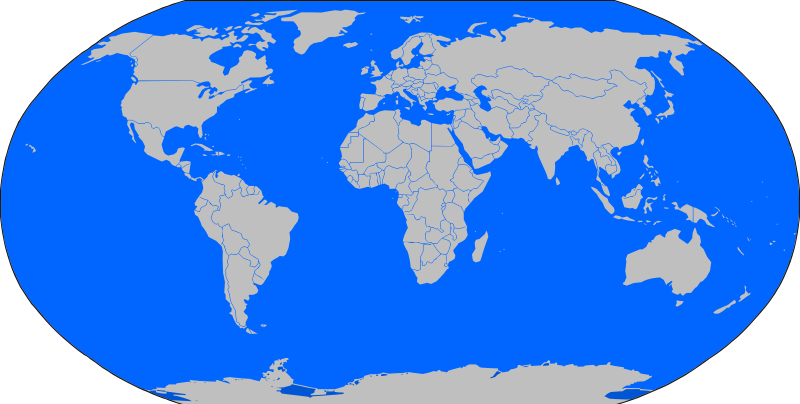
Standaard
February 1999

February 1999

February 1999

Stability and Conflict in 1999

Part I, January:

– The Americas

– Europe

Part II, February:

– Africa

– Middle East

Part III, March:

– Russia / Former Sowjet Union

– Indian Subcontinent

– Pacific / Asia

Part II, Africa – Middle East

Africa

The black continent, which was a very promising continent after the decolonisation process, trapped into the trap of power corrupts and absolute power corrupts absolutely. The elite who came into power after the former colonial powers left, started with the idea of building a new strong country but ended up in building their own little empires with secretive bank accounts in Switzerland at the cost of the population.

The Cold War firstly divided up the continent between Eastern and Western oriented countries. If the orientation was not established bloody civil wars with the support of the East or West were fought out. After one side could win the alliances system at least created some stability and sometimes even some progress for the population.

After the Cold War ended alliances fell apart and new interstate and intrastate conflicts erupted. The intensity and furiousity was beyond any other conflict before in Africa. Without any bounds the opposing sides tried, sometimes succesfully, to eliminate eachother. Not only as an entity but also the physical elimination of each and every person or part of the entity.

The African continent can be separated into two parts, the area North of the Sahara and the Sahara with the Islamic / Arab countries and the sub-Saharan areas in the South with a more animist and Christian background. Where as the northern part is more less stable with some of them with an internal problem. The southern part is less stable, with a number of conflicts between countries and even more countries with a potentially destabilising internal problem.

The Sahara and North of the Sahara area

The countries in this area are mostly large Islamic dominated countries. The relations between the countries are more or less friendly with no active claims on eachother territory. With the exception of one conflict between the newest and one of the oldest countries of the continent. Some countries have some smaller or larger problems with a minority in a certain region who demand secession or with islamic-fundamentalist organisations who want to establish an Islamic state.

The countries in this region are Egypt, Libya, Tunesia, Algeria, Morocco, Western Sahara, Mauritania, Mali, Niger, Chad, Sudan, Ethiopia, Djibouti and Somalia.

None of those countries have a booming or even a healthy economy and a number of them have internal problems which could eventually destabilise the political situation in the country. Stability necessary to be an acceptable partner in business and investment is therefore non-existent. This situation will not see a substantial improvement in 1999 and in the first years of the next milennium.

Egypt

One of the largest country and population of Africa is very often seen as an Middle Eastern country. Egypt belongs geographically to Africa but socially and politically it is a Middle Eastern country.

The position of Egypt has improved dramatically since the peace treaty with Israel. This has brought some economic relief and substantial support from the U.S.A. The paria status of Egypt in the Middle East has gone and Egypt has established itself again as a leading country in the Arab world.

The only external threat is from Sudan. The differences with Sudan are about the flow of water in the river Nile and about Egyptian support towards the policy of the U.S.A. against fellow Arab countries like Iraq.

The government under the leadership of president Mohammad Hosni Mubarak has been able to execute a succesfull foreign policy but have been under pressure because of internal problems.

The social and economic positon of Egypt has deteriorated during the preceding years. The economic policy of the government has not been able to limit the mass unemployment or the bad economic situation in general. An alternative to the sitting government and to the bad economic situation has become the several islamic fundamentalistic organisations who are promising improvement. They could become a direct threat to the government. The fast growing population is another burden to the country and is creating even more economic and social tensions.

The fundamentalistic organisations are activily fighting the government by a two fold policy of firstly schools, medical centers and the provision of food to attract people. And secondly, by terrorist attacks on important buildings and persons and on the tourist industry to hurt the economy, the government and the foreigners who are the infidels in their eyes and partly to blame for everything bad in the world. The aim of this policy is to destabilise the government and to take over control and introduce the Sharia, the Islamic law.

The security forces in Egypt have been able to control the situation until now but they will not be able to suppress the popular feelings of discontent forever. 1999 will not bring a change in government but the pressure on Mubarak will increase. If there is none improvement in the economical situation of the majority of the population then in two to three years the situation could take a turn for the bad.

Libya

This oil and gas rich country has experienced better times. The fall in the prices of oil and gas has, in this energy export dependent country, deteriorated the economical situation in the country. The lesser revenues of the exports limits the economic growth and the spending possibilities of the government. The government is however forced to continue subsidising the primary living needs to keep the population under control and pacified.

The suppressed economical situation, economical instability, has not yet led to social instability. The people of Libya are relativily satisfied. They can make a living of the money they earn and are proud on the strength of the country to resist the U.S.A. and the sanctions of the security council. Which are not really damaging only a nuisance.

The people who are unsatisfied and actually resist the government under the advisory, read under command, of Muammer Abu Minyar al-Qadhafi are very quickly brought under control through a system of secret services and the socalled committees of Purity. The committees of Purity are organisations who are independent from the police or secret services with the goal of identifying, watching and punishment of opponents of the regime. The system of people watching the people.

The food subsidies, the secret services and especially the committee system could prevent fundamentalistic organisations to start a same kind of opposition as in Egypt or even worser Algeria.

The only problem of Libya is in foreign relations, or better a bad track record. Libya and its advisor Qadhafi have been a staunch supporter of the Arab case and clashed several times with the West and Israel when Arab people were involved. And even more damaging they have been supporting all kind of terrorist organisations and probably even committed acts of terrorism themselves. They are for example accused of the planebombing in the Lockerbie affair. The supporting of terrorists has delivered Libya air assaults from the U.S.A. and sanctions from the U.N. security council.

Libya has created a kind of artificial stability. The export dependent economy is in very bad shape but the Libyan government could prevent any social instability through subsidies and an effective control system. The government of Libya, Qadhafi, seems to be stable and Libya has changed its foreign policy and are now more friendly towards neighbours, bought friends in Africa and are acting more conciliatory to the West.

Tunesia

Tunesia is one of the more stable countries in North Africa. There are economical problems but the revenues from the tourist industry saved Tunesia from the problems the oil dependent countries experienced. There is a lot of poverty in Tunesia but this has not yet led to any major problems.

The fundamentalists could gain ground in Tunesia but they are not of the same scale in numbers and organisation as in Egypt. They are controllable through cooptation and with a minimum use of force.

Algeria

The problems in Algeria are very serious, there is no stability in Algeria. The problems in Algeria are on every level and are in every part of the society.

The civil war like situation in Algeria is the consequence of and the reason for even more problems in this country. Economically, the country is devastated. The all important oil and gas sector is in trouble because of the low prices and the need for investments in new installations which is not available. The non oil energy related industries which were started in the booming oil revenues years proved to be outdated, inefficient and unprofitable. The population growth exacerbated the economical situation.

The poverty and mass unemployment created a lot of social problems. The islamic fundamentalists of the FIS became an attractive alternative to the ruling FLN government. After the FIS could first win the county and later the national elections they were ejected by the all powerfull military. The military were against the establishment of a Islamic fundamentalistic state in Algeria.

The FIS rejected the military coup d’etat but could do nothing against it. They later reacted with their military arm the Islamic Salvation Army and this has created widespread political instability. The actions of the Islamic Salvation Army were small and not very damaging at first but later with the support of the independent GIA, Armed Islamic Group the results were devastating for the army and the country. A campaign of terror spread through the country. The GIA killed foreigners and western oriented people and massacred whole villages to impress the government and force the people to side with them. The government has been incapable to stop, eliminate, the FIS and the GIA. Some rumours even suggest that the military has jumped the bandwagon and destroyed a number of villages themselve to acquire the deserted properties for a very cheap price.

The civil war increased the problems in Algeria. There is political instability, there is essentially a non functioning state. The economic instability increased even further through the civil war. Production capacity is closed down because of direct influences of the conflict, is to expensive to operate or closed because of the lack of spare parts. This all led to unemployment and poverty. The social instability has reached unprecedented levels because of the war. Before the conflict they had to take care to get enough to buy food now they have to watch their lives. The situation has calmed down somewhat but the conflict is far from over. It seems as both sides are only recovering themselves to start again as soon as possible. A negotiated solution seems to be impossible in 1999, the parties have not yet been able to find a common clause.

Morocco

Like Tunesia, the problems of Morocco are about economics. The Moroccan economy is lagging which leads without any changes on the short term to economical instability. This creates some more unemployment and poverty but not enough to start social instability. The family structure of the Moroccan society has been proved to be a kind of social security service. All left out of the official economy is supported by the family and makes a little extra in the grey / black economy.

The kingdom of Morocco has proved to be a stable foundation against all threats towards the political stability. The government with H.M. King Hasan II, who has very large powers, have been able to neutralise any Islamic fundamentalistic organisation who wanted to change the character of the state.

The only problem is about the Moroccan position in the West Sahara. Morocco has a claim on that tract of real estate but this is rejected by the people, Polisario, living over there. The problem is under control and will not be able to create instability in Morocco in what ever way.

Western Sahara

This tract of land is not really a country, it is claimed by Morocco and by the original population of Saharans. After Spain left the situation remained unclear and Morocco moved in. They considered it as part of Morocco. But this is not recognized by the international community and the United Nations.

The Moroccan claim was firmly contested by the Saharans with their Polisario organisation. Polisario has fought a long and hard to state their claim and they have received support from Algeria and Mauritania. The support of those two have been respectivily stopped and diminished to virtually nothing.

The Moroccan forces have more or less won the military part of the conflict with Polisario especially when all support had disappeared. Politically the Moroccan claim was not accepted and the military actions against Polisario did not gain any approval, sooner disapproval. The famous David-Goliath contradiction. Politically the conflict was undecided.

International pressure and the United Nations demanded an election to clear the situation. The next problems arised with the execution of the elections; who is allowed to vote, who is a Saharan, and what about the many Moroccan immigrants. The conflict is still not solved and Morocco is not in a hurry to clear the situation or even support the election. This status quo seems to be beneficial to Morocco. Every month the rights of the Moroccans increase especially if the birth rate is high enough.

The West Sahara region is stable as long as both sides stay committed to the elections. 1999 will be the year of the decision as no side will be able or wanting to postphone the elections any longer. But the expectations from the elections might be to high. No side will be satisfied and one side will most probably reject the outcome.

Mauritania

The situation in Mauritania is pretty stable. The claims on West Sahara have been dropped so no external threat or better competition is around to spoil the relations to other countries.

The internal situation is very much the same, all former conflicts have been more or less solved. No group or organisation is activily fighting the government. The economy is not a top performer but it is doing allright. Considering the capabilities which exist. Consequently there is no social instability in political and economical stable Mauritania.

Mali

After years under the dictatorial regime of Moussa Traore, the situation in Mali has improved itself. The in 1992 elected president Alpha Oumar Konare could lead Mali out of the impoverishment to an economic revival. This has created economical and social stability in Mali. Even the near civil war, in the arid remote North of the country, with the Tuareg guerillas could be settled by Komare.

President Konare has done a lot of for his country. He his now however receiving resistance from opponents who think he is already to long in power. This will however not lead to political instability in 1999. It is just part of having an elected president.

Niger

The situation in Niger is about the same as in Mauritania. Both are poor countries with an economy doing allright. Old debts are a negative factor on the balance sheet which delivers Niger a high debt service ratio. This stable situation has created some social stability.

Politically the situation seems to show some improvement. There have been promisess of elections without that a date is set. But at the moment there are no active resistance / opposition parties acting against the government. One negative development are the acts of the government to give some officials large stakes in promising parts of land in the south of the country. This has created some displeasure in the country and especially in the region were it happened.

Chad

This remote country has had its fair share of problems with Libya about the exact demarcation of the border. Some large mineral deposits were the cause of the Libyan agression. This problem has been settled after a short but intensive battle against Libyan forces in the advantage of Chad. Which had considerable support from France.

The country has not become a stable country after the conflict with Libya ended. Several internal differences erupted about power and capital, or better how to divide it.

Externally, Chad is supporting the Kabila goverment in Congo with some troops. They are, curiously, financed by Libya who was making new friends in Africa with the use of the check book policy. This involvement is small and will have no effect on the political stability of Chad in 1999.

At the moment things seem to be calm and stable. But the not that good performing economy could create some instability which certainly would have its effects on the many different ethnic groups in the country. Chad will remain economically and socially unstable.

Sudan

The situation in Sudan is deplorable. There is no political, economical nor social stability. This large country in Africa is divided between the North and the South. The ruling North is Islamic and wants to establish an Islamic state in the whole of Sudan, including the Christian / animist South.

The economy is because of the civil war in the South non-existent and in the North underdeveloped and in difficulties through the high cost in capital and human resources. The oil fields on the border between the North and the South are therefore of very important for the North to sustain and win the conflict.

The social instability is all over Sudan because of the war. The South is in essence a desintegrated society through the fugitives and the hunger. The North is also getting more instable. The people have enough of the war which cost ever more deaths and opposition movements are becoming more radical because of the fundamentalistic Islamic policies of the government.

The South is resisting the dominance of the North and the Islamisation process. Over 1,8 million people have died in the last 15 years because of the war. These have died out of direct casualties and hunger. And this number will increase as the conflict continues in intensity and brutality.

The main opposition party is the SPLA, Sudanese Peoples Liberation Army, under the leadership of John Garang. They have tried to minimise the influence of the North in the South. Large parts of the South are under their control but the North has been able to keep control over an approximate equal part.

The government, the North, has been able to divide the resistance in the South with the help of a defected SPLA leader, commander Kerubino Kuanyin Bol. Kerubino has been held responsible for the hunger in the Bahr El-Gazai region were his forces with support of Northern forces ruled by terror.

Later Kerubino went back to the SPLA but the SPLA never was as strong as before the defection. Kerubino and his forces are primarily interested in looting and terror instead of beating the Northern forces.

The position of the North has been undermined by the recent actions of the SPLA in cooperation with some opposition movements out of the North of the country. These operations on the east bank of the White Nile were dangerous to the North.

The position of the SPLA and the opposition in the North have been undermined by the better relations of Sudan with Ethiopia. They lost support and bases from and in Ethiopia as the Ethiopian differences with Eritrea became more clear.

The situation is in a status quo as no side is capable to beat eachother. The instability on all levels will however continue as the conflict does not end in the short term. 1999 will see the continuation of the conflict between North and South. The North will have a tactical advantage now the Ethiopian support of the SPLA has vanished. But this will not be enough the beat the South on their own territory.

Thereby the North has been classified as terrorist supporting state which means worser political and economical relations with the West. If the terrorist attacks continue, Sudan could become again the target of revenge and an international boycot. This would undermine the strength of Sudan in their battle against the South.

Ethiopia – Eritrea

These two countries are listed together because of their common history and until 1998 the use of the Ethiopian currency, the Birr, in both countries. And they are having an interstate conflict over which some fighting has already occurred.

After the marxistic regime in Ethiopia was beaten in 1991 by the combined guerilla forces for a free Eritrea and the rebel forces in Ethiopia the future looked promising for the country. In 1993 the Eritreans demanded the secession from Ethiopia and received their independence.

The political, economical and social stability improved as all energy could be used for the reconstruction of the war damaged country. Internally and externally there were no problems, Ethiopia supported the Sudanese rebel forces but Sudan could not do much against it. The support was thereby not of that scale as it could endanger the Sudanese government.

The Eritrean situation was about the same, the stability improved and a (re)construction of the country was implemented. Eritrea however got into a conflict with Jemen over the Hanisch Islands. The Hanisch islands do not only possess valuable fishing grounds and tourist attractions but also most probably oilfields. After a short small scale military confrontation between the two countries the conflict could be solved after French mediation by diplomatic means.

In the years after the secession the only instability between the two were about economic differences about the sharing of the economy after the secession. But they were all controllable by the former partners and presidents of Ethiopia and Eritrea, Meles Zenawi and Isayas Aferworki.

In 1998 however a new problem between Ethiopia and Eritrea started. What first seemed to be only an internal administrative act turned out to be the fuze of a bomb. During the Italian occupation of Ethiopia the Italians were not very carefull with the drawing of the borders between the several regions. And as Ethiopia was one country after the decolonisation, a large number of Eritrean farmers settled in the western part of the province of Tigray. The Ethiopian government wanted those farmers to accept the Ethiopian nationality what they, with support of the local government, resented.

The Eritrean government immidiately supported the resentment of the farmers and claimed the territory as part of Eritrea and directed the military to occupy the region. Ethiopia, which never really accepted the secession of Eritrea, reacted by sending military forces to the disputed region. A war between the former partners developed including a small air war with bombardements on major cities.

This conflict has ended after the first battles in a kind of cease fire. But both countries are rearming themselves and are preparing the country for more fighting in the future. The political stability of both countries have become very unstable because of the war. At the moment the populations support the war but the high costs will have effect on the economic situation and if the number of deaths increase the social stability will also suffer in both countries.

The situation in Ethiopia is even worser as the Oromo people in the south of Ethiopia are demanding independence. The OLF, Oromo Liberation Front has committed already several assaults on government installations to force the government to grant them independence. The OLF receives support from fellow Oromians living in Kenya. The Ethiopian forces have clashed with Kenyian forces when they crossed the border in the pursuit of the OLF.

1999 will show a continuation of the tensions which started in 1998. The demand of the OLF and the differences about the triangle in te province of Tigray will have a negative effect on the political, economical and social stability of Ethiopia and Eritrea.

Djibouti

The political, economical and social stability of Djibouti will be secured as long as a medium to large French garrison in maintained in the country. The French will not tolerate any political upheavals which destabilise the country. The economical benefits of the garrison are positive for the country and this will positivily influence the social stability. But the French presence in the country will not solve everything, there is still a large task for Djibouti.

A prudent economical and social policy is necessary to develop the country. If the government fails to do so there will be a moderate instability which could be dangerous to the government.

The political stability is equally important as the French are not that tolerant anymore as they used to be towards incompetent and inhumane governments. And their departure could be devastating for Djibouti, but this will be very unlikely considering the strategic location of Djibouti. But again never say never.

The necessity of good government policy becomes clear in the relations with Eritrea. There is between Djibouti and Eritrea a problem about the demarcation of the border. Eritrea is very aggressive on possible violations or misunderstandings about their territory, as became clear on the Hanisch Islands and the Western part of the Tigray province cases. This problem is still soluble by diplomacy and an agreement could be important for the stability in Djibouti.

Somalia

Somalia as such does not exist anymore. After the civil war between the many clans and subclans in the country, the country is divided in about 26 clanregions with the exception of Somaliland which is more or less a central state on his own.

All peace accords have had no effect on the development in Somalia. All clans wanted to have their own territory to start later, if they were strong enough, to try to capture the whole country. As this did not work cooperation between the clans seems to be possible.

The clans could conquer the territories but they were not able to manage the territories. Civilians from the territories had to arrange a state system by themselves, and it works pretty well. This limits the influence of the clanleaders but if asked the Somali will always choose for his clan instead of Somalia.

The only chance to create some political, economical and social stability in Somalia is by slowly integrating the several clans into a lose federal system with a lot of influence for the clan in their region. The traditions of the Somali clanstructure should be maintained in every attempt for a new Somalia.

For 1999 the only political, economical and social stability is in the individual clan regions and the republic Somaliland. A united Somalia will prove not to be attainable in the next year, this will be a five to ten year plan. And even this will only prove to be reachable if all circumstances are positive. The smallest clan can destroy all progress.

The Sub Saharan area

This area south of the Sahara is the real black Africa as imagined by the people. The people are black and there are wide savannes, a lot of jungle and exotic animals which are connected with the continent.

In this area there are small and large countries with a wide array of natural richess like timber, minerals, cacao, coffee and even in some countries oil and gas. The majority of the countries are however living in poverty out of the low prices for commodities, the several conflicts and the inability to explore the natural weath.

The smaller countries are mostly in western Africa and the larger countries are in the southern part of the continent. The majority of the countries are unstable countries, most of the countries have an internal problems about who should rule. The only way to find out who should govern seems to be by violence, and this gets very nasty. The internal conflicts are getting very often larger then supposed because neighbouring countries are supporting one side or the other and get involved. With all negative consequences included.

The following countries belong to this group: Senegal, Gambia, Guinea-Bissau, Guinea, Sierra Leone, Liberia, Ivory Coast, Ghana, Togo, Benin, Burkina Faso, Nigeria, Cameroun, Centrafrica, Equitoral Guinea, Gabon, Congo-Brazzaville, Congo (DRC), Uganda, Kenya, Rwanda, Burundi, Tanzania, Malawi, Sambia, Angola, Namibia, Botswana, Zimbabwe, Moçambique, Swaziland, South Africa, Lesotho, Madagascar and the Comores Islands.

Some of them are stable countries with just a few or small problems but others range from a little destabilised to nearly desintegrated.

Senegal

This country profited full from the touristic industry and there have been economical and social stability, at least for the majority of the country. Politically there is a rather pressing problem. In the south of the country, the region Casamance, is demanding secession from Senegal. The people from Casamance feel ill represented by the government in Dakar. They argue that not only the political and economical power is unfairly distributed but that the religious traditions of the region are undervalued by the central government.

The situation is still under control but if the problems are not properly adressed the people of Casamanche will do more than just demand secession.

Gambia

This small tract of land, pierced into Senegal, has been living in stability. Without any external threats and internally also without any radical opposition the country could develop without any unneeded investments and distractions. The political stability has in turn created economical and social stability.

Guinea-Bissau

This small country with a small economy and a marxistic history has experienced last year one of its worser years. After president Joao Bernardo (Nino) Vieira ordered the relief of general Ansumane Mane, because of arms smuggling, the largest part of the underpaid military immediately supported their general and started an insurrection. Senegal and Guinea supported the president and sended some forces to help the president. A cease fire was reached but this did not held very long. The fighting started again and the rebel forces could make some nice gains, including the second and third largest cities of the country and they controlled the military barracks and the international airport in the vicinity of the capital.

President Vieira ordered a unilateral cease fire and stated that he wanted to negotiate to reach a peace full solution. This ended in a new peace accord. A top adviser of the rebels, which is also the oldest opponent of Vieira, has been appointed as prime minister of a national government of national unity. The primary task of this government is to prepare the presidential and parliament elections in March 1999.

This peace accord have brought some political stability and the elections could improve this stability. Now the rebellion has been solved peacefully, economical and social stability can be fostered again. Next year is therefore important for the future of Guinea-Bissau, it will decide between stability or the chaos of civil war.

Guinea

The situation is Guinea is promising. There is political, economical and social stability. There are at the moment no known radical organisations which want to implement a revolution. The socialist experiments have ended and the move to a market based economy has been positive. The strenght of the country was proven when they were able to take over responsibility in ECOWAS, Economic Community of West Africa, and sended military support to Guinea-Bissau to combat the recent army rebellion.

Sierra Leone

The situation in Sierra Leone has deteriorated. The Revolutionary United Front, RUF, with support of rebellious army forces remains a danger to the government. Sierra Leone is a country in civil war, there is no political, economical and social stability. The power of the government is severly limited, the economy has come to a standstill and the people have to protect themselves against the army, ECOMOG, the RUF, food shortages and diseases to survive.

In 1997 was the RUF able with the help of the army, especially the lower ranks and soldiers, to defeat the government of the elected president Ahmad Tekan Kabbah. Large parts of the army supported the RUF while in the previous years of fighting against the RUF, the government used extensively the Mende militia, Kamajor. President Kabbah is also a Mende and the army felt being sidelined. The lower ranks were frustrated that the Kamajor became the most important force, thus limiting the possibility of a career in the army.

President Kabbah received support from ECOMOG, Economic Community of West African States Monitoring Group, or the west-African intervention force. This ECOMOG intervention force consisted out of forces of the Gambia, Mali and were as usual under the leadership and domination of Nigeria. After a short operation they could with the support of the Kamajor recapture the government and reinstall president Kabbah.

The RUF and the former army members, the army had been disbanded in the mean time, were however not beaten. In the interior of Sierra Leone they could regroup and collect even more dissatisfied young men who were prepared to fight, loot, rape and mutilate. All over Africa young frustrated young men are prepared to fight for every cause a dissatisfied ambitious politician wants to realise.

The RUF started another offensive and could conquer large parts of the country including the diamond rich regions to finance the war. The RUF received further support from Charles Taylor in Liberia and from president Blaise Compaore out of Burkina Faso.

The RUF, for the second time, could nearly take over the whole country. Ecomog and the Kamajor could just avoid that the RUF took the capital Freetown. The RUF was only willing to agree to a cease fire if their leader Foday Sankoh would be released out of prison. The RUF under the intirim leadership of general Sam Bockarie had proven to be serious and dangerous with their threat to continue the fighting if they did not get what they wanted.

The government seemed at that moment to be forced to accept the cease fire conditions. They were not strong enough with the limited Ecomog support to stop and eliminate the RUF. The Ecomog was however reinforcing their force in Sierra Leone with another 5.000 men to 15.000 men including a Nigerian elite unit. Nigeria had in the mean time been pressing the other members of ECOWAS, Ivory Coast, Guinea, Ghana and even Liberia to fullfill their obligations and send forces to Sierra Leone in the support of Ecomog. The reinforced Ecomog military forces have the ability to beat the RUF and this would change the position of president Kabbah in any negotiations with the RUF to end the conflict.

The problem with a civil war is that it is difficult if not impossible to totally eliminate a guerilla force by force. The guerilla, RUF, will seek refuge in the countryside and return later to fight the democratic elected government.

The Economog has been till now a reliable partner but if the civilian government in Nigeria is installed the future of the Ecomog looks bleak. The falling oil prices and the rising tensions in Nigeria makes the leading Nigerian role in Ecomog unlikely in the coming years.

The civil war has in the mean time created economic and social instability. The economy is virtually at a standstill and destroyed. The social dimension is even worser. The people are out of food and all civilian structures are destroyed and / or fall apart.

In 1999 stability will not return to Sierra Leone. The civil war will continue if the combatting parties do not reach a diplomatic solution. The other option is that the government with support of ECOMOG will try to eliminate the RUF. After a prolonged battle they will most probably be able to defeat the majority of the RUF forces. But some will survive and continue their fight a a later point.

Whatever will the outcome, if a diplomatic solution is reached or the RUF defeated. The remaining part of the RUF who wants to continue to fight have to be controlled and the other defeated forces of the RUF have to be demilitarised. They will most likely not become a peacefull force but fall to banditism. A return to normalcy will take more, it requires better opportunities for the forces of the RUF and the large group of dissatisfied youths of the country.

Liberia

The situation in Liberia has improved somewhat since Charles Taylor has been confirmed in power. Taylor and his party the NPFL belong to the same generation and the same kind of organisation as Foday Sankoh and the RUF. Both are trained in Libya and were supported by Burkina Faso. Both were dissatisfied with the government and wanted to take over the country.

After a bloody civil war, intervention from Ecomog, civil war and finally elections, there is now some kind of political stability. This will give the economy and the people a chance to recover from the civil war. But Taylor and his cruel followers are an unreliable force which could become violent again if they do not get what they want. 1999 could show a move to more stability in the country but volatility could return very quickly.

Ivory Coast

Ivory Coast belongs to the small group of countries in Africa which has created stability in the country. An accepted government has been in power for a long time with peace full transitions. The economy is delivering a respectable performance. The people seem to be satisfied. There are no parties or people who want the change the government with the use of violence like in Liberia or Sierra Leone.

1999 will be the same as before, the stability can be maintained and probably improved. The only real problem are the high debts which demand every year high interest payments. But with a sound economical policy this is a manageable problem. This debt problem is also valid for Ghana, Togo and Benin.

Ghana

Ghana has established itself as a stable country. The country under the leadership of president Jerry John Rawlings has created some prosperity and they could stay away from the violence in the region.

Internally the situation is also stable, the people are not wanting nor desiring any violent change as in Liberia.

1999 will not bring a change to this situation. Ghana will continue to belong to the small group of stable promising countries in Africa.

Togo

The situation in Togo is comparable with Ghana and Ivory Coast. Togo is a stable country and is moving towards a multi-party democracy. This will deliver even more political and social stability. The economy is also on the road of improvement. The progress made over here will increase the economic stability of the country.

Benin

Benin has shown some improvement in the last years. Like their neighbours, Benin could develop itself without any big distractions from outside threats or internal agressive movements.

The political stability has created economical and social stability. The triangle of stability will foster eachother towards new levels of stability in 1999.

Burkina Faso

Burkina Faso is a kind of malie genie and miracle in the region. This country is supporting and have supported the guerilla forces in Sierra Leone and Liberia. Burkina Faso is on the other side a democracy. The last elections went through without any problems. The political stability is based on a disciplined and orderly society. The political stability has created a stable economic foundation and the government has maintained a strict economic policy of balanced budgets. This has created some economic progress and this led to social stability. Education is at a high level in Burkina Faso, it easier to find engineers then a practically skilled workforce with experience.

This situation will most probably continue in 1999 and promisses even more stability and growth.

Nigeria

The political situation have changed dramatically in 1998. The former president Sani Abacha died and his successor major-general Abdulsalam Abubakar promised elections as soon as possible. It is expected that in May 1999 a new civil government should be installed.

The winner of these elections, presidential, parliament and local, will be most probably the PDP, People’s Democratic Party of the former military president Olusegun Obasanjo. He is a Yoruba and has support throughout the country. The second strongest party will be most likely the APP, All People’s Party. This party belongs to the group around former president Sani Abacha. The third party will probably be the AD, Alliance for Democracy. This party fought for a return to democracy during the Abacha regime. The majority of their followers are in the South-West of the country with the Yoruba tribe. This will limit their chances to win in the whole of Nigeria.

This change of policy, a civil government, opened a lot of doors for Nigeria. Nigeria is now again one of the respected nations in the world. This will improve their economic position as the oil revenues are at a historic low and other opportunities are absolutely necessary.

The political stability will be improved through the return to a civilian government in 1999. But the many differences between the many ethnic groups in Nigeria, the continuing economic problems and the high crime rate are damaging the economic and social stability in the country. This will have its effect on the political stability.

The political stability will be most pressed by the resistance of the local population in the South against the exploiration of the oilfields without considerable reimbursement. Like the military operation / protection action in the state of Bayelsa. The local people of Bayelsa committed sabotage on the oil industry and resisted the Nigerian military. A curfew of several months was the result. This will not create any long term stability. Or another possible problem is the dispute about the oil rich Bakassi peninsula with Cameroon. The dependency of both countries on the export of oil gives this conflict a different dimension. But for both mentioned problems a political solution is the best, cheapest and longest lasting solution.

But considering all factors 1999 will be more stable as in the days of the Abacha regime. The political changes could deliver something for all groups in Nigeria. Even the small tribes in the South, where the oil is found, could be given a proper place in the new political scene of Nigeria. If however their demands are ignored they will return to sabotage to get attention to their problem. And this might be more damaging, politically and economically, than to give them a fair share in the wealth and power of Nigeria.

Cameroon

This country with the special two major languages, English and French, division has achieved some prosperity because of the oil exports. The possession of this wealth seduced the country into debts which should have been avoided. But this can corrected relativily easy. The natural resources has brought economic and social stability in the country. This wealth made it much easier for the government to introduce and maintain a one party president system.

The only external threat is the dispute with Nigeria about the Bakassi peninsula. The oil resources over there will make both sides to insist on maximum demands. An open conflict should and could be avoided as the costs would easily diminish the profits out of a won military conflict.

1999 will see a continuation of the stability, the lower oil revenues could create some problems but a part can be made up by a prudent budget management and by increased sales of other products. The political stability will not be hurt by this short time depression.

Centrafrica

The position of Centrafrica is much more difficult. The economy is underdeveloped and there are regular tensions in the population and the military. The military gets paid unregularly and if it takes to long the military leave their barracks and start to loot the streets. The political stability is dependent on the ups and downs of the economic and social situation.

The one party government could till now survive all popular and even military uprisings. The French military garrison brought money and protection if the situation escalated. The French decision to leave Centrafrica will be a blow for the stability of the country. The Centrafrica government has to be more carefull in the future to survive.

The political, economical and social stability of Centrafrica will decrease in 1999. Without the generous French support the first problem could become the last problem of the government under the leadership of Felix (Ange) Patasse.

Equitoral Guinea

The small country with a number of islands before the coast have been stable in recent times. There is political, economical and social stability. There are no threats identified for the future of the country. 1999 will see a continuation of the 1998 situation.

Gabon

Gabon is a natural resources rich country with oil, gas and uranium. This has brought the population a high level of wealth. The economic stability achieved by the revenues out of the energy export could be stressed in 1999. The low oil prices will limit the spending and investment obligations of the government. The high foreign debts will do its part to squeeze the government budget and this will make the situation even more complicated.

The political and social stability will however not be depressed by the economic problems. The available resources, financial and natural, are still large enough to bridge any shortfall in the revenues in 1999. Gabon will remain in 1999 one of the most stable country of Africa.

Congo-Brazzaville

The situation in Congo – Brazzaville has still not returned to normalcy. The new old president Denis Sassou Nguesso could not pacify the country after the civil war of 1997. Consequently the return of political, economical and social stability has been delayed.

Politically Nguesso has been unable to destroy the remaining forces of former elected president Pascal Lissouba who has the support of the Angolan resistance movement UNITA. Unita fighters are allegedly directly supporting Lissouba’s forces. The position of Nguesso has in the mean time weakened by the diminished Angolan and French support. Politically everything seems to be possible in 1999, but one thing is sure it will bring even more instability.

The economy of Congo – Brazzaville is in very bad shape. The civil war, insurgency, limits economic activities, the low oil price and the high costs of the civil war are destroying any hope on economic improvement in 1999. The civil war, the negative economic prospects and the high number of refugees from Congo – DRC (Kinshasa) is creating a lot of social instability.

Congo – Brazzaville will remain an unstable country in 1999 as no side has the strength to beat the other side. And as long as none of the sides receives considerable outside support the status quo will be maintained. A diplomatic solution is also very unlikely as a compromise is nearly unachieveable.

Congo (DRC)

Congo or better the Democratic Republic of Congo has not seen any improvement in political, economical and social situation in 1998. Things have turned worser instead of better. President Kabila could not render the support of the many peoples in Congo to achieve the stability which would have been necessary to rebuild the country.

The contrary have been true, the country has fallen into two parts. Kabila has alienated his former allies, the Tutsis in Rwanda and Congo and his Ugandan supporters, in his search to unite all Congolese behind his government. To unite the Congolese he dismissed the Tutsis out of the government and the armed forces and he started to support the groups who were against the Tutsis, not only in Congo but also in Rwanda. He estranged the Ugandans by letting anti-Ugandan organisations like the West Nile Liberation Front operate out of Congo.

The Tutsis in Congo, with the support of Rwanda and Uganda, organised themselve and took over the North-Eastern part of Congo. They even airlifted forces to the Western part of Congo and nearly conquered Kinshasa.

The in the beginning very succesfull operation in the Western part of Congo could just be stopped by the intervention of Angolan and Zimbabwan ground and air forces. The remains of the Congolese army, the Angolan and Zimbabwan forces could force back the Tutsis in the Western part. Angola and Zimbabwe intervened out of self interest. Angola to limit the logistic activities of the Unita out of Congo and Zimbabwe to protect the business interests of Zimbabwan companies in Congo.

The military situation in the East was different. The Tutsis with Rwandan and Ugandan support could enlarge their territory even more and moved to the mineral rich South-Eastern parts of Congo. This movement could brought to a standstill by the increased support for Kabila by more Zimbabwan forces and by Namibian, Sudanese and Chadian forces.

The position of Kabila worsened by new resistance movements against his regime. Former prime-minister Bernard Kolelas with his own militia and another militia under the leadership of former Mobuto army general Jean-Pierre Bembe entered the stage. These new organisations complicated the situation even further as it will weaken the position of Kabila.

This could prove the beginning of the end of the Kabila government. The continued good performance of the Tutsi military, the new movements and the lessening interests in the war of the allies of Kabila could undermine his position. Angola will need the forces to combat the Unita at home, Namibia will be worried for a spill-over from the Angola-Unita conflict, Zimbabwe is in economic difficulties and the involvement in the conflict is not popular and the small Sudanese and Chadian contigents have been badly mauled by the Tutsis or rebels.

If the military successes of the rebel forces can not be tempered in a short time, Kabila will loose all support. The refusal to negotiate directly with the rebels will have to change as the possibility to beat the rebel forces is becoming more and more an illusion. A political solution is the only possibility to end the conflict and keep Congo one country. Every other option will most probably mean the dissolution of Congo in two or three parts.

The conflict will destroy any chances on political stability in Congo in 1999. Economical and social stability are in this situation even more difficult to accomplish as some political stability is a pre-condition for the other two.

Uganda

The Uganda government under the leadership of Yoweri Kaguta Museveni had initially created political stability. During that time the economy started to grow at unprecedented levels. The social stability in the Ugandan population increased as the differences between north and south started to diminish.

The political stability has diminshed somewhat by the cruel actions of the LRA, Lord’s Resistance Army, in the north of Uganda. The LRA is a kind of religious party who oppose the Museveni government and want to establish some kind of fundamentalistic state. They receive support from Sudan. Sudan’s interest is to force Uganda to stop supporting the SPLA in Sudan.

Beside the LRA there is another rebel organisation the West Nile Liberation Front who are also opposing the Museveni government. They operate out of the remote and barren Ruwenzori mountain range and out of Congo.

The fight against those two rebel forces does not only limit the political stability but also the economical and social stability. The war against these two oganisations is very expensive and it drains the state’s budget. Especially since Uganda have become involved in the Congo conflict. The involvement stems from the desire to eliminate the rebel forces who have a hide out in the Congo. And as Kabila did nothing to destroy the rebel forces in Congo, the Ugandan government decided to do it themselves.

The Ugandan economy have been hit hard by the conflict and until now they received the advantage of the doubt from the international financial and donation institutions. But they are on the brink of loosing the trust and financial support of those organisations. This would mean even more economical instability. The social stability will also decrease because of the long lasting conflict and the economic hardships.

1999 will be on the border to more or less stability. If the conflicts in Uganda and in Congo can not be solved on the short term than any further involvement will prove to be to expensive. The high costs of the conflict, the loss of international support and the corruption at high level will lead to political, economical and social instability in Uganda.

Kenya

The situation have calmed down somewhat after the tensions before and during the elections. As Kenya does not have any external threats, with the exception of Somalian gangs who cross the border to steal cattle and sometimes raiding farms in the border area, but that is more criminal problem.

All political tensions and instability are home made. The government under the leadership of Daniel Toroitich arap Moi has created political, economical and social instability in the country. The special treatment or better to favour some tribes and persons, have created an unhealthy economical situation and have created grievances with the other parts of the society. The dirty political games played by the government in general and especially at the elections has created political distrust in the population.

The instability will most probably continue in 1999 as the president is forced to keep his political friends, cronies, on his side. This means a continuing of the unhealthy political, economical and social policy, if you can call it policy.

Rwanda

The situation have not improved that much in Rwanda since the end of the guerilla war against the Hutu majority. The Tutsi minority have established itself as the governing party but have not been able to pacify the Hutu community.

The position of the Tutsis have been consolidated as the ruling party but political stability is still not achieved. The Hutu population can only be controlled to a certain extent. The Hutus keep resisting the Tutsi domination by a small scale guerilla warfare. The political situation deteriorates even further if the radical Hutus still living in Congo are considered. The remaining members of the radical Interhamwe movement, who were responsible for the mass murder on Tutsis and moderate Hutus, are now fighting against the Tutsis living in Congo and sometimes they even return to Rwanda for some guerilla actions. They remain the biggest reason of instability for Rwanda.

The Rwandan involvement in the Congo conflict is out of concern for the survival of the Tutsi minority in Congo and for the return and influence of the remainings of the Interhamwe movement. The Rwandan supported operations have been from a military viewpoint succesfull. The threat of the Hutus have lessened but not destroyed.

The economical and social stability have not improved. The high costs of the involvement in the Congo conflict, the unsolved differences with the Hutu majority and the practical existence of two societies, Tutsi and Hutu, have limited economic development and growth and any kind of social cooperation.

As is the case in Uganda, if the Congo problem and integration of Hutus an Tutsis is not solved on the short term the political, economical and social instability will increase in 1999.

Burundi

The political, economical and social stability is under threat in Burundi for a number of years. The Hutus are dissatified with the position they have in Burundi. The Tutsi controlled government could suppress any widespread violence but the Hutus have used and will continue to use guerilla tactics to try to improve their position in the society. The economy has suffered under these political tensions, this can be seen at the low economic growth, high debts and high inflation. The division in the society and bad economic performance, economic instabilty, has created social instability.

The instable condition of the country will go on in 1999. As long as the differences between the two peoples does not improve the overall situation will deteriorate even more in the future. The lifting of the embargo against Burundi, which was installed after the military coup d’etat under the leadership of Pierre Buyoya in 1996, but have been circumvented by Tanzanian and Ugandan businessmenn, should bring some relief to especially the rural population. Political negotiations should bring more results than the embargo. The situation in Burundi will however remain depressed as long as the internal problem is not solved on the short term.

Tanzania

The Tanzanian situation is peculiar. Tanzania is politically and socially stable but the economic stability is under pressure. The economy is suppressed because of the consequences of the socialist policy of the government one to two decades ago. The socialist experiment destroyed not only companies but more important the infra structure and the enterpreneurial capabilities which existed at that time. It will take a number of years to change that and create new capabilities.

Tanzania could stay out of the ethnic problems which destroyed countries like Congo, Rwanda and Burundi. The political, economical and social stability will most probably increase in the future as they can develop without outside interference and internal turmoil. The negative might be new fugitives out of the crisis region. But if politically properly used even this can be used to the advantage of Tanzania. The relief money supplied by the West and the organisations like the UN and UNHCR can used for the help of the refugees but also to the good of the Tanzanian economy.

The Tanzanian economy could receive another boost, as the economies of Kenya and Uganda. The rebirth and rejuvenation of the East African Community could improve the economic situation in the three countries. One large trading area, custom union, with over 100 million people could be created. The possible inclusion of Rwanda, Burundi and possibly the occupied part of Congo would mean new and fabulous possibilities for the economy of the area. The natural resources of Congo could be transported through Mombasa and Dar es Salaam which would boost the trading in the whole area. Especially because of the talks of one currency and passport in the area.

Malawi

Malawi might sometimes look like a isle of tranquility in this instable region. The only problem of Malawi is the weak economy. This leads sometimies to actions of popular discontent but relativily small in scale and short of duration.

1999 will see a continuation of the 1998 situation with moderate political, economical and social stability. An economic downturn could create some discontent, social instability, but nothing that could start political instability which would endanger the country’s democracy.

Zambia

After decades of authoritarian government a new elected government came to power. This government under the leadership of Frederick J.T. Chiluba first seemed a positive move. After an attempt of a coup d’etat the government declared a state of emergency with giving the government sweeping powers. The rules for the elections were afterwards changed that dramatically that all competitors to the sitting government were eliminated as a challenger.

Internally and externally Zambia is a stable country, the government will remain in power and none of its neighbours have a claim or are in the situation to become a threat for Zambia.

This artificial political stability has been holding since and no one seems to be able to change that situation on the short term. The economy which is highly dependent on the export of commodities is only showing a little growth. The people in general are not really dissatisfied with the situation as the economy keeps showing some improvement.

The political, economical and social stability can therefore be maintained in 1999 as no big changes are expected or suitors present to unseat the sitting government.

Angola

The situation in this country ripped apart by an civil war which lasts over two decades has deteriorated even further as the conflict took a fresh start after a two year break. This UN mediated break, cease fire, should have led to peace in Angola. The parties instead choose not to obey the peace treaty and the hawks in each party thought they could win by force. Both sides have in the mean time completed their arsenals with new weapons and ammunition. The goal of the war was not anymore Angola but the expansion and preservation of personal power and wealth, Angola was just a mean to acquire power and wealth. This power and wealth thesis is valid for both parties.

The opponents are the government dominating MPLA, Movimento Popular de Libertaçåo de Angola, under the leadership of Jose Eduardo dos Santos. The MPLA is the former marxistic oriented organisation who controls the capital, a large strip along the coast and the oil rich territory of Cabinda. As the majority of the people were living in this area the MPLA won the elections which were held in Angola after the peace treaty was signed.

The opposition party is the UNITA, National Union for Total Independence of Angola, under the leadership of Jonas Savimbi. The Unita is the more western oriented organisation who controls the majority of the interior of Angola with exception of the bigger towns but including the diamond rich areas of Angola.

According to the peace treaty the Unita should hand over the territories under their control and they should disarm. For that they would get a place in the government, seats, according to the votes, in the parliament and a part of the Unita would be taken over in the MPLA dominated army. The governmental positions were unimportant and without any power. And as they were only the minor party in the elections they would have been demoted to a powerless organisation. As they would further be living in the capital Luanda they would be at the mercy of the MPLA and their whole power and control structure. And the final nail to the power of Unita was the integration of the Unita forces in the army. Only a small part would be taken over, they would receive unimportant positions and would have no chance to promote or play a vital role in the MPLA dominated army.

The MPLA would get the country for nothing. The Unita did not agree with this development in a country were personal power and wealth is the most important factor. Consequently the peace treaty was dead and any promising political, economical and social stability gone with it. In war there is only unstability.

As the MPLA was busy preparing the new offensive against the Unita, closing the logistic support lines in Congo and position their forces to destroy the Unita, Unita did not wait and launched the first spoiling operations. This was followed by military operations in the region around the city of Kuito, an important logistical centre for the MPLA. Unita started even more operations in the provinces of Bie, Huambo, Huila and in the Cazombo salient.

The strategic advantage have been in the hands of Unita and it will take a lot work and blood for the MPLA to recover the lost territory. The policy of Unita is not to hold towns and cities, they only require men and capital to administer. They prefer to stay on the countryside were they are less of a target and more difficult to combat.

1999 could prove to be decisive. The MPLA failed in surprising and overrun the Unita forces. They were better prepared, armed and commanded then the MPLA had expected. This could lead to a bogdown of the operation and the attrition warfare would start. The question is how long can the MPLA continue such an expensive conflict financially with the low oil prices and such high debts which need to be serviced. The MPLA is in need of the diamond regions to support their expensive military. But they are tightly controlled by the Unita. Not only financially the fight will be difficult. The moral and willingness of the MPLA might be lower than expected. This could, in a worst case scenario, mean the end of the MPLA government.

The political stability have been destroyed by the war, the economic and social stability also have been under pressure. The oil prices are low, future oil production sold for weapons, the debts to high and the economic activity reduced by the war. A lot of refugees will be the result of the war which will lead to social instability. 1999 will show how weakened the MPLA government actually is. One thing is certain it is gonna be more expensive than anticipated.

Namibia

This large and sparsely populated but potential rich country country has experienced a slow and succesfull development since the South African mandate or occupation ended. The return to independence has been calm and organised. Political, economical and social stability have been created in Namibia.

The only potential danger is the possible spill over of the conflict in Angola between the MPLA and the Unita into Namibia. This would place immense presure on the small Namibian armed forces.

The military support for the Kabila regime in Sudan could prove to be to much for Namibia if at the same time the Angolan conflict gets serious. The result of the increased pressures would be increased instability in the country.

1999 will deliver more instability, even if the spill over does not happen, the mere threat of violence is enough the create instability. This kind of pressures could be controlled but an actual spill over, which is not stopped in the beginnings, would encourage small and insignificant anti-government groups to exploit the situation. A spiralling process of instability would be initiated which will prove to be difficult to stop.

Botswana

Botswana is one of the stablest countries in the South of Africa. There are no external or internal parties who want to change the government. The economy is in good order, good growth figures and good prospects for the future. Socially, it is one of the ethnically homogenous countries in Africa, this does not mean the absence of differences but it is an advantage, Botswana is very stable. There is no dissatisfaction in the population. The only problem is the high number of HIV infected people but this has not led to social instability.

Botswana will remain in 1999 a stable country, the only problem could be, on the longer term, the negative effects on the economy and the social structure of the country through the HIV infections turning into AIDS and consequently death.

Zimbabwe

The country which is governed by its president Robert Mugabe as its private enterprise is in deep trouble. The involvement in the Congo conflict, the internal political differences and the lagging economy are the reasons for the increased instability in the country.

The elite families of Zimbabwe have become, because of the support of Kabila, involved in several Congolese businesses. As the Congolese rebel forces started to become a threat to the existence of the Kabila regime and more important to the Zimbabwan business interests, Zimbabwe reacted immediately and supported Kabila with military forces. The Congo conflict needed more and more Zimbabwan soldiers and the death rate increased each month.

The already bad performing economy is even more supressed by the high costs of the military support of Congo and the internal policy of president Mugabe towards the white farmers and the veterans of the Rhodesian civil war. The most productive and profitable farms and industries of the country which happened to be owned and managed by the whites still living in Zimbabwe are partly confiscated to allocate land to the poor and landless farmers. A number of confiscated farms ended up in the hands of friends of Mugabe. The minority of the confiscated property was allocated. The small farmers are subsistence farmers which do not deliver any value to the export and national economy.

The other economical mistake are the high pensions and other hand outs to the veterans which are unaffordable to the Zimbabwan budget. Instead of an economic supporting policy the Mugabe government have been creating economic instability and consequently more problems and dissatisfaction.

The impopular involvement in the Congo conflict, the bad economic circumstances and the policy of the government in general are creating social instability. The people in Zimbabwe are disaffected and discontented.

The Zimbabwan government could until now control the situation and maintain political stability. No contender to the position of Mugabe has been strong enough to displace him, yet. But the disaffection is growing. There are rumours of an effort of a number of politicians with a number of higher military officers for a military coup d’etat. This could have been prevented but if large parts of the army get dissatisfied in countries like Zimbabwe, the next endeavour will not be far away.

The political, economical and social instability will increase in 1999. The government will be able to stay in power but more difficult and only if they guarantee the support of the army and with the resort to suppressive measurements.

Moçambique

After decades of civil war Moçambique finally has entered a period of peace. The consequences of the war are however still visible and tangible. The economy is destroyed or disrupted, landmines are all around and the debts are at abnomal levels.

Where as political and social stability has become a fact of life economic stability is just at the beginning. It will take another decade until some real progress will be visible.

1999 will see an improvement of the political, social and especially economical stability. If the world economy will return to boom again and Moçambique receives additional international support and debts restructuring the development will be even better.

Swaziland

This small country between Moçambique and South Africa has been a political, economical and social stable country during the apartheid and civil war period in their neighbouring countries.

The economical and social stability could be maintained only the political stability has come under pressure. Some groups in the country are not satisfied with the current division of power. One group, called the Tigers want to introduce a number of political changes and are prepared to use violence to reach their goals. Several terrorist attacks have been recorded at government officials and the king.

1999 will see a continuation of these terrorist activities which will create more political instability. The recently launched counter insurgency unit can maybe eliminate or at least limit the activities of the Tigers. But the causes of the discontent should be handled too to reach political stability again.

South Africa

The economical and military powerhouse of the sub-Saharan region has shown some weaknesses after the political changes in the country. South Africa will remain the strongest country in the region but the military dominance will be lesser in the coming years because of the reduction in manpower and capabilities and the use of the military to maintain internal security and to combat crime. The planned reequipment and the end of policing roles will return the South African Defence Forces to its former position.

The elected government under the leadership of the ANC, and especially its leader Nelson Mandela, has been able to maintain political, economical and social stability. Admittingly there are a number of problems like the high crime rate, the low commodity prices, the slow down of the economy, the poverty under large parts of the black population and the rising discontent under the black population over the slow changes which could become a threat to the stability of the country, the government could keep them under control.

The real danger in South Africa are the problems between some groups in the society over their political position like the differences between the Zulus and the Xhosa dominated ANC. These problems tend to become violent on local and regional level if there is some kind of real or perceived unfair treatment. It is very important to adress these problems with attention and actions. They easiliy become larger and more dangerous than anticipated.

The level of political, economical and social stability reached in 1998 can be maintained in 1999. A careful government policy to stabilise the overall situation and at the same time stimulate growth and improvement will bring progress for everybody in South Africa.

Lesotho

This small kingdom surrounded by South Africa has experienced political, economical and social instability last year, 1998. The elections of May 1998, were the sitting government of the LCD, Lesotho Congress for Democracy, gained the majority of the seats, have been fraudulent according the opposition under the leadership of the major oppostion party the BCP, Basutoland Congress Party. The result was several actions of civil disobedience to hinder the functioning of the government and the demand of new elections.

An international inquiry into the elections declared that there were inconsistencies but did not state the level of fraude needed to declare the elections invalid. The opposition, BCP, was enraged and cancelled all negotiations with the LCD. Supporters of the BCP took the complaints to the street and made all government actions impossible. The actions of the BCP escalated into anarchy in the capital Maseru. They looted and destroyed everything what was on their way, with support of a part of the small Lesothian armed forces.

The SADC, South African Development Community, decided to stop the anachy in Lesotho and reinstall law and order. A force of the South African Defence Force and some units of the Botswana armed forces moved into Lesotho and after a short but fierce battle the intervention force could take over control.

Law and order are returned in Lesotho and only a small SADC force is still in Lesotho. The political, economical and social instability that cumulated in the recent acts of violence are now being suppressed by force. The instability is still there as long as the bad smell of fraud at the elections is not cleared.

Madagascar

One of the biggest islands of the world is a stable country. There is political, economical and social stability. The negative side of Madagascar is its slow developing economy and the poverty among large groups of people. 1999 will remain the same as last year. Stable but a slow growth of the economy.

Comores Islands

This small group of islands consisting out of three major islands Grand Comore with the capital Moroni, Anjouan and Moheli have come into conflict. The islands of Anjouan and Moheli want secession from the Federal Islamic Republic or better Grand Comore. Anjouan and Moheli are the two economic succesfull islands of the group. The majority of the revenues of the republic are made on the two islands, they have to transfer the largest part of their earnings as taxes to the main island Grand Comore.

As Anjouan and Moheli declared their independence, forces from Grande Comore tried to land on the islands but were beaten by the islands militias. Since the military defeat of Grand Comore the situation is frozen as Grand Comore has no other policy available than diplomacy to convince the islands to stay in the republic.

The stability of the republic as a whole is very low. But Anjouan and Moheli are even with the conflict political, economical and socially stable. On the other hand Grand Comore, which represents and actually is the republic, is destabilised by the conflict. Politically because they lost half of their territory in the republic. Economically because they lost their main source of income. And socially because the economy will deteriorate in 1999, they lost the integrity of the republic and the lost in a battle from the two little islands.

The Middle East

The most volatile region in the world remains the Middle East. Stability in this region is limited to some very small parts and it can be very short in duration.

The Middle East is the region with two fundamentally opposed religions, the jewish and islamic religion. And the islamic religion is divided by interpretation into two large groups, Sunnites and Sjiites, and several other small groups, sects. This religous diversity makes cooperation sometimes very complicated.

The religion is not the only reason for conflict. The several Arab, including the Persians and Turkish, peoples live in national states with each its own interests and expectations. Often the differences are solved by meetings and under the table, shady, solutions but sometimes they get more serious and end up fighting it out.

The future conflict in the Middle East is about something different and much more dangerous. The limited supply of water in this water scarce region, with the exception of Turkey, will make every conflict a case of life and death, and consequently dangerous.

Nearly all countries in the Middle East have an internal and external problems which have an effect on the political stability of the country. The economic stability of the majority of the countries in the Middle East is also negative influenced by the low oilprices and the dependence on the regional and world economy. Finally the social stability is in danger because of the sharp contradictions within the religion. Either you are fundamentalistic or you are an enemy of God. The next countries have been influenced by the above mentioned problems and are part of the Middle East; Turkey, Syria, Lebanon, Israel, Palestina, Jordan, Saudi Arabia, Jemen, Oman, United Arab Emirates, Qatar, Bahrein, Kuwait, Iraq and Iran.

Turkey

One of the two none Arab states in Middle East is Turkey. But history, religion and tradition makes them belong to the Middle East even if they are the gate to and so close to Europe. The Turkish people are rooted in the Arab world and are followers of several of the many directions in the islamic religion.

Turkey has several problems, at least three external and two internal problems which have considerable effect on the political, economical and social stability of the country.

The external problems are two direct and one indirect threat to the interests of Turkey. The first potential area of problems is the exact demarcation of the Aegean Sea and more specifically the extension of the territorial waters which would make Aegean Sea an inland sea, lake, of Greece. The extension would limit the freedom of shipping for Turkey and others who want to travel through the Aegan.

The second potential trouble spot are the relations with Syria. Turkey and Syria have a number differences with eachother. Syria has territorial claim on a part of Turkey, Turkey is allegedly illegally diverting water from the Eufraat river and Syria supports or better has supported the anti-Turkish PKK terrorist organisation.

After the two direct problems there is another indirect trouble area. This problem is linked to the problem with Greece and can be viewed as an extension or even proxy fight with Greece. Turkey is supporting and protecting the minority of Turkish people on the island of Cyprus. The northern Turkish part of the island has with substantial support of Turkey declared their independence from the republic of Cyprus and now have factual their own republic. Only recognized by Turkey. The southern Greco dominated part of the island, with a security pact with Greece proper, resent the declaration and want to nullify the declaration. They want to use diplomacy to convince the northern part to return to the republic. But as usual in these complicated situations both consider the other side as dangerous and agressive. The enlargement or even an improvement of the armed forces could represent a casus belli.

All three external problems could lead to a war. Each of those wars would be very expensive in capital and casualties and could therefore become a major threat to the stability of Turkey. Especially if one considers the fourth problem or first internal problem of Turkey. This problem is already a destabilising factor in Turkey. The activities of the PKK, Partiya Karkaren Kurdistan, or the Kurdistan Workers Party, who want to create an independent Kurdish socialist state in the Turkish territories with a Kurdish majority, are a major threat to Turkey.

The PKK would abuse a possible conflict of Turkey with one of the above mentioned countries and would try to gain back and take over control of the Kurdish territories they recently lost.

The conflict with the PKK has developed into a war with occasional military expeditions into Iraq to destroy bases and support facilities of the PKK. The massive use of military force and the forced relocations of the illoyal Kurdish population out of the area have diminished the abilities of the PKK. The loss of the Syrian support and the bases in Lebanon has weakened the position of the PKK even further. The only sources of income for the PKK are the criminal activities, the levy of taxes, extortions, of Kurdish people in Turkey and western Europe, the trade of illegal substances and weapons and the shipping of people.    The loss of territory in Turkey, the loss of support and the diminished financial resources limit the capabilities of the PKK. Militarily the PKK is disabled. They are no longer in the position to combat the Turkish armed forces or conquer and hold terrain.

As a terrorist organisation with now and then an assault on Turkish facilities and an international political campaign are the only activities of the PKK to continue their battle against Turkey.

The second internal threat is the islamic fundamentalistic organisations who are wanting to change Turkey in a Islamic republic. The have gained support in the population and received power through the ballot box. They even were in government for a while before, on instignation of the all powerfull military, they were removed out of power. This did not eliminate them, they simply continued on a different name. They remain a threat to the secular character of Turkey.

The lagging economy, the expensive military, the islamic fundamentalists and the refusal of entrance in the European Union have had a negative effect on Turkey. The political stability is under threat as no strong government is in command and the many internal and external threats. The economical stability is in danger because of the national and international problems. And the social stability is also under heavy pressure because of the war against the PKK, the division of the population in secular and fundamentalistic and the economic situation which has created a lot of dissatisfaction in the population.

The position of Turkey will not see a substantial improvement in 1999. The military threat of the PKK has been destroyed but the organisation is not eliminated. The islamic fundamentalists will continue to undermine the state, e.g. the secular character of Turkey. And finally the threat from Syria, Cyprus and Greece might be inactive or even dormant but they are still around and could be a casus belli in a very short time.

The political, economical and social stability will be under pressure in this uncertain environment with so many latent and potential problems. But a prudent policy could keep everything under control.

Syria

Syria has been able to maximise its political power in the region. Especially if one considers the Syrian political, economical and social weaknesses. The only bad performance have been against Turkey, when Syria was forced under the pressure of threatening with war to abolish the support of the PKK in Syria and in the Beekaa valley in Syria controlled Lebanon. This shows the weakness of Syria and the impossibility of Syria to enforce its claim on Turkish territory at the moment or in the coming years.

Syria has however been able to exploit its position in Lebanon and against its arch rival Israel. The dominant position of Syria in Lebanon could be maintained and is even stronger because of the problems of Israel to combat the Hizbullah in the Israel controlled security zone in the south of Lebanon. The activities of the Syrian tolerated Hizbullah has been improved in challenging and annoying the Israelis. The Hizbullah have become a real threat to the security of Israel and therefore a welcome support to improve the Syrian position. The enemy of my enemy is my friend scenario.

The Israeli threat to Syria has diminished, the problems with the occupation of southern Lebanon and the wish to achieve peace with Syria with an offered partial withdrawal from the Golan heights have placed Syria in a better position than ever before.

Especially the constellation of Lebanon and the Golan heights have delivered Syria a powerfull bargain tool to achieve maximum demands. This relative position of strength is covering the real position of Syria.

The political stability of Syria is based on the power of the military and especially the secret services. They suppress any potential threat to the government of Syria, the Baath party under the leadership of Hafez al-Asad. As long as no external threat is minimizing the capabilities of the suppression apperatus the government is safe. Therefore a large or even a longer term military conflict with for example Israel constitutes a threat for the regime and should be avoided. A conflict should also be avoided because of the worse condition of a lot of the equipment of the Syrian armed forces.

The economical stability is closely connected to the political stability. If the ruling government remains in power some economic activities are assured. But this government is at the same time limiting economic development out of the fear to loose control. The drop in oil prices has also hurted Syria. The high costs of the large military has been a pressure on the budget which have shown in recent years high deficits. The overall economic situation is depressed and this could lead to economical instability.

The social stability is under the same pressures as the political and economical stability. As long as the security system can suppress the wishes of the people nothing will happen. The discomfort about the depressed economic situation can also be controlled as long as the security apperatus is in place. No one will try to challenge the power of the government, it is deadly.

The situation will remain the same in 1999. The excellent security system will suppress any possible uproar. A conflict should be avoided but an international success like the return of the Golan would be very beneficial for the government. There can be some kind of artificial political, economical and social stability in Syria in 1999. The sort of supported and controlled by the security services.

Lebanon

Lebanon is finally experiencing some stability after many years of civil war. With the exception ofcourse of southern Lebanon which is occupied by Israel.

The Syrian dominated part of Lebanon has shown considerable improvement in the recent years. The neo-colonial embrace of Lebanon by Syria has delivered peace and political stability in Lebanon. The country could begin to rebuild the country after decades of internal conflicts. The political stability allows the economy to be productive again. This has created social stability as the people are not suppressed anymore by war and internal strive.

The several militias, for example the AMAL, have been partly disarmed and partly integrated in mixed companies in the new Lebanese army. The remaining part is used as a security enterprise to protect houses and facilities of VIPs and the party. The leaders of the militias moved to parliament to make politics.

1999 will show a continuation of the reconstruction of Lebanon. The Syrian influence will be present but to a lesser extent than before because the Lebanese government will become more self confident and Syria’s interest are in the south. Mainly to observe the activities of Israel in the southern part of Lebanon. The continuation of the political development process will consequently increase the economical and social stability of Lebanon, with the exception of the southern part.

The southern part of Lebanon is occupied by Israel and with the support of the South Lebanese Army used as a security zone to protect Israel. This illegal occupation is fiercely combatted by the fundamentalistic islamic Hizbullah organisation. With assaults on the South Lebanese Army, the Israeli Defence Forces and Israel proper the Hizbullah is limiting the movement of the armed forces and is directly threatening the safety of Israel. Retaliations from Israel on Lebanese or Hizbullah targets, especially civilian targets, are responded by the Hizbullah with missile atacks on Israel.

The barren and very lightly populated security zone has become the operation territory of the Hizbullah. They limit the movement of the IDF and SLA and are slowly weakening their military capabilities.

This low intensity warfare have been damaging on the IDF and SLA. The conflict has also created instability in the southern part of Lebanon. The political stability is contested by the operations of the Hizbullah. The economical stability is non existent because of the destruction in the war. And social stability is under threat from the military actions and retaliations of the IDF.

This instability on all levels will continue as long the Israel is occupying the southern part of Lebanon. Only a withdrawal and some cooperation could end the instability in this border region.

Israel

The position of Israel is weaker than ever before. Militarily they are the superpower of the region. All their neighbours together do not possess an equal military force in equipment and capabilities. Politically things are different, the policy of president Netanyahu, security first, has undermined not only the political position of Israel in the region and the world but also the safety of the country. The policy of delaying and one sided changes in the Oslo accords for the sake of security has created the opposite of what was wanted, more insecurity.

The political stability has been undermined by the machinations in the Knesset, parliament, and the policy of the Netanyahu government. The wishes of small parties and the interests of groups like the colonists are served but the majority has to accept all demands to keep the government in power. Or better Netanyahu. The political position of Israel has become unreliable. The economy deteriorated under this government and the Asia crisis destroyed all hopes for a recovery on the short term. The resulted economical instability led to social instability. The people got dissatisfied because of the unemployment, rising costs, the worse prospects and the fundamentalistic organisations, the orthodox jews, who are forcing the entire society to live according their rules and traditions. Israel is developing itself towards a divided and segregated society with three major groups; the secular jews, the orthodox jews and the colonists who are a both of the former two groups and dreaming about a greater Israel, Eretz Israel.

The international position of Israel is also weakened. Israel will be seen as an unreliable partner in future negotiations because the recent political wheelings and dealings. The solution of the Palestine case, the pacifying of the Palestinians in the occupied territories, Gaza and the West bank, and the Palestinians living abroad in Lebanon, Jordan and the rest of the world will not become any closer or easier. The differences between Israel and the PNA, Palestine National Authority, will become larger because of the Israelian opposition to the execution of the Oslo accords.

The proclamation of a Palestine state, without any influence of Israel, is coming to be more likely. A military reaction on the proclamation is relativily easy to execute but the following intifada, uproar, of civilians against the IDF will prove to be impossible to suppress if the IDF does not want to resort to massacres of large parts of the Palestinian population in the occupied territories. The international rejection of such a military operation will make even Israels best friend the U.S.A. think twice before helping Israel.

The Palestinian case is the most dangerous of the problems of Israel. Military they are no adversary but political they have come on to nearly the same level.

The other problem of Israel is Syria, or better a peace treaty with Syria which would mean to have peace treaties with all neighbours. The Syrian demand for the return of the Golan heights as precondition for any negotiations is unacceptable for Israel. An withdrawal, partial withdrawal, the demilitarisation and the disconnection with the solution of the withdrawal out of southern Lebanon is for Syria unacceptable.

Out of a military and political viewpoint Syria cannot become a threat to Israel. The military forces of Syria are not in a condition to start a war nor are they able to have a slightest chance of success against the IDF. A war would be dangerous for the Syrian government of Asad if it would not be successfull or take longer than a couple of weeks. A political solution is the best Syria can achieve. The status quo on the conditions will however forestall any negotiations.

The last problem of Israel is the occupation of southern Lebanon. The socalled security zone has become a nightmare. The operations of the Hizbullah against the IDF and SLA have become very successfull. The IDF and SLA are forced to station their forces on strongpoints which can be attacked by missile and mortar fire. The greatest dangers are however the ambushes of patrolling units and the improved measurements and counterattacks against the infiltration or assignments of IDF special forces units. Several casualties have been recorded in those operations. The rise in casualties is not acceptable for the Israeli population and has given reason to complain about the stationing of forces in Southern Lebenon. Especially as the security zone have proven to be unable to stop missile attacks on Israeli settlements after retaliation bomb raids on Hizbullah positions.

The withdrawal, without guarantees from the Lebanese government and / or Syria, is considered to be dangerous as the Hizbullah would be able to operate even closer and with more safety in the border region. The Israeli government does not trust the Hizbullah statements that they are only fighting for the liberation of southern Lebanon. The Israeli government assumes a double agenda of the Hizbullah, the removal of Israel out of the region.

The complicated situation of military dominance and political incompetence will continue in 1999. The elections for a new parliament will not stimulate the peace process if the same coalition assumes power. A broad coalition of moderate parties would be the only possibility to restart the peace process but that is probably unattainable.

The illusion of total security will forestall any approachment to the Palestinians. Total security is unattainable because one idiot of the Hamas, Hizbullah, or other islamic or Jewish extremist group can always come through and make a high profile bomb assault on a large group of people. To sacrifice a general peace agreement for an illusion might get very expensive on the long term.

Political, economical and social instability will increase in Israel in 1999 as no solution is found to eliminate the problems with the Palestinians, the Syrians and in Lebanon. On the positive side Israel has no potential enemies in the region who can become a direct military threat to Israel in 1999. The only enemy of Israel is Israel.

Any speculations about the potential development and possession of NBC weapons with long range missiles in the inventories of Iran and Iraq are irrelevant. It will take another three to four years before the most advanced of the two, Iran, can field an operable system in quantity. But even when they do so, use them is a different question. If they possess them they will have to work according the policy of Mutual Assured Destruction. Any use will mean the retaliation of Israel with their 100 + Jericho II nuclear armed missiles. The result will be the end of each of those regimes, a large part of the population and the destruction of the holy places. And finally Israel’s Anti Ballistic Missile capabilities are increasing every year. Improved Patriot PAC III and the Arrow missile systems and the Nautilus laser system.

Palestine

The peace process and the Oslo accords gave the Palestinian people some territory were they could govern themselves. The Gaza strip and a couple of towns on the West bank were placed under a kind of Palestinian government. The PLO became the main political party and their leader Yassir Arafat the leader of the socalled PNA, Palestinian National Authority.

The Oslo accords were not executed as they should as the new Israeli government under Netanyahu wanted first more security measurements of the PNA before they could continue with the execution. To complicate the situation even more, several other delays and new demands were introduced. This brought the peace process to a virtual standstill.

The political relations with Israel and a number of internal shortcomings created political instability in the territories of the PNA. The PLO and the ministers of the Arafat government were hardly fair politicians. Corruption, nepotism, unclear hierarchies and incompetency in the government are widespread. This political instability fostered economical instability. The incompetent government and the Israelian refusal to support or at least not to hinder the economic activities destroyed the economy in the territories under PNA control. The poor performance of the economy stimulated unemployment and personal misery in the PNA territories. This all led to economical and social instability in large parts of the Palestinian society.

The opponents to the peace accords, like the Hamas, were the main benificiaries of the instability in the PNA territories. The Hamas gained substantial support because of the misery in the society. They even stimulated the instability by a number of assaults on Israelian targets. The Israeli reaction on an assault created even more misery in the PNA territories. A vicious circle started with no escape possibility in the present political climate.

The political, economical and social instability will not diminish in 1999. The problems and instability are likely to rise because of the standstill in the peace process and the activities of the Hamas and the extremists in Israel. The only advantages are the improved relations of the PLO / PNA to the west and especially the U.S.A. In any future negotiations this could lead to some political and economical support.

Jordan

The kingdom of Jordan is probably at the moment one of the more stable countries in the Middle East. There are a number of problems in Jordan but some improvement have become visible in recent years.

Jordan has been hit hard by the second Gulf War as they first supported Iraq. Because of that support they lost important donations form the oil and capital rich Gulf region. The Jordanian economy was, because of the war and the U.N. embargo, badly hit by the loss of trade with Iraq. The economy got another big blow after the oilprices started to fall and approached new historic lows.

In recent years this have changed somewhat by an increased trade with Israel and other nations in the world. Some grey or black trade with Iraq and better relations with the west also supported the recovery of the economy. As the economy improved the economical stability started to increase. But we must not forget that Jordan is still one of the poorest countries in the region and every improvement seems larger than it actually is.

The political stability in Jordan could be maintained by a carefull policy of the king of Jordan, Husein I ibn Talal Al Hashemi. Husein could create an equilibrium between the large group of Palestinians and the original Bedioun population in Jordan. All people living in Jordan are satisfied with the king and his rule. King Husein is a kind of integrating force in Jordan with very good national and international relations. This made him a isle of stability in this violent region.

The economical problems created poverty but because of the family support structure grave situations of poverty and hunger could be avoided. This has created social stability in the kingdom and gave people the opportunity to weather out any bad periods.

Jordan will be able to improve the political, economical and social stability in 1999. The economic recovery will continue, certainly if the Iraqi embargo will be lifted in the future. An improved economy will lead to an improved social stability. And finally the political stability will also increase as the king will remain in power and is seen as an important stabilising factor in this volatile region.

Saudi Arabia

The large and oil rich country with probably the largest proven oilreserves have been stable in the last decade. The oilwealth could buyout most of the tensions in and outside Saudi Arabia. But Saudi Arabia was and is not a troublefree paradise.

The second Gulfwar have been the main and first really threatening situation. Even if Iraq never contemplated to invade Saudi Arabia, the thought of it was frightening enough. Old, dormant or other present problems looked much more dangerous than before.

The situation is however more or less stable. There are no threats which could lead to a change of power in Saudi Arabia. There are only a couple of minor problems which can be controlled.

The falling oil prices have been very bad for the economy, the budget had to be scaled down. Some large projects, civilian and military, had to be postponed or even cancelled. The important social, educational and medical programmes remained working. The economy have been badly hit by the drop in revenues. The economical stability of Saudi Arabia could be maintained as prudent policy, budget cuts and the large financial reserves could evade a damaging impact on the economy.

The preservation of the social programmes could forestall any negative consequences out of the economic downturn for the population. Social stability could therefore be maintained.

The political stability is closely connected to the economic and social stability in Saudi Arabia. Saudi Arabia is still a clan society. If some people are in trouble, the whole clan will have problems. This automatically has an impact on the political stability. The government has therefore to keep everybody as satisfied as possible.

The only point of disagreement between the government and some clan members is the presence of U.S. military forces, infidels, in Saudi Arabia. Saudi Arabia is a holy country and the protector of two of the holiest places in the islamic world. As such the U.S. forces could be seen as unwished intruders.

The external problem of Saudi Arabia is about the exact demarcation of the border between the Saudi Arabia and Yemen. As large deposits are expected in the border region it is worthwhile to dispute about the correct borderline. The Saudi Arabian government has been fuelling dissatisfaction between several clans and the government in Yemen. They support some clans in Yemen to weaken and distract the government in Sanaa from the border problem.

Saudi Arabia will remain one of the most stable countries in the Gulf region. The financial resources, the increased defensibility of the government and the fundamentalistic islamic character of the country will maintain overall stability in 1999. The depressed economy will improve again. The unwished U.S forces are stationed in remote desert bases and do not have an influence on the society. And the problem with Yemen can be solved by negotiations even if the tension between the two sides will continue this year.

There is only one event which could spoil the stability in Saudi Arabia. Which for the sake of the country will hopefully not happen in the coming years. The illnes of king Fahd bin Abdul Aziz al-Saud could deteriorate further and the question of succession and the installment of crown prince Abdallah bin Abdul Aziz al-Saud could seduce radical elements in and outside Saudi Arabia to create chaos.

Yemen

The situation in Yemen is less stable. The government in Yemen is facing numerous problems which pose an obstacle to political, economical and social stability.

The political stability is undermined by the psychological division between the population of former north and south Yemen and the traditional clan structure in all of Yemen. These two problems are also signs of social instability. The north is more islamic fundamentalistic and the south more open to world and western ideas. The unification is thereby still not accepted as became overtly clear in the recent fightings between the north and south.

The traditional clan structure undermines the position of the government. The loyalty and the interests are with the clan and not Yemen. The clans use and even blackmail the government to receive money, infra structure projects and even positions in the government. But they do not really accept the government as the legal authority in the country. They live, think and work in the clan.

Beside the internal problems Yemen has a dispute with Saudi Arabia about the exact demarcation on the border as mentioned in the chapter about Saudi Arabia.

The economic stability is also undermined. The revenues out of the oil industry have declined because of the low oil prices. The demands from the several clans and their actions undermine the economic activities and growth of Yemen. And the problems between north and south have also been a limit for the economy.

The political, economical and social instability have a had negative effect on the development in Yemen. This instability will be at best remain the same but more likely it will increase. 1999 will remain instable. The government is not in a position and does not have the capabilities to change this on the short term.

Oman

One of the most stable country in the region has been able not to get involved in the many problems in the region. Located at the entrance of the volatile Persian Gulf it has been able not to annoy a country in the region.

Under the leadership of sultan Qaboos bin Sa’id Oman could develop itself to a prosperous country. A prudent policy of opening the country and widen the economic base with the support of the limited energy reserves available to Oman generated a balanced economic growth. The population have gotten educated without severance of its own traditions and culture. The economic base have gotten less dependent on the revenues of energy export.

Political, economical and social stability have been achieved. This stability will increase in 1999 as all factors look promising for Oman.

United Arab Emirates

The federation of seven emirates have been a success story. The seven could develop themselve into one of the most successfull economic entities. The oil and gas industry remains the most important industry in the economy but other sectors are being developed and supported. The large holdings of international investments also deliver a positive effect to the developemt of the economy.

The political and social stability could be increased in each of the emirates. There are no big threats to the rulers of each of the emirates. The population is satisfied with the rule of the leaders of the emirates and the advantages of belonging to the federation.

The only external dispute is with Iran about two small islands in the Persian Gulf. Both countries have a claim on the islands and Iran has occupied and militarised them. The problem is controllable and can be solved by diplomacy if the need arises. A military conflict over the islands is unlikely but the United Arab Emirates would be able to give Iran a hard fight and could even win. The recent military acquisitions would give the U.A.E. a technological edge over the naval and air forces of Iran.

The situation will remain the same in 1999. The political, economical and social stability can be maintained in the U.A.E. There is no direct threat to the stability of the U.A.E. Even the lower oil prices can only be a nuisance to the U.A.E. considered the other parts of their economy, including the international investments.

Qatar

This wealthy emirate have been less stable than its neighbour the U.A.E. Qatar is more dependent on the revenues of the export of the energy resources. The low prices have hurt their budget. This has created some instablity as it has become more difficult to solve internal problems with money.

Qatar is socially less stable than the other countries in the region. The composition of the population, Sunnites and Sjiites, create tensions and even sometimes a small uproar of the Sjiites who want more influence in the running of the country.

Politically, the ruling government is stable. The Sjiite moniority will not be capable to unseat the government. But they can make more problems than they are actually worth. They should be reckoned with as a dangerous factor in Qatarian politics.

The instability will continue in 1999. The government will not be able to solve the problems and lessen the discontent in some parts of the population. Any political changes are however not expected in 1999.

Bahrain

One of the smallest countries in the Persian Gulf and with just little energy reserves has been more or less stable. Politically the government is strong and not contended by other groups in the society. There are sometims differences with its neighbours about the demarcation of the border but nothing dramatic. All problems can and could be solved by diplomacy. As the leading thought behind Bahreinian policy is to have good relations with all neighbours.

The economy is less dependent on energy and more on trade. The drop in the prices of energy have been bad for trade. Consequently the economy of Bahrain has been equally hit as the energy depended countries.

Social stability could be maintained in Bahrain. The differences between the several groups in Bahrein has been less agressive than in Qatar. There are some small groups which are opposing the government policy and are favouring a more fundamentalistic policy. They are however small and marginalised in the society. The majority of the society are aware that Bahrain depends on good relations with eachother to trade.

Political and social stability can be maintained in 1999. The economical stability will however only show improvement as the prices of oil and gas increase. This will increase trade and consequently the economy of Bahrein. The dependency on trade will make the cooperation or cohabitation last in the future. This will be a guarantee for social stability. Even the U.S. forces in Bahrain are accepted. Maybe not loved but the U.S. is considered as beneficial for the economy of Bahrain. And after all conflict is very bad for a traders nation.

Kuwait

The situation in oil rich Kuwait has stabilised some what. After the ejection of Iraq out of Kuwait the reconstruction process has cleared the majority of the war damages. The occupation during the second Gulf war is only a bad memory. The real threat is the survival of Saddam Husein as the leader of Iraq, with still very large ambitions.

The political situation in Kuwait is stable as far as that there are no groups in the society who want to change the government by the use of violence. The political instability is about a parliament which want to have more influence in the policy of Kuwait. They want to realise the after the second Gulf war granted democratic rights.

The head of State, Sheikh Jabir al-Ahmad al-Jabir al-Sabah, would like it more to continue to govern in the old style. A parliament of people who are advising him and agreeing in everything he decides.

This will lead to some political instability, as both groups will continue to try to enlarge or to limit the power they have. A certain confusion will be created about who is doing what.

The economy of Kuwait has been hurt by the second Gulf war and the consecutive drops in the oil price after the war. The destroyed installations and industrial property has limited the economic growth. The loss of revenue because of the low oil price forestalled any investments in new and promising industries in the country. Everything had to be used to repair the war damages.

The social stability reached quickly the old levels of before the war. This could be maintained as at first the people have gotten power which was used to be in the hand of the royal family. Second, the reconstruction of the country created a new kind of bound between the Kuwaiti’s. And third, the basic government service for free, like medical care, education and housing, could be maintained. Even in these difficult times. Other programmes were postponed of cancelled to support the social programmes. The social stability could be maintained as a large part of the old situation could be reinstated again.

The political. economical and social stability are likely to increase in 1999. The reconstruction phase has still not ended, some small things have to be finished, like the rebuild of some new industrial capacities and a functioning state system.. These will increase the overall stability in the country. The only problem of Kuwait is the uncertainty about Iraq. The ambition of Iraq to annex Kuwait is still as valid as during the second Gulf war. The international support, especially the capabilities of the U.S. armed forces, will refrain Iraq from any activities towards Kuwait. Iraq will remain a potential threat and this demands an active attitude of Kuwait. This will mean higher military prepardness for Kuwait. This will be more expensive than the military of before the war.

This could have a negative effect on the economy if the price of oil remains that depressed. A little more political and economical instability are possible if a worst case scenario would happen.

Iraq

The position of Iraq is deplorable, the government under the leadership of Saddam Hussein has been limited in its freedom of movement since the defeat in the second Gulf war. The economical and social situation is equally bad.

The limited movement of Iraq is national and international. The internal, national, limits are about movements of aircraft in the no-fly zones in the north, above the 36 degree line, and south, under the 33 degree line, of Iraq and about the production of armements, especially weapons of mass destruction. The international limit is the international, UN, embargo on trade with Iraq, with the exception of the oil for food deals, to make Iraq obey the UN resolutions. The UN resolutions were initiated after the second Gulf war to prevent Iraq acquiring weapons of mass destruction and other armements and to make them to pay for the damages in Kuwait.

Stability is in Iraq a misnomer, you can talk about a kind of artificial stability. As long as the security services, the Special Republican Guard and the Republican Guard are in power and supporting Saddam Hussein this artificial stability can be maintained. The system of suppression and elimination of all possible enemies or conspirators against the state will destroy any possibility of toppling Saddam Hussein. The political stability is in that definition very stable.

All surviving political enemies are therefore living abroad, with the exception of the Kurdish people in the north and a number of Sjiites marsh Arabs in the south. There are a number of oppostion groups against Saddam. The majority of them are one man shows or maybe a few men shows operating from London, Amman, Cairo and so on. They are not important and certainly not able to become a threat to Saddam.

One of the larger groups is the INC, Iraqi National Congress, under the leadership of Ahmad Chalaby. The INC is trying to unite the several opposition groups. The INC has a good relationship with the U.S.A. and will most probably receive support from the U.S.A. including a large part from the $ 97 million furnished by the U.S. Congress through the Iraq Liberation Act.

The groups with a large presence in Iraq are the Iranian supported Kurdish PUK of Jalal Talibani, the Kurdish KDP of Massoud Barzani and the Iranian backed Sjiite organisation SCIRI of Ayatollah Mohammed Baqr al-Hakim. These three could also receive U.S. support. But to get the support they have to accept the demands of human rights, friendly relations with all neighbours and territorial integrity of Iraq.

The PUK will probably accept U.S. support if it would be advantageous to reach their goal. The KDP could also accept as their rethoric is moving from pro-Saddam to opposition. But the KDP still does not trust the U.S. after they felt cheated in the last support action of the U.S.A. The SCIRI will not accept U.S. support as they consider it as a foreign intervention in Iraqi affairs and because of the strong Iranian support they receive.

The INC, PUK, KDP and SCIRI could become a threat to the regime of Saddam Hussein if, a big if, they would cooperate and even more important if the security apperatus would show some weaknesses. All operations of the PUK, KDP and SCIRI have been until now suppressed with great force and cruelty by the Iraqi security forces.

The economy is in a very bad condition. The industrial capacities of Iraq have been largely destroyed in the second Gulf war. This includes the all important oil industry. A large number of riggs and pumps are out of functioning and need repairs or replacement. A large part of the industry has not been rebuild after the war as spare parts and new equipment were not available. The embargo destroyed any chance to rebuild the industry. The economical stability is therefore non-existent, Iraq is for a large part dependent on the black market and smuggling. The political elite, Saddam and his friends, have become very wealthy by the existence of the black market. The illegal activities are supported and protected by the elite.

The real victims of the second Gulf war and the embargo is the population. This divided popuplation of Sunnites, Sjiites, Kurdish people and a few Christians are sometimes fighting eachother and are all suffering from the Saddam regime. Unemployment, poverty, diseases and hunger are common under a large part of the population. Social instability have become the normal situation for the majority of the people in Iraq.

The political, economical and social stability, or better instability, will remain the same, or non-existent if you will, in 1999. Saddam Hussein will remain in power and the population will be suppressed and suffer under his rule. As will be the foreign policy of Iraq, the defeat and embargo are just an interruption in the execution of the masterplan of Saddam for the region.

The activities of the west to stop the development of weapons of mass destruction and advanced weaponry will not have any success. The west will be unable to stop the development if they do not want to move in with ground forces. The inspector teams and the air assaults can not really hurt Iraq as they can not hit every important target and they can not go on for ever. The only way to create a change in Iraq is by replacing Saddam Hussein and his friends and allies in the Baath party and the security apperatus. An additional advantage of the removal of Saddam would be the relieve of the threat against Kuwait. As Saddam will not have forget Kuwait, he might have disavowed any claim on Kuwait, his thinking will be different.

Iran

Iran, the former Persia, does not really belong to the Arab world as they are Persians and nearly the whole population are Sjiites where as the other Arab countries have a population of a majority of Sunnites. This have already created a big division in the region and the results could have been experienced as Iran is supporting fundamentalistic organisations all over the world, including the Arab and islamic world. The goal of this support is to spread the islamic religion, the fundamentalistic and Sjiite version preferred, all over the region and world. This has created some tensions in the world as their support is not only for peacefull religious oganisations but sometimes also for terrorist groups.

This religious policy has created instability in a lot of countries and has made Iran more enemies than friends. This religious policy of fundamentalism has even created instability in Iran. The recent elections in Iran have brought forward a new president, the more liberal, liberal in the islamic definition of the word, Muhammad Khatami. Khatami proposes a more free society, ofcourse within the rules of the Koran, and reconciliation with the west and the U.S.A. The election of Khatami has created a division in the Iranian society and consequently political instability.

This liberalisation is already a step to far for the conservatives in Iran. The conservatives under the leadership of Ayatollah Ali Khamanei, which also happens to be the spiritual leader of Iran, are doing everything to limit the power and actions of president Khatami.

The opposition of Khamanei as spiritual leader will make life for the government of Khatami very difficult. Khatami has to be very carefull in his decisions. The spiritual leader is the most powerfull person in Iran as he rules by divine law and has the final word in all affairs in the country and the religion.

The government of Khatami is undermined where ever possible. A large part of the administration is still manned by conservatives so the conservative opposition have an important ally within the government. They deliver information and delay the execution of policy which is not according the ideas of the conservatives. The Khatami government is further undermined by the arrests of people, even ministers and mayors, who favour his policies. The closing of newspapers, publishers, who are to liberal in their writing. And even the physical intimidation, including the murder, of people who support Khatami or think in the same catagories as Khatami.

President Khatami himself is not treatened in that way as he is much to popular. A large part of the population is supporting him. This describes the division and instability of the politics in Iran. The liberals versus the conservatives in fundamentalistic Iran.

The economy is also destabilised. The economy is showing a negative growth, the industry is lagging behind in the world in productivity and product quality, the all important oil industry needs the support of international companies and as with every oil dependent country in this region, the revenues are dropping below the lowest expectations. The budget was planned with 16 to 18 dollar a barrel and they receive 10 dollar a barrel.

The low revenues in the budget are in the same time loaded with the high costs of the promotion of the national industry and the high expenses of the military. The military is spending a lot of money on product improvement, acquisitions of Russian and Chinese equipment and also the creation of a national defence industry. At the same time large military training operations are held at the border of Afghanistan and in the Gulf region. To warn respectivily the Taliban government in Afghanistan and the U.S.A. in the Persian Gulf.

The political problems are creating uncertainty and fear in the population. The economical problems are responsible for higher unemployment and poverty in the Iranian society. This political and economical situation has created social instability.

The external political problems are only deteriorating the general situation. The religious policy have delivered Iran with a number of enemies. The relations with Irak and Afghanistan are strained. Iran is in both countries supporting oppostion parties. The unnecessary differences with the U.S.A. isolate the Iranian economy and the less dangerous potential conflict with the United Arab Emirates will most probably not lead to an armed conflict but is simply bad P.R.

The political, economical and social instability will not decrease in 1999. The instability will more likely increase as the differences widen and the problems get worser. It will take a different policy and fortune to escape the downward spiral of political problems, economic depression and social disintegration.

Standaard
January 1999

January 1999

January 1999

Stability and Conflict in 1999

Part I, January:

– The Americas

– Europe

Part II, February:

– Africa

– Middle East

Part III, March:

– Russia / Former Sowjet Union

– Indian Subcontinent

– Pacific / Asia

Part I, The Americas – Europe

Introduction

Now that we are nearing the end of the milennium we can conclude that the nineties were not as peacefull as many people had expected after the ideological conflict or the cold war in the world came to an end. Numerous conflicts between states but also between different people, religions and groups within a nation erupted. The conflicts range from a rise in tension between two or more parties to an outright genoïcide / polïcide of the opposing groups.

The world will see in 1999 an intensification of a number of conflicts. The conflicts will be mostly happening in the third world with a few exceptions which are at the perifery of the first/second world.

A large number of these conflicts will be carried into 2000 and will most likely also comtinue in the first decade of the next millennium. Most of these differences, at least the most important ones, will be mentioned down here. Where, how and who will be the questions which will be answered.

The Americas

The North and South American continent feature nearly all characteristics of geography, people and development which can be found on this planet, sometimes even in one country. There is however a clear division between the two continents. Where as the northern part belongs to the wealthiest region of the world, the middle and southern part play at best in the second league.

This sharp difference leads many times to feelings of supression by the South through the North. This northern domination is felt politically, economically, socially and historically. This domination exists and is real but it is not that influential as one might think and how it is conceived. The northern influence is very often more of psychological nature. The only real and usable northern power is based on economics. All countries in the South have some kind of economical dependency to the North but this is also reciprocal. If the South gets influenza the North gets a light cold.

North America

The North American continent is the most peacefull place in the world if one excludes Middle America from the North. There are no internal problems in the U.S.A. and Canada which could set off civil unrest, war or any other major problems. The North American continent remains one the safest places to invest directly or in the stock markets. There is political, economical and social stability which will continue to exist in the coming decade.

The only minor points is that there are some differences with some Indian tribes in both countries but these will and can be solved by negotiations. Thereby the majortiy of those groups are not in a position to use violence. Violence or civil disturbance will only complicate the affairs, make an acceptable solution more difficult to reach and the most important factor the groups are already to much integrated in the societal structures of the U.S.A. or Canada

Another problem in the U.S.A. is the existence of a number of militias / right conservative christian fundamentalists which feel their rights threatened by an increasing powerfull government. The number of people agreeing to the ideas of the militias might be higher than the government thinks but the actual menbership is still fairly low. The number of radical members is even lower, there are some rather dangerous people in those organisations but killing their own people on large scale is still a bridge to far. All “assaults” are more incidents and very specifically aimed at one person.

There is a potential problem in the U.S.A. with the militias. Admittingly there is a mission creep of the federal government. More power is centralised and legislation is introduced by Washington. Some problems have to be handled at federal level but not everything can be done by legislation. Environmental problems and organised crime can be at best solved at federal level but if other problems can be solved at state or county level leave it up to them. And as with most problems it is also a choice between legislation and education, than choose education it is the better option. Limiting peoples rights and freedom which are guaranteed by the constitution and which are inherent to the American tradition is a very dangerous development. Modern times and the accompanying problems do not justify any limitation.

South America

The South American continent, including Middle America, is a different story. There is prosperity and stability but there is also a latent conflict between two countries and internal problems, ranging from economic problems to a civil war, in several other countries.

There is an similarity for all South American countries beside that all are democracies except Cuba. They are nearly all governed by a wealthy elite which have the support of the military. There is a large division between the rich and the poor and this seems to increase. If the responsible government does not implement some social programmes to improve the situation of the poor, communist guerilla organisations will take their chance and will try to oust the sitting governments. And in some countries they would be successfull.

The continent is in general an emerging market with a lot of possibilities and growth potential. There are five groups of countries in this area. First, the economic well off with some kind of political stability. Second, the economic worser performing but without any internal conflicts. Third also the economic worser performing but with some problems. Fourth, the group whose economic position is not in that bad shape but who have an rather big problem. And finally the fifth group, countries or better country with a bad economy and with a large internal conflict.

Chile – Argentina – Brazil

The countries who belong to the first group are Chile, Argentina and Brazil. All three countries have shown a very good economic performance in the last decade. The change to democracy have been successfull. There is more or less political stability in those countries. The only negative about it are possible problems with some Indian tribes who claim a part of the country but these will all be solved by the political and judiciary process.

The economical and social situation are more likely to cause a problem. The uneven sharing of wealth and additionally for Brazil the high debts and weak currency could create some kind of unrest in the country. The position of Brazil is the worsest. They have a very large rural population which increasingly have no means to exist. The landless farmers in combination with a weak economic performance and a currency devaluation could become a threat to the stability of Brazil.

But these socio-economic problems can be solved by the implementation of social plans, a more even distribution of wealth and power, some support from the North and a positive economical development in the world.

The perspectives of Chile and Argentina are very good, Brazil is however under pressure and demands a more carefull approach to everything planned for or with some entity in Brazil.

The mediocre countries

The second group of countries are essentially weak performers and do not have any kind of minerals or other valuables which would make them atttractive. They have not experienced the same kind of economic boom as the first group. They have experienced some progress but not something really substantial. The political situation is stabile as far as that there are no serious threats or better competitors to it. The government is elected but the power and interests of the people do not count for much in these countries,

The social and economical situation are typical South American. There is a small elite which control all capital and power. They are supported by the military. The division between the rich and poor is therefore very negative. Consequently the governments of those nations tend to be unreliable,slow and corrupt. But not in a big way which would be damaging to the country.

Countries like Uruguay, Paraguay, Trinidad and Tobago, Panama, Nicaragua, Honduras, Costa Rica, El Salvador, Guatamala, Belize and several Caribbean islands like Bahamas, Grenada, Barbados, St. Vincent, St. Lucia, Dominica, Antigua belong to this group.

The mediocre with a problem

The third group of countries are also weak performers but in contradiction to the second group they all have some problems which makes them less stabile. Their problems could be a life threat to the government.

If a special constellation of circumstances would come together there would be a very good possibility that the conflict would come to live and be disastrous to the government and people of that country. The following countries are under threat of internal turmoil.

The Domincan Republic and Jamaica.

These countries suffer from a lagging economy and unemployment. The governments of those countries are to a high level corrupt.

Haïti.

Haïti did not recover yet from the authoritarian regimes of the Duvaliers and the regime under the leadership of Raoul Cedras. The U.N. reinstated democratic government had to rebuild all facets of governmental institutions. Corruption of government officials is widespread, without a payment nothing is possible. The result of this is that Haïti does not have a functioning legal system and police force. Together with the organised crime organisations of the former security people of the dictatorial regimes this has created anarchy. International support keeps the country more or less peacefull and running. If the U.N. would leave in the coming year civil war or at least widespread chaos would be back again within a month.

Surinam

The problems in Surinam are of economical nature but they could end in a political problem. The economy of Surinam have been in downward spiral during the last two years. To much government expenditures, to little revenues, inflation and a lagging economy.

The economic problems could easily lead to social problems which would automtically lead to a political crisis. And we should not forget that there already have been an armed struggle against the government.

The government seems not to be able to bring some improvement to the economic misery. They are to occupied by securing their own power position and protecting the advisor of the state, Desi Bouterse, from accusations of narcotic trade.

If the turnaround is not achieved in 1999 we will see another conflict erupting shortly later.

Guyana

The problems in Guyana are of the same nature as in Surinam. The economic problems which are inherited from the 18 year long regime of the PPP, People’s Progressive Party, under the leadership of Desmond Hoyte, can not be solved that easily. The PPP policies have changed a potentially rich country into poverty.

The new government has been under presure of the PPP which cannot accept that they have lost the last elections. The PPP will therefore take any excuse to make live more difficult for the government. Violence might a bit to much but civil disturbances are however more likely.

Bolivia

The situation in Bolivia is much more secure than in the other countries in this group. Where as the other countries have an internal problem Bolivia could become entangled in an external conflict. The problem of Bolivia stems from a long time ago. Once Bolivia had their own seaboard which had been lost in a war with Chile.

The Bolivian government has since been active to regain an own naval harbour. Several constructions have been proposed but all were not acceptable to Chile or Peru.

This problem will very unlikely end in armed conflict between neighbours. The economical situation and the possibilities of the armed forces exclude any agression towards one of its neighbours in the coming decade.

The political, economical and social stabilty of Bolivia is in order as long as the expectations are not to large.

Progress at a cost

The fourth group of countries consists out of nations which have seen a positive economic development or they have large mineral reserves at their possession. And they all have experienced problems with organisations which opposed the form and policy of the government.

As usual in South America the economical growth has been very profitable to just one group of the society. This unfair distribution of positions, wealth and property led to much discontent in the countries. Out of these large groups of discontented grew a sense of resistance to the existing order. Three options were available to the discontented. First, they joined a criminal gang. Second, they joined one of the socialist-marxist organisations. Or Third they joined one of the nationalistic organisations with socialist tendencies.

Most of the countries have a long history in civil disturbance or even active resistance, read querilla warfare, against the government. Most of the organisations date back to days when the dictators were in power in the majority of the countries in South America.

The change to democracy was no reason to stop their fight against the government. At first they sometimes tried to use the ballot to gain more influence but they soon realised that the old elites very quickly upsurped the power the authoritarian regimes gave up. Voting districts could be created, votes could be bought, people manipulated by campaigns and finally results changed to reach a positive result.

The governments could and can suppress the movements or even eliminate them but they can not eliminate the ideas as long as the unfair situation remains in place.

A couple of countries in South America have experienced growth which profits and positions are only shared among the elites of the country. But where an effective resistance have been successfull. There are four countries which fit more or less in this description.

Peru

Peru has experienced several economic developments in its history. The benificiaries of the progress has always been the old elites of Spanish-Indian descent. These have shared the best government and business positions, control the most fertile tracts of land and own the majority of the companies.

The original population of Inca indians have been demoted to small farmer or tenant or as a cheap employee. This inequality has been the reason of the rise and initial success of two organisations who fight for the rights of the poor and the Indian population.

Two organisations are still fighting the government. The city querilla organisation MRTA, Movimento Revolucionario Tupac Amara, or in English Tupac Amaru Revolutionary Movement. The MRTA receives most support out of the urban areas and especially from students. Their last famous action was the occupation of the Japanese embassy in Lima. The impact of the MRTA is at the moment limited. No actions have occurred in the last year. The security forces have been hunting the MRTA and were succussfull. The MRTA is at the moment more of a debating club but they can be reactivated if they feel that they have a chance.

The other organisation is the rural Shining Path, Sendero Luminiso, or sometimes referred as the People’s Liberation Army, EPL. In their best days they contolled large tracts of inpassable and wild terrain and their policy was based on cruelty against everybody who did not agree and support their goals. As for the MRTA, the operations of the Shining Path have been minimized because of an intensive military operation to crack down on the querilla organisations.

The Shining Path has become marginalised after their whole staff had been arrested and convicted in the last years. The secretive cell structure became without leadership and less effective after the staff was jailed.

The territorial problem between Peru and Ecuador is for the moment solved. There is new demarcation plan under development about the disputed area. And as long as the U.N. observers of the Military Observer Mission Ecuador-Peru, MOMEP, remain in the area the treaty will be respected by both parties and the hostilities will remain ceased.

The latent internal and external problems have kept the armed forces awake and they have improved their capabilities in the last years.

Every new conflict can be dealt with, with new and intense vigour. This improvement of the political situation has been at a cost, the economic and especially social position of the poor have been deteriorating.

The political stability in the country has been restored with the exception that the president has granted himself with extraordinary powers and a longer serving term.

The economical stability, the investment postion, has consequently improved but this have not yet translated into more foreign investments and a better economical position of poor. The social stability is in the same shape as before a large and increasing division between the have and have nots.

Ecuador

The position of Ecuador is not that bad if the they can eliminate the nasty habit of South American governments to use or better abuse the natural resources of the country for the improvement of the private wealth of the elite.

The oil resources brought some economic prosperity to the country but if better used the advantages could be beneficial to the whole country. Existing economic and social problems could be circumvented. But there remains a big but.

The oil revenues are limited, especially now the oil prices are at a historical low, therefore a choice has to be made between economical and social investments or security investments. And you need a stabile political situation to create economic and social stability. The security situation have been under threat from the outside and the inside.

The Ecuadorian armed forces have in the last years been busy to improve the fighting power of the forces through the acquisition of several new weapon systems. They are now in the position to handle short term low intensity external conflicts. It could prove that they should have better made that investment in the internal security apperatus.

The external problems with Peru are now under control and a political solution is possible in the near future. The internal situation is much more complicated. Since last year a new threat emerged. There have been several bombings in Ecuador like the bombing of the U.S. embassy in November 1998. This internal threat could keep the security forces busy and this would refrain money from the badly needed economic and social programmes.

This instabile political, economical and social situation is likely to increase if the people behind the new threat are not quickly stopped. The future is therefore highly uncertain for Ecuador.

Venezuela

The position of Venezuela is delicate and a little different from the other South American countries. Venezuela also has the South American disease of a small and wealthy elite backed by the military but it did not experience the same militant political opposition to its regime as other countries like Chile or Argentina did.

The large deposits of oil delivered a boom of prosperity in the 70ties and the beginning of the 80ties. The incompetent government, the particuliar distribution of the oil revenues, the consumer minded investments and the behaviour of the population turned the prosperity sour as soon as the oil price dropped significantly.

The political elite have become that corrupt that the support for the two major parties which have been in power for decades lost dramatically at the recent elections and only received a couple of percent each of the votes. The population have become poorer in the last decade. People who belonged to the middle class fell back to the slumps.

The economical and social problems get worser by the day. The recently elected president Hugo Chavez promises to make things better. Chavez is a former officer from the armed forces who staged a coup d’etat some years ago. After a short detention he decided to run for president to clean up the country. His advantage is that he has no connection what so ever with the former government parties.

There should not only be political changes like the clean up of the governmentsystem and the improvement of education and health care but also social plans have to be introduced to limit the high unemployment in Venezuela.

The people have to do something themselve to, prosperity is build on production and that is something they have not done for some time. Private initiative is needed to start companies and to stimulate people to work. And finally family planning should be introduced to limit the drain on the national and family resources and give the children and the country a better future.

The government and people of Venezulea relied on the paper wealth of the oil fields. But that will never be sufficient to let all people take part in the prosperity.

The political, economical and social stability depends largely on the skills of the new president and the goodwill of the population. At the moment however and in the coming year Venezuela will remain a rather instabile country with a latent insurgency on their hands if the poor in the country do not get a share in the wealth.

Mexico

The country on the border with the first world, Mexico, has seen many political and economical developments. The division between rich and poor and powerfull and powerless is the same as in all other South American countries. But Mexico has long been a democracy or at least something like a democracy. For several decades one party is essentially running the country, with the oddly name PRI, Institutional Revolutionary Party. Revolutionary is however a misnomer because the same elites were and are in charge during the government of the PRI, nepotism is a very popular game in Mexico and changes are an unknown thing in this country.

As with Venezuela the oil boom has brought Mexico fortunes but the revunues were also disappropriately used and to much debts were incurred on the future earnings of the oil. The closeness to the U.S.A. has been beneficial to Mexico. A large number of unemployed could find work in the U.S.A, illegally but to the advantage of Mexico, and a large number of U.S. industries have been relocated to the Mexican border region to take advantage of the low wages and the small or even non-existent legislation.

The economical situation is not that bad, the restructuring of the debts, the high number of new industries in the border region and an improving home market is creating a promising situation. Promising with regard to the macro-economic situation and the elite of the country.

The remaining large division between the rich and the poor is creating political and social instability. The low income, underpaid, workforce, the small or landless farmers and the Indians are a liability which could lead to a number of problems. These unsatisfied people could, if nothing is done to improve their worse situation, become a pool for violence.

There are already a number of radical organisations which want to implement changes to the society and they are prepared to use violence and have already done so. They have nothing to loose. Some are operating regional but some have a national organisation.

The Zapatista Liberation Army is a regonial organisation of native Indians who want to improve the position of the Indians in the Chiapas province. They want a re-allocation of land in the region, the Zapatistas want a fair share of the land. They have used violence to support their case but through the use of force and the hermetically closing of the region from all outside influences, the Mexican security forces could stop the violence but this suppression of the Indian population is not a long term solution.

Other national operating organisations, with the goal of radical changes in the Mexican society to improve the situation of the poor, landless and Indians, are the CND and the EPR, Ejercito Revolucionarias Popular, Popular Revolutionary Army. These national organisations are better structured and have a greater impact on the national government.

The regional aimed organisations can be controlled fairly easily but the national ones are to large and widely based to be suppressed that simple. The activities of the CND and EPR are at this moment relativily modest but they are pressuring the government to change their policy.

The government of Mexico is sensitive to all kind of pressures from all sides. In 2000 are the next elections and the domination of the PRI might be ended if there is to much opposition. The likes of the Zapatistas, EPR and CND can not only use violence to present their case but they also can rally considerable support in the population and they could evict the PRI or at least weaken their position dramatically.

The economical situation is not ideal but more or less stabile. The political and social situation is on the other side tensed. The have nots of the society have gotten less patient to wait for any improvement. Organisations with radical ideas gather ever more support and the preparedness to use violence is also increasing.

The security forces can at the moment still control, minimize, the actions of the opposition movement. Only if the things deteriorate dramatically and the opposition, the radical movements, could unite into a single front the security of the state could be in danger. This will be very unlikely however.

With a little patience things could change at the ballot box. The election could alter the course of Mexico. The investment opportunities and security situation will remain the same but the poor, landless and Indian part of the society could eventually get a fairer share of the wealth.

Near the edge

The fifth group is the worst group. Where as the others might have problems they all can be solved or at least an acceptable solution can be implemented to pacify an uproar. The problems in this group encompass all facets of the society. There is political, economical and social instability and a cure is not insight in the coming year. The country in this category is Columbia.

To speak about Columbia is talking about an area which is partly under control of the central elected government in Bogota. The areas under the control of Bogota are the large cities, the important tracts like the oil fields and some territories around the cities. The other parts, the largest part, is under control from the leftist guerillas, the rich land owners with their own right wing militias and some narco organisations.

The central government is not able to retake or even subdue the several movements which undermine the power of the government. The military is not capable to eliminate those forces because the military is to weak in manpower, training, organisation, weapons and they have to guard to many other installations, buildings and VIP’s to have an effective force at hand to beat the guerillas.

The negotiations with the guerilla, which started after the election of president Andres Pastrana, under the leadership of Victor Ricardo had no real improvement. The guerilla force can negotiate out of a position of strength where as the government is in deep trouble.

There are essentially three opposition groups which are fighting the government. The leftist guerilla organisations of which the strongest and most powerfull is the FARC, Fuerzas Armadas Revolucionaries de Columbia or in English the Armed Forces of Columbia, under the leadership of Manuel Marulanda. Marulanda builded and consolidated the FARC in 50 years into the largest and most effective communist guerilla organisation in South America. Large parts of the country are under their control, including a territory of around 42.000 KM2 in the South of the country. The government forces turned over the territory for an exchange of prisoners and to stimulate the FARC to end the conflict by negotiations.

The second most powerfull group is the group of rich landowners with their right wing militias. These right wing militias work semi independently, locally / regionally and fight mainly against the guerilla forces who want to change the title of the land. Organisations like the AUC, Autodefensas Unidos de Columbia, or translated the United Self-Defense Forces of Columbia, fight primary against the guerilla forces but the government is on the second place. With massacres and intense cruelty peasants are persuaded not to support the guerilla forces. The battle against the guerilla is in the same way. The right wing militias are to small and independent to really diminish the power of the government or the guerillas. But on the regional level they can protect their interests and beat their opponents.

The third group is the group of narco organisations. These cocaine growers, processors and traders are less influential as used to be. The large cartels of Cali and Medellin have been destroyed by the government with the support of the U.S.A. But a number of smaller organisations survived the crack down and can still run their business, often undercover from the guerilla or right wing militia, against a protection fee or tax.

The narco business is partly used to finance the guerilla organisations like the FARC and some of the right wing militias. Beside their narcotic trading and protection taxes of the narco organisations the guerillas and the right wing militias levy taxes in the territories under their control.

Columbia is actually a disintegrated country where the power of the national government of president Pastrana is limited to where the territory of the guerilla or right wing militia starts. In and between the government, guerilla and right wing militia are the narco organisations which do not possess that much hard power, men under arms, but who possess soft power, capital.

Political stability is an unknown property in Columbia, where three to four entities fight over power, influence and territory. This political instability leads to economical and social instability.

The economy is in very bad shape. The majority of companies and financial institutions are writing losses, the debts are of lower quality than junk bonds, the inflation is at record high (over 20 %), interest rates are at an equal high level (over 30 %) and unemployment is over 15 % of the population. The worse eonomic situation is deteriorating by the negative world economic develoment and the high costs of the military to keep a little order in the country.

The political and economical misery is the reason for the hardships on the population. There is widespread discontent under the people but there is now way that they can show their discomfort, they are politically and economically trapped.

The situation will not see an improvement in 1999. Instability will remain the key word for Columbia. Before any recovery is possible the government has to be cleaned up, a compromise with the guerilla, FARC, has to be reached and the international economic situation has to improve.

Europe

Europe, or better the Western part of Europe, every state from the Atlantic to the the Baltic states, Poland, Slowakia, Hungary and Rumania are in this region. The majority of these states belong, beside the North American continent, to the most stabile and wealthy region in the world. The exception are ofcourse the former countries under communist rule. But even they are having potential to become more stabile and prosperous on the short term. At least for the most of them. A closer look at them after the more or less stability countries in Europe.

The countries who are members of the European Union and Switzerland and Norway are examples of political, economical and social stability. There are small problems in some of these countries like the high unemployment but social mechanisms take care to eliminate tensions which could be a threat to the stability in these countries.

The political differences are limited to internal problems in three to four countries. We will list them below.

Belgium

One of the countries with a problem is Belgium. There is a sharp division between the French and Dutch speaking parts of the country, which is as old as Belgium itself. The division and the accompanying tensions between the two groups is regulated and will not end up into a conflict. And any further integration of the European Union will minimize the problems in Belgium.

France

The problem of France is Corsica, the country has a history of disobedience, but the wish for independence or autonomy is complicated. There are a number of organisations in Corsica who proclaim independency or autonomy for the island. Their wishes vary from time to time and it has been influenced with the level of support and benefits the French central government was providing to the island and the organisations.

To state their case, to pressure the central government or to fight out a conflict with a concurrent organisations assaults are committed towards government officals, offical buildings, houses of foreigners or at buildings of rival organisations. This has been a real nuisance to the island and Paris. As a reaction the island was very often granted more grants and benefits but the policy seems to change in Paris. Especially now when the goals of the organisations started to change from political to economical and private objectives.

The acquired social and economical benefits created an above normal wellfare for the island and stability. The political instability was not a threat to the island as a whole but the effects could now create a backlash. The central government gets tired of the independent movements and want to eliminate them and the extraordinary benefits for Corsica. If this new policy is implemented it will lead to a short outburst of violence and more instability and would mean in the end a worser position of Corsica. Whether as a part of France or a more autonomeous / independent region.

The United Kingdom

The problem in the United Kingdom is in North Ireland. For decades the Katholic part of the society is stuggling for more rights, independency from the UK and a reunion with the republic of Ireland.

The more radical part of the Katholics rallied behind the Sin Fein and its armed arm the Irish Republican Army. Where as the Sin Fein could not change much to the position of the island, the IRA has attacked the British forces and political representants in northern Ireland and other places in the world.

Only after both sides, Katholic and protestant and UK government, considered there position as not winnable a political solution, with diplomatic support and pressure from the U.S.A., became a viable option.        After prolonged negotiations between the Sin Fein, the Social Democratic and Labour Party, the British government, the Irish republic and the most important protestant parties, Ulster Unionist Party, Ulster Democratic Party and the Progressive Unionist Party, in northern Ireland a cease fire and a political solution became possible.

The deal is far from ideal but the fighting or better assaults have stopped and the armed wings, the IRA of the Sin Fein, the Ulster Defence Association and the associated Ulster Freedom Fighters of the UDP and the Ulster Volunteer Force of the PUP, have accepted the political solution. Even the Loyalist Volunteer Force which continued its resistance against the peace treaty after the peace treaty was signed seems to back down from violence.

This peace treaty and the general acceptance in the population will at the end even force small radical organisations on the Katholic side, like the Real IRA and the Continuity IRA, to change their policy.

Political stability is established in Northern Ireland and can be maintained if none of the sides is unfair treated because of the recent and future developments in the political process. The disarmement of the still very well armed para-military organisations is essentially irrelevant. If disarmed they can rearm very quickly and the British government might be tempted to harden their position, out of for example electoral reasons, and treat the Katholics less fair then when they would be armed.

In a highly politicised environment as Northern Ireland a perceived fair and equal treatment of all parts of the society is absolutely essential to create political stability.

Spain

The problem in Spain is centred in the Bask province. A minority of the population in the Bask province is demanding an independent great Bask country, this includes not only the Bask province in Spain but also the whole of the province of Navarra and the French regions of Labourd, Basse-Navarre and Soule. In the Bask province the Bask people are the majority, in Navarra and the French regions they are however a minority.

The majority of the Basks is satisfied with the reached autonom position within Spain. The radical part is demanding more and is organized within the political party Herri Batasuna under the leadership of Arnaldo Ortegi. Their political influnece is limited but through an alliance with the largest and moderate nationalist party PNV they can dominate Bask policy.

The real power of the Bask separation movement is with the military arm of the Herri Batasuna, the ETA, Euzkadi Ta Askatasuna or in English the Bask Fatherland Party.

Since decades the ETA has spread terror in Spain to force the central government to take care of the Bask question. Since the start of insurrection the Bask province has been granted many rights, they are now more or less state within the European Union, and any further concessions demand a change in the Spanish constitution. This would most probably mean the dissolution of Spain. Everything more would result in an independent Bask country. And this is not acceptable for Spain. More provinces like for example Catalonia could wish to become independent if a precedence is set.

The Bask population is becoming tired of the often senseless killings of the ETA. A popular uproar started recently when a local politician was killed in the Bask province. The Herri Batasuna have till now weathered out this inpopular actions very well but the limit is nearly reached.

ETA and the Herri Batasuna are now starting with a new policy, they would like to reach, just like the IRA / Sin Fein, a political solution. The Spanish authorities would also like to solve this problem but the demands of the Herri Batasuna, a great Bask country, are unacceptable.          Where as in Northern Ireland a compromise on democratic basis was relativily easy achievable this will prove to be impossible in Spain. The Spanish government is simply not in a position to give away something. All possible rights have already been given to the Bask province. One step further will mean independence.

Political stability will therefore not be reached in the future in the Bask province. Economically the Bask province will continue to belong to the better parts of Spain but socially there will remain a division as politically. But the Bask province will be able to function quite well with this division if the ETA does not step up its terror activities.

The population has grown tired of the terror and this with a further integration of the European Union might be the solution of the Bask conflict.

The other Europe

In the other part of Europe small and larger differences or even conflicts are still part of live. These problems can have a major impact on the stability of the country or the region as such. In the former Warsaw Pact countries the problems are mainly out of economical nature with a small exception. In the former Yugoslavia, Albania, Greece and Cyprus there are political, economical and social problems.

The former Warsaw Pact countries

To this group of countries belong Poland, the Chech Republic, Hungary, Slowakia, Rumania and Bulgaria. The three Baltic countries, Lithauania, Letland and Esland, can be added to this group, they have more or less the same level of political, economical and social development.

They have been changed into democratic societies where ever more western kind of political and legal structures are introduced. These positive political developments are not matched by an equal positive development on the economic and social level.

The lagging economic development, partly due to the recent Asian and Russian economic crises, have its effect on the social structure of the countries. Unemployment and poverty are creating large scale problems in this group of countries.

The four countries who are admitted first in the European Union are the best preformers of the group. The best economic and social development and less affected by the economic crises are Poland, Chech Republic, Hungary and Estland. There perspectives are the best and beside political stability, economical and social stability is within reach on the short term.

Slowakia, Rumania, Bulgaria, Letland and Lithauania are in a worser position. Where as the change in Letland and Lithauania to market capitalism is more or less successfull and show a bright future. The perspectives of the other three countries are not that good. The economic changes necessary to implement another system are slow and full of problems because of corruption, nepotism, an outdated production capability, inferior products, high debts and a depressed home market. This poor economic record has a disastrous effect on the social stability of the countries.

The only real political problem in Rumania, Slowakia and the Chech Republic is with the large Hungarian minorities who are living in those three countries. There have been problems about them, but this Xenophobism seems to be under control through legislation and pressure out of the European Union. The same kind of problems have the Baltic countries. Lithauania, Estland and Letland have considerable minorities of Russians in their countries. After initial problems about the statehood of those people they are more and more receiving a Baltic nationality. New legislation, with support of the people will solve the problem on the longer term.

The bad side of Europe

The South Eastern part of Europe is traditionally the volatile area. The Balkan is an area full of political, social and religious contradictions. In some times they can live together but if the flame is thrown in, a full blown bush fire is on. All historical and present differences are used against eachother and a compromise is not possible. In all Balkan societies a compromise is admitting that you have lost.

At present another conflict in the Balkan is raging and two others are at the brink of war. But the position of living on the edge is common in this region and may have to mean nothing. There are still the deep rooted mistrust and tensions between Greece and Turkey. These tensions continue on the isle of Cyprus. The civil war in Albabia has subsided for the moment. And finally the conflict about the partition of Yugoslavia still has not ended. The biggest part seems to be over but the end is still not insight.

Greece

As a member of both the European Union and NATO Greece is among the most stabile countries in the region. There are number of internal problems but nothing really destabilising. There is unemployment, inflation, high debts and a lagging economy. And all these factors are not good but they at least can be solved.

The economical and social stability is not the problem but the external political stability. Greece is living in the midst of the Balkan conflict, Albania and former Yugoslavia are their neighbours. And most importantly Greece and Turkey have a number of differences about the exact demarcation of the Aegean Sea and a number of small islands in that sea. Both sides are willing to go to war if one side conceives its national interests are at stake.

Greece has an additional lever to manipulate Turkey. As a member of the EU they can control the relations of the EU with Turkey. And because Turkey wants to become a member of the EU the position of Greece is stronger. The position of Greece is therefore only admittance of Turkey if all problems about the demarcation and Cyprus are solved in their way.

The tensions between Greece and Turkey are very often on the edge of war but international mediation and the knowledge that war will not solve the differences proved to be a strong line against the war. War will therefore be unlikely in the coming year between Greece and Turkey and this improves the political stability of Greece.

Cyprus

The conflict between the Greek and Turkish part of the island is a kind of continuation of the Greece Turkey problem. The Greek majority wanted to dominate the island and reunite with Greece proper. The Turkish reaction was to support / protect the Turkish population against the Greek domination and reunification and invaded the island. Since then both protect their turf. It is a war / conflict of proxies. Both countries support their group on the island and the status quo is stabile since the seventies.

The recent improvements of the Greek-Cypriot national guard have been a worry to the Turkish forces on the island. Till now the Turkish armed forces dominated the national guard and they still hold an edge over the national guard without support of the Greek armed forces. But more importantly, they had an absolute air superiority. This air superiority could change very quickly if the national guard receives its recently ordered S-300 air defence system.

This system is able to control the whole airspace of Cyprus up to mainland Turkey. Turkey conceives this new capability as a threat to its security. Turkey responded immediately to this new capability, if stationed, they would try to destroy it and this would mean war on Cyprus. This conflict would not be limited to Cyprus but would spread to Turkey and Greece.

War is however unlikely at this moment. It will most probably remain a war of words. First, war would be to much for the abilities of Turkey. They have already to many problems, the Islamic fundamentalists in their own country, the Kurdish problem and a more than unfriendly Iraq and a revengefull Syria on their border. They do not need another high intensity long lasting conflict with Greece. And second, Cyprus will most probably avoid stationing the S-300 on the island but chooses instead the Greek offered alternative of Crete. An actual deployment would undermine any political relation and possible solution with Turkey and the Turkish part of the island.

The tensions on Cyprus are not benificial for the political, economical and social stability on both sides of Cyprus. The political instability will undermine the economic performance on the Greek part of the island and this will also have a negative effect on the limited inter island trade. The political instability and the worsening economic stability will cerntainly have a negative effect on the social stability of Cyprus.

Albania

The situation in Albania is very bad. The change from a communist to an open market western style society have become a nightmare. There is no political, economical nor social stability. The fall of the communist regime and the following changes destroyed all systems and alliances in the country.

Albania returned to the old clan society where the alliance of the people was with the the clan and not the country. And even between the clans there is a division. The people from the North of Albania who are closed people averse to everything new, strange and foreign. And the people from the South of Albania who always where more open to changes and influences from outside.

The central government is therefore, the division between the South and North and the clan stucture, not very powerfull. Every entity in Albania likes to run their own business according their traditions. The central government is only an option if something can be gained and if it is in accordance with their own, or better clan, interests.

The economic situation is through the money schemes, pyramid funds, bad companies and management, corruption, the civil unrest because of the bankrupty of the pyramid funds and the political clashes nearly at the absolute worst situation.

The social structure and the absence of economic activity has destroyed all economical and social stability. Everything seems to be possible in Albania.

The political stability is also nearly non-existent. The North-South division and the clan structure creates no political foundation. The political elites in the form of the Socialist Party and the Democratic Party are also just struggling for power and very often personal gain. The parties have their base in respectivily the South and the North of Albania which only increases the intensity of the fighting between the two organisations. The Balkan mentality of irreconcilability and only to accept a win or loose makes a turn for the better very difficult.

The political, economical and social instability is reinforced by the problems in Kosovo and possibly Macedonia. Here the local Albanians are fighting against the central governments and a number of them are wanting a great Albania. The problems in the Kosovo and Macedonia might be bad for the stability but the position of the Kosovo-Albanians and Macedonian-Albanians in the Albanian politics is probably the only case of understanding but they also create more problems and enemies.

That Albania is not ripped apart by civil war is because of international pressure and the deployment of foreign forces to withheld the opposition parties from starting a new war. If they would leave the situation would immediately deteriorate, involvement in the Balkan will mean a long term appearance and even after that peace and prosperity are uncertain.

The Yugoslavia Saga

Gone are the days of an united Yugoslavia and most probably they will never return. Officially there are at the moment 4 states within the former Yugoslav territory, Serbia in allianc with Montenegro, Slovenia, Croatia, Bosnia and Macedonia. This number might even rise to 6 or 8 states if every little group would receive its own state.

The only country which has escaped the horrors of the Yugoslav partition is Slovenia. The country who was first to leave Yugoslavia has become a prosperous country which has created political. economical and ocial stability which is equal to its neighbour Italy.

Croatia could only become independent after a long struggle. And even then it had to wait even longer till all Serbian forces could be forced to leave Croatia. But stability is still not attained, Croatia has some influence on the Croatian part of Bosnia and the dream of a great Croatia is still considered as an option.

The internal situation in Croatia is also far from stabile. The governing political party of Franjo Tudjman is running Croatia as an one party country. The government is highly corrupt and the better functions are reserved for people loyal to Tudjman. Any opposition is suppressed by the use of violence and by pushing them out of the political arena. This has its effects on the economical development of Croatia. The war damages cannot be repaired, the economy is still lagging and international support and investments avoid Croatia.

Croatia’s policy is harmfull for the stability in the country and this may remain that way as long as there are no significant changes.

The situation is Bosnia is even more complicated. After a prolonged battle and several agreements a separate Bosnia has emerged. This is however a country with three countries inside. The Muslems. the Croats and the Serbs with each its own territory. They only have to work together in a weak central body to impose a Bosnian state.

This delicate balance act was the shortest way to attain peace. This has been agreed in the accords of Dayton which could be implemented with the support of SFOR and as long as there is a considerable SFOR force around there will be no party who will try to change the status quo. All will remain peacefull but there will be no more cooperation than absolutel necessary or agreed on at the Dayton accords.

No party in the conflict is looking for possibilities to improve the cooperation and relations, everybody is working for themselves. In their own territories there is some kind of stability if you belong to the own group and if you accept the political line set out by the government. Political stability in Bosnia as a whole is only possible as long as SFOR is around, they are the controlling and pacifying factor.

Economic stability is only there where the international support organisations set up aid programmes or help the local population. The war damage and a passivity of the population are the factors which limit economic activity. The high number of unemployed, the worse conomic forecasts, the many displaced persons without a house and the poverty in general have been the reason for the economical and social instability.

The negative political and economical situation is not likely to change on the short term, the differences and attitude of non-cooperation in the Bosnian population and regional governments will hinder any positive development. Bosnia will remain dependent on international support for even the most basic needs to survive.

Macedonia

This poor and isolated region of former Yugoslavia has been relativily quiet. There have been differences with Greece about the name Macedonia but they have all been solved by diplomacy.

The other problem, beside to slow economic improvement, has been the increasing problem with an ever more loud Albanian minority. Since the start of the independent republic of Macedonia the Albanian minority felt being surpressed in their rights to speak their own language and to express the traditional customs. What started as complaints and wishes has ended in the use of violence and demands. First they wanted an equally treatment of languages and role in the government, they now want autonomy in the region where they pose the majority. The Macedonian-Albanians have not yet demanded secession of Macedonia but certain quarters are starting with proposals about seceding or the creation of a great Albania.

This increasing political instability could become a fuze to the existence of the state Macedonia. The economic poor performance increases the overal instability. People feel insecure about their future which indicates social instability.

A fair government policy towards the legitimate feelings of the Albanians and international support could change the attitude of the Albanians. But if the Albanians in Kosovo get their way the Albanians in Macedonia will feel encouraged to ask for maximum demands in the negotiation with the central government.

The uncertain future perspectives increase the instability and this will continue in the coming years. Every solution will take considerable time to be accepted by all groups in the society.

Serbia

The former strongest political part and inheritor of the name Yugoslavia, Serbia, is still fighting to keep the last remnants of Yugoslavia together. But Montenegro and especially Kosovo are demanding respectivily more freedom within and secession from Yugoslavia. In both cases the domination of Serbia over the affairs in former Yugoslavia and its successor will most probably end.

Since the dissolution started the economic position of Serbia has been deteriorated. The loss of power and revenues because of the dissolution, the high costs of trying to keep Yugoslavia together and the embargo on Yugoslavia and later Serbia has virtually crippled the Serbian economy. This has led to a higher unemployment and poverty in Serbia. The political dominance of the policies of the Serbian leader Slobodan Milosevic suppressed effectivily any opposition in the country.

Serbia is economical and social very instabile and this will increase even more on the short term. This because they are in a negative spiral and the internal and extenal policies of Serbia and especially its leader Slobodan Milosevic will lead to even more political instability.

The position of Milosevic is however not in danger all elements who could pose a danger for him are moved out of their positions and loyal people brought in. The not that loyal Yugoslav army who was kept out of politics by its former Chief of staff, Momcilo Peresic, has been cleaned up by the replacement of the CoS by a Milosevic loyal man, Dragoljub Ojdanic. Ojdanic is a staunch Milosevic supporter, he was the commander of the para-military Serbian Volunteer Guard who is held responsible for etnic cleansing in Bosnia. Ojdanic will not hesitate to use the Yugoslav army in Kosovo or even in Montenegro if Milosevic demands so. The right man on the right place in the vision of Milosevic.

Where as the demand of Montenegro for more freedom within Yugoslavia can be eventual solved by political means. The problem and the kind of contradiction in Kosovo can only lead to a new civil war. All the international mediation, pressure and support can not stop the coming conflict in Kosovo.

The problem in Kosovo is about the demand, of the Kosovo-Albanian majority of 90 % in Kosovo, initially for more rights and equal treatment for their people. Later for the independence of Kosovo from Yugoslavia or the creation of great Albania.

The demands of the Kosovo-Albanians were at first very moderate as were their actions. Only after the policy of the LDK, Democratic Liga of Kosovo under the leadership of Ibrahim Rugova, of peacefull resistance and the creation of a shadow society beside the Serbian one failed to deliver more rights and freedom for the Kosovo-Albanians more radical elements received more support from the people. Especially the ever harder and more cruel Serbian suppression pushed the Albanians towards the radical parties.

Several small and radical organisations came forward but the UCK, Ushtria Clirimatare e Kosoves, or the Kosovo Liberation Army was the strongest which could deliver some protection to the Kosovo-Albanians. The policy of the UCK to demand independence or the creation of a great Albania was very attractive for the Kosovo-Albanians, finally they could live and talk without fear and how they would like it.

The UCK seemed in the beginning stronger then they really were as they controlled large tracts of Kosovo. The illusion of strength and a quick victory over Serbia evaporated after a combined operation of the security forces with the support of the Yugoslav army defeated all UCK units within a couple of weeks. The UCK was pushed back in the hills and the margin.

The military capabilities were hit very hard as their logistic support from Albania was closed down as the security forces and the Yugoslav army closed the border and destroyed many villages in the border region and where the main strongpoints of the UCK are situated. The capabilities and the image of the strong and invincible UCK were destroyed. A return will take long and will be more difficult. A military victory over Serbia / Yugoslavia will prove to be impossible on the short term. The successfull Serbian policy of destruction will thereby make it impossible to build a local support base. The rural population is terrorised and forced into refugeeship.

After negotiations and pressure from the international community Milosevic ordered the Yugoslav army and the security forces from outside Kosovo to withdraw from Kosovo. This delivered some space to the Kosovo-Albanians and the UCK who could retake some territory they lost in the operation against them.

None of the participants is willing to negotiate, the Serbians do not want to give up this historical important region, the LDK of Rugova does not possess the authority nor the support to close a deal and the UCK who lost a lot of actual and negotiating power in the recent fighting still demands independency on the long term.

The Balkan aversion against compromises will make that the groups will not come together. The Kosovo-Albanians are not strong enough to beat the Serbian and Yugoslav forces if they do not receive support from the international community, read NATO or the U.S.A.

The international community is against the fighting or the massacres which happened in Kosovo but they will not deliver the support the Kosovo-Albanians / UCK like to see. They will only use force if there are massacres of the population. The international community will try to force the parties to the negotiation table to find a mutual acceptable diplomatic solution.

The Kosovo conflict will therefore continue as a low-intensity warfare in 1999. None of the parties will be able to force the other to a decision or the win or even start the famous decisive battle. The conflict will be centred at Kosovo and with now and than excursions into Albania. There is a slight chance that Macedonia will get involved but if the situation in Kosovo is unclear the Macedonian-Albanians involvement is very unlikely. Only if the UCK would be winning Macedonia could become part of the battlefield. This is however dependent on the policy in Macedonia,

The much discussed war on the Balkan over Kosovo is an illusion. Albania is to weak and chaotic to become seriously involved, Bulgaria is militarily and economically to weak and to dependent on international, European, goodwill to take a part of Macedonia and Greece is to much in the international camp to get involved.

Standaard
December 1998

December 1998

December 1998

Some notes on nuclear weapons

Introduction into nuclear weapons

Nuclear weapons belong to the group of weapons of mass destruction. Nuclear weapons can be divided into two groups: atomic devices or thermo-nuclear devices. There are more variants like the neutron bomb, but they are essentially derivatives of the first two groups. Some qualities of the nuclear device, like radiation in the neutron bomb, are enhanced. You also can improve the blast or heat to cause more destruction. But all devices have a core of the same raw material or combination of them, 239 Pu, 235U and/or 233U.

Some technological details

An atomic device is relativily easy to build but the thermo-nuclear device demands better and advanced technical skills. The first device works on the principle of fission which creates a chain reaction which leads to an explosion. There are two ways to start the chain reaction, in general and simplified manner they function like this. The fission device can be of the gun type model or the more complicated implosion model. The gun type is easier to build but less effective. With the gun type a small load is blown into a ball of nuclear material. This will create a critical mass and the initiator with one neutron will set off the chain reaction. The implosion device is more complicated but more used and common. A ball of nuclear material is pushed together, the implosion, to create a critical mass. A initiator is fed into the ball from outside to set off the chain reaction. The fission implosive device can be improved through the use of a boostergas. This is a mix of deutrium and tritium. The result of a boostergas is that it will not significantly increase the yield of the device but it increases the fissionable efficiency of the used plutonium. The number of released neutrons will be multiplied by the use of a booster and these neutrons will create a higher efficiency because you have more fissions of atoms.

A thermo-nuclear device is much more complicated to construct. This device works on the principle of fusion. A thermo-nuclear device is in fact two nuclear devices. One small normal fission bomb, the socalled primary, and a bomb with the fusion material like lithiumdeuteride and tritium. The fission bomb will initiate the fusion in the second bomb through the radiation of the first bomb. This fusion will lead to a much higher yield than with a fission device. Where fission devices talk about KiloTonne, KT, yield, thermo-nuclear talks about MegaTonne, MT, of yield.

The problem of both principles is the timing. All components have to come together on the right moment to achieve the wanted reaction. The use of timing is also the basic of the creation of low yield nuclear devices. It will create a guided chain reaction to limit the yield of the weapon. The fission device is through the application of advanced initiators and suboptimal timing more useable and modern than the fusion device which are only usefull to create yield.

Development and consequences of nuclear devices

It is possible to develop and build a nuclear device, especially an fission device, in a laboratory without any testing. All testing can be done by computer simulations. It might be however difficult to build a save thermo-nuclear device without proper testing. Computer simulations might not be enough and the simulation technology not advanced enough. Test explosions could prove to be necessary if new thermo-nuclear devices are developed. Testing is however forbidden for the participants of the CTBT treaty. The CTBT treaty is a test ban on explosions of nuclear devices with a higher yield of 1KT. This will most probably limit or better end the development of new thermo-nuclear devices. But this treaty is in the case of thermo-nuclear devices irrelevant because the need or wantedness of thermo-nuclear devices has been diminished. The main reason for the CTBT treaty is that it eliminates all possibilities for other than the possessing countries to have thermo-nuclear devices.

The limitation of especially thermo-nuclear mega destruction devices and nuclear devices in general is thereby, for two reasons, in accordance with the policy of the possessing nations. Firstly, the possessing nations want to limit the proliferation of nuclear devices because they already have them and have no interest that some other countries also acquire nuclear devices. An end to nuclear explosions complicates the development of fission devices. If there is no possibility to acquire the right computer simulation programmes it will become very difficult to construct a save and reliable fission device. Secondly, the possessing nations have therby changed the objective of research and are developing low yield nuclear devices which could eventually be used and they can be developed by simulations.

Contrary to popular believe the real thing are not thermo-nuclear devices but boosted fission devices. Thermo-nuclear devices are only useable as weapons of last resort or at best as defence. To threat and keep off opposite forces to use nuclear weapons or a conventional superiority. Thermo-nuclear weapons are the ultimate threat, it will even keep a superpower at bay. But the use of thermo-nuclear devices is a kind of suicide. The negative consequences of the explosion of a number of MT devices will be disastrous for the whole planet, it will cause widespread radioactive contamination and a nuclear winter. Life on this planet would be in big trouble. The possession of thermo-nuclear devices is nice for the ego, it is nice to have. The political and military value is non existent, you cannot use them and will in the end limit your space to move. Every move will be viewed with suspiscion and will invite a countermove. The majority of foreign policy have to be dealt with through proxies just as in the cold war.

A boosted fission device is a better option. It is much more controllable, they are small and the yield can be limited to just a couple of KT. They can be eventually even be used against some kind of targets, like chemical or biological production and storage sites. The intense heat of a nuclear explosion would destroy all traces of chemical and biological weapons. The boosted fission device can certainly be used, the effects like the fall out is manageable from a low yielded device. The boosted fission device is the weapon of choice for the military. All development is aimed at those devices. The low yield, small size and the superficiality of test explosions make them very attractive.

But the implications could be in the end as difficult and worrisome as with thermo-nuclear devices. Militarily it is just another device/weapon with good and bad sites. If necessary and usefull it even can and will be used. Politically however it could prove to be disastrous if one leading nation would use a weapon of mass destruction. They would survive the natural consequences of the explosion and even win the conflict but the political fall out would prove to be deadly on the long term.

Finally the weaponization. A nuclear device must become a weapon if it is be viewed as dangerous and a threat. The capability to develop and build a fission or even thermo-nuclear device is not enough. It has to be delivered to the enemy. This is just as important as the device itself. For an example, what would be the use of a squadron of advanced jetfighters like the F22 in the defence of a countries airspace if you do not have the pilots to operate them.

This process of weaponization is just as difficult as the development of the device itself. The best and most attractive solution is the missile as way of transportation. To achieve that goal a missile has to be acquired which is strong, large, reliable and accurate enough to deliver the device. The accuracy, CEP, must be better the lower the yield of the device. The nuclear device has to be constructed according several spefications to fit in a missile and it must be that sturdy to withstand the natural forces which exist in the lanching and flying of a missile.

Nuclear weapons and the development N-weapons in the world

There are just a handfull of countries which are known and accepted owners of nuclear weapons. All five are members of the security council with a permanent veto right. The U.S.A., the U.K., France, Russia and China. There are three other groups of countries, first, the countries who possess the technological capabilities and the means to build a nuclear device. Second, the countries who also have actually builded a nuclear device or a very close to do so. Those countries do not want their ability to be officially known. They consider the possession of nuclear wepons as necessary item in their national defence. Third the group of countries, sometimes called rogue states, who are very activily busy in developing a nuclear device. Estimates forecast that they will be able to do so in approximately 4 to 6 years.

The first group of countries are most of the developed nations in the world. All countries who have mastered the skill of building and operating nuclear energy installations have in theory the ability and as important have the materials to put together a nuclear device, at least a fission device. Japan, Germany and the Netherlands belong to this large group. But they have no ambition to do so.

The other group of countries are the ones which are in the gray area of having already builded a nuclear device or are close to do so. They can construct fission devices with more or less advanced boosting technology. The possession of nuclear weapons is considered by those nations as a badly needed asset to protect the national interests of the country. The reason why they do not make their nuclear capability public is to circumvent the negative political international reaction and a possible arms race in the region. Officially they do not have them but everybody knows that they are around. To this group belongs Israel and belonged South Africa but they have destroyed their nuclear device. Israel is probably the strongest nuclear power outside the five acknowledged nuclear countries. The Israelis possess around 150 Jericho I and II missiles and they have an estimated 200 nuclear warheads. The Israeli Defence Force mastered the ability to build devices, build a missile and integrate both of them into a viable weapon system.

Two former countries who also belonged to the gray group are India and Pakistan. They were also suspected of the ability to build a nuclear device. India wanted to prove its capabilities because of strategic concerns and maybe out of frustrations over the CTBT treaty. India considered its strategic position versus China and Pakistan to be deteriorated. India has with both countries some old differences about territory and China as a nuclear power alledgedly supported Pakistan with their missile and nuclear programmes. The other grievance is the CTBT treaty which limits the not haves in their options and secures the position of the haves as dominating countries. The CTBT and the Non Proliferation Treaty does also not include a schedule to disarm, the Indians viewed that as an unfair treaty, with other words only advantageous to the haves. Mainly because those two reasons India decided it wanted to belong to the known and accepted nuclear powers and held a serie of five nuclear explosions to state that they possessed the capability to build nuclear devices. As a reaction to the Indian tests Pakistan felled compelled to show their capabilities and also held a serie of five nuclear explosions. There are however strong doubts with both series about the strength and number of the explosions. Both were most likely of the fission type and not that powerfull as stated. But simultaneous explosions and a certain soil structure can be the reason for the confusion about the number and strength.

India and Pakistan stated their ability with the explosions and gained enough information to run further testing through computer simulations. They do not have yet the capability to build a weapon but they will have it in the future. The minituriasation and hardening of a nuclear device is just a matter of time. Both countries already have reliable short range missiles. India the Prithvi and Pakistan the Hatf 1 and 2 and the Chinese M11. But both have a longer range missile under development, respectively the Agni and the Ghauri. In about three years both countries will have functioning nuclear weapons and in five years the longer range models will be available for introduction into the armed forces.

The third group of countries are the countries who do not have yet a nuclear device but who are very busy to build one. These countries, mostly all governed by one party regimes with a strong leadership, view themselve underpressure from the international community in general and the U.S.A. in particuliar. They want to limit the influence of the U.S.A. and want to remove the wrongly conceived threat from the U.S.A. They consider nuclear weapons very well suited for that job. Countries like Iraq, Iran and North Korea are very ambitious about their programmes to build a fission device. At the same time means of delivery, missiles, are under development in all those countries.

In reality ambition and the actual development are sometimes two different things. Iraq is because of the embargo and inspections of UNSCOM virtually out of the nuclear programmes development but this will last as long as the embargo and the inspections remain in place. North Korea has alledgedly shelved the development of nuclear weapon because of an agreement with South Korea, the U.S.A. and Japan. The missile programmes are however continuing at the same pace. Only in Iran both programmes, the missile and nuclear development programmes, remain on schedule. In two to three years a fission device could be developed and tested. Weaponization will at least take another two to three years before the device actually can be introduced into active service.


Standaard
November 1998

November 1998

November 1998

Communication as a way to improve your business – Investments in the last quarter of 1998

Communication as a way to improve your business

Communication is the foundation of not only a successfull company but also of our whole society. Without the development of oral and written forms of communication there would be no progress. To run a company also requires several communications skills. Ideas have to be told around, products have to be invented, investors have to be attracted, staff have to be instructed and buyers have to be convinced. All those activities of a company require communication skills.

The definition of communication is in our understanding not only the well known and used oral and written part, but also the interaction of the several departments in a company. Or as you like between people, organisations and entities in the society. The people in a department, division or unit should cooperate but also these parts should cooperate in the company, organisation or even the society. Only if the communication between all and every parts are functioning correctly there can be gained a production improvement of substantial size.

We will describe some conditions and measurements to improve the communictation in a organisation which should deliver a better working climate and above all an improved balance sheet.

Conditions of better Communication

To improve the communications in an organisation there are some basic pre-conditions. The people involved should talk about the same subject, must have an equal educational background and preferably there should be some sympathy, especially at low, unit/group level, it would make things easier.

The pattern of communications should on the other hand not be limited to a part of the group, department and organisation. A free flow of ideas, information and the like should be stimulated to increase the group feeling, to make people think and to generate several alternatives. Everything what is presented should be treated with the same respect and interest as if it was proposed by the CEO. If the proposals are not suitable tell why they are not suitable. If however something really interesting comes up, the idea should be rewarded not just by money but also with honours towards the person who brought forward the idea. This social reward will be more impressive and lasting than just an addition to the paycheck.

Toward improved communicative relations

Communications can be further improved by the use of a common available data storage and retrieval system, regular and pre-meeting information exchange, the correct meeting preparation and a case objected approach of the meeting.

The creation of a common understanding is necessary to look at the current developmental status and what is possible. The whole process of a product should therefore be arranged according the KISS rules, Keep It Simple and Stupid. This will eliminate difficult production processes, products nobody really understands because they are to difficult to use and it minimizes the probability to make a mistake.

The communication in the company should be improved by the introduction of an intranet. This will improve the internal communication and at the same time all messages and information transfers can immidiately be stored in the central data storage to further usage by other employees in the company/project. A kind of open communication system eliminates difficult hierarchy schemes which only disrupts the flow of information. Communications should improve the cooperation in a company. Information should be available to all concerning parties. Only if those conditions are met, the information can be used to do something like to improve a business process.

As an example, improved communications improves the development time of a given product. For example product A is in its R+D phase. A file is giving the exact status of the product. The product will be evaluated, a report about its status is send to all concerned. A standard reply form has to be used to simplify answering and processing of the remarks. Standard reply forms avoids long irrelevant stories and forces the replier to be to the point and only to submit relevant information. All recommendations are collected in the file of product A and in a general data base for use on other programmes. All members of the development team can use this information to improve the product. This can be done as many times as it is necessary, Product – Questions – Recommendations – Evaluation – Questions – Recommendations – Improvement. This cycle in the R+D phase will eliminate a number of meetings which have no other goal than improvement of the product. Another advantage of this kind of communication is that it allows the company to use all resources available in the company not only the ones which are at one site. Intranets do not care about distance and do not use valuable time on ineffective meetings.

The number of meetings which are necessary can be minimized to just the important ones which are about product selection, decision and other managerial tasks. But the meetings can become more effective. Every meeting needs to be prepared, if you have to read the files during the meeting, taking decisions will be more time consuming and difficult. The data storage of all information and the pre-meeting intranet exchanges allows all participants to know what is happening and what is demanded. An identical background can be shaped by the availability of a data base and the preparation before a meeting. The meeting can then be case object oriented and decisions can be made and executed at a higher speed and with more impact.

The communication system does not need to be limited to the company but can be extended to suppliers and customers. The use of advanced data transfer and storage systems allows the owner of the system to set parameters who is allowed to see what information. This makes it possible to allow outsiders to support or be involved into your company/R+D. The suppliers can activily participate in the development of a product. This will improve the quality and ease of production of the product and it will bind the supplier to the product. The customers can influence the product development by infusing intelligence about the wishes and demands of the customers. The attractivity of a product increases if it features the things which are wanted or even needed by the customers.

Conclusion

Communications in all its difference forms will be important to the success of a company. It is the essence of a company, the superior management/application of communications will promote the invention of new products, streamline the production process, increases sales and not to forget will improve the relations with your shareholders.

The implementation of the correct ways of communication can be achieved by the improvement of the relations between employees, the several departments in a company and with the external sources like suppliers and customers. The use of advanced data storage and transmission systems. The use of standardized processes, checklists, information exchanges and consistent preparation of the work assigned towards each employee. This will improve the operations in a company but additionally the climate will also be improved substantially. And everybody likes it to work somewhere where he feels comfortable.

Investments in the last quarter of 1998

The last couple of months proved to be very volatile. The economic troubles of the Asian region spread over the world. The Russian economy collapsed, South American currencies became under pressure, the economies became extremely negative and that all finally led to a massive correction on the European and US stockmarkets. Especially the international financial listings lost over 50 % of their value. The majority of the other stocks also experienced some losses but they were small compared to the financial stocks.

The outlook for the next months is very complicated. The economic problems will not be evaporated on the short term. Some Asian economies will see some improvement like Thailand, Singapore and South Korea. Japan and the Philipinnes have a chance to see some improvement. If the Japanese government plans, including the support of financial institutions are implemented and accepted, then Japan will see some growth in 1999. The situation in Malaysia is more complicated. If the Malaysian experiment, to close the financial transactions market with the world, does not have a positive result the economy will be in the same bad position as the economy of Indonesia. The Indonesian economy will not show any positive developments in 1999. There first need to be a lot changes, economical and political, to be implemented before growth will restart.

There are a number of opportunities in Asia, if you are willing to take a risk. There seems to be some kind of bottom reached in Singapore, Thailand, South Korea and the less hit countries like China, Hong Kong and Taiwan. The economic forecasts are also better then before and the stock prices are now at a level were some buying could be profitable if your horizon is at least12 till 18 months. The chances on the short term a more difficult to estimate, only a small number of stocks will be promising on the short term. The whole Asian crises situation is dependent on two factors. The Japanese recovery plans and are the changes in the Asian countries enough to stimulate growth and attract foreign investors.

The situation in Russia is more troublesome. As long as the Russian government is not willing to eliminate the phantom economy, the large state enterprises which do business through barter with a minimum of cash and at unrealistic prices, there is no chance of recovery. The Russian economy should be founded on companies which work according the profit system. Only healthy companies can deliver tax income and guarantee work to the people which will mean growth to the Russian economy.

The South American economies will remain under pressure as long as the Asian crises is not solved, the national budgets are not brought in line and the short term debt is not restructured. The future of the South American markets will remain depressed in the next months. If the Asian economies will show some improvements South America will become more interesting. But this will not be before the third and fourth quarter of 1999.

The U.S. and European economies will be the only places were growth is possible. The economies will show some growth but at slower pace than before. The economic fundamentals remain in order for the U.S. and Europe. The inflation and the interest rates are low, the internal demand continues to be promising and the unemployment is in many countries lower then before. The outlook is very promising especially after the third quarter of 1999. The millennium bug (Y2K) might be a little disrupting at some places but it will not inhibit growth substantially or for a long time.

There are a number of opportunities in the U.S. and Europe. They will be centred around companies who have none or just a little exposure to Asia and South America. The differences between the good and the bad will be fully clear if the quarter results will be published. Some will be disappointing but for a number of companies things do not look that bad. The companies with a healthy cash flow and a high return on capital ratio will be the best performers for the coming months.

There are essentially two groups of stocks which will probably show some above average growth. The companies which have done good during the several crises, they are however rather expensive. Like the telecommunication companies, the large pharmaceutical and some of the tech companies. The tech sector is very differentiated, IBM, Dell, Apple, Oracle, Microsoft, AOL and other internetcompanies are outperforming the market. Where as a number of others have done below expectations.       The other group are the companies which have been beaten badly by the recent corrections. The most promising companies are those who are in business sectors which have implemented a number of changes and who are needed and promising. Like the semiconductor and oil service sector.


Standaard
October 1998

October 1998

October 1998

Russia a country in change

Russia a little history

The dissolution of the Sowjet Union and the consequent resurrection of Russia and several other new countries started a process of change which was underestimated by most people.

The whole geographic, political and economical structure of the region changed by the dissolution of the former dominating entity. Everything had to be reshaped in the region, where as Belorussia and the Asian republics continued more or less with the old structure and the same old political elites in power, Russia and to a lesser extent Ukraine had to introduce new ways of political and economical organisations.

Russia turned into a kind of democracy with a parliament and a strong president. The power of the president is very large he only needs the parliament for the permission to install a new prime-minister who is proposed by himself and to introduce new legislation. If necessary he can however rule on his own by decree. The regions in Russia have become very powerfull in this time because of the lack of a strong central control/policy.

The parliament, the Duma, is controlled by former communists and other nationalistic parties which want to reinstall the former Sowjet Union or want to resurrect a strong Russia. The actual power of the Duma is limited but they can and will use every mean available to destruct the policy of the presidents prime minister. A what Marx called a “verelendung”, deteriorating, of the economy and state could be benificial to their own goals and agenda.

The situation of the economy has also deteriorated. The privitisation process have been very painfull and to slow to create new chances for the future. The many unprofitable companies lost a lot of there customers because of competition from foreign companies and the irregular and bad quality of the products which are produced in Russia. The absence of a fair and functioning tax system eliminated the solvability of the Russian state and the means to stimulate the Russian economy. The dropping commodity prices finally destroyed all hopes of Russia to go on and this was essentially the famous last drip after which the crisis started.

Russia is in a very bad situation, there is no clear leadership, the legislation is non-existent or will limit economic growth and the several regions are beginning to introduce laws and programs on their own.

Future development

The future of Russia is a very complicated one. They are at the cross roads to further disintegration or with a lot of work, hardship and luck to a new booming Russia. Everything seems to be possible.

There are a lot of possible scenarios which might possible to happen in Russia. The potential of Russia is enormous. The intellectual or educational potential is among the best in the world. The natural resources are on average the largest in the world. And finally there can be created a market which belongs to the top five in the world. The policy and attitude of the leaders and people will be the decisive factor what is going to happen. We will give a short comment on the situation and two scenarios, a worst case and a best case scenario.

Russia return to might

If Russia wants to be on the road to economic well being the goverment has to act as a government. The president and parliament have to forget rivalries and political agendas, they have to cooperate. Russia is in need of a government which clearly leads the country and introduces and executes general and taxation laws which stimulates the economy and the start of new companies. The companies have to be competitive and deliver products which are demanded by the market. An upswing of the economy will create jobs and will give the government the opportunity to pay off their debts and the wages which they owe to pensioners and workers at state enterprises. Only if the private companies start to grow a restructure of the economy and the state enterprises will have a viable chance.

A rise in the prices of commodities and energy, which is not very likely for commodities on the short term but the perspective looks a bit better for energy/oil, would make things a lot easier. If the government has to stomach to limit the influence of the Russian oligarchs which control a large number of important and profitable businesses they could use the natural richess of Russia to develop the country. The existence of the oligarchs is not perse negative but the Russian variant has the nasty habit to move the profits out of their businesses and country instead of re-investing the profits in the Russian economy.

The end of Russia

Another option is the further disintegration of Russia. The economic problems and the weak central power together with the more powerfull and confident regional leaders will put a lot of pressure on the Russian federation. The nearly paralysed and ineffective federal government forces the regional governors to solve the problems on their own. If those leaders have to do even more to save their region they will get even more control over the running of their region. Consequently the temptation increases to limit the central influence even more and create a de facto independent region.

The ambigious process of lesser central control and support and the increasing power of the regional leaders could become the fuze which will blow up what is left over from the Sowjet Union and Russia.

The inability of Moscow to support the regions which are instabile and in need for support will speed up the disintegration process. An example of such a region is Dagestan. Dagestan is dependent on central support, 65 % of their budget comes from Moscow. If Moscow fails to support them they will be drawn unevitably in a same kind of conflict as in Chechnya. Another example is from Krasnojarsk, Moscow was unable to pay the wages of the military forces which are situated in the army nuclear base in Oezjoersk in the Krasnojarsk region, the governor of that region, the famous former general Lebed, threatened to take over the compound if Moscow did not react. Other regional actions in the Kuzbass and in Jakoetia are the refusal to hand over of gold to the treasury in Moscow. The regional governors want to keep the gold to protect local banks and essentially creating an own currency. Or the implementation of price controls on basic foodproducts also in the Krasnojarsk region. There are many more examples of the actions of the regional governments to limit and solve the existing problems. Some will bring a solution but some other will mean a return to the old days of state planning/control and suppression of human rights. But all actions have in common that the role of Moscow is diminished.

Russia could be divided into eight to nine large regions which are strong enough to go for it on their own. Moscow and the surrounding areas. St. Petersburg and North-West Russia. Samara and the areas around the river Wolga. The Caucasus areas north of the muslem dominated areas. The Ural mountain region with Jekatarinenburg as centre. Jakoetia with the East and South of Siberia. The area around Krasnojarsk, this is the middle part of Siberia between the Ural area and East and South Siberia. And the most eastern part comprising Sachalin, the Kuriles, Kamchatka, the areas around the river Amur and the areas around the city of Vladiwostok. There would be further a number of smaller areas like Kalingrad, Karelia, and areas like Dagestan.

The above mentioned areas are a kind of natural areas which are also yet more or less administrative areas or there is a strong inter-regional cooperation. The division of Russia might be along those lines if the central government keeps to excel in ineffective policy and nepotism. The governors in a number of regions will be very capable to run the region on their own as a seperate country. The above mentioned regions are very suited to be run as a independent entity. The problems could be dealt with with more speed and efficacy.

Russia after 2000

The coming decade will prove the most important one in Russian history. The creation of the Russian empire, the Russian revolution and the subsequent rise to superpowership are minor to the choices which have to be made right now. The development of Russia could have an incredible effect on the position of Russia and its people but also on the political and economical wellbeing of the entire world. The negative impact of a destroyed Russia will be limited on the economic situation in the world but an economic healthy Russia could become decisive factor in the world.

The Russian power elite owe it to themselve, Russia and the world to finally take some action towards a recovery of their economy. They are the ones which are in a position to do something. Nobody can do it for them, the West can support them but if the foundation is not in order it does not make any sense to start building the walls. The Russians themselves are responsible for the creation of a fair state organisation, economic and taxation laws and the effective collection of taxes. If they can somehow make those things in order the walls can be constructed.

The return to a new might is then just a matter of time. Russia could become the superpower which it used to be but this time with a healthy economic foundation.

The new government under the leadership of Primakov should be warned that a return to old habits like state planning, nationalisations, inefficient production and currency control will not bring a long term solution. However tempting those old habits may look they will prove to be disastrous in the development of a healthy economy. The already to powerfull and influential regional governors will then continue to use the weakness of the central government to alienate them even further from the influence of Moscow. This process will be faster if the regions get even more power and what is important if it is given without central control or direction. Primakov should not expect support from the regions if he has not something substantial to offer. The cooperation will therefore be very difficult with the regions.

The policy of printing money which are not covered to pay the arrear wages will only devalue the currency even more, it will make live even more difficult and in the end weakens the power of Moscow. Russia’s policy will be a minefield where every step should be evaluated and aimed at stabilising and creating possibilities for growth in the economy. The existence of a healthy economy based on small and medium companies will be the road to prosperity.

Standaard
September 1998

September 1998

September 1998

Instrumentalising Procurement – Congo in trouble

Instumentalising Procurement

Procurement in business life is an important part of running a successfull company. It will partly decide the profitability of the operation. The results of procurement will have a dominating effect on the balance sheet. Procurement is however more than just squeezing the best price out of every deal. It has also to do with expectations, conditions, timing, quality and reliability.

The procurement department has to meet the demands which are set by the production, management and controlling departments. This complicated task should be organised in such a manner that every procurement process can be handled with the greatest efficiency and efficacy as possible.

The procurement process should follow a step by step approach to fullfill all demands as much as possible. After that the actual decision can be made which product is to be bought. Procurement has to be instrumentalised to make the decision process an automatic process which should be run without to much human interference.

A decision tree model could be an example how to instrumentalise procurement.

The decision tree model

The decision tree model is an approach to simplify procurement. Every procurement has a reason. The procurement has to fullfill a demand in a company. The object of procurement has to do a job. This can be a very basic job as paper to write on or a machine for the production of goods. The procurement of paper could be a straight forward process where to main decision factor is the price. The other factors like the quality, thickness, print on the stationary are more or less inflexible because they are standardized. The abundance of sources make the decision therefore relativily easy. The procurement of the machine is however more demanding because of its specific nature, e.g. the complicating and often ambigious influences which turn up in the procurement process.

On both mentioned examples the decision tree model is applicable. It will however show its usefullness on the more difficult procurement decisions in a company.

The decision tree model is a five tier model, A, B, C, D and E, and each tier lists a number of conditions and questions. The object in question must meet the conditions or must answer the questions listed as much as possible. Each of those tiers have a value, for example 1 to 5, and the product which receives the most points in the first four tiers should be evaluated in the fifth tier. The results of the first, A, and the second, B, tier should thereby have an equal or higher value than the third, C, and fourth, D, tier. This to support their importance in the equation. The mathematical model, in a simplified manner will look like this (A+B+C+D)*2 + E*5 = X.

X is the value of the most promising product.

The general decision tree model that could support you in buying a object could look like as described here after. Remember that some conditions and answers could be listed by other tiers as well but this will increase the usefullness of the model. All conditions have more or less effect on the use of the object and the financial implications of acquiring and operating the object.

Tier A is about the Capability, the conditions which are to be met:

A1 Performance of the object, with performance you should think about:

A1.1 The production capacity.

A1.2 The production efficiency.

A1.3 The product quality.

A1.4 The product diversity.

A1.5 The time needed to change from one product to another one.

A1.6 Simulation/recording application, e.g. to test the object and to check it if their is production malfunction.

A2 The life expectancy, economical and technological, of the object.

A3 Human engineering, the construction of the object, this can be divided into:

A3.1 The ergonomics.

A3.2 The display.

A3.3 The control.

Tier B is about the Availability, the conditions which are to be met:

B1 Reliability of the object, with reliability you should think about:

B1.1 The reliability specifications.

B1.2 The environmental suitability.

B1.3 The ability to meet the reliability specifications.

B2 Maintainability of the object:

B2.1 The maintainability specifications.

B2.2 The existence of BIT, Build In Test equipment.

B2.3 The ease of maintenance.

B3 Sustainability of the object:

B3.1 The commonality with other systems in use.

B3.2 The local maintenance possibilities.

B3.3 The number of sources to procure systems.

B3.4 The in house full support capability.

Tier C is about the Growth potential of the object, the conditions which are to be met:

C1 The ease of upgrade.

C2 The impact on the system if upgraded.

Tier D is about the Risk with the object, the conditions which are to be met:

D1 The capabilities of the company which delivers the object and the after service record of the company.

D2 The position of the company, e.g. the financial position of the company and the technological and market position of the company in the economy/market.

D3 The development status of the object, is it a new product, is it well placed in the market or is it a running out model.

D4 The question of system integration, as products get larger, more complicated and to minimise production costs a lot of products are developed by a company and the parts are from other companies. What is the position and experience of the company in that line of business.

And finally tier E, tier E is about the price of the object. This last tier will be very often the decisive factor if at least the minimum standards of the previous tiers are met. The conditions of tier E which are to be met:

E1 The price of the object.

E2 The methods of payment.

E3 The currency in which the object has to be paid.

E4 The warranty on the object.

This general description of the decision tree model will help to instrumentalise the procurement of products in a company or organisation. It will deliver a clear view of the competing products which might be offered to satisfy a need of the company. Additionally companies will be forced to offer the best they have at the best price, otherways they simply will be eliminated in the selection process.

The decision tree model will not eliminate the human factor in the decision process but it is meant to support the procurement manager in the decision process.

Congo in trouble

Congo, or former Zaïre, has fallen victim of another civil war. The victor, Laurent Desire Kabila, of the former civil war which ejected Mobuto out of power has fallen victim to the same problems faced by his predecessor. The ethnic diversity, the lack of economic progress, the nepotism and the threat of discrimination led the country in another civil war.

In an effort to regain more support in Congo, Kabila played the ethnic card and tried to eliminate the Tutsi influence in Congolese politics. The Banyamulenge, Congolese Tutsis of Rwandan descent, were afraid to be discriminated again and resisted the orders of Kabila and started an armed resistance against the regime of Kabila in Kinshasa.

The Banyamulenge received support from their brothers in Rwanda and from Uganda. Rwanda and Uganda supported the Banyamulenge not only because of their close relations but especially because of the existence of anti Rwanda and Uganda forces in East Congo. This collection of forces, the Rwandan Hutu Interhamwe movement and the anti Uganda movements of the Allied Democratic Forces, some men of the last year defeated West Bank Nile Front and a local moslem movement out of the Ruwenzori mountains. All those movements operate out of Congo to spread terror in respectivily Rwanda and Uganda. If the Tutsi influence in Congo would be destroyed those forces would get a free hand to operate against Rwanda and Uganda.

The military operations

The battle hardened Tutsi forces with the support of Rwandan and Ugandan forces could relativily easy expel the Congolese forces out of the East of Congo. They have taken over control of the provinces of Kivu, a part of Shaba and a part of upper Zaire province including the largest city Kisangani. The rebel forces even staged a operation in the west of Congo. In the west they could conquer all important places like the harbours, oilfields and the energy powerplant in Matadi. Kabila was because of this daring assault pushed into a corner and close to be check mate.

The Congolese forces of Kabila could not stop the rebel forces. The rebel forces were closing in on Kinshasa. Kabila moved to his home town in the province of Shaba. Congo was on the verge of breaking apart. If Kabila would fall, he would most probably declare Shaba independent. The Banyamelunge, their Rwandan and Ugandan Allies could live with a desintegrated Congo. The call for a cease fire was there fore an acceptable proposition for the rebel forces. They had nothing to loose only to win.

Kabila called for help from the neighbouring countries which are all members of the South African Development Community. The largest member South Africa called for a cease fire and a diplomatic solution. Angola and Zimbabwe on the other hand were willing to interfere and support Kabila. Especially Angola was willing to support Kabila. Angola needs a strong and unified Congo which can suppress the diamond trade of the Unita in Congo. This would cut of the Unita of its main source of income. The Angolan forces could than try to defeat the Unita which still controls about two-thirds of Angola. But this is another story.

Zimbabwe sended commando forces of around 500-600 men with some air support which pushed back the rebel forces from Kinshasa. At the same time Angolan forces moved into Congo out of the Angolan enclave of Cabinda. Angola is after South Africa the strongest military power in the sub Saharan region. The Angolan forces pushed back the rebel forces from the seaboard. The rebel forces are there after trapped between two powerfull forces. With the loss of the Kitona air base they even lost their logistic support out of the East, Rwanda. But because of the lack of a credible air force the possesion of Kitona was irrelevant because the Angolan air dominance would have wiped out the Rwandan transport aircraft.

The demise of the western front of the rebels is just a matter of time. They do not have a chance against the superior forces of Angola, Zimbabwe and the Congolese army. The integrity of Congo seems to be saved by the intervention of Angola and Zimbabwe.

The position of the rebel forces in the East, with the support of Rwanda and Uganda, looks a lot better. The Congolese forces do not have the power to eject them out of the occupied provinces. And Angola and Zimbabwe are probably not willing to get to deep involved in the conflict. Some air support and logistic support will be possible but probably not use of the ground forces. The rebel forces do have the additional advantage that they can simply pull back in the dense jungle and wait for the Congolese to come. This battle in the jungle and far away form their logistic bases could prove to be to much for the still young and relativily inexperienced Congolese forces

The future

A diplomatic solution will be most likely in the future if the threat in the west of Congo is eliminated. The problems in the east would seem to be insoluble by military force. The Congolese and Banyamulenge rebels are both not strong enough to force one side into an understanding. The outside support both groups are receiving is not enough to move the scale into one direction. The Rwandan and Ugandan support is to little as is the Zimbabwan support. The Angolan forces are on the other hand most likely not willing to move that deep into Congo. They have enough problems of their own in Angola. The operations in Congo were largely out of self interest.

The dissolution of Congo has been prevented but the rebel force has become a power factor to be reckoned with. Everything what has to happen within the territory they hold has to be arranged to get their consent. If a solution is to be reached they will play a major role. Congo will probably move slowly to a more decentralised state as more regions with a large ethnic group will claim the same rights as the Banyamulenge have been given or better have fought for.

It is time that the many peoples of Congo start building their own nation. Not the old Congo were the people in power divide the profits among themselves but use the wealth of the country for all Congolese.


Standaard
August 1998

August 1998

August 1998

Is the bull getting tired? – Conflicts turning violent

Is the bull getting tired?

The Asian crisis turned all emerging markets, Russia and South America, moving south. Currencies got under pressure and markets disappeared. The solution of the Asian crisis is largely dependent on the economic recovery of Japan. And as long as Japan is not seriously solving their economic problems, clean up the bad loans, restructure their financial system, eliminate the connections between business, government and crime and restore confidence into the government, Asia and the other emerging markets will not be able to stem the tide.

The European and U.S. economies on the other hand are doing allright. The Asian crisis forestalled the threatening ghost of inflation in the booming U.S. and the recovering Europe. The stock markets on the old and new continent have reached in the mean time new records. The Dow broke the 9300, the Dax the 6000 and also the smaller markets like the Dutch AEX broke trough the 1300 level.

How long can the Western markets continue this growth? If Asia would return to their former might everything would be OK but this will take another two or three years at least. The growth of the western markets has also to be carried by the home markets and the markets in Eastern Europe which are less influenced by Asia then the other emerging markets. The economic fundamentals are thereby not that bad for the majority of the companies but there are a number of buts which could have a negative effect on the development of the stock market.

One of those buts is the price/earnings ratio. The market valuation is becoming very expensive. The Standard and Poor 500 index is traded at 20 times earnings, the best performers of the S&P even 35 times earnings and the profit expectations for 1999 are just a mere 1,5 till 1,9 %. The weak position of the U.S. stock market becomes more clear by a look on the advance-decline line of a combination of the NYSE and the Nasdaq, it is dropping. There are reported fewer new highs but more new lows. The booming stock markets are builded on the just a few strong stocks, the breadth is very small. And finally money is moving out ot the stock market and into the money and bond market.

The European valuation situation is not yet that worse as in the U.S. but the earning forecasts are just as disappointing as in the U.S. Disappointing is not the right word, they just not that impressive as before. The economic performance in especially the manufacturing sector will deliver single digit growth where as the financial, telecommunication and some tech stocks are however still able to deliver double digit growth. This small breadth of high performing stocks will disappoint the analysts and the investors.

This will result in a lost of trust in the strenght of the market. A lot of people will take profits and wait to re-enter the market at a better price. And more dangerously the stock community will react very harshly on most of the earnings warnings which might be given by companies. Consequently there will be some ups and downs but the year to date growth will remain positive for the quality stocks.

The earnings growth of several companies will be less then in the preceding years and this will limit the growth of the market. The volatility of the stock market will continue till the end the year. It can be described as a slow down but to call it the beginning of the bear cycle might be a little premature. The overall economic position is still to positive. The economic outlook on the world economy for 1999 is despite the Asian crisis promising, especially the U.S. and European economies are responsible for the well being of the economy. The last quarter of 1998 or the first quarter of 1999 will show some improvement to the market. The earnings situation will get better at that time. The improved market/economy with a cheaper stock price because of the slow-down/correction will improve the valuations and this will boost further growth in 1999. The bull will continue in 1999, it is only taking a little break in the second half of 1998.

The third quarter and possibly the fourth quarter will bring some volatility. This could include a correction of 10-15 %. This will not have a lasting impact. But if you want to be on the save side and have good night sleep you could consider to protect the profits you have gained till now by the use of a put-call option combination. This will protect you to any losses and it will keep your portfolio unimpaired. This can be done at little cost because the majority of the costs will be covered by the earnings of the put. This little exciting operation will protect your holdings but will limit the growth chances of the second part of 1998, there are however some more exotic derivative combinations which could increase your gains even more. But this is attached with a higher risk.

Conflicts turning violent

The world in 1998 is still not a peacefull place. There are several regions where people, organisations, groups, religions and sometimes even states have differences with eachother. Some of those problems can be solved by mediation but some will use violence as a way to improve their position. In Kosovo most of the above mentioned differences are present , included the preferred way to solve it.

Kosovo, bushfire or war

The conflict in Kosovo gets worser by the time. Both groups, the Kosovo-Albanians and the Serbian security forces increase the use of violence towards eachother but also against the civilian population.

The Serbs and the Albanians are getting far away from a diplomatic solution. The demands of both sides essentially rules out a diplomatic solution. The Serbians want to keep Kosovo part of Yugoslavia with no special position. The Albanians are insisting on independence or a possible link up with Albania proper and a part of Macedonia to create a Greater Albania.

The major party which represents the Albanians have become the UCK/KLA who have more or less controlled a large part of Kosovo before the Serbian/Yugoslav forces started their operations. The military power of the UCK/KLA is limited. The numbers are relatively small and the armament beside the personal arms of the fighters is limited to heavy machine guns, mortars and grenade launchers including AT systems. This is enough to carry out a querrilla war but it is not enough to impress or defeat the Serbian security forces. Especially, what is the case, when they receive support from the Yugoslav army. The Yugoslav army will be the decisive factor. They can deliver the necessary military weight, MBTs, artillery and manpower to destroy the UCK/KLA military power. But they could, in the end, also force the Serbians politicians to accept a diplomatic solution. The Yugoslav army are not loyal supporters of Serbian president Milosevic and his policy. This could mean a chance for a diplomatic solution. But in the beginning they will support Milosevic to destroy the UCK/KLA because they pose a danger to the integrity of Yugoslavia. A strong UCK/KLA can not be tolerated by the army but a less threatening querilla force could be an acceptable negotiation partner.

The intensified fighting between the UCK/Albanians and the Serbian/Yugoslav forces pushed the former in the defensive. The Serbian military operations to regain control over the important roads between Pristina and Prizren and between Pristina and Pec proved to be a dangerous development for the UCK/KLA. Because the Serbians already controlled the border with Albania, incidentally they even followed the UCK/KLA into Albania and clashed with the Albanian border troops, the UCK/KLA got trapped in its hide out around the town of Malisevo. Malisevo is the HQ of the UCK/KLA and it is situated in the centre of the triangle Pristina-Pec-Prizren. And the line Prizren-Pec is about 10 KM of the border which is under control of the Serbian security forces. The intensed fighting in the triangle led to loss of the UCK/KLA HQ and this was a bad development. They not only lost a clear sign of their power but they also lost morally. They are not that strong as was thought and they are also not able to protect the Kosovo-Albanians from the Serbian terror. It was essentially the end of a myth.

The fighting will be in the advantage of Serbia. The military fortunes of the UCK/KLA are bad. They are pushed back by the Serbian/Yugoslav forces and they will be finished as conventional force very quickly. After that they will only be able to operate as a querilla force. The situation is further deteriorated by the fact that the logistic support of the UCK/KLA has become very difficult because the Serbian security forces control and “evacuated” the border territory with Albania. The Serbian forces are thereby willing to eliminate the Albanian support of the UCK/KLA in Albania proper. They have moved into Albania and destroyed UCK/KLA forces over there.

Time will be advantageous to the Serbian forces. The resistance of the UCK/KLA will be further undermined by the coming winter which is very harsh in those regions. The many displaced persons who fled because of the agression can be of no help to the UCK/KLA in their resistance. The resulted uninhabited villages can not be used as a hide out for the UCK/KLA. And local support is necessary in a querilla war.

The position of the UCK/KLA is finally undermined by their own policy to try to get the support of all Albanians in the region and their insistence on maximum demands. The UCK/KLA has become a powerfull force in the area and they try to rally support not only from the Albanians in Kosovo but also in Macedonia and Albania proper. This could draw three countries into Kosovo-conflict. Albania might like the idea of a greater Albania even if it would create a ungovernable country and that it is not clear who will run the country. The other involved entities, Yugoslavia, Macedonia and the international community, would however fundamentally oppose such a development.

The military operations in Kosovo has forced the UCK/KLA in the defensive. They had to give up the limited/conditional control they possessed over some areas. They are hard pressed because of the operations of the Serbian/Yugoslav forces. They even called for intervention by the international community. The UCK/KLA might be tempted to use a possible cease fire to regroup and reinforce their positions and try to save what is possible.

The demand for international intervention might be to late. The military operations in Kosovo might soon be over as the military power of the UCK/KLA is broken. The Serbian security forces can handle the querilla threat by the Kosovo-Albanians on their own with the usual terror. The political position of the Kosovo-Albanians will then be weaker then before and a low-level querilla war will be the only mean of resistance leftover.

The Serbian leaders will feel encouraged by the demand for international intervention because that is the evidence that they are stronger and can solve the Kosovo problem their way. The silence of the international community during the recent military operations will also give Milosevic the idea that the West does not object to the steps taken to keep Kosovo within Yugoslavia.

To prevent a forced military solution by the Serbians the UCK/KLA and other political organisations in Kosovo like the LDK should unite and work together. With one strong voice they should then try to get as much as international support as possible. If they at the same time are willing to accept a compromise solution of autonomy within the state Yugoslavia it could be feasible to reach it. The international community could press Milosevic to accept that compromise especially now the Yugoslav army has been involved into the conflict.

The psychology of the people in the region however encourages the choice of maximum demands and any compromise is a sign of weakness. Their thinking is black and white. You win or loose and something in between is not possible. If the Kosovo-Albanians let traditional feelings run their policy they will loose.

The Kosovo conflict will be a limited conflict. The threatened new Balkan war is very unlikely. The UCK/KLA is to small, politically and militarily, to really influence the outcome of the conflict. The Albanians in the region are thereby not in a position to create a Great Albania. They have to many internal differences and they are simply to poor. The neighbouring states have intrests in the region but they have little in common with wishes of the Albanians and they are certainly not willing to die for Pristina or a Great Albania.


Standaard