July 1998

July 1998

July 1998

The economies of the world, the connections and the situation – The Kosovo dilemma

The economies of the world, the connections and the situation

The economies of the world are not that promising as two years ago. In those days everything seemed possible. The countries in the Asian-Pacific region were considered the best of the world. Their way of living, especially the political system was considered by the Asians as superior to the decadent western democracies.

The economy of the U.S.A. was also booming where as the majority of the European economies where coming slowly out of the last crisis. But even when they were doing allright the growth figures of Europe en the U.S.A. looked bleak by the Asians double digit growth. The growth in the U.S.A. and Europe is on the other hand based on strong fundamentals where as the growth in Asia is resource-bound and extremely dependent on cheap and foreign capital.

Even in those days it was obvious that the much talked about globalisation was only partly correct. The globalisation was only limited to one sector and it was a developing process to some countries in the world.

The finance sector is the only group which is operating all around the world. Investors are looking for every opportunity to make an investment. The socalled emerging markets were the key benefiaries of those investments. The banks are therefore the industry with a large exposure in Asia. The Asian involvement was at one time a very sound investment but the political systems which controlled the Asian economies and the incorrect investment and accountancy policy turned the investment/loans into very vulnerable operations.

The only country which can be viewed as true global player is the United States of America. The U.S.A., as the largest exporter in the world, is a big trading partner to many countries around the world. They are therefore the key benefiary of the opening of markets, the globalisation. The European Union and especially Germany is starting to become a global player. The regional market is becoming to small for Germany and it is becoming attractive to look for new possibilities around the world. A global open market is a condition to expand around the world and to keep the industry competitive.

But the level of globalisation should not be overestimated. The stakes of the financial sector are high but the Asian involvement in relation to the total financial business is relativily low. The same is true for the level of exports to the Asian region. The exports to Asia from the U.S.A. and the European Union are considerable but in relation to the total economic picture the total exports by each only account for an estimated 10 %. The Asian part in it is even smaller.

Essentially most countries/parts of the world, with the exception of the U.S.A. and possibly Germany, are regional players. The majority of the trade is aimed at neighbouring countries. Those regional groupings very often agree to some preferential treatment. The most successfull regional economy is the European Union but also others are moving in that direction. Like the Mercosur in South America, several less successfull organisations in Africa like ECOWAS and CEUCA and the increasing cooperation in the Asean grouping.

The regional economies are mostly of the same technical level, economical development and often belong to the same cultural grouping. There are differences but the countries are supportive to eachother. This is the strength of the regional economy, the many look a likes, the geographic proximity and the same development and cultural standards. And to limit the globalisation even further, the trade with other regions, global trade, is not a really international trade between countries but a trans-company trade within one company. A certain company has a division in for example an Asian country. This division is producing goods or parts for the other region. All movements are within the company which is only using one feature of the Asian country: the cheap labour. This trans-company trade is advantageous to the country, it will deliver more jobs and a little bit of know-how but on the other hand it will not deliver the strong industrial base which is wanted. Those companies/divisions can be moved very easily and the left behind country is not in a position to replace that company, they simply do not have the know-how, resources and brand name to do so.

The regional economies can be viewed as a development phase to the global marketplace. The level of globalisation will increase in the future but at the moment most sectors/industries are regional directed. If the regional market is becoming to small the phase of globalisation starts. But for now and in the future the impact of a crisis in one region will not affect the economies of the other regions on a dramatic scale. The impact will be more of a psychological nature then real. Most of the losses in one market can be maid up by improvements in other markets. Some individual companies will be badly affected, as now is happening in the Asian crisis, but the picture on the whole is dependent on much more factors then one company or sector.

There is however one exception. The impact on the financial sector. The financial sector is a globally operating group with interests all around the world. If one large part of the world is in trouble it could affect the profitability of the financial sector. This will limit the ability of the financial institutions to deliver their services to their cutomers. For example export credits and loans will be more difficult to obtain, exports/trade and investments slow down and finally the economy is in a downward trend. The availability of capital and the intrestrates could become a decisive factor in the well being of the world economy. This worst case scenario could become reality if the financial sector does not apply proper risk analysis and if it is not controlled as it should be. The strong regulations in the western world will limit such negative developments but that does not mean that it will not be hurt by it.

The globalisation is here to stay and will increase in the future but it will take a very long time before one crisis in one or more countries will affect all economies of the world. The strong economies of the large markets in the U.S.A. and Europe will limit any devasting Asian influence on their economies.

The forecast on the economies of the U.S.A. and Europe are therefore positive. There will be a strong growth and low inflation for at least the next two years. The development of the Asian economies is dependent on the measures taken by Japan to stimulate the consumer demand, restructure their financial system and to strengthen their currency. The other South-East Asian economies are, if they have implemented the IMF plans, dependent on a strong Japan for their return to healthy economies. The South American economies are also dependent on the return to strong Asian currency values. Where as the African economies are dependent on the absence of internal and external conflicts for their growth. And finally the Russian economy needs higher oil prices, a radical improved fiscal legislation and tax collection and although to a lesser extent Russia also needs a stabile Asia to keep the title of the fastest growing stock market.

The Kosovo dilemma

The problems in the area of former Yugoslavia are far from over. The conflict in Bosnia-Herogowina seems to be cooled off. But there are still some areas in the territory of former Yugoslavia where there are still some problems to be solved. The most dangerous situation is in Kosovo. The region is very volatile. The Kosovo-Albanians which constitute the large majority in Kosovo have changed from peacefull resistance against the Serbian “occupier”, and turned violent.

The policy in Kosovo is a Serbian policy, not Yugoslavian policy. The president of Yugoslavia, who happens to be a Serb, wants to control Kosovo out of historical reasons. The Yugoslav/Serbian policy is executed by security forces, the police, and not by the army. The army is not under the personal command of the president and it is considered as not very loyal to the president where as the police is totally under his control.

The Serbian policy in Kosovo was to limit the influence and power of the Kosovo-Albanians, their response was to create a shadow society of Albanians only. This peacefull resistance from the Kosovo-Albanians was under the leadership of Ibrahim Rugova of the LDK. They wanted to avoid the massacres which happened in Bosnia-Herzegowina. In the beginning the Albanians agreed with this policy of peacefull resistance but it did not achieve the success which was expected.

After the Serbians government achieved the total exclusion of Albanians out of the public sector, there was a move from both parties to use violence to reach their goals. The Albanians organised themselve in the UCK/KLA, an armed Kosovo-Albanian organisation with the goal to liberate Kosovo from Serbia/Yugoslavia. At first they were just a couple of thousand armed radicals which committed some armed assaults on Serbian installations and on Albanians who cooperated with the Serbs. The Serbian government at the same time started to “clean” the border territories with Albania proper from Kosovo-Albanians. This was done in the same way as in Bosnia-Herzegowina with muslem and Croat villages. The Albanians rallied behind the UCK/KLA because they were the only group who promised at least a little protection. The military efforts of the UCK/KLA became more successfull as they got larger and better trained and armed. The peacefull resistance was effectivily bankrupt because they did not reach anything and they could not stop the Serbian security forces.

The world community would like to see a diplomatic solution to the conflict. The few negotiations, or better talks, between Ibahim Rugova, leader of the LDK which started the peacefull resistance against Serbia, and Milosevic, president of Yugoslavia, had no positive result. Milosevic did not want to grant the Albanians any autonomy and Rugova was considered a collaborator because he talked to Milosevic. Rugova lost a lot of support because of these talks and is effectivily sidelined because of the continuation of the violence.

The LDK, especially Ibrahim Rugova, lost control over the Albanians. The UCK/KLA was more attractive because of the armed resistance and their goal of an independent Kosovo. As a result the LDK split and a number of former LDK leaders, like Jakub Krasniqi, are trying to take over the LDK from Rugova and build a new LDK which can represent the case of the new LDK and UCK/KLA to the world community. The leadership problem of the new LDK and UCK/KLA combination is far from solved. There is no clear leader who has the personality to do it. A possible candidate could be Adem Demaçi, the Mandela of Kosovo. Demaçi has spend a large part of his live in Yugoslavian prisons and is now the leader of a small political party which is much more radical than the LDK.

The international community has some problems with Kosovo. Because Kosovo is part of Yugoslavia therefore it is an internal problem in which foreign countries have no right to meddle. The atrocities committed by the Serbian securtiy forces will however force the international community to do something against it. But whatever they will do it will be in their disadvantage and will not create peace.

The Chinese and especially the Russian govenments are absolutely against the use of military power to force Yugoslavia/Serbia to stop the actions of the security forces. Where as the West, Europe and the U.S.A., do not like to exclude this option to force the Serbians to stop the cleansing of territories in Kosovo.

The Serbians show a willingness to talk but do not want to offer something substantial. They use negotiations to create time to continue the violence and create facts which put them in a better position.

The new LDK and the UCK/KLA are not an acceptable partner to the world community mainly because of the use of violence and also because of the ambition to create an independent Kosovo which is in contradiction to the policy of most countries and the United Nations. But if there is going to be solution to the Kosovo conflict, the LDK-UCK/KLA will be part of it. So the international community have to talk with the LDK-UCK/KLA organisation to reach something.

The world community, the six of the contact group for Yugoslavia and the United Nations, are having some difficulties in creating to right policy mix in Kosovo. As mentioned above; Yugoslavia is an sovereign country, China and Russia oppose military actions but Europe and the U.S.A. are willing to use them, Milosevic is considered unreliable and unwilling to reach an agreement, the LDK is loosing support and the new LDK and UCK/KLA are considered not acceptable because of their policy. All these factors make an agreement nearly impossible. The situation is even worser because how to force the Serbians to abandon the security operations in Kososvo?

The diplomatic solution is difficult without means to force Serbia to obey, Serbia is not willing to give up Kosovo, it is of historic importance to Serbia. And the Kosovo-Albanians want to be independent, autonomy will not satisfy the extremist part of the population. There is also very little room for a compromise.

The use of military means is difficult because it have to be done without support of two important parties, China and Russia. And if military forces are used, the question remains how to use them? The use of air power, control the air space of Yugoslavia and bomb security forces and installations. Or the stationing of land forces in Kosovo or seal off the borders with Albania and Macedonia. The use of only air power will not stop the Serbians because there are not enough clear targets and it is more dangerous because the Yugoslav air force could pose a bigger danger then before in the conflict in Bosnia-Herzegowina. The use of land forces is equally problematic. First who will participate and to occupy Kosovo you need at least a force of 40.000 +, if there no resistance from the Yugoslav army. Or between 20.000 an 25.000 to seal off the borders. Ocuppying Kosovo will be intolerable to China, Russia and Serbia and sealing off the borders would eliminate all support to the Kosovo-Albanians and this would support the Serbians with their destructive policies in Kosovo.

The use of airpower and/or moving in to Kosovo would mean to alienate Russia and China, introduce a novelty in international relations and that the world community would site with the Kosovo-Albanians. And sealing the borders would mean indirectly to support the Serbians, which was not the reason to use the military, on the contrary. The use of military forces would mean to give up the impartiality of the world community/Contact group/United Nations.

The Kosovo problem is a dilemma for the world, whatever policy is chosen, nobody would be totally satisfied. The military option can only be used if nothing else works. It is only usefull as a pressure tool. The diplomatic solution might be difficult to achieve but it is the only possibility.

The solution in the Kosovo problem is in the particular constellation of powers in the region. A careful and precise navigating can result in a solution which will satisfy, more or less, all concerning parties.

The goal should be a Kosovo which is formally part of Yugoslavia but with far reaching autonomy. This can be achieved by exploiting the weaknesses of the parties involved. The Kosovo problem is a Serbian problem not Yugoslavian problem. The Yugoslav army will probably not be involved. Therefore you need to isolate the Serbians in Yugoslavia by supporting the other ethnic groups in Yugoslavia. The police and special police forces will probably be not strong enough to subdue the Kosovo-Albanians on their own. The increased strength of the UCK/KLA will make the activities of the security forces even more difficult. This constellation of two parties which are not strong enough to beat eachother creates a status quo which could deliver a diplomatic solution.

International pressure can then be applied to both parties. The honey and stick method could be very effective in this situation, offering them support with the reconstruction and punish them by limiting outside support if they continue their fight. The Serbians and the Kosovo-Albanians have to come to the understanding that they have to cooperate if they want to survive. They should understand that the insistence on maximum demands will not end the conflict but only increase the intensity and senselessness of the conflict.

The other options would be the worsening of the conflict. It would mean war. Or the Serbians are using more violence, with increasing support of the Yugoslav army, to subdue the Kosovo-Albanians. The atrocities which will happen will at the end suppress the Kosovo-Albanian struggle for independence. But this is a short term solution, there will be more problems on the longer term when there is another uprising. Or the UCK can, with luck and cunning, beat the Serbian security forces which might be not strong enough at the moment with little to non support of the Yugoslav army. They might be able to reach independency but this is a va banque game, all or nothing. It is very risky and shared with a lot of blood shedding but the last will happen in both cases.

An acceptable compromise is therefore a Kosovo which is part of Yugoslavia with an equal say in Yugoslav questions and far reaching self determination about internal questions. A Kosovo which is ruled by the people but with respect to eachother’s culture and religion. This gives the Kosovo-Albanians the opportunity to create the society they want but they should respect and protect the Serbian monastries and Serbian minority in Kosovo. And because Kosovo is still a part of Yugoslavia free movement of people and products is possible. This can satisfy the Serbian interests and it will be economically advantageous to the Kosovo economy.

Standaard
June 1998

June 1998

June 1998

Change in Indonesia – Asian addition

Change in Indonesia

The economic crisis seems not have reached the bottom. After a short and respectable recovering in the first quarter of the year things turned bad again. The problems in Japan and especially the continuing disaster in Indonesia was the main reason for the renewed depression.

The lagging Japanese economy, the near insolvent banks and the limited actions of the government are responsible that Japan is not able to take the lead in the reconstruction and build up of the South East Asian economies. And we should not forget that the South East Asian economies are to a high degree connected with eachother. The mutual exports to eachother range from 40 till 60 % of the total of each country. With Japan and China being the most important partners.

The other probably bigger reason for the downturn is the severity of the Indonesian crisis. The austerity measures, the cutting of all subsidies, of the Indonesian government have made live for the ordinary citizen very expensive. The social unrest which started after the second round of price increases have led to the resignation of Suharto as president of Indonesia.

The number of questions have risen after the resignation of Suharto. Are the changes in the government and in the economy enough to satisfy the demands of the population and the international investors. Is the new government able to restore order on the long term.

Law and order, economic and fiscal regulations and trust in the government are preconditions to stabilise Indonesia. And a strong Indonesia is necessary to make any South East Asian economic resurrection lasting longer than one summer.

Political change

The crowds in the major cities in Indonesia went on the rampage after the increases of the prices became public. The situation of the already pressed poor people of Indonesia became unbearable. Supported or even initiated by some criminal gangs large scale looting started. The better off, especially businesses of Chinese descent were targeted by the crowds. There are even some rumors that some government organisations were involved in the beginning of the looting. But there is no substantial evidence to support that theory.

The intensity and scale of the demonstrations by the students of Jakarta increased. The popular uprising and the inactivity of the police against the lootings were the reasons that the demonstrations moved out of their campusses and took over the streets.

Military forces had in the mean time took over control in Jakarta and restored order in the capital. But they permitted the students to demonstrate and opposition groups to operate against the Suharto regime.

Under pressure from the street, the military and even his own Golkar party, Suharto decided to give up power. The new president was going to be B.J. Habibi which is a staunch ally of Suharto, the whole career of Habibi was arranged and supported by Suharto. Habibi the former minister of industry and technology is reknowned for its very expensive modernisation plans like a turbo-prop aircraft and a jet powered aircraft in the design stage. Most of Habibi’s policies were very ambitious but also economic doubtfull.

Habibi is an important player in the Suharto clan but he does not possess that much support in the military and business community in Indonesia. Habibi is therefore considered as an intirim president, the promised elections should deliver a stronger figure.

The first acts of government of Habibi was to restore order, build some confidence in the world by eliminating some business connections with companies of the Suharto clan and replace the majority of the Suharto clan out of the important government positions.

The retirement of Suharto had in the mean time created some stabilisation in Indonesia. The currency did not loose substantially more in value for a couple of days, order could be re-established in the country and the protestors against the Suharto regime could return home with the good feeling of having gained a (small and partial) victory.

Habibi is not the president to lead the country for a long time. He does not possess the political, economical and above all military support to be president for a long time. He is the care-taker to stabilise the economy as much as possible and to get as much as international support as possible at better terms or at least at a better time table. Habibi will try to convince the IMF to make the promised funds of up to $ 43 B. available at easier and better conditions. Or better at less stringent conditions. This would buy the Indonesian government some extra time to solve the crisis on their way.

The IMF will most probably stick to their demands to create political stability and to change the political and economical organisation in Indonesia before new funds are released. With some luck they might be a little lenient on the time table.

Political and economical changes are however unavoidable and they have to be implemented as much as possible. But if the austerity measures could be implemented at a slower pace the hardships to the people could be lesser. If the above mentioned IMF funds would also be available and if the economy would return to a more promising situation the transition would be more acceptable.

The political future

It will be difficult to predict the outcome of the coming political struggle in Indonesia. There are three or four major players which could rally enough support to take over government if the promised election would take place. And some kind of personal change will be very likely, by true free elections, an election in the peculiar Indonesian system or by simply putting a strong figure in command by the armed forces.

The mostpowerful person in Indonesia is without doubt minister of defence and CoS, general Wiranto. General Wiranto has at the moment the support of the defence forces, he enjoys the respect of the socalled Islamic faction and the nationalistic faction. The existence of both factions does not mean that the army is divided it only gives a rather crude indication of preferred policies which exists in the army.

All changes in Indonesia have to be approved by the army. They are the most important power factor and the decisions are born out of a kind board of directors of the most important people in the defence forces. The influence of Wiranto in this group is considerable, especially because he could eliminate the closest and probably the most ambitious allies of Suharto out of the most important positions in the forces. For example the son-in-law of Suharto Lt.-Gen. Prabowo who was the commander of Kostrad and the commanders of other elite units like Kospassus and of the Jakarta army district.

At the moment it seems as Gen. Wiranto does not have any political ambitions. The goal of Wiranto and the army is to preserve the unity of Indonesia and make any change as peacefull and gradual as possible. Any violence and revolution-like activities will be suppressed by the army.

The peculiar Indonesian form of democracy will try to implement this gradual change. They will get the support of the defence forces in this course of action. The candidates who want to become the next president are Amien Rais, Emiel Salim, Golkar chairman Harmoko, Megawati Sukarnoputri and possibly Abdurrahman Wahid. The candidates have all some kind of popular support but the problem with some of them is the inability to transform the popularity in to political power. Especially Rais and Megawati are hit by this problem.

Amien Rais is the leader of the city based muslem organisation Muhammadiya. He has played an important role in the resignation of Suharto. He is somewhat of an opportunist and populist. He used the possiblilities of this crisis the excell his case. He was a member of the new alliance who had a shadow cabinet. He supported the students in their demonstrations. And he rallied his members to take part in several big other demonstrations. The speeches of Rais were moderate and acceptable to the majority of the Indonesians but his writings show a different person. He is a much more fundamentalistic writer, he agitated against zionism, imperialism, westernization and secularization. Rais has a lot of support but his policies could be unacceptable to the defence forces and the world community.

Emiel Salim is a former minister and a candidate of the vice-presidency. He is moderate in his policy but lacks the support to make a succesfull pass at the presidency.

The chairman of the Golkar party, Harmoko, was also active in the resignation of Suharto. He was a close ally of Suharto and one of the last to demand his resignation. The normal very loyal Golkar had to preserve their authority and that was the major reason to join the movement against Suharto. Harmoko could eventually get the support needed to become the next president. He has the right political and military connections to become a promising candidate.

Megawati Sukarnoputri, the daughter of former president Sukarno, has been one of the first and clearest opponents of the Suharto regime. She already tried to become president in the last election. This was countered by some rather unfriendly acts of the Suharto regime. She did not receive enough support in the elections and was rather quiet in the recent demonstrations and activities against the Suharto regime. Beside the failing of Megawati to be an active player in recent demonstrations, she never had a lot of support in the countryside and used probably most of the goodwill in the last elections to be a viable candidate in the next elections.

The last and most doubtfull candidate is Abdurrahman Wahid the leader of Nahdlatul Ulama, the largest muslem organisation in the country. The Nahdlatul Ulama receives most of its support out of the country side and they have been very reluctant to support the demonstrations and the resignation of Suharto. Wahid is very good strategist and kept his cards close to his chest. The moderation of Wahid and his organisation, the connections with the military and the backing of a large organisation could place him in a promising position to become the next president. But he could prefer it to maintain a background position and support another candidate.

It will be difficult to predict who will win but all candidates have conform to the ideas of the defence forces of a gradual transition of Indonesia to a more open society with a more western like administration and legal system. In essence the Indonesian unity and identity have to be preserved and the nation/government and economy reconstructed to bring prosperity to all Indonesians.

Asian addition

The economies and financial situation of South East Asia is still in depression. The growth figures of most countries have shrunk to a couple of percents at best. A number of countries will even experience shrinking economies. The currencies in the region have not made any progress to their old levels. The Asian crisis is more severe and more difficult to eliminate than was expected.

The IMF policy to demand political stability and to introduce western-like financial legislation, accountancy rules and government spending in combination with financial support packages will create a better business climate and growth prospects in the future but it is not enough to solve the crisis.

The depressed economies and devaluations of the curencies will be difficult to turn around. The region is highly interdependent. This means that the whole region must see an improvement to get out of this situation.

The most important economic partner in the region is Japan. Japan is the investor, lender, technology provider and customer of the Asean countries. Asean is an organisation in the Pacific-rim area of which nearly all countries in that region are member or associate-member.

But not only the Asean countries are victim of crisis, also Japan is hit by a crisis, however of different character. Lagging consumer spending, economic stagnation, banks with bad loans and an indebted and distrusted government are the problems of Japan. Japan could make a turnaround if the government would introduce a viable long term government policy on taxes, fiscal and criminal legislation, the elimination of the Yakuza(Japanese maffia) involvement in the economy and changes in the bureaucracy. Japan has all requirements to become an economic healthy country, the people have the highest amount of savings in the world and their industrial capacity is first class.

Japan is the linch-pin to the economic improvement in the Asian area. If Japan brings its house on order it could become a market to the struggling Asian economies. The well being of Japan is also of importance to the world economy, if Japan would experience a serious economic crisis, the whole world would feel it. The recovering of Japan would start a cyclical improvement all around Asia. With the additional benefit that the Asian countries could pay back the loans to Japan which is the biggest lender and investor in Asia. It would therefore be in Japan’s intrest to support Asia.

If Japan implements the above mentioned measurements it would become the powerhouse it was before the crisis. As an economic worldpower it could help the other Asian countries in the economic recovering. With a strong Japan, international support to the Asian countries would make much more sense.

As the crisis in Asia is for a large part the result of overborrowed companies which cannot fullfill their financial obligations, the only solution is to revitalise the companies. This has to be done by the rescheduling of debts, the reorganizing of the banking system, the stabilisation of the currencies and the creation of national and international markets.

The Asian countries with currency and other economic problems have therefore to do their share to get out of the crisis. They have to implement reorganisations in the business community, especially the financial sector, introduce fiscal and account legislation, eliminate bureaucracy, corruption and monopolies and create a stabile political and economical climate to attract international investors.

Standaard
May 1998

May 1998

May 1998

Business management, a short summary

The company

The society has demanded the creation of companies by individuals and also by state organisations. The goal of the companies was to fullfill the several demands and needs which exists in a modern society. Individuals sensed a chance / opportunity and governments saw that there was a need to be satisfied in the society.

In the (social)-capitalistic world, which prevailed after the fall of communism, the companies have to be at best profitable or at least cover all the costs. Especially the companies in the private sector have to be profitable. They have to deliver a certain return on investments or capital to guarantee the continuation by the management / owners.

A very general description of the activities of company can be described as follows. A company is selling a product, this can be a physical product or a service offered to a customer. This product has to have a demand in the market. The nature of the demand has to be understood and researched. The product has to be developed and evaluated. The product has to be produced, marketed and sold. After it is sold and delivered most products demand a kind of after-sales support service.

This is in short the cycle of a company. A company has become an advanced organism to be succesfull in this cycle. Several departments have been created to do the job as good and fast as possible. But all of those departments are liable to be to focused on their own little part of the business or to make a mistake. This has to be prevented.

This article will deliver some ideas and thoughts about the product cycle in a given company. The company delivers specialised, high value, products. The approach given in this article is also valid for mass-market, low value, products but the R + D, Research + Development, and marketing departments require with these products a little different approach.

A point to think about

The starting point of a company is its vision. Before one can do something there has to be a guide after which can be acted. This is not necessarily a description of the activities or products but it will deliver a better understanding of the company.

You could think about one of the following proposals. As a company you want to improve a certain condition in the world. You want to make life easier. Or you want to be the technical leader in the community. Or, very basically but why all companies start, you want to make a living. With other words a certain profitability has to be achieved to make it worthwhile.

After the general direction is established you move to implement the vision into a strategic plan. The strategic plan will already consider the activities you are going to do. A synergy has to be created between the available means and the goal you want to reach.

The strategic plan demands the creation of a tactical plan. Where as the vision thing is the responsibility of the board of directors, CEO, CFO and COO level, the strategic plan has to be formulated by the board of directors with support of the management of the several departments. The tactical plan is in need of influences of an even wider group, essentially the people who have to do the job. The R + D, marketing, production, sales and also the bookkeeping/controlling departments will have to participate in the tactical plan. They know what is possible and what will be economically viable.

The early inclusion of the people of the workfloor and the ones who are in immediate contact with the market will secure an opportunity to participate on present developments and limit unsuccessfull adventures into to good to believe projects.

The tactical plan will give an lay out of the actions which are needed to select a need in the society, to develop a product which will fullfill that need, the development and implentation of a focalized marketing campaign which is aimed to customize each product and finally the actual sale and delivery of the product. This has to be added by an after-sales support plan to react on dissatisfactions in the market and research to solve shortcomings and introduce new and attractive additions to the product. All these actions should ofcourse fullfill the demands of efficacy, to keep the cost to an absolute minimum.

The implementation

The R + D and the marketing department should assemble two task forces to respectivily observe and survey the market to look for hidden needs and for shortcomings at existing products.

To introduce new and exiting products it is necessary to observe the market or better the people and find out what they need but what does not exist yet. Socio-Psychological research into the behaviour of people has to be executed to find out what is missing. The involvement of the R + D department is necessary to evaluate if it is already existent in one or another way or if it is technically feasible.

Beside the work for the development of a new product the second task group with support of the sales department should examine the acceptance and use of the existing products. Production faults and possible improvements should uncovered as soon as possible to maintain and even improve the market chances of the product.

The company should try to introduce a three step product cycle. In step one, the existing product is marketed, in step two, an improved product with already some characteristics of the new development should be marketed and step three, the new designed product of a new generation should be marketed. It is important to keep ahead of the market. The three-step system forces you to keep up to date and deliver the best available on the market. And it assures that your competitors are not able to copy and market your product at a better price.

Finally the marketing department should market your product in such a way that it creates a brand name, recognizeable by all parties in the market. The creation of brand name will deliver a product the market wants and nearly automatically picks it if they see / want it. This will also limit copying of your product.

Beside the creation of a brand name every product should be offered to the right customers. Customization of products will tie the customer even closer to the product. A respected name should only cover one group / sector in the market. Every move to widen the group will mostly result in trade offs which will lead to a loss of original customers. The old customers will get dissatified but also a large part of the new customers will view it as unsatisfactory.

Conclusion

It is demanded from the management of a company to keep ahead of the market or better your competitors. The first condition to reach that is to offer a better product at a competitive price.

A lot can be done by a proper management of the company. The management process of vision – strategy – tactics should be taken care of. The financial side of the company should not get all the attention but also the productive and related parts should receive attention. The interaction between all parts of the company secures its existence.

The product and the products in the pipe line should be viewed as the centre of the company. They are responsible for the earnings of a company. The R + D, production, marketing and sales departments play an equal important role in the company.

There should be a lot of interaction in the company to optimise the production cycle. The development of new products demands the knowledge of R + D, marketing and the sales departments. The actual development / design needs the services of R + D and controlling departments. And at the sales and after-sales support of the product the Sales and Marketing departments are the natural partners.

All departments have their own tasks in which they should excel but the internal cooperation is just as important. The result of increased cooperation will not only be an increase in returns and creativity but it also will improve the business climate.

The company who wants to be successfull in the next millenium should be lean. But not that lean. A little bit of fat should be left to have some extra energy left to get the right product to the market. A company to lean will not have the stamina to launch the second and third cycle of the three-step production cycle we described above.

If to much attention is granted to the financial side, the search for new products and improvements on existing products will be viewed as a to expensive exercise. You should maximise the returns of each product but not to the level that competitors get an advantage out of a delayed introduction of new products. Therefore always follow the path of the three-step production cycle. Missing one cycle will increase the difficulty of doing business. It will not only require a change in the marketing and sales plan but it will degrade the company into a follower instead of the business / technology leader.

Standaard
April 1998, II

April 1998, II

April 1998, II

Economy and financial affairs

The economy

The world economy has been influenced by the Asian economic downturn. The problems which have come down on South Korea, Thailand, Malaysia, Indonesia, Philipinnes and to a lesser and different way in Japan will suppres the worldwide economic growth by nearly a percent.

The measures taken by the countries in the region, with support of the IMF, have already delivered some improvement. The fall in currencies and the stock market have been stopped and the stocks could regain a part of the value they lost in the last half year. The exceptions are Indonesia and Japan. The Indonesian government is hesitating to implement the harsh measures needed to stimulate the economy. And Japan fails to regulate the financial industry and to boost the economy. In both countries there is a lack of trust with the people and the international investors that the government is serious about the policy they need to introduce. They are afraid of window dressing by the governments.

If Indonesia and Japan finally do the right things the whole Asian-Pacific region could start to rebuild the economy and become again the economic tigers they used to be. The third and certainly the fourth quarter of 1998 will therefore see some substantial improvement in the economies of the region. It will take however two to three years to get back at the position in which they were before the Asian crisis.

The other Asian countries like China, India, Pakistan, Taiwan and Vietnam were able to keep their economies going on and are expected to grow in 1998 between 5 and 8 %. This stability have been an anchor to the countries in trouble and will continue to be in the future.

As the majority of the Asian countries could stabilise their economies, the other parts of the world have overcome the first shocks of the Asian crisis and are back on the winning track.

The economies of South America are the exception. The policies taken to limit the influence of the Asian problem will limit the economic growth to 3,4 % in 1998.

The problems in Africa are not so much connected to the Asian problems but are more or less home-made. The natural disasters and the several armed conflicts limited the growth last year to 3,2 %. The African economies are however expected to bounce back and a growth is expected in 1998 of 4,6 %.

Russia is also to see more growth in 1998, 1 % against 0,4 % in 1997. The economy will slowly grow out of the problems which were inherited after the collapse of communism. Russia has to bring its fiscal and tax policy and collection in order to create a growth boost in the future. All other necessary factors to be successfull are already present in Russia. If they can get there act together the economic development in Russia can be even more impressive than the economic growth of the Asian tigers in the last two decades.

The East European countries also have felt the influence of the Asian crisis. But they could handle the consequences and turn the economy in the right direction. The economic growth for the region in1998 is expected to be around 2,9 %. Some countries have still a lot of difficulties in getting their economy on order but especially Poland, Hungary and even the Czech republic will see a healthy growth figure in 1998.

The European economy will be among the better performing in the world. An expected growth of 3 % for 1998. The economic cycle will turn in Europes favour. The impact of the Asian crisis have been less then expected. Every improvement in Asia will on the other hand only improve the European figures. The high unemployment figures will be reduced in the coming years. The implementation of the single currency and further integration and expansion of the European Union will prove to be other factors of growth.

Finally the U.S. economy will continue to be growing. The Asain crisis have come on the right moment for the U.S. economy. The necessary raise of intrest rates to temper the fast growing economy and the threat of inflation could be circumvented by the reduced demand out of Asia which tempered the growth a little bit. The economic growth in in the U.S.A. in1998 will be around 3 %. This means a stabile, balanced and sustainable growth for the future.

It can be concluded that the overall economy is in a very good shape. The U.S.A and Europe will see more growth in the coming years. Any reduction in Asia will be absorbed by Europe. The growth in the European Union, Eastern Europe and Russia will undo all discomfort out of Asia.

Financial affairs

If the majority of the economies in the world continue to grow this will be good for the companies in the world. The growth in earnings and profits will be somewhat lower than in 1997 but this is more because of lesser possibilities to reduce costs than of a lower demand.

We therefore upheld our forecasts on the market. The bull will go on in 1998. The incredible rise of the first three months will not continue at the same pace in the next nine months. The stockmarkets will see a more volatile behaviour in the second and third quarter of the year. A correction will be very likely in the coming months. Probably at the end of the second quarter. The 10 to 15 % correction will be recovered in two to three months. The U.S. and European indexes will probably see an increase of 20 % and 35 % at the end of the year.

The growth will be widespread over several sectors. Within each sector there will be however some companies who will stay behind. Stock picking will be very important in the coming months.

We upheld our advice of January II, 1998. The majority of the companies selected in that report will continue to outperform the market. It covers the most important sectors which will see growth.

There are still some opportunities left to invest. Beside the stocks we listed in January II, 1998, the following sectors in the U.S.A. could prove to be attractive. The office furniture, the chemical, heavy industry and leisure industry could deliver some outperforming companies. But be aware there are a lot of underperformers around.

We like Minn. Mining & Mfg. and Ikon in Business supply. In the chemical sector, Du Pont and Monsanto. Even the heavy industry could offer some improvement with companies like Deere, UCAR International and Danaher. Finally in the leisure industry we like Sun International, Starwood, Premier Parks and Steiner Leisure.

The European stock markets are covered well by our advice of January II, 1998. The problem are the Asian stock markets, they will not be outperformers in the second quarter. A number of South Korean and Hong Kong companies could make profits up to 50 + % in the first quarter, the problems in the area are far from solved. New acquisitions are therefore not advisable in the second quarter.


Standaard
April 1998, I

April 1998, I

April 1998, I

The road towards European Defence integration – A note on India

The road towards European Defence integration

Europe, the continent is moving to further integration. The European Union starts to unify its monetary policies under the aegis of the single European currency. This will automatically lead to a more or less identical fiscal policy in Europe. The single currency is a way towards political integration through the backdoor. The countries who are now outside the single currency area will be forced to become members after a couple of years. Otherways they will loose to much on the trade with other single market countries.

The single currency, the Euro, will promote the internal trade in the Union. It will not eliminate the difficulties in Europe with unemployment and the rising costs of the social wellfare state. The benefits of the single currency will not be visible on the short term but on the medium and long term it will bring substantial improvements to the employment figures and the fiscal deficits of all member states.

The single currency is a step towards improved co-operation in Europe. Till now it was largely aimed at economic goals but the rules of the single currency will force them to increase the co-operation to fiscal and political fields.

The integrating process will be re-inforced by the continuing globalisation of all aspects in the world. Problems will become ever more difficult to solve on national level. This requires solutions on a higher, greater level, the European Union. The democratic nature of such an Union can be maintained by elections on European level, national/regional level and county level. To protect the people even more there could be an European constitution which is protected by an independent court system. This way there can be no violations of the rights of the people, and they are the ones which are reason for the existence of the European Union and the main beneficiaries of the Union

At the same time the political leaders are pursuing another field of co-operation. The diversified and often small defence industries of Europe should move together through a carefull integration process to compete on the world market against the large U.S. corporations like Lockeed-Martin and Boeing. Another impetus to integrate is the creation of a common defence market in Europe.

The common defence market in Europe will deliver the companies the necessary scale to be competitive in business. But the companies should be managed with great care to avoid any nationalistic sentiments. These would destroy any further co-operation in this field. And finally the member states should abolish article 223 of the treaty of Rome. This article exempts the defence sector from the rules of free trade. Such an article is a joke in a community like the European Union.

The next step would be a move towards an unified foreign and defence policy. A clear and fully implemented foreign and defence policy will be to much asked in the coming years but a first step towards increased co-operation could be one of the possibilities. The decision taking could be done on national level with some negotiations with the member states. In most cases the differences between European countries are not that large and a compromise is always around the corner. The executive could then be transfered to an E.U. organisation.

For example, an integration of the defence forces in Europe will increase the capabilities of the defence forces at the same or even lesser costs. This leaves all participating countries the same capabilities at their disposal as they had before the integration. The changes are only of an organisational and traditional nature. As an additional benefit, the common defence market/industry will be much easier to achieve.

European forces versus U.S. forces

The U.S.A. possess without doubt relatively the largest and best military forces in the world. There are other countries who have more men in their forces but they do not have the superior equipment and training of the U.S. forces. Or there are countries with more or less equal equipment and training but who do not have the numbers to make an impact.

An example of the last are the several European armed forces who have some very fine equipment and training but are to small in numbers and to little in scale. With scale we mean that France and the U.K. do possess aircraft carriers and amphibious capability but they are no comparison with the Nimitz class aircraft carriers and the Marine Corps, respectivily.

The armed forces of the member states of the European Union are to fragmented to make an impact. They are only usefull in a major conflict if they cooperate with eachother. And even then they will need the support of the U.S.A. The individual European forces are large enough to be used in low intensity and/or small conflicts with third world countries but are incompetent in a medium to large scale conflict.

Where as the U.S. military is capable to operate globally, the European countries, even when they co-operate, are only able to be effective in a medium scale regional conflict at best.

If we compare the capabilities and the financial side of the U.S. forces and the combined European forces the result is awfull. Europe should be, considered the defence budget of approx. $150 B. of the European Union countries, at least half as capable as the U.S.A. with approx. $ 250 B. to spend. But at best they are just as third as capable.

In the power projection sector Europe could have 6 full size aircraft carriers instead of the 5 light carriers of the U.K., Italy and Spain and the one or two medium French carriers. The same is valid for the the amphibious forces. The capabilities of Europe are to limited to become a major threat. They have only 10 LPH/LPD type carriers and a 20 + LST/LSD type carriers. The majority of the ships are old and small to modern standards and are thereby in need of replacement. Only a few are or are going to be replaced. And finally the European navies possess a lot of frigates, corvettes and FAC’s. The fleet should be better balanced with a few more destroyers, lesser but more capable frigates, more corvettes and lesser FAC’s and patrol boats.

The air forces air in a better shape considered a large part of the equipment. This is of the same category as the USAF’s equipment. See the performance of the Mirage 2000-5, the Tornado and the future Eurofighter. The air forces have two major problems, first the lack of unity, no individual country is strong enough to go for it alone. Regular exercises with eachother improve co-operation but are not enough to really create an united force with the impact of the USAF. And second, there is a shortage of long range wide body transport aircraft, which makes world wide operations impossible.

The land forces of Europe are in better shape but they lack the structure and organisation advantages of the U.S.A. This leads to an unacceptable overhead and consequently to lesser people on the fighting line. A part of their equipment is outdated, they are in need of more modern MBT’s, AFV’s, SP artilley systems and battle helicopters, and finally the organisation structure has to be adjusted towards the demands of information warfare.

Essentially, he European armed forces do have more soldiers under arms then the U.S.A. but the utilization is inferior in Europe. This means that the European side has to improve itself. The integration, reorganisation and streamlining of the European forces will deliver an improvement in capabilities of at least 20 % at the same costs.

An approach to improvement

The armed forces of Europe need an improvement in organinsation, equipment and efficacy. With this particular sensitive subject the approach should be comprehensive and with care not to offend the members of the Union.

There are shared interests for the existence of defence forces that make it possible to build an integrated defence force for Europe. These are more or less the same for all European countries. The job description of the defence forces could look like this. The main tasks of the defence forces in Europe are to protect the territory, people, lanes of communications and the interests/values of the members of the union.        There are a number of particuliar interests of nearly each country in the union. These also can be satisfied by the use of a common European defence organisation.

During the integration process every countries sovereignity, traditions and national sentiments should be considered. If we are aware of this we should take care that the members should hold an indirect control system over the defence forces and get a kind of drawing rights on a part of the forces if they are in need of them. The number of troops available to each member state should be depended on the input of resources of each country. This way they can protect their particuliar interests with the advantage of the knowledge that a massive group is supporting them, even when it is indirectly.

This is going to be a slow process of integration if it wants to succeed. There first has to be a poltical body with representatives of all participating countries to have the ultimate control and the budget authority. These can interact with the national parliaments and the E.U. commissions and parliament. Second, a kind of joint chiefs of staff, JCS, has to be created who are responsible for the day to day command and the military affairs in general. For example, the acquisition of equipment should be according to the military specifications which are specified by the JCS, e.g. the best available systems for the best price, to circumvent political motivated buys. If this structure is set up we can move on to start with new syllabi on the schools and academies to get the new professional military person in Europe. After the first courses and graduates we can start integrating and reorganizing the actual forces of each member into one organisation. The set up of the education system and the first steps to integrate the forces go hand in hand. This way there can be anticipated on any problems which may arise on the JCS integration masterplan.

The whole integration process will take a 10 + years to implement. This way national sentiments can be handled with care and new systems acquired at better costs and integrated into a new more capable defence force.

Conclusion

The integration of the defence forces of the member states of the European Union would be a logical step on the way to an intergrated/united Europe. After the creation of the single market, the single currency, the growing influence of European institutions and directives and finally the birth of a common defence industry, it is now the right moment to integrate the defence forces.

The goverments have the responsibility towards the people to provide them with the best security available at reasonable costs. Therefore the integration of the defence industry and the defence forces will provide an improvement in capabilities, including global reach, and a better utilization of the available resources.

Only if there is a strong defence force which is worldwide deployable, Europe can play its role according to the position it has in the world, at least the economic world.

A note on India

India, the largest democracy in the world, is at the crossroads towards a new India or on the return to an archaic society. The elections did not created a clear winner but it reinforced the position of the fundamentalistic Hindus in India. The Bharatiya Janata Party, BJP, has become the largest party. With the support of several, up to 17 regional parties and independent members of parliament, they could take over the government.

The coalition government will most probably not introduce the fundamentalistic BJP policies as promised before the elections. If they would implement the policies it will mean an intensification of the tensions in the region and most likely a devasting war between the several religions in India, conflict with Pakistan over the divided province of Kashmire, border quarrels with China about Tibet and the province Arunachal Pradesh in the North-East.

The diversified coalition government will most likely be occupied with the avoidance of internal differences in the coalition and solving the economical problems of India. The conflicts with Pakistan and China are of less pressing importance. The reconstruction of the temple at Ayoda might be important to the BJP but they are not willing to sacrifice the coalition government and risk the emergence of internal unrest / civil war because of the religious temple. The government will leave the Ayoda temple case to be solved in the future. A decision will be to costly to india and its government.

The policy of India

The policy of the coalition government under the leadership of the BJP will be aimed to stimulate the economy and bring it back to a growth figure of 7 – 8 % per annum and to stabilise the national currency, the rupee.

The Asian crisis did not really hurt India, the rupee only dropped a small 10 % last year. The tight and controlled currency policy and the protected market of India limited the devasting downfall which happened in other Asian countries.

The nationalistic BJP wants to promote the economy by supporting the agri-cultural sector, the majority of the Indians live on and from the land. This is therefore considered as an important element which should have an appropriate role in the economic growth. The countryside does not have the technology, financial resources and acreage to introduce dramatic improvements in the agri-cultural sector.

The government also want to support the economy by giving Indian companies space to grow, they want to protect the Indian companies against the competition of foreign companies. Thereby giving Indian companies a chance to adjust to and integrate in the world economy. This fits perfectly in the BJP view that multi-national companies have no place in India. According the BJP those companies only want to make money in India which will then leave the country. In the end it would bring no gains for India.

Foreign companies are only allowed to enter India for large infra-structural projects like airports, roads, harbours and energy/power plants. These expensive and long term projects forces foreign companies to become involved in India for a long time.

The lack of international investment could however limit the growth and will leave India out of the development of technology. The creation of a developed economy will become much more difficult, or even impossible, without the financial and technology support from abroad.

The new government will ride a dangerous path if they exclude the international community. It might be able to stimulate some extra growth on the short term. But a lasting 7 – 8 % growth per annum will be impossible without participating in the world economy.

The Indian government should evaluate their economic policy. The BJP’s policy of economic nationalism might look attractive and will be popular in the countryside but it will exclude India from the economic development and growth it wants to create. Closed societies have rarely shown impressive lasting growth and revolutionising technologies. You can have just one thing at a time. Closed and backward or open and advanced.

But the coalition partners will probably force the BJP to adjust their economic ideology. This would leave India on the road to a open society with a balanced economic growth. India has to continue the liberalising process wich was started by the former governments. The Asian crisis is setback in the region’s development but it is the right way to go.

Standaard
March 1998

March 1998

March 1998

Iraq after the U.N. brokered agreement – A note on China

Iraq after the U.N. brokered agreement

The diplomatic agreement reached by the secretary-general of the United Nations, Kofi Annan, seems to have taken out the fuze of the upcoming military strike against Iraq.

All parties seem to be winners because of the diplomatic solution. Iraq have been able to split the international community, they could change, however a small part, of the composition of the inspection teams and the most important aspect they could introduce a clause which states that the U.N. should respect the integrity and sovereignity of Iraq.

The U.S.A. can claim that their threat of violence has forced Iraq to obey the resolutions of the U.N. and that Iraq will not be able to become a threat to region at least at the short term.

And the international community is safe for the moment from another conflict and the proliferation of WMD.

Consequences of the solution

The diplomatic solution leaves a lot of questions unanswered and the problem unsolved. The inspection teams can continue their search for WMD but the threat out of Iraq is still alive.

All parties could gain something with a diplomatic solution but it is essentially nothing more than to maintain the status quo. Iraq is struggling to survive with as much military equipment and capabilites as possible. The U.N. on initiation and with strong support of the U.S.A. are doing their best to limit the capablilites of Iraq.

The solution has improved the Iraqi position a little. It has especially improved its international position in the Arab world. But it is not enough to change the political situation in their favor. The neighbouring Arab states want to improve the relations with Iraq but they still fear the ambitions of Saddam and his cronies.

Iraq can and will restart the harassment of the weapon inspectors of the U.N. within a couple of months. The creeping movements are aimed to hollow out the inspections the U.N. bit by bit. As long as the conflict does not turn into violence Iraq will be able to improve its diplomatic position. Time is working on the side of Iraq, more countries are willing to have normal relations with Iraq, which means that the embargo is just matter of time before it will be ended.

The Iraqi position have been improved by the statement in the clause that the U.N. and the inspectors have to respect Iraqi integrity and sovereignity. This means that they could possibly slow down or even limit inspections because it would violate Iraqi honour/sovereignity.

It is and will be in the future an illusion to think that the inspection teams will refrain Iraq from getting WMD. The inspections can at best slow down the development and production of WMD. The knowledge to built those weapons is in the possesion of Iraq and to built them is just a matter of time and funds. Especially if one considers the fact that most parts necessary to construct them are dual capable, the large stock piles of spare parts which do not fall under the UN resolutions and the unaccounted systems or part of systems which are still in Iraq.

The U.S. on the other side are relieved of an impossible situation. The planned air strikes would be a fruitless affair. Now they are in the position to assess their position and return with a better plan. The U.S.A. should have a comprehensive and clear Middle East policy which is fair to all sides. But what ever policy they want to execute they should pull it though and should not hesitate because of some negative consequences.

There are essentially two options to deal with Iraq. First force Iraq to obey the UN resolutions and try to remove Saddam out of power. This could be done by supporting indirectly Iraqi opposition groups or include the use of violence. Indirectly supporting opposition organisations will not be to succesfull if one will consider there performance in the last years.

If the UN or the U.S.A. decides to use violence they should only do so with the support of a number of Arab countries and with more means available, which includes at least limited ground warfare to directly support the opposition movement to get Saddam out of power.

The use of violence might be possible if Iraq, Saddam, violates the UN brokered agreement. The U.S.A. might gather enough political support to go for a military solution. But this will bring more hardship on the Iraqi population and will not guarantee a pacified Iraq after the operation.

Another military strike would force the U.N. to remove Saddam out of power he would otherways be a highly dangerous opponent with which no dialogue is possible.

The other option, more dangerous and difficult, would be to re-integrate Iraq into the world community with a number of regulations and controls which would limit the influence and power of Saddam and his armed and security forces. But at the same time Iraq has to be supported in the reconstruction of the country. Only people who’s basic needs are fullfilled are capable to work towards a more or less democratic society. Or at least a country which does not pose an immediate threat to its neighbours.

The use of military forces to solve the threat of Iraq might be more satisfactory to the U.S.A. as the sole superpower which is capable to defeat all military opponents. The military solution will not deliver more stability to the Middle East. On the contrary it will create a new alliance against the U.S.A. under the leadership of Iran. And this is an absolutely unwanted development.

A note on China

China has remained relativily untouched by the disturbances in Pacific area. The national currency have been able to keep its value. But China has not fallen victim to the destabilising developments as the other countries have. The Chinese economic development is not that advanced and to regulated by law and the rigidity of the communist party to be victim of the “Asian disease”.

The socio-economic problems of China are of a different nature. The rapid economic development has created large differences in China. There are geographical differences, the coastal provinces get developed but the inner countryside provinces stay behind. Economic differences, the farmers cannot compete with the industrialised workers, the large state owned companies are unprofitable but the privately owned and joint venture companies are booming. And finally a whole new class of pour people come into existence in the cities in the coastal areas. These people who fled the countryside to improve themselves find theirselves in slums with none or just part time work.

The worse off people see the workers in commercial companies and the small business people who are making more in a month than they do in a year. This creates friction and tensions which could create a very dangerous situation.

The situation is downplayed by the Chinese government. For example, there are officially around four million unemployed but the real number might be three times that large. Then there is also a very large group of people living under the existence minimum. The living conditions of these people are below any standard and this situation requires a quick and effective solution.

China is in need of an operation plan which takes care to eliminate the deficiencies of the rapid growth of the last years. A plan which will stimulate a balanced growth in all regions of the country and which also modernizes the agricultural sector. The establishment of a new small/medium sized industry and service sector, countrywide, will deliver prosperity based on internal demand which promisses long term growth. This will make the cities less attractive to migrate to and it will give the urban areas a chance to implement infra-structural plans which are aimed to promote business development without using to much funds as is happening now to rather unproductive sectors like housing and feeding the large number of unemployed.

Another important area is the insurance, pension and social security sector. Without a decent social security organisation economic development could be very short lived and the resulting aggravating socio-economic problems will become a danger to the society and the political system.

Standaard
February 1998

February 1998

February 1998

Security changes in the Asian-Pacific region – Iraq, the next battlefield?

Security changes in the Asian-Pacific region

The Asian-Pacpific region

The Asian-Pacific region stretches from the northern territories of Australia in the South to the southern tip of Sahkalin island in the North. This wide area with many different countries with even more different peoples have been the prime example of a successfull economic development. The GDP’s, the technological capabilities and even the self esteem of these countries was booming.

The large currency devaluations in Thailand, Malaysia, Philippines, Indonesia and South Korea and the following economic breakdown in essentially the whole Asian-Pacific region destroyed many big dreams in the region. The wish to become a developed country in their own manner and on the the fast lane was dashed within a couple months because of the already to often mentioned reasons.

Only a couple of countries could remain untouched by the problems in the region. China, Hong Kong and Taiwan could remain more or less stable with a negative reaction on the stock markets and a slow down in sales/exports. But even they, epecially China, have their economic problems. The large inefficient and uncapable Chinese state industry is a heavy mortgage on the economic development of China.

The exception is Japan. The economy of Japan has been depressed since the bubble economy of the eighties bursted. The crisis in Asia have been the reason for the further decreasing of the stock market and the bankruptcy of some large financial institutions. The bankruptcies were also an internal Japanese problem because of failing government policies and control and inappropriate bookkeeping and management in the companies. Japan is however strong enough in resources and knowledge to get business on order again if they are finally willing to settle the problems in the financial sector. But this will need a change of culture in Japanese politics and business customs.

The security situation

The security situation of the Asian-Pacific region will not be inbalanced by the recent difficulties. The independent movements and/or small leftovers from the communist insurgencies in some countries will try to benefit from the economic difficulties but in the end their causes will be to insignificant for the people to change something. They have other things on their mind then ideology or etno/religious -nationalism. To quote Berthold Brecht; “first food than the moral”.

The border squabbles which a large number of countries in the region have with eachother will also be in a state of suspension on the short term. All countries in the region will be to occupied in getting their economies on order before they will be able to settle their border differences.

The military equipment programmes which are planned and partly implemented by numerous countries, like Thailand, Malaysia and the Philippines, will be stretched, deferred, refinanced and even some very ambitious programs like the submarine program in Thailand be cancelled. The major equipment provider to the region, the U.S.A., is supporting this policy and is pressing companies to be flexible on the delivery schedules and payment on the orders of the countries in trouble.

The U.S.A. wants to maintain the stability in the region. It is important for them to keep the programmes alive to protect the security of each country, to satisfy the needs of the military establishment and at the same time support the economy through the offset and compensation programmes associated with the sales. Ofcourse the U.S.A. also wants to protect its market.

The two countries, China and Taiwan, who are in the position to influence the situation are at the same time also the most controversial in their support. Both countries will be tempted to bind the support to conditions and this will have a worsening effect on the stability on the longer term.

China can and has supported some countries who are suffering from the crises. The resources of China are however limited. The Chinese currency reserves are about 140 B. US dollar. This sum might look very big, as it is, but if we consider the resources needed to avoid a devaluation of the Hong Kong dollar and the internal economic problems of China, the money will be very badly needed by the Chinese themselve. If the support which given by China is politically connected then they will create a lot of hard feelings for the future. Finally the Chinese statement that they will not devaluate the Yuan, the Chinese currency, are nothing more then words. First they have already devaluated the Yuan in 1994 with 35 % and second another devaluation would be bad for the Chinese economy because they will loose the trust of international investors.

Taiwan is in a similar position, it also can and has supported a number of countries. The Taiwanese financial resources are about the half of China but the Taiwanese economy and industry is in much better shape than the Chinese one. Taiwanese entrepeneurs are already involved in the South-East Asian economies through large investments. These investments of Taiwan in S-E Asia are part of the South-movement of the Taiwanese government to be less dependent on China where the bulk of Taiwanese investments are placed. This familiarity with the S-E Asian markets will make Taiwanese support very usefull in the recovering phase.

Taiwan might be, even more than China, tempted to get a kind of recognition from the countries they help. But this will increase the hostility between China and Taiwan and it forces the Asian countries to choose sides.

Most of the countries in trouble will accept the support but they will not recognize Taiwan and continue to view the relations the same as before the crisis. The acceptance of Taiwanese support could however be already to much for the Chinese wishes. China only seems to accept Taiwanese support if it is absolutely free of any political connection.

The Asian economic disaster will limit the differences between a number of countries on the short term. The policy implemented in this crisis will however set the stage for the future cooperation in the Asian-Pacific region. If China and Taiwan are to much focused on eachother the results could dangerous. On the long term the tension between China and Taiwan could raise to unprecedented levels. This will place a number of countries, like Indonesia, Malaysia and the Philippines, in a dilemma. They have already differences with China and want to limit Chinese power but they also do not want to make China to a direct enemy because of Taiwan.

The crisis has proved that the U.S.A. is indispensable in the region. They are the stabilising factor which are able to help with economic problems as with possible political tensions in the area. China is faraway from being the power it wants to be in the region. They do not have the means to solve economic problems and are viewed as a country with geographical ambitions.

Iraq, the next battlefield?

The fullfillment of the U.N. resolutions, of eliminating all Weapons of Mass Destructions, WMD, seems to get more difficult as the second Gulf War is further away. The search of inspection teams to capabilities to build and the storage of WMD is being hindered by Iraqi security forces and by the refusal to let inspections teams into presidential palaces and properties.

The U.S.A. is however pressing for the fullfillment of the resolutions. They are supported by the U.K. Most of the other states agree with the U.S.A. that Iraq has to give up all capabilities which are related to WMD. They are however less willing to use violence to reach that goal. The large majority of Arab countries are against using military means where as Russia and France could be persuaded to agree to the use of air assaults but they will not actively support the assault.

The Arab countries, France and Russia are even pressing for the elemination of the embargo towards Iraq. They think cooperation and trade relations will be more successfull.

As the last remaining superpower the U.S.A. is determined to press Iraq into obeying to the U.N. resolutions. Iraq on the other hand is using all means available to split the international community. Saddam has interpreted the new situation in the Middle East very good. With exploiting the inconsistencies of the U.S. Middle East policy and the policy of offering a little and making at the same time objections to the composition of the inspection teams and refusing entry to some places he could forestall a creation of a new alliance against Iraq.

Problems with an assault on Iraq

An attack on Iraq will be a very difficult operation. The problem is not the launching of air strikes and missiles into Iraq but everything associated with an assault.

The U.S. will not be able to get the same support for this action as it had in the second Gulf War. It will be an operation with just a handfull other countries like the U.K. and political backing of Kuwait. The U.S. will loose a lot of friends in the Arab world especially their two biggest allies, Saudi Arabia and Egypt. These two countries would have a lot of difficulties to justify the support of a U.S. lead attack on an Arab country. Especially if one considers the large fundamentalistic organisations in those countries.

As mentioned above the launching of air strikes and missiles is not difficult. The problems start with the sense and usefullness of an air strike, the identification of the right targets and the proper elimination of those targets.

The use of airpower to solve problems can be usefull if the attacked party is sensitive towards the effects of such an air strike or in coordination with combined arms assault. In the case of Iraq, it will not be very effective. It is not possible to cripple the whole society by the use of massive air strikes. The results will be devastating, if not only military and industrial sites are attacked but also the infra-structure and other civil targets are destroyed. The long term civilian casualties, especially by the following epidemics, will be very high in the populated areas but the regime will still be in power. Beside that it will not change the leadership of Iraq, an assault on civilian targets is politically unacceptable.

To change the policies of Iraq one have to remove Saddam out of power or find a way to live with him. There are three ways to eliminate him. First, have the luck to get him in an air strike. This will be very difficult because Saddam is fully aware of this threat and therefore impossible to pinpoint. Further the U.S. have to violate executive order 12333 which forbids the elimination of foreign heads of state. But the executive order is the least of all problems.

Second, hope that an internal coup d’etat removes him from power, but the secret service is very capable in eliminating possible threats to Saddam.

And third, move in with a ground force, but this is political not feasible and if the forces have to stay on for a longer term it will be very dangerous.

The identification of targets will prove to be very difficult. After several years of research the inspection teams still have not yet found all sites. Thereby the Iraqis have become, because of the second Gulf War and the embargo period, specialists in hiding equipment/goods from being found. The military forces will be spread around the country and everything connected with WMD will be hidden. For example biological weapons can be designed and build in a large house, chemical weapons can be manufactured in a farm with a couple of large barns. Only the construction of nuclear weapons need a larger space but this can be done at several smaller sites. And finally you can hide a lot of production capacity in the existing agri-chemical production complexes. With the exception of the existing production sites all other sites will be impossible to target.

The number of clear targets is limited and they will be moving around to make it even more difficult to target them. One should remember the impossibility of the allied forces to capture one missile Scud launcher in the second Gulf War.

Finally a number of complexes will be bunkers who are very deep and well constructed. The U.S. will not be able to destroy these bunkers with existing conventional weapons and the ones in development. Even when they have received the ground plans of German and Yugoslav construction companies who builded a number of those sites. To destroy these sites you need a small nuclear device. The use of nuclear weapons could however create a precedence. As a result every self-respecting defence force will find that it needs nuclear devices to protect the interests of their country. Especially the nations in the Middle East.

Conclusion

The use of military means, air strikes, to force Iraq to obey the U.N. resolutions will be a fruitless affair. The U.S. is certainly be capable to hurt Iraq very badly but it is not enough, as long as they do not use ground forces, to remove Saddam out of power. The impact is not of that scale that the power structures will be destroyed. The Iraqi people will be the ones who will suffer most of an massive air strike. The position of Saddam will most probably be improved after an assault. The national and international “admiration” of Saddam, as the only man who has guts to resist the only superpower in the world, will grow. If it does not kill him it will make him stronger.

The U.S.A. will probably use violence, strike Iraq, to try to make Saddam obey the resolutions. The results will be minimal, with some luck Saddam will allow the inspectors more space to move but they will not find more then they have done till now. He will continue to tease the U.S.A. and the U.N. and this will weaken the influence of the U.S.A. in the Middle East.

The U.S.A. would be better advised if they would use the threat of force with diplomacy, the carrot and stick method. If Saddam gives in to the wishes of the U.N. he will get more freedom to move. The oil for food program is nice but it is not enough to persuade Saddam to obey to the U.N. resolutions. Saddam maybe an unpleasant leader to deal with but he is in power and will most probably be so in the future. Somebody who is participating in the world community can be more or less be controlled. If somebody has nothing to loose he will be more likely to react contrary to what is expected if he is under threat.

A comprehensive Middle East policy from the U.S.A. with equal treatment and chances for all countries in the Middle East will be more promising to regain the influence the U.S.A. has lost since the peace process has fallen apart. The U.S.A. as the remaining superpower has the obligation to have a balanced policy and to be a fair broker in world politics.


Standaard
January 1998, II

January 1998, II

January 1998, II

Portfolio management in 1998

1997 have been a year of incredible growth figures in the stock market. The first three quarters of the year were an investors dream. It seemed as the market knew only one direction: Up. The last quarter brought back the reality, what can go up can come down. Volatility was the word which can be best used for the situation in the final quarter of 1997. Big number number losses but relatively small percentage losses have been recorded, which could be straighten out within one or two months. But the year as a whole have been good to the investor.

Disappointing figures and some profit warning of some companies and especially the spreading economic and financial crisis in Asia created havoc, not only on the Asian stock market but they also had a major impact on the western stock markets. The markets in the West could recover from the bad news out of Asia but the uncertainty is still out there and waiting to strike back.

The volatility of last year will also be very active in 1998. Uncertainty about the outcome of the crisis in Asia and disappointing sales and profits in the coming year especially in comparison with the preceding years will limit the growth of the stock market. Only a small number of companies will show some impressive growth. 1998 will be the year of carefull stock picking.

A portfolio example

The balanced portfolio of 1998 will show some changes. The portfolio as a whole will be in the first six months of 1998 more defensive. The exposure to Asia should be limited and a higher percentage should be into bonds.

The coming months will be very volatile. The crisis in Asia will influence all other markets. Therefore you should put most of stocks outside Europe and the U.S.A. on hold. New investments should be into bonds and companies with the ownership and the majority of their sales into Europe and the U.S.A. They are the only companies with a better chance to gain something.

The allocation could be as follows; 55-60 % into stocks, 30-35 % into bonds and 10 % into property. The geographical allocation of the stocks could be; 38 % Europe, 37 % U.S.A., 5 % Eastern Europe, 4 % Russia, 3 % Japan, 2 % Hong Kong / China, 3 % India, 6 % South America and only 2 % in South-East Asia.

If your financial situation permit it you can invest directly into stock markets outside your home country. This can be done to the majority of the developed countries in the world. Beside the direct investment into particular companies one can invest into country or region funds which are offered by most of the major financial institutions. Fund investing is recommendable to countries like India, Russia and regions like Eastern Europe, South America and Africa. The regulations in those countries/regions, the scale of the market or the lack of available information about companies makes such a fund an attractive alternative to direct stock acquisitions.

Fund investing

As we have mentioned above fund investing can be a viable alternative if your financial resources are limited or if you want to invest in emerging countries with tight protective regulations, a small stock market or companies without a clear administration and information policy.

China and some South East Asian countries are examples of these peculiar countries/regions. To benefit from the possible profits in these markets several China/Asian/Tiger funds are available. At the moment it is however very dangerous to invest in these funds. The economic climate is to volatile to justify an investment.

India seems to be untouched by the developments in Asia. The Indian economy is showing stabile growth figures. The opening of the market have paid off. Several Indian companies, especially in the software sector, are becoming world players. The Indian stock market has shown an equal growth. The Indian law however is still restrictive to foreigners who want to buy Indian stocks. By investing in an Indian country fund you can circumvent these problems and still profit from the positive developments in India.

The situation in Russia is more complicated. The Russian economy has shown some improvement in the last year but the Asian crisis has become a threat to this growth. The Russian currency, the rouble, is because of the introduction of a new rouble with lesser zeroes and the Asian problems in trouble. The Russian government should be restrictive in their expenditures, improve the tax collection, limit organized crime and support the business development without the use of nepotism. If Russia can meet these conditions the growth will continue in 1998. Russian country funds will be an intersting investment next year.

Eastern Europe can be divided into two parts. The countries who are allowed to enter the European Union in the first wave and the ones who have to wait for the next round. The economic performance of the first group, Poland, Hungary, Czech Republic, Letland and Slovenia, can be described as positive despite the little problems some countries, like the currency and trade problems of the Czech Republic, have to rebuild their economy. An investment in a region fund with those five countries will be a good investment. The countries, like Rumenia, Bulgaria and the other Baltic states, who have to improve their economic and political situation before they are allowed to become a member of the European Union are worser off. An investment in a fund with those countries will show a worser performance. Unless you are willing to take a bigger risk this investment can better be avoided.

Africa, the former lost continent, is improving their political and economical situation. Stock markets from Morocco, Uganda, South Africa and Namibia are promising to show some growth in 1998. In a region fund with a number of these countries in their holdings could be an investment opportunity.

South America, the continent which have achieved growth which equals the growth of an emerging Asian country in the last years is now experiencing some negative effects of the Asian crisis. Especially Brazil is the most under threat from the devaluations. The Brazilian currency is under threat and the inflation is rising again. The government is having difficulties solving the problems. The impact of the Asian crisis on the other South American countries is not that extreme. The economic growth will be somewhat limited by the crisis. But a large number of companies will be able to stay profitable. A South America fund is a valuable addition to your portfolio. South America will recover faster from the consequences of the Asian crisis than most of the Asian countries.

Asia

The economical situation in Asia is horrorable. The financial system in a number of Asian countries have nearly collapsed. Only the intervention of the IMF and the international community saved them from bankruptcy. A large number of companies, in the insolvent countries, are also in deep trouble. They can not produce to market terms, they have accumulated a large stock of products, they have invested into to many unproductive glamour projects and are therefore unable to fullfill their credit obligations.

Especially Korea, Indonesia, Philippines and Thailand are affected by this unhealthy situation. Malaysia, Singapore and Taiwan are heavily influenced by the economic downturn in Asia. Japan and Hong Kong / China also have problems, which are similar to the other Asian countries, but because of their respectively financial and industrial resources and the protected currency and large promising home market they will be able to solve the problems with other means then outside support.

It is uncertain to what level the governments in Asia will implement the advise of the IMF, do the Asian governments really support the international demands? Only cosmetic changes to satisfy the IMF and the international community will not be enough to solve the problems. And if the Asian countries would try to export themselve solvent by price dumping they will also hurt their own businesses and economies. On the short term it will generate an extra flow of money to Asia but the already very small profit margins will become losses on every product they sell. This will become even worser on the longer term. If the Asian countries have to procure raw materials and equipment from other countries they will have to pay more because of the weakened value of the Asian currencies.

The Asian economic and financial crisis will affect all other markets in the world. Even at these low stock prices in Asia a buy could be unprofitable. We advise therefore not to invest fresh money in Asia and you should have liquidated or hedged your other holdings. Only a small number of companies in Asia will offer some growth but not enough to justify a buy or enlargement.

If you are willing to accept a higher risk one should limit its acquisitions to Japan, Taiwan, Hong Kong and some lonely riders in South East Asia. In Japan we like Canon, Matsushita, NEC, Sharp, Sony and Yamanouchi Pharma. In Hong Kong we like HSBC, , Hutchinson Whampoa, Swire Pacific and Cheung Kong. In Taiwan we like companies like Formosa Plastic and Taiwan Semi. Other companies in the region which will improve quicker and better from the losses of the last months are Singapore telecommunications, the telecommunication companies in the region look all very promising, Singapore Airlines and Sime Darby.

Europe

The economic situation in Europe is despite the large number of unemployed in some European countries good. All countries in Western Europe promiss an increase of GDP of around 2,5 – 3 % in 1998. All member countries of the European Union except the three who do not want to enter and Greece who does not qualify seem to become members of the single European currency, the Euro.

The economic growth of Europe will be less by 0,5 to 1 % due to the crisis in Asia. The first six months of 1998 will be the most influenced by the crisis. After that the economy will be able to adjust itself better to the new situation and the situation in Asia could be turned in the right direction.

Together with the U.S.A. Europe’s stock markets will show the best performance. The consumer markets of countries who lagged behind in the last years seem to take off in the coming years. This will stimulate the European economy, considering most of the external trade from the European countries is with eachother. The introduction of the single currency will stimulate the trade in the European Union. Companies which are prepared for the Euro can exploit the advantages of a single currency best and this will be very clearly in their stock price.

A number of European stocks will therefore be very promising. Some financial institutions with little exposure in Asia, the pharmaceuticals, the insurance sector, some telecommunication / technology companies, luxury equipment producers and some food companies.

In Germany we like BMW, Daimler Benz, Porsche, Siemens, Mannesman, Preussag, VEBA, VIAG, RWE, Deutsche Bank, Dresdner Bank, Allianz, Muenchener Ruck., Fresenius Medical, SAP and Wella. Those companies are very well positioned on the internal market and also have the U.S.A. as their most important export market. Other companies like BASF and Bayer who also have a large medical operation can see a profit next year but this depends on the performance of their chemical operation which have heavily invested into Asia. The Asia crisis could have a positive on the chemical industry if a number of Asian chemical companies are taken over or closed. But it can also have a negative effect if they would produce even more than needed and dump it on the market.

In Switzerland we expect a lot of Novartis, Roche, UBS, Nestle, SMH and the Zuerich Group. The Swiss multinatonals have the majority of their markets in Europe and the U.S.A. which will boost their sales in 1998.

The FTSE in London had a respectable growth figure in the last year. But also 1998 will bring a number of opportunities. We have listed British Aerospace, British Petroleum, British Telecom, Cable & Wireless, SmithKline Beecham, Glaxo Wellcome, Cadbury Schweppes, Diageo, Asda, Safeway, Tesco, Unilever, Scottish Newcastle, Barclays Bank, Royal Bank of Scotland and General Accident.

The French economy will also see some improvement which will be translated to the stock market. Some export oriented companies but also a few companies with only the French market as a target will show some improvement. In France we like Canal +, Carrefour, Promodes, Danone, Elf-Sanofi, LMVH, L’Oreal, Rhone-Poulenc, Louis Vuitton, Generale des Eaux, Society Generale and Total.

The Dutch AEX market will, with their large multinational companies, offer some opportunities for growth. We especially like ABN-AMRO, ING, Fortis Amev, Koninklijke Olie (Royal Dutch Shell), Unilever, AHOLD, Océ, Baan, Cap Gemini, Getronics, Royal Numico (former Nutricia), Nutreco, IHC Caland, Internatio Muller and AKZO. The fundamentals and the market forecasts of those companies promise growth in the next year.

The Italian market which has performed very well in the last years will also be promising in 1998. We expect more growth from Alleanza, Generali, Mediobanca, Banca di Roma, Olivetti, SAI and Cofide.

The United States of America

The second place were we expect a lot of growth is the U.S. stock market. The economy of the U.S. is still to good to change the course of the market. Companies in the U.S. with a large exposure in Asia will see a slow down in sales in the first six months of 1998. But a large number of companies, small and large cap, will show a positive result in 1998. It will be more difficult to sort them out but if the management, sales, profits, money flow and the product and production facilities are in order things will be promising in 1998. Ofcourse, as mentioned before, the exposure in Asia should be limited to 5 to maximal 10 % of sales.

A number of large cap, quality, stocks look very promising. We like AT&T, GTE, LCI, Bell South and Northern Telecom in the telecommunications sector.

A number of IT companies also offer some growth next year despite the lower stock price in the last quarter of 1997. We like Intel, AMD, Motorola, First Data, Computer Sciences, Honeywell, IBM, Compaq and Dell. Other companies which were badly hit could also see improvement next year, but later and at a higher risk, we mean HP, Lucent Technologies, Applied Materials, Unisys and the biggest gamble of all Oracle.

The financial sector, especially the regional institutions will offer growth in 1998. Like BancOne, Fifth-Third Bancorp and First Bank System. But also Salomon and American Express possess enough stength to continue their growth. The large international banks who are more exposed in Asia should not be written off. In three to six months the situation could be stabilised in Asia and Citicorp, J.P. Morgan, BankAmerica and Chase could easily regain the losses they experienced because of the Asia crisis. The crisis could have a positive effect on the large banks if Asia is implementing the conditions which were demanded by the IMF.

The insurance sector will show a good performance in 1998 and certainly the U.S oriented insurers like Travelers and Allstate.

The retail sector will have no interference of the Asia crisis and it is therefore an interesting investment, you could think about Kroger, Dayton Hudson, Kmart and Ingles Markets.

The food companies are also less affected by the crisis. Companies like Anheuser-Busch, Archer Daniels Midland, Sara Lee and Kellogg. But we also see an opportunity for consument producer Procter & Gamble.

Another protection against the Asian influence are the energy providers like Colonial Gas, Eastern Utilities and Atlantic Energy.

The oil producers and services industry is because of the slump in oil prices less attractive at the moment. But the demand for oil will increase in the future. On the short term they will more or less keep their value but on the longer term they will become expensive. We like large producers like Exxon, Texaco and Mobile. But also the smaller producers like Occidental Petroleum, Amarada Hess and Phillips are attractive. The oil services industry also possesses a bright future. We like Schlumberger, Diamond Offshore, BJ Services, Baker-Hughes and Transocean Offshore in this category. The reason to chose the services companies is that they possess the knowledge of deep-ocean drilling.

The best perfoming sector in 1998 will be the pharmaceutical companies like Bristol Myers-Squibb, Eli Lily, Merck and the darling of the stock market Pfizer.

Further we like General Electric, Lockeed Martin and Raytheon. We also like companies which are mainly domestically oriented like AOL, Staples, Schering-Plough and Sunbeam. And finally the first quarter of 1998 will also be profitable for the transport sector. We like AMR, Delta Airlines and Federal Express.

Not only the large cap companies will see growth. Also a number of small cap companies are very promising. The P/E ratio of small cap companies is at 14 or 15 where as the P/E of the S&P 500 companies is around 20. The orientation on the U.S. market is an another advantage. The small cap companies will maybe capable to beat the performance of the large cap companies in the first months of 1998.

In the small cap league we like Imperial Credit, Redwood Trust, Commerce Capital Investment Services, Method, Vesta, Swiss International, HS Resources, Miravant Medical, IRT technologies, Technitrol, Guildford Mills, Baker Fabrics, US freightways, Comair, Hot Topic and Landries.


Standaard
January 1998, I

January 1998, I

January 1998, I

An Outlook on 1998, I

Areas of Tension and instability

The world have not become a saver place to be, in the last year. The same will be valid for 1998. There are several areas in the world where intra-state and interstate conflicts are imminent or already in existence.

We will try to list those problems and the chance if those conflicts will have an impact on to the political, economical and social security of the country, region and the world.


Europe

Europe, excluding the territory of the former Sowjet Union, is together with North America one of the safest areas in the world. The problems in Europe are largely concentrated in the Balkan.

The United Kingdom and Spain

There are a couple of intra-state problems with small and at the moment rather insignificant terrorist groups in Spain and the United Kingdom. The IRA in the U.K. is trying to solve their problems by negotiations. The ETA, which stands for a seperate Bask country is losing support from the people living in Bask country. The people living in Northern Ireland and Bask country are getting enough of the mostly random violence of both organisations. Especially because some of the victims of their assaults were local people. A peace agreement between the IRA and ETA and the respective goverments is however very difficult to accomplish. The leaders of both organisations and the involved governments are hampered in their actions by the radical/extreme elements on their sides. The terrorist organisations have however lost a lot of their strength and certainly the support of their people who desperately are looking for peace.

Former Yugoslavia

The other problems in Europe are intra-state conflicts or potential conflicts with the potential to become inter-state wars. Yugoslavia has dissolved itself into five countries. Slovenia, Croatia, Macadonia, Serbia and Bosnia-Herzegovina.

The first two have returned to normal countries, Macedonia has some problems with a minority, the Albanians, but this will probably not turn into violence. But the other two are still in a conflict like situation.

Serbia has a number of problems with the Albanian majority in Kosovo. The Albanians in Kosovo get less and less satisfied with the situation. The policy of civil disobedience and non-violent resistence seem to near its end. An increasing number of Kosovo-albanians want to use violence to get more freedom or even independence. The Kosovo- albanians however do not possess the equipment to become a danger to the Serbian dominance. They will need the support of other countries to become a threat to Serbia. According to the Kosovo-albanians they will receive outside support and this will lead to a new war on the Balkan. In reality most neighbouring countries are not in a situation to support the Kosovo-albanians, they have enough problems of their own. A civil war with the ambition to spread over the Balkan is not very likely in 1998. The resistance of the Kosovo-albanians will be limited to an underground Albanian society and some local actions against Serbian officials, but any open resistance will be suppressed very quickly by Serbia.

Most of the friction is still in Bosnia, the NATO led SFOR will forestall any form of agression of one of the sides but this will not create peace. The Serbians, Croats and Bosnians show in the mean time no inclination to start living together again. And this mutual acceptance is necessary to get a functioning peace in Bosnia and fully implement the Dayton accords.

Greece and Cyprus

The final area with tensions are born out of the differences about the exact line of the border between Greece and Turkey and their proxies on Cyprus. A peace agreement seems to be out of question but a better cooperation is one of the possibilities.

The difficulties which Turkey experiences about its membership of the European Union might however be used as a lever, way of revenge, by Turkey against any negative decision about entering the E.U. A worse relationship between Turkey and the E.U. or Greece will directly be translated to the situation on Cyprus.

1998 will probably bring no improvement to the tensions between Turkey and Greece and their counterparts on Cyprus. The situation will become even worser but it will not escalate into war. War is simply at the moment not an acceptable option to the political constellation in the area.

Russia and the former territory of the Sowjet Union

The intra-state problems in Russia seems to make a lesser impact in 1998. The state of the Russian economy is still to weak and the level of organisation in minority groupings in the area of the Russian federation to low to instigate any problems on the short term. On the longer term there are still a number of unsettled questions which might create a rather dangerous situation.

The Caucasus

A number of peoples in the Caucasus are not satisfied with the situation they are living in. Not only the Chechnyans want to be an independent nation but also several others like the people of Dagestan, North Ossetia and the Tsjerkessk have similar ambitions. Chechnya have become in facto an independent state but there is still no final agreement with Russia. The Chechnya intirim government is not the sole contender to power. There are a number of warlords which have their own policy and do not hesitate to assault Chechnyan government officials and even operate in Russia. The outcome of the Chechnya question is far from solved. If the political and economical situation of Russia improves a lot, Russia may start reviewing their position in the Caucasus and try to turn back the clock.

The Caucasus is a very volatile area. The conflict between Armenia and the oil rich Azerbaidzjan and the internal problems of Georgia with Abchasia and South Ossetia are still not settled. The situation can be described as a cease fire. All parties are preparing themselve and gather international support to solve it by military means. Russia is also playing a major role in the continuation of these conflicts. It is in the interest of Russia to keep those imbalances alive because that is the way they can keep a lot of influence in the region as long as Russia is not capable to do it by political, economical and military strength.

The new Asian republics

The new countries which came into existence after the dissolution of the S.U. like Kazachstan, Oezbekistan, Turkmenistan and Tadzjikistan have also a number of problems. Kazachstan for example is afraid of Russian involvement in their internal affairs because of the very large Russian minority who is living in the north of Kazachstan. Oezbekistan and Turkmenistan have only insignificant problems. The biggest problems are centred in Tadzjikistan. They not only have external security problems but has also internal problems about who is the legitimate government. All three receive a lot of Russian support including troops to protect the borders with Afghanistan. The three countries are under threat of Afghanistan, especially the expansion of their peculiar form Islamic government and Afghan “terrorist” groups who cross the border to support their allies in the three above mentioned countries.

But we envision for 1998 a preservation of the status quo in the former territories of the S.U. None of the countries and groupings in the area are strong enough to change this in the next year.

The Middle East

The Middle East will remain the most volatile area of this planet. The political, economical and religious contradictions combined with the availability of a massive weapons inventory and the will to use them makes the Middle East a powder keg which only needs to be ignited by a simple misunderstanding.

The threat on the long term will be even more dangerous than the ones listed above. The changes in the climate, the scarcity and the increase use of water by the countries in this region will make the distribution of water the factor which is the determinant of war and peace. All countries will view an unfair distribution or even diverting of water resources as a reason to go to war. The beginnings of this future tragedy is allready visible in Egypt, Syria and Israel. The threats Egypt has made at the adress of Sudan, if they change the flow of the Nile. Or the tension between Turkey and Syria about the irrigation projects on the Eufraat river in Turkey. Or the policies of Israel to keep control over the water resources in the Golan and the West Bank are examples of the problems to come.

Israel

The main potential conflict at the moment is the “Arab” world against Israel. The existence of Israel is still for some Arab countries unacceptable. Where the peace process promised some improvement and even wide acceptance of Israel, the policies of Netanyahu destroyed every hope on further cooperation. A military clash will be not very likely. The military dominance of the Israeli Defence Forces is still to large to be broken by the combined defence forces of Egypt, Jordan and Syria taken together. Even taken in consideration the improvements these three countries have made in the last years on their inventory and operation modus of their military forces.

The bad relations between the Arab states and Israel will primarily have a negative effect to the economic development in the region. The promising developments of the last years will be finally destroyed within the next year.

The deplorable economic situation combined with the dwindling water resources will prove to be real danger, on the long term, to peace in the Middle East. 1998 will see a maintenance of the status quo, none of the countries is able to question the dominance of Israel. But alliances and capabilites will change very quickly and the law of relative depreciation will eliminate the power of Israel.

Lebanon

Lebanon is still no sovereign country, the country is still divided by external forces. Even when the Lebanese are trying to rebuild their state after the war, civil and external, of the last decades.

Several foreign countries are dominating powers in Lebanon. Syria occupies a large part of the country and they are promoting the establishment of a Syrian friendly government in Lebanon. Israel has a security area in the south of Lebanon which is controlled by the South Lebanese army with the support of the Israelian Defence Forces, IDF. And Iran is supporting the Hezbollah organisation which is very active with combatting and ambushing the South Lebanese army and the IDF and they are even launching surface to surface missiles into Israel. Finally the older militias in Lebanon like the Amal and of Walid Dschumblat are regaining their power.

The Hezbollah with overt an covert support from some militias and even sometimes from the Lebanese army is occupied, succesfully, in trying to force Israel out of the Lebanon. The invincibility of the IDF have been hurt badly by recent actions of those organisations. There have been shown up several flaws in the equipment and operation modus of the IDF and the allied South Lebanese army.

The hostilities in Lebanon will not lead to a new all out war. But the future will depend on the negotiations with Syria and Israels policy towards the security zone. The continuation of a low intensity war will go on in 1998 with no clear winner in sight.

Turkey

Turkey faces some external problems with their neighbours. They have problems with Greece about the demarcation in the Aegean Sea and Cyprus. And the relation with Syria is strained because of the diversion of water of the Eufraat river and the close relations of Turkey with Israel. The external pressures will not lead to an armed conflict. It only will be a diplomatic one.

The internal problem is much more dangerous. The problem is the insurrection of the Kurdish people. The main organisation of the Kurds, the PKK, is still very active even when the Turkish military forces have tried, several times, to destroy them by following the PKK in their hideouts in Iraq. The suppression of the Kurdish people will not only limit the economic growth of Turkey but it will also create a bad international position. The only friend left to Turkey is essentially Israel. They are the only country which is willing to help Turkey with advanced military equipment to combat the PKK without to many questions asked. In contrary to the U.S.A. and the E.U. The contacts with the E.U. are already strained because of the unwillingness to let Turkey enter the E.U.

Iraq

The threat of Iraq has been downgraded by the second Gulf War and the succesive boycot and inspections of the United Nations. Another military adventure of Iraq will be very unlikely. The neighbouring states could spend their resources on improving their military capabilities where as Iraq had to spend their scarce reources on remaining in power.

The cat and mouse game between Iraq and the U.N. about the full implementation of the U.N. resolutions are only an annoyance. The threat of Iraq is more of a psychological nature. As long as Saddam Husein is in power with its ambitions of become a nuclear state, Iraq will present a danger to the security of the Gulf and the world.

Iran

The threat of Iran is based on its possesion of oil and the proximity to even larger quantities of energy resources. The military capabilites are not enough to fight a major conflict. But it is enough, especially because of the recent acquisition of modern diesel-electric submarines from Russia and surface to surface missiles from China, to stop the shipping of oil through the Strait of Hormuz.

The support of Iran of terrorism has been a menace in the last years but it seems as Iran is changing their policy of supporting these terrorist organisations. The political costs have outgrown the profits of this policy.

There are two external areas of tension. Iran feels more threatened by the rise of the Taliban in Afghanistan. This fundamentalistic government in Afghanistan is, beside the difference in religious interpretation, even for Iran a bridge to far. Iran actively supports some groups against the Taliban. The other external problem is with the United Arab Emirates. Iran have took possession of two small islands in the Gulf and stationed there some forces. But this will not lead to the use of arms by one of the two sides.

Egypt

The situation in Egypt is much more stabile. Internally there are some problems with a islamic fundamentalistic party, the muslem brotherhood, but this still can be controlled by the security forces. The only external threat is with Sudan which have tried, according to the Egypt government, to destabilise Egypt. Further, as mentioned before, the increase use by Sudan of water out of the Nile increases the tension with Egypt which is dependent on this source of water for their survival.

Saudi Arabia

The last area of tension in the Middle East is between Saudi Arabia and Jemen about the exact line of the border. It is expected that there are some large deposits of energy resources in this borderarea. Any problems will not emerge on the short term and if they do they will be solved by negotiations.


Asia and the Indian sub-continent

There are several areas of tension in Asia and the Indian sub-continent. This area which promisses to become the largest economic region in the world in the next century is abound of internal and external differences. The economic boom of the last decade made it possible for the countries in this region to improve their capabilities and they might be tempted to use the power they gained recently if a situation arises.

Korea

The Koreas, North and South Korea, are technically still at war with eachother. The ceasefire still holds and will probably hold also in 1998. The very bad economic situation in North Korea seems to make any military adventure very unlikely. North Korea could however use violence as a last resort to give them some breathing space and maintain their power but this will be very unlikely. The negotiations between the Koreas, China and the U.S.A., which started in 1997, will give some hope on a better future. The negotiations will stabilise the political situation on the peninsula.

The economic and especially financial problems which surfaced in 1997 in South Korea limits the support opportunities of the South to the North. The negotiations will become very difficult and lengthy because of the specific political situation and the financial difficulties. If a reunification will ever happen is doubtfull, and if it happens it will be a very lengthy process spanning more than 3 or 4 decades. Especially if one considers the difficulties Germany experiences with their unification. And East Germany was better developed than North Korea and West Germany much wealthier than South Korea.

China

China is another example of strong economic growth and a number of internal and external trouble spots. Beside the problems like poverty and unemployment which have their origin in the economic and social changes, the internal problems of China are with independence movements in Tibet and Xinjiang. The people living in these areas have none or little communality with the Chinese. The Chinese government is trying to solve the problems by increasing the number of native Chinese in these regions and with special economic growth programmes. The Tibetians and the muslem people of Xinjiang will continue to fight for their independence on the short term. Especially the muslems will be the most dangerous enemy to China. Whatever treaty China will have with their Islamic neighbour countries, the muslems in Xinjiang will receive overt and covert support from their brothers in race and religion. Where as the Tibetians could destroy the international goodwill/position of China. Both struggles for independence will pose no threat to the integrity of China in 1998. But the problems should not be underestimated it could become a brake on the economic development of China and a lot of violence in the coming years to suppress any opposition to the integrity and government of China.

A mixed internal and external trouble area is Taiwan. China considers Taiwan as a renegade province and therefore an internal problem. But if Taiwan claims independency it could become also an external problem. The proclaimation of independency would immediately demand a reaction of China. It would mean war but the capabilities of the Chinese armed forces are not strong enough to win a war with Taiwan. China will therefore try to isolate Taiwan and destroy its economic capabilities of which they are capable. But the proclaimation of independence will be very unlikely. Both sides are fully aware of the precaurious situation and the advantages of the status-quo.

The external problems are all border questions. China has differences with nearly all neighbours with the exception of the former Sowjet republics, Afghanistan, Pakistan, Birma and Laos.

China has some minor differences with Japan about the nationality of some small uninhabited islands in the East Chinese Sea.

The problems are of a bigger scale with Vietnam. China and Vietnam both claim the Paracel Islands where beside the natural resources some energy resources are suspected.

And finally China has a potential conflict with all states on the South Chinese Sea. The origin of this conflict are the Spratly Islands with their rich natural resources and probably large energy and mineral resources.

China does not possess the capabilities to enforce their claim on the islands on the short term. But if the economic boom continues as in the previous years, China will enforce their claim at the end of the first decade in the next century.

Whatever the arguments they use now, if the economic growth continues as before, China will be the dominating country in Asia in the next century with the attached political and military power. And at that time conflicts will be nearly unavoidable.

Cambodia

The situation in Cambodia is troublesome. The internal problems which already are going on for several decades seem to find no ending. The elections did not bring one clear winner and therefore the old communist party, CPP could stay in the government in coalition with FUNCINPEC, the party of the royalists.

The communists under the leadership of Hun Sen could oust the royalists. The king could stay as the head of state but with effectively no power. Hun Sen seems to be in control with only a little resistance left by small groups of royalists and the last remainnants of the Khmer Rouge.

Hun Sen will have difficulties in getting international recognition but there is no internal threat which can replace him in 1998.

Philippines

Beside the problems about the Spratly Islands, the Philippines have no external threats. The only problem of the Philippines is of internal origin. There is still a secession movement of the muslems, the Moro National Liberation Front MNLF, who do not want to live under the mainly Christian Philippines and demand their own nation. And small parts of the NPA, New People’s Army, who wanted to create a communist state on the Philipinnes.

The scale of this insurgency by the MNFL and the NPA is to small to dominate the Philippine politics and the differences with the MNFL are already nearly solved by negotiations. The NPA is also nearly destroyed only a couple of very small groups are still struggling to survive. In 1998 we expect therefore no big problems in the Philipinnes.

Indonesia

The situation in Indonesia is similar to the one in the Philippines. The only external problem is with China about the Spratly Islands. The internal problems are however bigger than in the Philippines.

Indonesia is plagued with an “agressive” opposition party, the PDI, who demands their rightfull place in Indonesia. They want to act as a opposition party and want the same rights as the sitting Golkar party. The Indonesian government annoys the opposition parties and is trying to make any normal political work impossible. The downturn in the economic situation only makes the problem worser and the need to start some changes in the current political and economic system more pressing.

The dissatisfaction of the population with the political system and the economy have to be met by the government, if they fail to do so more violence can be expected in 1998.

The Indonesian government is further entangled in a secession war on the island of Timor. The former Portogese colony which is occupied by Indonesia for more than 20 years continues to fight against the Indonesian occupation.

The “freedom” fighters of Fretilin are however not strong enough to win the war against the Indonesian defence forces. The status quo will be maintained on Timor. With now and then an uproar of violence.

The other two internal problems of Indonesia are on Sumatra and on West New Guinea. The people of Sumatra want to achieve independence or autonomy status of Indonesia. The energy and natural wealth of Sumatra makes the case of more right/independence a national security issue. There are two organisations who are fighting the Indonesian forces. The peoples movement Aceh merdaka, “for a free Aceh”, is a political movement which is not very violent and could be satisfied by an autonomy status. And the muslem organisation GPK who is engaged in a guerilla war with Indonesia and will be only satisfied with independence.

The other insurgency in on West New Guinea. The people of West New Guinea do not feel comfortable in Indonesia and are fighting for independency. The OPM is the leading organisation in the fight against the Indonesian forces. They get support from Papua New Guinea.

The chances for the people of Sumatra and West New Guinea to succeed are very slim. The Indonesian forces are capable to control the situation but sometimes they have to use excessive violence to suppress the movements. The fighting strength of the movements get lesser by the year. And finally the migration plans of the Indonesian government will destroy the independence plans of the original population. The coming years will see a decrease in violence on the outer islands of Indonesia.

Papua New Guinea

The problems in Papua New Guinea are centred around Bougainville. The people of Bougainville feel exploited by the national govenment who only extract the resources without returning something to the local community.

The Bougainville Revolutionary Army, BRA, demand secession or at least autonomy of their region. After several years of fighting the conflict has come to a standstill. The mines on Bougainville are closed since the fighting started.

The government is not strong enough to counter the BRA with force and have now started negotiations under the guidance of New Zealand. This development will stop the violence on the short term. The final outcome is unsure but the space of movement is not that large for the government, which makes a positive outcome more likely.

Sri Lanka

The security situation of Sri Lanka is undermined by the battle against the Tamil Tigers, LTTE, who fight for an independent state in the North of Sri Lanka. The defence forces of Sri Lanka have improved their position in the battle against the Tamil Tigers but they are far away from victory.

Negotiations with the LTTE have been fruitless and were only used to reinforce both sides military. 1998 will therefore see a continuation of the fight against the Tamil Tigers. The government will try to limit the territory and military power of the Tamil Tigers and at the same time try to persuade the Tamil people by a “hearts and mind” campaign to stop supporting the LTTE. But this will take time and Sri Lanka will see next year a lot of violence before a peace-like situation will return.

Bangladesh

The internal problems of the Bangladeshi government with the tribal peoples of the Chittagong Hill Tracts seemed to be solved by the peace accord at the end of 1997. Some hardliners at both sides will oppose to the accord but they will probably not be able to destabilise it. The refusal to the accords will be local. The Bengali and the Hill people will fight eachother at local disorganized actions. But they do not possess the capabilities to let grow in a national issue.

Afganistan

The situation in Afghanistan is still very worrisome. The Taliban has been able to conquer two-thirds of the country but they failed and will continue to fail to conquer the last third. The Taliban which have introduced an extreme form of islamic fundamentalism are only recognized by three countries in the world.

The opposition against the Taliban are belonging to five different parties. They cooperate in the same way as they did against the Sowjets. The northern peoples were also in the fight against the Sowjet occupation from 1980 till 1988 very succesfull.

Until recently the victories of the Taliban were on known territory against warlords of Pathan decent, the Taliban is also Pathan. The Pathans have got war-tired which made the victory relatively easy. When the Taliban tried to do the same thing in the North where the Oezbek and Tajik people pose the majority things became very difficult. This five party alliance which came into existence after the rise of the Taliban will continue to fight the Taliban in 1998. They will get support from their neighbours in the North. All countries which are bordering Afganistan are supporting the alliance against the Taliban. Those states consider the Taliban as a threat to their countries. With the exception of Pakistan which is supporting and acknowledging the Taliban government.

The civil war in Afghanistan will continue without a chance for one of the sides the create a decisive victory. The status quo will be maintained in 1998 and the tragic epic will continue.

India

The biggest democracy on earth, India, is at the same time one of the most diversified country in the world. It is multi-cultural, -linguistic, -religion and -racial. Sometimes there are some difficulties between all these groups but in general living together has been relatively peacefull if one considers the quantity and intensity of the different groups.

There have been people/groups/sects which demanded more autonomy or even independence from India like for example the Sikhs. But all these movements lacked the support and the stamina to gain there goal.

The exception has been mainly the secessionists in the state Kashmire in the North of India. Since the independence from the U.K. this area has been in trouble. The muslem majority did not feel at home in India. They would have preferred it to be independent or be a part of Pakistan. One-third of Kashmire belongs to Pakistan which therefore has claim on the other two-thirds in India. This gives the conflict an inter-state flavour.

The Kashmiris will continue to support the organisations who fight for independency or becoming a part of Pakistan. They will use force to achieve it but the Indian security forces will prevent much of it. The military strength of the Kashmiris is to small to make an impact. The alleged support of Pakistan is not enough to change the situation but it increases the tensions between India and Pakistan.

This brings us to the major security problem of India. The border problems with Pakistan. The conflict with Pakistan is not new, the two countries already waged two wars with eachother about the state of Kashmire. Both countries do not trust eachother and live behind two heavily guarded borders. The tension is at the highest in Kashmire on the Siachen Glacier. Indian and Pakistani military forces clash regularly with eachother on this glacier. This middle-intensity war goes on since 1984. These artillery and fire-arms exchanges happen in one of the highest and harshest areas in the world.

The politicians of both countries have tried to solve the differences by negotiations but the demands and expectations of both sides are still to much focused on getting everything. The tension between India and Pakistan will continue in 1998 with now and then an exchange of fire. The chance that a new war will start is not very likely, the politicians of both countries are to carefull to let the situation escalate. The costs of war are to expensive on what can be gained.

Africa

What was called the “lost continent” in the last decade, it has made its come back. Africa has returned to the map of the economy and the political affairs. A number of African economies are booming and promise growth for the future. The change of government in a number of southern African countries changed former alliances and new markets and resources are discovered again.

Beside the good news there are also some negative developments. The genoïcide, the corruption, the suppression of the opposition parties, civil war and the several criminal/political organisations who are raiding through a number of countries.

Algeria

The move towards a democratic country have proved to be a nightmare. The fundamentalistic party, FIS, which won the elections in the early 90ies have been put out of power by the defence forces. The defence forces have taken over the government, with consent of the West, to save the country from islamic fundamentalism.

The country has turned into a killing field since the take over of power by the military. The internal situation is very bad in Algeria. The government seems to be unable to combat and defeat the FIS and their armed forces the Islamic Salvation Army and the independent Armed Islamic Group, GIA.

The islamic organisations seem to be free to spread terror and destroy the economy of Algeria. The economic situation and the future seems to get worser by the day. The elections which were staged by the government are won by the president and his party but the number of voters was low. There is no end in sight to the internal problems of Algeria. All negotiations are boycotted by one of the sides so any deal which could mean an end to the conflict has no chance.

Senegal

After many years of peace in Senegal a new threat has emerged against the unity of Senegal. In the south of the country an independent movement have made the call for seperation of Senegal. The movement is partly religiously inspired, the muslems have the idea that they are not good represented by the central government. Not only the political and economical power is unfairly distributed but also the religious values are undervalued by the government.

The situation should not be underestimated. The use of violence is until now limited but if the question is not properly adressed the situation could easily get out of control.

Liberia

The elections which were held in 1997 have put Charles Taylor in the position of president. The warlord who ousted the former president and started a civil war is finally in command. The result of the election is largely due the wish of the people for peace and as Taylor seemed the strongest contender he has got the vote.

The African peace force is leaving the country to leave Taylor in power. Taylor should have, or at least started, to build a new army and police force from all former factions in the civil war. But as it seems Taylor is primarily using the troops from his own faction to police/control the country.

The other factions of the civil war are not strong enough nor possess the legitimacy to question the position of Taylor. But in the long term the ethnic factions will rally against Taylor and this would probably mean another conflict in Liberia. But for 1998 Taylor is in the position the consolidate his power without a threat from another party.

Nigeria

The dissolving of the government by general Sani Abachi, the president of Nigeria, and the low turn out during the following elections at the end 1997 did not improve the position of Abachi. The position of Abachi in questioned by the international community and by the people of Nigeria. The lack of support from the people of the North or the people of the South increase the weak position of Abachi. Its only ally seems to be the defence forces of Nigeria.

We will see an increase of violence in 1998 in Nigeria. The violent suppression of any opposition will be the only way for Abachi to stay in power. As long as the many different ethnic groups in Nigeria act independently against Abachi he will be able to withstand them. But if the northern or southern people can find an operation modus to work together one of the sides can take over control.

But the dominating North which is used to a power position, will not easily accept the South in command. On the other side, the more and more self-conscious people of the South, and most of the energy resources are located in the South, are not that willing anymore to accept the North as the natural leaders of the country.

This constellation of power, resources, tradition and most importantly the changes which could start in Nigeria will promise a new civil war in the near future. 1998 will be the year in where the possible alliances will start to cooperate. The government will react through the increase suppression of the opposition. Which in the end speeds up its collapse.

Congo – Brazzaville

The civil war in Congo seems to be over. The new president Denis Sassou Nguesso seems to have the support of a number of countries like Angola and France. This creates an opportunity to consolidate his power and start to rebuild the country.

The options of the former president Pascal Lissouba are limited. He still has a number of forces under his command. The forces are only a fraction of the former national army. They have fled to the North of the country after the defeat against the militia of Nguesso. To regain power Lissouba will need the support of other countries. This support will be however limited to non-existent and this will change the remaining forces of Lissouba quickly into an armed gang. Unless Lissouba gets support from abroad he will be finished within a year.

Congo – Kinshasa

The forces of Kabila have taken over the country with an astonishing speed. There are only a couple of internal security threats left to be solved.

First there are some foreign organisations operating from Congolese territory into Uganda. These are being countered in a joint operation with Ugandan forces.

Second there are several movements in Congo who want more autonomy or even independence from Congo. These movements already exist since the independence from Belgium. A number of provinces could become semi-independent during the Mobuto regime who was only interested in getting money out of the country. Who was satisfied as long as the money arrived and the provinces called themselve to be part of Zaïre.

Especially the provinces of Shaba and to a lesser extent Kivu see opportunities for themselve if they would be independent. At the moment they are not violent or are considering using violence to gain their goal. But the central government in Kinshasa should take care not to underestimate the wishes of the provinces. They could easily mobilise the people, funds and international support to start a fight for independence.

Rwanda

The Tutsi minority has regained power after a lengthy guerilla war and the massacre which the Hutus committed against moderate Hutus and Tutsis in general. The new Tutsi government could install their power structures in the country but there are still several Hutu groups which resist the new situation.

The Hutu extremists operate from within Rwanda and out of Congo. The Tutsi dominated Congolese army is cooperating with the Rwandan army in the fight against the Hutus. This conflict will continue and intensify in the coming years. The Hutus will prove difficult to defeat especially because the conflict will have a guerilla nature and the conflicting parties will not come easily together to negotiate. The political differences and the genoïcide has created to much hate and distrust.

Burundi

The internal situation is also stressed in Burundi. The Hutus and Tutsis show an equal dislike towards eachother as in Rwanda. The situation is only kept better under control by the government.

The tensions in Burundi will increase in the coming year. The Hutus resist the division op power as it is in Burundi. The Hutus organize their resistance and even use violence against the government. It seems as Burundi is on the way to a civil war. The Burundi government is distributing weapons to their people, the Tutsis, to defend themselve against the Hutus. The Hutus who remained in Burundi and the ones who return from the Congo and Tanzania are concentrated in several areas which will diminish the support to the Hutu organisations. This is positive to reduce the violence on the short term but it is no solution to end the conflict. The spiral of violence is still in action in Burundi.

If this development can not be turned in another direction civil war will be unavoidable in Burundi. The situation is worsened because of the support the ethnic groups receive from eachother in the Congo, Rwanda and Burundi triangle.

Uganda

The Ugandan government under the leadership of Museveni has pacified the country after decades of civil war. Uganda only has some minor internal conflicts with a couple of small but very agressive groups like the West Nile Liberation Front and the Party of God. The first group operates out of Eastern Congo and the latter out of Sudan.

Both groups “excel” in spreading terror but they are not capable to make an impact on the government. In cooperation with the Congolese army the Ugandan army is trying to eliminate the West Nile Liberation Front. The elimination of the Party of God has to be done on their own because they do not receive any support from the Sudanese government who is supporting the Party of God.

The use of guerilla warfare and the inhospital terrain makes destroying both organisations very difficult. The violance will therefore continue in 1998 but time is working against those small organisations with none or limited outside support.

Sudan

The islamic fundamentalistic government of Sudan is trying since decades to eliminate the christian and indigenous beliefs in the south of Sudan. The goal of the Sudanese government is to make the whole of Sudan an islamic country.

In the south the people are resisting the northern dominance and at least two organisations are fighting against the north. The SPLA under the leadership of John Garang is the largest and there is a smaller organisation which is split off the SPLA.

Since the southern organisations cooperate with a couple of northern tribes with the same goal of eliminating the islamic government they are more succesfull in defeating the northern forces. Before that cooperation the south was only active in the southern parts of the country, but now they are also operating in the north of the country and push the government to the negotiation table.

The conflict will continue in 1998, the internal situation will deteriorate. The government forces will be pushed even further in the defensive and the already bad international relations will worsen. The Sudanese support for terrorist organisations brought them only two friends, Irak and Iran. Two countries who can not give the necessary support when you are dealing with a civil war.

Somalia

The internal situation in Somalia seems to get better after the peace accords between the 40 warlords are signed. The two largest warlords, Aideed and Mahdi, support the agreement. Even the warlord, the ruler of Somaliland, in the north of the country is participating in the accord. This could reunify Somalia as one country instead of the several small entities which each its little leader.

The solution to the chaos in Somalia, the Accords of Egypt, will not be easy to fullfill. The number of participants with each his own interests makes it difficult to satisfy all those little wishes of each warlord. The conflict will renew with increased intensity if one warlord has the idea that his interests are violated.

The bad economic and social situation in Somalia, which is deteriorated even further by the natural disasters of the last years, gives a peace accord a better chance. But only time will tell what will happen. Somalia will continue to be a dangerous country with no clear government. Despite all good intentions of the Accords of Egypt the situation remains volatile.

If the international support organistions and NGO’s would return to Somalia the warlords could be tempted to startover their “racketeering” operations and this would mean the end of the Accords of Egypt.

South and Middle America

The political situation in Latin America has shown an impressive improvement. The former dictatorships are replaced by democracies with the exception of Cuba.

There are still a number of sensitivities between a number of South American states but they will most likely not trigger a war between two of more countries. The problems we mean are the traditional fears between some countries. Like Chile and Argentinia, Argentinia and Brazil. But these fears are appropriately dealt with through increased cooperation between several countries. Or about the purchase and stationing at the borders of “new and advanced” equipment. For example the acquisition of Leopard I MBTs by Chile which is experienced by Bolivia as threatening.

There are four areas of tension remaining in Latin America.

Mexico

The Mexican government has some problems with leftist organisations like the CND who want to improve the living conditions of Mexican farmers and the poor people in general. Some of those organisations have a strong indian-identity. Like the Zapatistas in the province Chiapas. The Zapatistas fight for more rights and the re-allocation of land to the original and poor people in Mexico and Chiapas in particular.

In some parts of the country those organisations can make a small impact on the local government. It can make life difficult at local level but the leftist organisations are not strong enough to resist the security forces of Mexico. Negotiations are the only way to change the situation but all negotiations are stalled because both sides are sticked to their views. Only time and international pressure can bring change to the Mexican society.

The actions of the Zapatistas and the like will be a nuisance in the future and can be controlled by the security forces. They can therefore not make a lasting impact on the government. Except if the government does not adress to the needs of the worser off in the country. Appropriate action is needed to avoid a massive support to organisations like the CND and the Zapatistas. If they would gain coutrywide support this could mean a revolution in Mexico.

Columbia

Columbia seems to be a country with a government without any influence. The security forces are not able to go where they would like to go. The “no-go areas” are controlled by communist guerilla organisations which are paid and funded by the coke-business.

Columbia is degraded to the unsafest country of South America. The communist guerilla is governing, effectivily, parts of the country. Beside the political defeat even criminal gangs, who cooperate with the communist guerilla in the coke business, seem to be free to do what they want. Kidnapping and racketeering have become part of the normal civilian and business life.

It will be very difficult for the government to restore order in the country and gain back the territory given up to the guerilla. The government should be able to do it with support of the international community. They will however demand that also the government itself should restore integrity in their ranks.

In the mean while Columbia will be a dangerous place to be in 1998. The chaos will continue as it did in the last year with the government only in command in the larger cities and some parts of the countryside.

Ecuador

The situation in Ecuador is about border differences with Peru. Since Peru was granted large parts of territory in the protocoll of Rio de Janeiro, which was administered before by Ecuador, differences were unavoidable.

None of the two countries have ever accepted the protocoll and several small exchanges of fire have happened. Since the last armed conflict in January 1995, there has been signed a cease fire and an international force is patrolling the border. This last cease fire did not solve the conflict. Negotiations should bring a peace treaty but as none of the parties is willing to give up any of their demands, peace will be difficult to achieve.

1998 will see a continuation of the tensions like in 1997, an armed peace is the best which can be reached in 1998. On the medium term a new armed conflict is one of the possibilities. An uparmed armed forces of Peru and Ecuador and the rise of internal difficulties in Peru makes the start of the war more likely.

Peru

Beside the territorial differences with Ecuador, Peru is struggling with another problem. Two leftist organisations, the Shining Path, Sendero Luminoso, of peasant decent and the more intellectual MRTA, is making life difficult for the government. The Shining Path is ambushing the government in the countryside where as the MRTA is more aimed at the city.

The goals of both organisations is to improve the living conditions of the poor through a communist program. The effectivity of both organisations is low. They do not have the resources and even more important they do not have the support from the people to succeed.

The security forces have been able, in cooperation with the people, to eliminate large parts of both organisations including the top. They probably only have 10 % of the fighting strength they used to have for a couple of years.

The Shining Path and the MRTA are not beaten and they will reorganize themselve and fight back. The government has to improve the living conditions of the people and relief the farmers of the service in the Rondas Campesinas, the village militias which are for a large part responsible for the losses of the Shining Path. If they fail to do that the government could easily loose the support of the people.

The future of Peru could be promising if they take the right decisions. 1998 will not show an increase in violence but it will be the year which decides about a peacefull or war ridden Peru 2000.
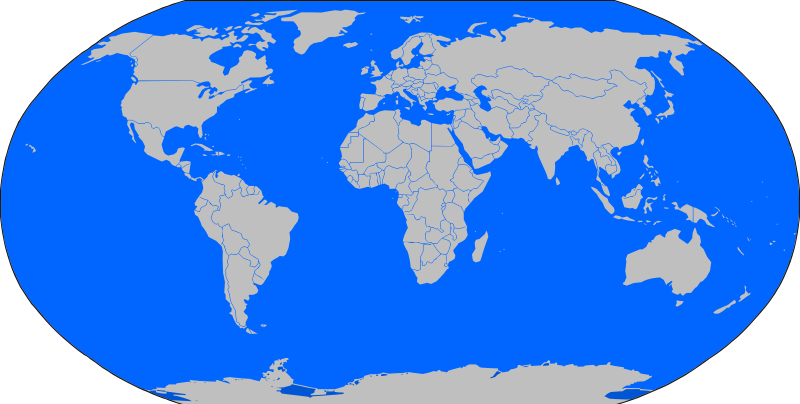


Standaard
December 1997

December 1997

December 1997

The threat of IT – Turmoil in Asia

The threat of IT

IT, or information technology, has become a major factor in the civilian world but also in the defence sector. IT improves the quality of life, things go faster, better and with lesser input.

IT means more than just the collection and dissemination of information. It encompasses the whole spectrum of everything what you can do with information. The jamming, the falsification, the manipulation, the collection, the processing, the emitting, the targetting, dissemination and so on. Information does not only play an important role in the military but also in all parts of the civilian society. The goal of IT in the defence forces is to reach a superior management of your own forces and to attain the ultimate victory as described by Sun Tzu: “vanquishing the enemy without fighting”. The decisive force multiplier of the future is therefore information. The side who possess the information dominance will most probably win the next conflict.

The giant leap forward because of the introduction of IT has also shown the achillesheel of modern society and their armed forces. IT is very susceptible to intrusions from the outside. With only limited resources you can enter IT systems and change their operation modus or even destroy it. Where as military systems are more or less protected against such intrusions, however they are certainly not invincible to intrusions, civilian systems are on the other side very easy to penetrate.

Most countries but also terrorist organisations are putting more attention into capabilities to exploit the weaknesses of the modern society. They are not only targeting military systems but especially civilian systems which are an absolute necessity like power systems, telecommunication, finance systems, sewage and water purification complexes and logistic systems which supply the necessary items to an urbanized society. If you destroy the command and control systems of modern society it will come to a standstill within a week. The same is ofcourse true for the defence forces as we have seen in the second Gulf War when the Iraqi forces were immobilized when their C3, Command, Control and Communications, systems were destroyed or jammed.

The military and especially the governments of the more developed countries are preparing themselves to fight the war on information. Several study groups have been launched to find out the weaknesses of our modern society and ways to eliminate or at least minimise the impact of IT warfare on a developed society.

This is just the beginning of a new kind of countering modern warfare. Therefore should the efforts to stay ahead in IT warfare be intensified. Study groups and firewalls to limit intrusions into IT systems are not enough. The intruders should be automatically tracked and indentified and at best active systems should be introduced to strike back at the intruder and eliminate his IT capabilities.

We should never forget that the development in the IT sector is moving ahead at an astonishing speed. And the basis of IT is knowledge which can be learned by everybody and can be moved across borders without a possibility to stop it. That is why we should continuously improve the capabilities on IT to stop rogue states and terrorist groups exploiting the possibilities of IT.

Turmoil in Asia

The Asian miracle has turned sour. The peculiarities of the Asian countries, like the protected home market, the availability of easy and cheap loans and the system of nepotism and cover ups, were the main reasons for the dramatic economic situation. After the devaluation of most of the Asian currencies and the subsequent fall of the stockmarkets all over Asia the last of the walls of Asian prowess fell down. The already stressed Korean economy and the problems in Japan were the last nail to the self esteem of Asia.

The Korean system which created in two decades the worlds tenth economy became victim of the trap they had created themselve. The Korean government builded there economic rise on a number of large companies, the Chaebols. Those chaebols were supported by a protected home market and very cheap loans to grow into global operators in a number of sectors, like steel, memory chips, electronics and cars. The already stressed markets were flooded by cheap products from Korea and the price was driven down even further. Then the devaluations of the Asian currencies destroyed the already small profit margins of the chaebols. The repayment of loans of as well the chaebols and the Korean government became increasingly difficult and finally the weakest of the chaebols had to file for bankruptcy and the government had to ask for support of the IMF.

This is a short summary of the beginning of the economic downfall in the northern Asian region. In the mean time the drop of the Nikkei, the Tokio stockmarket, under the 16.000 level forced the financial institutions in Japan to asses their position.

The Japanese financial powerhouses, or better former powerhouses, are finally coming to terms with their actual financial situation. Several institutions including the fourth largest and oldest broker, Yamaichi, went out of business. But it seems as Japan finally is introducing the necessary steps to clean up the mess after the bubble economy of the eighties bursted.

The bad loan problem has to be solved. As long this is not the case the Japanese banks will continue to feel the pressure of insolvency and they will not be able to grant loans to new enterprises which could stimulate the growth of the Japanese economy. As long as the bad loans stay on the balance sheet the Japanese economy will be in a vicious circle with only the export market as a small relieve.

The Japanese government has to open up the market and introduce harsh measurements and regulations to eliminate this problem. A number of banks will go bankrupt because of this but the survivors will emerge stronger as ever before. This is the only option to pull Japan and a great number companies out of the problems.

An economical and financial healthy Japan can than be the stimulant to push all other Asian countries to introduce the necessary steps to regulate their economies. Only after new regulations are introduced and the specific Asian “values” eliminated international investors and the national investors will be willing again to invest and re-start the economic boom. The devaluation of the currency, as happened because of the internal problems, will not suffice to solve the problems. It will promote the export on the short term but it will also destroy investment opportunities on the long term.

The investments are the pre-condition to stimulate trade and the economy. The importance of capital will only increase in the future because labor input growth is already to expensive to make an impact. There are other countries which offer cheaper labor costs than most of the Asian countries. The Asian Tigers and Tiger-cubs have to become investors into high tech and innovative production to maintain the impressive growth figures.

Asia is still a very promising region but the market has to be opened, the financial institutions regulated and the government influence minimised. This will be a guarantee to economic growth and political stability. The Pacific area can become the most important area in the next millenium but only if they can get their act together. This has nothing to do with Western values but just with a sound fiscal, economic and business policy.

Standaard