July 1998
The economies of the world, the connections and the situation – The Kosovo dilemma
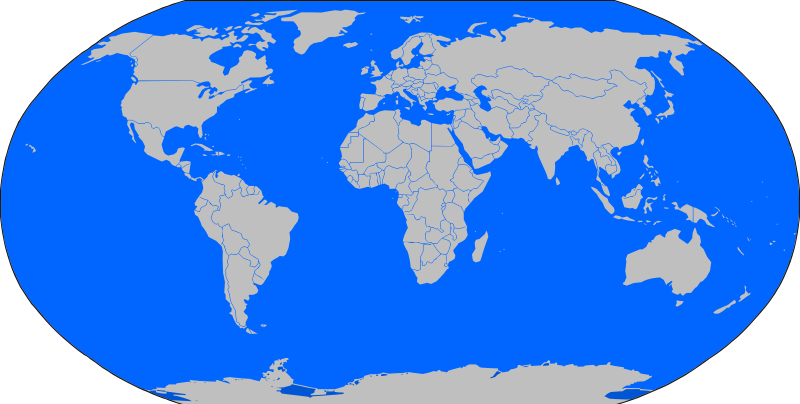
The economies of the world, the connections and the situation
The economies of the world are not that promising as two years ago. In those days everything seemed possible. The countries in the Asian-Pacific region were considered the best of the world. Their way of living, especially the political system was considered by the Asians as superior to the decadent western democracies.
The economy of the U.S.A. was also booming where as the majority of the European economies where coming slowly out of the last crisis. But even when they were doing allright the growth figures of Europe en the U.S.A. looked bleak by the Asians double digit growth. The growth in the U.S.A. and Europe is on the other hand based on strong fundamentals where as the growth in Asia is resource-bound and extremely dependent on cheap and foreign capital.
Even in those days it was obvious that the much talked about globalisation was only partly correct. The globalisation was only limited to one sector and it was a developing process to some countries in the world.
The finance sector is the only group which is operating all around the world. Investors are looking for every opportunity to make an investment. The socalled emerging markets were the key benefiaries of those investments. The banks are therefore the industry with a large exposure in Asia. The Asian involvement was at one time a very sound investment but the political systems which controlled the Asian economies and the incorrect investment and accountancy policy turned the investment/loans into very vulnerable operations.
The only country which can be viewed as true global player is the United States of America. The U.S.A., as the largest exporter in the world, is a big trading partner to many countries around the world. They are therefore the key benefiary of the opening of markets, the globalisation. The European Union and especially Germany is starting to become a global player. The regional market is becoming to small for Germany and it is becoming attractive to look for new possibilities around the world. A global open market is a condition to expand around the world and to keep the industry competitive.
But the level of globalisation should not be overestimated. The stakes of the financial sector are high but the Asian involvement in relation to the total financial business is relativily low. The same is true for the level of exports to the Asian region. The exports to Asia from the U.S.A. and the European Union are considerable but in relation to the total economic picture the total exports by each only account for an estimated 10 %. The Asian part in it is even smaller.
Essentially most countries/parts of the world, with the exception of the U.S.A. and possibly Germany, are regional players. The majority of the trade is aimed at neighbouring countries. Those regional groupings very often agree to some preferential treatment. The most successfull regional economy is the European Union but also others are moving in that direction. Like the Mercosur in South America, several less successfull organisations in Africa like ECOWAS and CEUCA and the increasing cooperation in the Asean grouping.
The regional economies are mostly of the same technical level, economical development and often belong to the same cultural grouping. There are differences but the countries are supportive to eachother. This is the strength of the regional economy, the many look a likes, the geographic proximity and the same development and cultural standards. And to limit the globalisation even further, the trade with other regions, global trade, is not a really international trade between countries but a trans-company trade within one company. A certain company has a division in for example an Asian country. This division is producing goods or parts for the other region. All movements are within the company which is only using one feature of the Asian country: the cheap labour. This trans-company trade is advantageous to the country, it will deliver more jobs and a little bit of know-how but on the other hand it will not deliver the strong industrial base which is wanted. Those companies/divisions can be moved very easily and the left behind country is not in a position to replace that company, they simply do not have the know-how, resources and brand name to do so.
The regional economies can be viewed as a development phase to the global marketplace. The level of globalisation will increase in the future but at the moment most sectors/industries are regional directed. If the regional market is becoming to small the phase of globalisation starts. But for now and in the future the impact of a crisis in one region will not affect the economies of the other regions on a dramatic scale. The impact will be more of a psychological nature then real. Most of the losses in one market can be maid up by improvements in other markets. Some individual companies will be badly affected, as now is happening in the Asian crisis, but the picture on the whole is dependent on much more factors then one company or sector.
There is however one exception. The impact on the financial sector. The financial sector is a globally operating group with interests all around the world. If one large part of the world is in trouble it could affect the profitability of the financial sector. This will limit the ability of the financial institutions to deliver their services to their cutomers. For example export credits and loans will be more difficult to obtain, exports/trade and investments slow down and finally the economy is in a downward trend. The availability of capital and the intrestrates could become a decisive factor in the well being of the world economy. This worst case scenario could become reality if the financial sector does not apply proper risk analysis and if it is not controlled as it should be. The strong regulations in the western world will limit such negative developments but that does not mean that it will not be hurt by it.
The globalisation is here to stay and will increase in the future but it will take a very long time before one crisis in one or more countries will affect all economies of the world. The strong economies of the large markets in the U.S.A. and Europe will limit any devasting Asian influence on their economies.
The forecast on the economies of the U.S.A. and Europe are therefore positive. There will be a strong growth and low inflation for at least the next two years. The development of the Asian economies is dependent on the measures taken by Japan to stimulate the consumer demand, restructure their financial system and to strengthen their currency. The other South-East Asian economies are, if they have implemented the IMF plans, dependent on a strong Japan for their return to healthy economies. The South American economies are also dependent on the return to strong Asian currency values. Where as the African economies are dependent on the absence of internal and external conflicts for their growth. And finally the Russian economy needs higher oil prices, a radical improved fiscal legislation and tax collection and although to a lesser extent Russia also needs a stabile Asia to keep the title of the fastest growing stock market.
The Kosovo dilemma
The problems in the area of former Yugoslavia are far from over. The conflict in Bosnia-Herogowina seems to be cooled off. But there are still some areas in the territory of former Yugoslavia where there are still some problems to be solved. The most dangerous situation is in Kosovo. The region is very volatile. The Kosovo-Albanians which constitute the large majority in Kosovo have changed from peacefull resistance against the Serbian “occupier”, and turned violent.
The policy in Kosovo is a Serbian policy, not Yugoslavian policy. The president of Yugoslavia, who happens to be a Serb, wants to control Kosovo out of historical reasons. The Yugoslav/Serbian policy is executed by security forces, the police, and not by the army. The army is not under the personal command of the president and it is considered as not very loyal to the president where as the police is totally under his control.
The Serbian policy in Kosovo was to limit the influence and power of the Kosovo-Albanians, their response was to create a shadow society of Albanians only. This peacefull resistance from the Kosovo-Albanians was under the leadership of Ibrahim Rugova of the LDK. They wanted to avoid the massacres which happened in Bosnia-Herzegowina. In the beginning the Albanians agreed with this policy of peacefull resistance but it did not achieve the success which was expected.
After the Serbians government achieved the total exclusion of Albanians out of the public sector, there was a move from both parties to use violence to reach their goals. The Albanians organised themselve in the UCK/KLA, an armed Kosovo-Albanian organisation with the goal to liberate Kosovo from Serbia/Yugoslavia. At first they were just a couple of thousand armed radicals which committed some armed assaults on Serbian installations and on Albanians who cooperated with the Serbs. The Serbian government at the same time started to “clean” the border territories with Albania proper from Kosovo-Albanians. This was done in the same way as in Bosnia-Herzegowina with muslem and Croat villages. The Albanians rallied behind the UCK/KLA because they were the only group who promised at least a little protection. The military efforts of the UCK/KLA became more successfull as they got larger and better trained and armed. The peacefull resistance was effectivily bankrupt because they did not reach anything and they could not stop the Serbian security forces.
The world community would like to see a diplomatic solution to the conflict. The few negotiations, or better talks, between Ibahim Rugova, leader of the LDK which started the peacefull resistance against Serbia, and Milosevic, president of Yugoslavia, had no positive result. Milosevic did not want to grant the Albanians any autonomy and Rugova was considered a collaborator because he talked to Milosevic. Rugova lost a lot of support because of these talks and is effectivily sidelined because of the continuation of the violence.
The LDK, especially Ibrahim Rugova, lost control over the Albanians. The UCK/KLA was more attractive because of the armed resistance and their goal of an independent Kosovo. As a result the LDK split and a number of former LDK leaders, like Jakub Krasniqi, are trying to take over the LDK from Rugova and build a new LDK which can represent the case of the new LDK and UCK/KLA to the world community. The leadership problem of the new LDK and UCK/KLA combination is far from solved. There is no clear leader who has the personality to do it. A possible candidate could be Adem Demaçi, the Mandela of Kosovo. Demaçi has spend a large part of his live in Yugoslavian prisons and is now the leader of a small political party which is much more radical than the LDK.
The international community has some problems with Kosovo. Because Kosovo is part of Yugoslavia therefore it is an internal problem in which foreign countries have no right to meddle. The atrocities committed by the Serbian securtiy forces will however force the international community to do something against it. But whatever they will do it will be in their disadvantage and will not create peace.
The Chinese and especially the Russian govenments are absolutely against the use of military power to force Yugoslavia/Serbia to stop the actions of the security forces. Where as the West, Europe and the U.S.A., do not like to exclude this option to force the Serbians to stop the cleansing of territories in Kosovo.
The Serbians show a willingness to talk but do not want to offer something substantial. They use negotiations to create time to continue the violence and create facts which put them in a better position.
The new LDK and the UCK/KLA are not an acceptable partner to the world community mainly because of the use of violence and also because of the ambition to create an independent Kosovo which is in contradiction to the policy of most countries and the United Nations. But if there is going to be solution to the Kosovo conflict, the LDK-UCK/KLA will be part of it. So the international community have to talk with the LDK-UCK/KLA organisation to reach something.
The world community, the six of the contact group for Yugoslavia and the United Nations, are having some difficulties in creating to right policy mix in Kosovo. As mentioned above; Yugoslavia is an sovereign country, China and Russia oppose military actions but Europe and the U.S.A. are willing to use them, Milosevic is considered unreliable and unwilling to reach an agreement, the LDK is loosing support and the new LDK and UCK/KLA are considered not acceptable because of their policy. All these factors make an agreement nearly impossible. The situation is even worser because how to force the Serbians to abandon the security operations in Kososvo?
The diplomatic solution is difficult without means to force Serbia to obey, Serbia is not willing to give up Kosovo, it is of historic importance to Serbia. And the Kosovo-Albanians want to be independent, autonomy will not satisfy the extremist part of the population. There is also very little room for a compromise.
The use of military means is difficult because it have to be done without support of two important parties, China and Russia. And if military forces are used, the question remains how to use them? The use of air power, control the air space of Yugoslavia and bomb security forces and installations. Or the stationing of land forces in Kosovo or seal off the borders with Albania and Macedonia. The use of only air power will not stop the Serbians because there are not enough clear targets and it is more dangerous because the Yugoslav air force could pose a bigger danger then before in the conflict in Bosnia-Herzegowina. The use of land forces is equally problematic. First who will participate and to occupy Kosovo you need at least a force of 40.000 +, if there no resistance from the Yugoslav army. Or between 20.000 an 25.000 to seal off the borders. Ocuppying Kosovo will be intolerable to China, Russia and Serbia and sealing off the borders would eliminate all support to the Kosovo-Albanians and this would support the Serbians with their destructive policies in Kosovo.
The use of airpower and/or moving in to Kosovo would mean to alienate Russia and China, introduce a novelty in international relations and that the world community would site with the Kosovo-Albanians. And sealing the borders would mean indirectly to support the Serbians, which was not the reason to use the military, on the contrary. The use of military forces would mean to give up the impartiality of the world community/Contact group/United Nations.
The Kosovo problem is a dilemma for the world, whatever policy is chosen, nobody would be totally satisfied. The military option can only be used if nothing else works. It is only usefull as a pressure tool. The diplomatic solution might be difficult to achieve but it is the only possibility.
The solution in the Kosovo problem is in the particular constellation of powers in the region. A careful and precise navigating can result in a solution which will satisfy, more or less, all concerning parties.
The goal should be a Kosovo which is formally part of Yugoslavia but with far reaching autonomy. This can be achieved by exploiting the weaknesses of the parties involved. The Kosovo problem is a Serbian problem not Yugoslavian problem. The Yugoslav army will probably not be involved. Therefore you need to isolate the Serbians in Yugoslavia by supporting the other ethnic groups in Yugoslavia. The police and special police forces will probably be not strong enough to subdue the Kosovo-Albanians on their own. The increased strength of the UCK/KLA will make the activities of the security forces even more difficult. This constellation of two parties which are not strong enough to beat eachother creates a status quo which could deliver a diplomatic solution.
International pressure can then be applied to both parties. The honey and stick method could be very effective in this situation, offering them support with the reconstruction and punish them by limiting outside support if they continue their fight. The Serbians and the Kosovo-Albanians have to come to the understanding that they have to cooperate if they want to survive. They should understand that the insistence on maximum demands will not end the conflict but only increase the intensity and senselessness of the conflict.
The other options would be the worsening of the conflict. It would mean war. Or the Serbians are using more violence, with increasing support of the Yugoslav army, to subdue the Kosovo-Albanians. The atrocities which will happen will at the end suppress the Kosovo-Albanian struggle for independence. But this is a short term solution, there will be more problems on the longer term when there is another uprising. Or the UCK can, with luck and cunning, beat the Serbian security forces which might be not strong enough at the moment with little to non support of the Yugoslav army. They might be able to reach independency but this is a va banque game, all or nothing. It is very risky and shared with a lot of blood shedding but the last will happen in both cases.
An acceptable compromise is therefore a Kosovo which is part of Yugoslavia with an equal say in Yugoslav questions and far reaching self determination about internal questions. A Kosovo which is ruled by the people but with respect to eachother’s culture and religion. This gives the Kosovo-Albanians the opportunity to create the society they want but they should respect and protect the Serbian monastries and Serbian minority in Kosovo. And because Kosovo is still a part of Yugoslavia free movement of people and products is possible. This can satisfy the Serbian interests and it will be economically advantageous to the Kosovo economy.
 IN-SE Services