January 2000
Portfolio management in the new millennium
The new millennium
A century and millennium are over and a new one has just started. A millennium with many promisses but also with instability, volatility and a continuation of conflicts which are born out of the end of the Cold War. The world has become saver and more prosperous for one part but for the other part the world has become poorer and more dangerous. The old contradictions, capitalism versus communism – developed versus un- or less developed world, are not valid anymore. The new contradiction is developed or developing countries who embraced some form of democracy and a free market / capitalistic system versus the authoritarian less or undeveloped countries who are forced to live under a system of suppression, controlled markets and economy and who are mostly involved in some kind of internal or even external conflict. A new kind of first world versus a second world, but this time not only based on economic performance but also on political system.
Portfolio management for the next millennium and the year 2000 will be about taking advantage of the positive developments in the first world and avoiding the second world and the occasions when the two meet. As these meetings will be rarely opportunities, for example if some leader of a second world country has become or will become a threat to a vital interest of the first world. The only opportunities are if a second world country changes its government system and wants to become a member of the first world. But this change has to be internally induced. The first world can do little to nothing unless the people of a second world country are making the first step. Only then the first world can and will be able to give support.
The world economy
The development of the world economy can be divided in a growing economy in the first world and a small to negative growth in the second world economy. Or better sum of economies.
The first world economies can be divided, firstly, into the developed economies of the western world, Europe, Australia and the U.S.A, and the Asian Pacific economies of Japan, Singapore, South Korea, Taiwan and to a lesser extent Hong Kong. And, secondly, the developing economies of the emerging markets in Eastern Europe, Latin America and Asia, South-East Asia. The economic growth will be in a moderate to positive scenario in the developed world in the 2,5 to 5 % range and in the developing countries in the 5 to 8 % range.
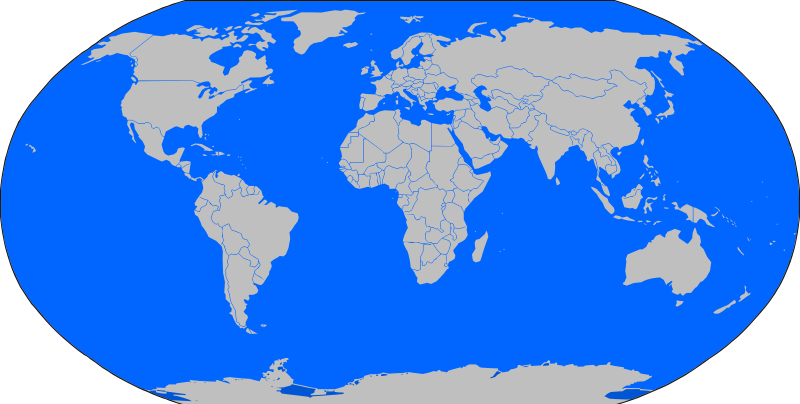
The second world economies are the un- and less developed countries which can be found on nearly the whole African continent, in the Middle East, on the Indian subcontinent, some parts of South-East Asia and on the territory of the former Soviet Union. The economic growth will be very low to non-existent as the political system and internal and/or external problems are using all available resources. The resources are with other words used for the enrichment of a small group of the population, to stay in power and to continue the conflict in which they are involved. Thereby destroying every possibility of growth.
The first world economies
The first world economies will continue to perform very well. The financial situation of these countries are getting better, the revenues and expenditures are more in line, the debts are becoming lesser and inflation remains stable or at least controllable. And more importantly the life line of every country the business community is doing well and will most likely to continue doing well.
A large number of the medium to large companies, especially export industrial-, tech-, telecommunication-, and the financial sector, have shown a very good performance, a stable growth around the two digit figure over the previous 5 years, and have promising forecasts for the coming years. All indicators and forecasts about the production, demand and counsumer confidence are rising while the cost of money remains stable.
A negative development is that in some countries, especially Europe and Japan, the small companies are staying behind and are a little bit weaker as the larger companies. And there are some sectors which have not participated in the boom on the stock markets. Their growth have been moderate but their was no large interest in the companies.
A number of small companies have some difficulties in reducing the costs and global competition does not make live easier. But if the current trend continues their sales and profits will experience an improvement.
The laggards of the stock market in the U.S.A. will not be able to create a break trhough in the coming year. Their sector in general and the forecasts in particular have been negative and this will remain to be the case as the income expectations and forecasts do not promiss any large improvements. Certainly not in comparison to the tech stocks.
The rising interest rates in Europe and the U.S.A. have had a dampening effect on the markets as investments in the stock market became less profitable. The rates did not destroy the economic growth. In Europe the demand and market confidence was not influenced to much by the higher cost of money. In the U.S.A. the small interest rates hikes were helpfull in slowing down of the economy. But the somewhat lower demand and the increase in productivity have been mainly responsible that the inflation has been kept in check. The low inflation has been further supported by the unexpected low warehouse figures of several industries and the lesser mergers and acquisitions activities. All these factors have created the pre-conditions for a soft landing of the hot U.S. economy.
The rates in Europe and the U.S.A. will remain in 2000 at about the same level as at the end of 1999, in the 3+ % and 5,5 % range. This will be enough to control inflation and give the economy a chance to continue to grow.
The much talked about millennium bug will have none to little impact on the economies of the first world countries, especially not in western Europe and the U.S.A. The majority of the systems at the government and large and medium businesses have been checked and repaired. A number of the smaller companies are not yet been checked and repaired but the consequences of a failure are much less dangerous as with the larger companies. And remember that the dates of 1-1-1999 and 9-9-1999, which also could pose a software problem, went by without any mentionable problems.
The first world economies are not endangered at the turn of the year. Economic growth will not decrease it will most likely increase. The U.S.A. will continue to grow only at a more comfortable speed. Europe will benefit from improving economies of nearly all countries in Europe. The next decade promisses to be the European decade with the European Union becoming larger and stronger, more unified regulations, the introduction of the Euro as a currency, more and intensified business relations and growing economies. Japan has been able to make the turn around. Consumer demand seems to be rising, companies are restructuring and finally the first actions are being undertaken to solve the bad loan problem. After years of shrinking, the economy is moving upwards, there have been growth in the first half year of 1999. The forecasts promisses some growth for the year 2000. The emerging markets have been active in solving the problems which had caused problems in their countries. The improvement of the Japanese economy meant automatically an improvement of the economies of the emerging markets. This improvement will continue in 2000 and can only be stopped, or better limited, by a medium to major conflict in the region.
The improving economies in the first world will lead to a rather high chance of large volatility in the year 2000. There have to be made changes into the portfolios of investors which will lead to some larger sell offs. The resulting profit taking and the fear, disbelieve, of the continuing bull market will create further volatility. And finally the interest rate hikes in the U.S.A. and Europe to combat the threat of inflation will also create volatility.
At the end of the year 2000 the stock markets of the first world countries will deliver an average growth between 8 % and 15 %. But with some large up and down movements.
The United States of America
The U.S.A. will experience a soft landing of its economy. Growth will be around the 3 % instead of the 4+ % of 1997 and 1998 and approximately 3,75 % for 1999. The business growth will also be somewhat lower, instead of double digit figures of the U.S. business community responsible for the stock market growth, they will only grow at about 8 to 9 % in 2000. The high stock valuations of those highly succesfull stocks, the price earnings ratio, will remain high, so do the interest rates and this will therefore lessen the attractivity of the U.S. stock market. The U.S. stock market will show a slower growth then in previous years. It will not be bad or disappointing but the returns elswhere will be larger.
Europe
The European economies are growing, the large companies are restructured and able to compete on the world market and the low value of the Euro will promote exports. The weaker smaller companies still face some difficulties about improving their profitability but with a growing market these problems can be dealt with. The unemployment remains at unacceptable high levels but the increased consumer demand and the increasing number of service companies might bring some relief.
The most important factor is however that consumer confidence has been improved after years of lagging demand. And this will deliver the largest improvements to the European economy.
European stocks are because of the improving economy much more interesting than U.S. stocks. The stock valuations, P/E ratio, are also much lower and therefore more promising on the short to medium term.
Australia
Australia, New Zealand included at some distance, are benefitting the most from the recent improvements in the economies of the Asia-Pacific rim countries. The Asian area has been traditionally an important market for products out of Australia. As the Asian market collapsed during the crisis Australia managed to enter new and enlarge existing markets in Europe and the U.S.A. Consequently the Australian and New Zealand economies have not been that dramatically hit by the Asian crisis and its economic fall out.
The return of the traditional markets has had a positive effect on the Australian and New Zealand economies. The business communities in both countries have gained a lot in strength. The results have been very promising and will continue to be promising in 2000.
Australian stocks are not cheap but it remains worthwhile to increase the investments in Australia and New Zealand. Especially Australia will expernience one of the best years in its history.
The Asian-Pacific rim countries
The economies of the developed Asian-Pacific rim countries like Japan, South Korea, Taiwan, Singapore and Hong Kong have experienced a large improvement in 1999. The existing problems like the very high debt ratio of many businesses, the inter-business relationships and the government involvement is in the process of being corrected. The improved internal but especially external demand has been very benificial for the economies of the above mentioned countries.
The economic growth will continue in the year 2000 and will most likely with the exception of Japan reach the 4 to 6 % level. Japan as the most developed country in the region will in the most positive scenario achieve a growth of around 1 to 2 %. But this a large improvement to the previous years of a shrinking economy. Japan is a case of its own, there are still some worrying problems. The large and industrial companies are doing very well. The smaller and non-industrial companies are still weak and do not expect an increase in sales and profitability. The consumer demand has improved but is still very weak. Japan will see growth in 2000 but it is not yet very stable.
The stocks in those countries are therefore very attractive as the majority of the companies in those countries will deliver above expected results in the next two to three years. The stock valuations are also very positive. The stock markets of the Asian Pacific rim group of countries are therefore very promising on the short to medium term.
The emerging markets
The emerging countries in the first world group of countries are also very promising. Countries who belong to this group are Thailand, Malaysia, the Philipinnes, Poland, the Baltic states, Hungary, Czech republic, Slowakia, Slovenia, Turkey, Mexico, Chile, Brazil and Argentina.
The South-East Asian countries made the first efforts and even partly implemented the necessary changes to create a healthy economy. The following cases are going to be or are introduced; financial regulations, control mechanisms and business changes to increase profitability.
The first signs of growth in South East Asia became visible in the first half year of 1999. The second half was somewhat lower but in general the trend is upwards.
This same is valid for the Latin American economies. The governments of those countries were better off as they did not need to make that dramatic incissions in the company structure of the country. But the pressure on the currencies and the decreasing exports pushed the economic performance downwards. After measurements of the government and support of the IMF the currencies could be stabilised and the subsequent Asian-Pacific re-emergence improved the situation in Latin America. On the negative side, Brazil is having some problems with the transfer of companies from state owned to private owned. This is damaging the confidence in the Brazilian market. And Argentine is struggling with its currency which is closely connected with the US dollar. Argentinian products are therefore relatively expensive.
The Eastern European countries were depressed by the Russian economic and financial crisis. A number of Eastern European countries are still dependent on Russia as it is the largest buyer of products out of Eastern Europe. The simultaneous privatisation programme, the change to a market economy, has not been that easy as expected. The change initially has created a relatively large economic growth in the years just after the dissolution of the Warsaw pact and as the output of Soviet production system became very low.
The continuation of the privatisation programme at a slower pace, prudent government policy, support from the European Union, the improved economies in western Europe and the growing attractivity and strength of Eastern Europe for investments and an improved internal and external market have changed the position of Eastern Europe. Eastern European economies have experienced a larger growth in 1999 and the growth will continue in 2000.
There are some worries about the Y2K, millennium, problem in Eastern Europe, and in nearly all other countries except the U.S.A. and western Europe, as the majority of the companies have done little to nothing to fix the problem. The consequences of a Y2K problem in Eastern Europe will be much less dangerous as in western Europe or the U.S.A. The computer penetration level is in Eastern Europe much lower as in the west and much less advanced, e.g. very often they even do not have a time/date option installed and very often are the computer systems of a new/young generation of which might be expected that they are millennium save. The penetration level of computers is in all countries except in western Europe and the U.S.A. relatively low and the impact of an failure will be much lower. And the largest number of the computers are thereby new, five to six year old, so with some luck already 2000 proof.
Eastern Europe will experience growth in 2000, especially the countries selected to enter the European Union will do very well. The connections with western Europe will become ever stronger. Eastern Europe is at the moment more dependent on western Europe for its economic well being than from Russia. And western Europe will be very promising in the coming decade, so Eastern Europe will benefit from it.
Finally a word to Rumania and Bulgaria. These two countries are the worsest performers of the group of former Warsaw pact countries. Their economy is weak and there are many unemployed. It will take time and work to change this situation. The Kosovo problem could have a positive effect on these two countries as their support during the conflict has led to additional promisses from the European Union to support Rumania and Bulgaria to improve their economy. On the medium term these two countries might offer some better potential and investment opportunities.
Countries in between
A number of countries do not belong to the second world group of countries. They are not that easy to group and belong to their own group. The countries in between are mostly democratric or semi-democratic countries which have a weak economy and very often some kind of internal problem.
Countries like Egypt, South Africa, Venezuela, Ecuador, Peru, some middle American countries, Russia, Ukraine, India and maybe Vietnam belong to this group.
The economic prospects of these countries are weak and will remain so on the medium to long term. They will first have to solve the internal weaknesses before economic growth can set in. In the mean time those countries will not be a viable investment opportunity. An investment in those countries is associated with a very high risk. For example an investment in a Russian oil company could be very profitable but the uncertain legal and ownership situation, the very often unclear alliances and the conflict in Chechnya could change the fortunes of these companies overnight.
The special case is China it does not belong to this group or the second world economies group but because of its size, power and theoretical potential it is essentially a group of its own. China is a large country with many opportunities but it is having and will have in the future considerable problems with the development of the country. The government system fuells nepotism, the creation of little empires in the country and will promote corruption. The unclear legal system and accounting and business practices will make it unreliable. The division and contradictions between good and bad companies, coastal and inner provincial regions, between rich and poor will increase and will be responsible for internal tensions. The social dissatisfaction and non-existence of a workable economical system will create many problems. Not to mention the ethnic/secession problems in the western China. All this taken together can only be controlled or hold together with the massive use of security forces. And in an environment of suppression self created and sustained economic growth has no chance.
China will be able to mask its problems for some time by its seducing (false) opportunities, its large financial reserves, the inflow of foreign investment and the number of companies which are performing very well but in the end somebody has to take up the tab. The large number and the scale of the problems can not be solved by economic growth. China would need two to three decades of at least 8 to 9 % of economic growth each year and the inflow of very large sums of foreign investments, to solve only its economical problems, e.g changing the country from an agri-cultural society with a large number of government owned inefficient loss making enterprises into an industrial-service society with profitable companies. And this is something of an impossibility. In short, structural problems like these demand structural solutions.
The second world economies
The second world economies are the group of countries which have a very bad economic performance, little potential on the short term, an autocratic government and are often involved in some kind of internal or external conflict. You should think about countries like Iraq, Iran, Syria, Algeria, Sudan, Liberia, Sierra Leone, Uganda, Rwanda, Burundi, Congo, both, Angola, Somalia, Ethiopia, Eritrea, Georgia, Armenia, Azerbaidjan, Tajikistan, Kyrgyzstan, Afghanistan, Pakistan, Sri Lanka, Burma, Cambodia, Laos, North Korea and Indonesia.
The government structure, the internal problems, sometimes tensions or even external conflicts, the undeveloped economy, high unemployment and the disuse/abuse of the resources make any progress and economic growth very unlikely on the short, medium and long term. In the long term there is change possible but only if there is a change of government, e.g. government structure. Not only the replacement of people but of the system as well. Until that time it is even unnecessary to consider investing in those countries.
Portfolio distribution
To have a succesful portfolio it will be necessary to spread the risks and optimise the returns. There are essentially four groups of investments to include in your portfolio. Stocks, bonds, property and cash in one or more currencies or short term depositos. Each category has its own risk and return ratio. Stocks have the highest risk but also the highest return. Bonds, commercial and government, have, depending on the grade, a much lower risk but also a lower return. Property also has a smaller risk factor and mostly a lower return. Cash has the lowest risk, if it is a stable currency, but ofcourse also will deliver the lowest return on your investment.
There are other investment oportunities like derivatives or commodities. Derivatives are options and futures or combinations of both. The number of possible derivatives is unlimited as every day, every hour new instruments are created by the financial institutions of the world. Derivatives gives you the right or obligation to buy or sell an underlying stock, currency or whatever at a negotiated date in the future. Derivatives are developed to hedge your investments against losses or will guarantee the possession of a given product. But you can also use the derivatives to speculate as the value of derivatives will change just like the underlying product. It can give you the opportunity to buy or sell products at a tenth of the actual price of a product without possesing the product so benefitting from the positive or negative developments of a product. But always remember you can loose everything if the development you anticipated goes in the other direction and nobody has an interest in your derivative or the underlying product.
So we only advise to buy or sell derivatives if you need to have a given stock, currency or other product in some time, if you want to protect, hedge, your investments against an expected unwanted development of the market or if you need the value of your investment at a time in the future.
Commodities are products like silver, gold, orange juice, pork bellies, other agri-cultural products and so on. Your are essentially buying or selling these products or the derivatives of these products on the expected availability of them in the future. This will make them very volatile and speculative.
The portfolio for 2000
A balanced portfolio should consist out of stocks, bonds, property and/or cash. The quantity of each part should be based on the time horizon, e.g. the number of years willing to invest, and the willingness to accept risk. And ofcourse the goal of the investments, which is mostly connected with the time horizon. It might be savings, pension, a house, some other much wanted very expensive item, the college education of the children, income now or later. The portfolio can and will change during its existence as the motive, time horizon an risk acceptance changes during time.
There is a scheme which gives an summary of the combination of time horizon, composition of the portfolio and the to expected return on your investment. The to expected returns only gives an indication based on historical data and does not guarantee the performance in the future.
If you are willing to invest for a period of at least 1 year, the portfolio should consist out of 50 % bonds and 50 % cash, the return would be in the range of 4 to 5 %.
If you are willing to invest for a period of at least 3 years, the portfolio should consist out of 20 % stocks, 5 % property, 45 % bonds and 30 % cash, the return would be in the range of 5,5 to 6,5 %.
If you are willing to invest for a period of at least 6 years, the portfolio should consist out of 30 % stocks, 10 % property, 50 % bonds and 10 % cash, the return would be in the range of 6,5 to 7 %.
If you are willing to invest for a period of at least 10 years, the portfolio should consist out of 60 % stocks, 15 % property, 20 % bonds and 5 % cash, the return would be in the range of 7,5 to 8,5 %.
If you are willing to invest for a period of at least 15 years, the portfolio should consist out of 75 % stocks, 10 % property and 15 % bonds, the return would be in the range of 9 to 10 %.
If you are willing to invest for a period of at least 25 years, the portfolio should consist out of 90 % stocks, 5 % property and 5% bonds, the return would be in the range of 10 to 11 %. With this time horizon you might increase the quantity of stocks to 100 % and receive a return of 11 to 11,5 %. A 100 % stock portfolio carries some disadvantages. For example if the market is temporarily down and you would need some cash there is no other option then to sell stocks below value or ofcourse lend it from a bank. But that is mostly expensive in a time of a tight money market and a depressed stock market. In those times bonds and property mostly keep their value.
These five portfolio models deliver an idea how to allocate your assets. Which pattern should be selected belongs to your individual wishes and demands. After establishing the right portfolio allocation the next question is the allocation of the individual part.
Cash is best placed in for example short term gilts or depositos in a stable currency. Going into exotic currencies can be more profitable but is more risky and mostly expensive. Especially if you want to remain into currency investing for a longer term.
Bonds can be divided into government and commercial bonds and the interest rate depends on the trustworthiness of the company or goverment issuing the bond. The trustworthiness is determined by the credit rating the issuing company or government received. If the rating is high, triple A or AA, the bond is reliable and probably has an average interest rate. If it is however B then there is considerable risk of default and consequently the interest rate is higher. We advise bonds with a high credit rating as they are best tradeable and keep the highest value in time. If you want risk go into stocks there is more to gain.
Property are the stocks into property funds. Property funds are essentially companies who plan, built, buy, manage, rent out and sell property. Property is a reliable stock as it is based on the buildings. The property stocks are not fast growing stocks, except in times of high demand, but they are very stable and reliable in their returns.
At the moment the property stocks in Europe and the U.S.A. have delivered a very nice return on the investments. Their price, especially in Europe, is still relatively low. Because Europe is at the beginning of an economic growth cycle European property stocks are very promising. The Asian-Pacific property stocks are more dangerous as the economy is still recovering from the crisis and there is an oversupply of commercial buildings. It is therefore still to early to enter the Asian-Pacific property market. Except if you have the necessary stamina and an appetite for risk and living dangerously.
Stocks, part ownership of companies, are the investment opportunities, outside derivatives and commodities, with the highest possible return on investment but they inhibit a certain risk. The volatility of stocks is famous, the value of stocks can be halved within a day if bad news reaches the market. Stocks have been however on the long term the most profitable and savest way of investment. If you take a time horizon of over 15+ years all business cycles are included and balanced out. If the company is a good company after 15+ years it should have grown and become more valuable. If it would deliver a bad performance over time the company would have been closed or taken over. But long before you would have sold your stocks in that particular company and invested it in another company.
The growth and returns of stocks is very differentiated. Some sectors perform very well, even if a number of companies have none to little returns and profits. Where as other sectors have delivered over years a stable growth of two to three percent but the stock remained at the same level or even decreased in value.
The following sectors promise the best growth on short to medium term. In general the large cap global players like General Electric, Citigroup, Dell, CSC, Ford, Procter and Gamble and Coca Cola. To mention a number of companies which offer the right potential. Companies with the size and abilities the play on several markets, with several products and which are lean and mean but still with enough human and financial resources.
In particular the export industrial companies, the tech industry in its various forms and sizes, telecommunications, the regional, commercial and integrated financials, oil and oil service industry, entertainment and hotels and resorts, luxury retail and large retail groups with a good sales and control system and if you have some patience the drug sector, and then the companies with a large product pipeline and the necessary scale to assure continuation.
Stock Allocation
Stock allocation, stock picking, is one of the most difficult parts of the investment business. To be succesful you have to select growth stocks. Quality stocks have to be selected which promiss to outperform the market. Those stocks belong to companies who have little to no weaknesses. Management, production, R+D, sales, marketing, the product and product pipeline and the forecasts have to be good.
First select the right and most promising sector and in that select the most promising companies. Through the globalisation, nearly the whole earth is your working area. After a balanced portfolio has been built of quality companies be sure to take a long term policy of little movement, changes, in the structure of the portfolio.
The U.S. stock market will be somewhat depressed because of the lower growth, high P/E valuation and negative advance-decline line. A correction of up to 20 % will not be unlikely in the second or third quarter of 2000. It will take some time to make good the correction. Instead of the usual 2 to 3 months it could now take up a year to reach the old high stock market levels.
The European, Asian and Latin American markets will do better as their home markets, export opportunities and business figures improve. The medium and small size companies also have their problems but the improving economy and demand, the steady shrinking number of unemployed and the continued changes in the effectivety of the companies will create a more broad based economic growth. The European, Asian and to a lesser extent Latin American markets will outperform the U.S. stock market.
As we have seen above the economies of the first world are improving. Nearly all countries in the first world experience growing economies. The companies in those countries are performing well to very well. This could have an effect on the share price. It will go up for the big cap companies which are operating all over the world and profiting from the global growth. This is valid for the big caps in the U.S.A., Europe and the Asian-Pacific region. A number of U.S. big cap with a high P/E valuation will however experience a slower growth in comparison to its European and Asian counterparts.
The medium to small companies in the U.S.A. will have a harder time. They will face a slower growing U.S. economy, an expensive dollar, somewhat lower demand and some price pressures. This will lead to a lower growth figure, disappointing many analysts. Consequently, the advance-decline line remains negative. Only a small group of companies will be able to move forward with the majority staying behind. The number of laggards in the market will become larger. 1999 did not deliver the much needed broad based growth of the market. At first it looked promising as the paper and other cyclical stocks started moving up but it could not hold on to the growth.
In Europe, Asia and Latin America the medium and small companies have some better prospects. The growing economies and the increased demand will provide them with better opportunities and results and weaknesses can be covered by the growth. The stock prices of those companies listed on the stock exchanges will however only show none to little growth. The results are not that convincing to fool the analysts.
Only the sectors mentioned, listed, in the previous chapter will be able to beat the market in 2000 as it did in 1999. To be on the winning side of stock investing take care to be in those sectors and preferably in the large caps.
To minimize the risk and optimise the returns you have to spread your stocks over several countries and even more companies. For the year 2000 we favor a stock allocation of: 8% Germany, 3 % the Netherlands, 1 % Belgium, 7 % France, 5 % Spain, 1 % Portugal, 3 % Switzerland, 1 % Austria, 6 % Italy, 1 % Denmark, 1 % Norway, 1,5 % Sweden, 0,5 % Finland, 5 % United Kingdom, 1 % Ireland, 0,5 % the Baltic countries, 2,5 % Poland, 1,5 % Czech republic, 1,5 % Hungary, 0,5 % Slovakia, 0,5 % Slovenia, 18 % the U.S.A, 3 % Canada, 2,5 % Australia, 5 % Japan, 1,5 % Hong Kong, 3 % Taiwan, 3 % South Korea, 2 % Singapore, 1,5 % Thailand, 1,5 % Malaysia, 1 % the Philipinnes, 2 % Mexico, 2 % Chile, 0,5 % Argentina and 1,5 % Brazil.
An allocation of this size is only possible with larger funds to invest. With smaller investments you could instead invest in socalled region funds. With 45 % in a West European fund, 7 % in an East European fund, 21 % in North American fund, 21 % in an Asian-Pacific fund and 6 % in a Latin American fund.
 IN-SE Services